Thelema Abbey
 78
78

Thelema Abbey
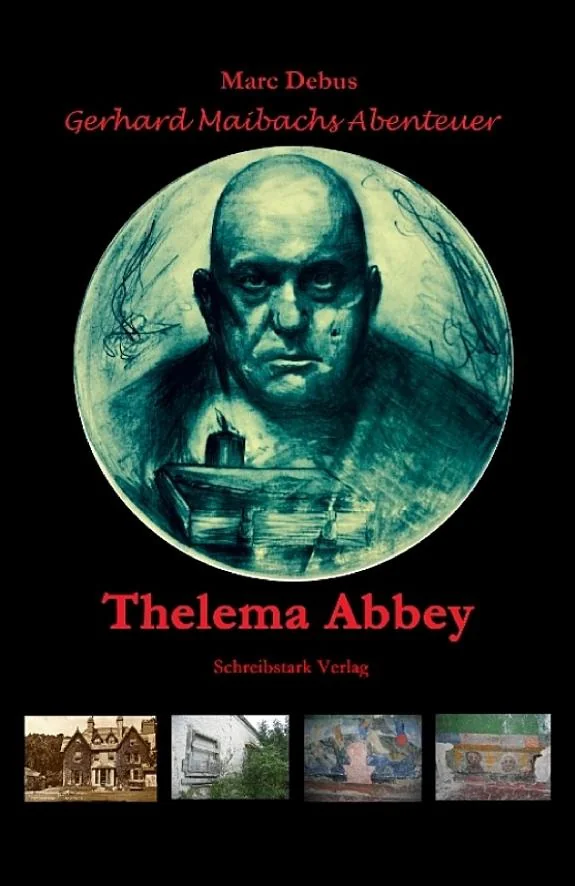
Marc Debus's Thelema Abbey presents a peculiar premise: a man stumbling into the complicated estate of Aleister Crowley. The novel opens with Gerhard Maibach's seemingly innocent Sicilian sojourn transforming into a vortex of magical artifacts, the Mafia, and a mysterious woman. Debus attempts to connect these disparate elements, but the execution feels less like a structured investigation and more like a series of narrative coincidences. The strength lies in its unusual premise, directly engaging with the tangible residue of Crowley's presence in Cefalù. However, the limitation is the explanatory glue holding the plot together; the connections between Maibach, the Abbey, and the criminal element remain somewhat nebulous. A particularly intriguing, though underdeveloped, aspect is the lingering influence of Crowley's philosophy on contemporary, unexpected actors.
The work ultimately serves as a speculative fiction piece more than a deep dive into Thelemic principles.
📝 Description
78
Marc Debus's Thelema Abbey plunges a protagonist into Aleister Crowley's Sicilian legacy.
Gerhard Maibach's visit to a friend in Sicily turns into a surreal entanglement with occult forces, the Mafia, and a mysterious woman. The story centers on Maibach's accidental involvement with Aleister Crowley's effects and his abandoned temple, Thelema Abbey. This fictional narrative uses the historical setting of Crowley's Cefalù commune to weave a tale of lingering esoteric influence.
The book is for those interested in fictional accounts of occult history, especially the enduring impact of figures like Crowley. It appeals to readers who enjoy mystery stories with a speculative bent, set against actual historical locations and esoteric movements. Those who like narratives that mix the ordinary with the extraordinary will find the premise engaging.
The novel is set against the historical reality of Aleister Crowley's Thelema Abbey in Cefalù, Sicily, a 20th-century focal point for his followers and the development of Thelemic religion. The book engages with the persistent mystique surrounding Crowley's life and teachings, particularly in the post-World War II period when his cultural echoes remained strong. It uses this backdrop to explore how physical remnants and symbolic sites associated with esoteric figures can continue to exert influence.
💡 Why Read This Book?
• Gain insight into the fictionalized aftermath of Aleister Crowley's Thelema Abbey in Cefalù, Sicily, understanding how such historical esoteric sites might inspire speculative narratives. • Explore the narrative tension arising from the juxtaposition of occult legacies, the Sicilian Mafia, and personal encounters with historical magical residue. • Experience a story that uses the tangible presence of "Thelema Abbey" as a symbolic anchor for exploring themes of fate and the unexpected entanglements of everyday life with esoteric history.
⭐ Reader Reviews
Honest opinions from readers who have explored this book.
❓ Frequently Asked Questions
What is the significance of Thelema Abbey in the book?
Thelema Abbey, the real-life former residence of Aleister Crowley in Cefalù, Sicily, serves as a central symbolic location in the book, representing Crowley's enduring legacy and the focal point of the protagonist's unexpected entanglement.
Who is the author of Thelema Abbey?
The book Thelema Abbey was written by Marc Debus, with its first publication date listed as December 17, 2017.
What is the main character's name in Thelema Abbey?
The protagonist of Thelema Abbey is Gerhard Maibach, who finds himself unexpectedly involved with Aleister Crowley's estate and the Abbey itself.
What real-world historical figure is central to the plot?
The plot of Thelema Abbey revolves around the legacy and estate of the prominent occultist Aleister Crowley, who established the actual Thelema Abbey in Sicily.
What are the main plot elements in Thelema Abbey?
The book features a protagonist encountering Aleister Crowley's legacy, the physical site of Thelema Abbey, the Sicilian Mafia, and a significant female character, all woven into a mysterious narrative.
Where does the story of Thelema Abbey take place?
The primary setting for the events in Marc Debus's Thelema Abbey is Sicily, specifically in and around the location of the historical "Thelema Abbey."
🔮 Key Themes & Symbolism
Crowley's Legacy
The work explores the lingering impact of Aleister Crowley's life and teachings, using his actual Thelema Abbey in Sicily as a tangible locus. It examines how physical spaces and personal effects associated with such a controversial figure can draw unsuspecting individuals into complex situations, blurring the lines between historical fact and fictionalized consequence.
Esoteric Entanglement
The narrative studies the idea of unintended spiritual or magical connections. Protagonist Gerhard Maibach's simple visit becomes an entanglement with occult matters, suggesting that proximity to potent historical esoteric sites or artifacts can trigger unforeseen chains of events, impacting personal destiny.
Sicily as a Setting
The book leverages the unique atmosphere of Sicily, juxtaposing its ancient mystique and the presence of the Mafia with the specific historical esoteric significance of Thelema Abbey. This setting grounds the fantastical elements in a real-world locale known for its layered history and cultural complexities.
Mystery and Fate
Fundamentally, Thelema Abbey functions as a mystery concerning how various elements—Crowley's estate, a beautiful woman, and organized crime—are interconnected. The plot suggests a sense of predestination or fate drawing individuals into circumstances beyond their initial understanding or control.
💬 Memorable Quotes
Direct passages from the work, attributed to the author.
“Gerhard has suddenly to do with the legacy of the great magician Aleister Crowley, with his still standing temple "Thelema Abbey", the Mafia, and a wonderfully beautiful woman.”
— This summary highlights the core confluence of elements in the novel: the occult past embodied by Crowley and his abbey, the dangerous present represented by the Mafia, and a personal connection through a mysterious woman, setting up the central mystery.
“Wie all dies zusammenhängt, ist schwer zu erklären.....”
— This phrase, translating to 'How all this connects is difficult to explain,' directly addresses the narrative's central challenge and theme: unraveling the complex and seemingly disparate threads that have ensnared the protagonist.
“Gerhard Maibach besucht einen Freund auf Sizilien.”
— The opening sentence establishes a mundane starting point for the protagonist, Gerhard Maibach, visiting a friend in Sicily, which serves as the unassuming catalyst for his extraordinary and perilous entanglement with esoteric history.
“Dann überschlagen sich die Ereignisse.”
— This phrase, meaning 'Then events escalate rapidly,' signifies the turning point where the protagonist's simple visit transforms into a cascade of unexpected and significant occurrences, driving the narrative forward into mystery and danger.
“Thelema Abbey, der noch stehende Tempel.”
— This emphasizes the enduring physical presence of Aleister Crowley's "Thelema Abbey," portraying it not just as a historical site but as an active element within the story, a standing temple that continues to influence events and draw characters into its orbit.
🌙 Esoteric Significance
Tradition
The work is rooted in the Western Esoteric Tradition, specifically drawing from the lineage of Aleister Crowley and his system of Thelema. It engages with the practical and symbolic dimensions of this tradition, treating "Thelema Abbey" not merely as a historical location but as a site imbued with magical potential and historical resonance.
Symbolism
Key symbols include "Thelema Abbey" itself, representing a locus of occult power and Crowley's enduring influence. The narrative likely touches upon broader Thelemic concepts and symbols associated with Crowley's magickal system, potentially exploring their manifestation in the mundane world through the protagonist's experiences.
Modern Relevance
Contemporary interest in figures like Crowley persists, with "Thelema Abbey" reflecting a modern engagement with his legacy through speculative fiction. Thinkers and practitioners exploring the intersection of history, myth, and occultism find such narratives useful for contemplating the lasting power of esoteric ideas and their cultural footprint.
👥 Who Should Read This Book
• Students of Aleister Crowley's life and the history of Thelema, seeking fictionalized explorations of his physical legacy and the symbolic resonance of his former abbey. • Readers of occult-themed mysteries who enjoy narratives that blend historical figures, real-world locations like Sicily, and speculative plot developments. • Those interested in the cultural impact of esoteric movements and how figures like Crowley continue to inspire creative works that examine themes of legacy and hidden connections.
📜 Historical Context
Marc Debus's "Thelema Abbey" emerges in a literary landscape still captivated by the mythos of Aleister Crowley, a figure whose influence on 20th and 21st-century esotericism remains potent. Published in 2017, the novel engages with the tangible legacy of Crowley's actual "Thelema Abbey" in Cefalù, Sicily, established in the early 1920s. This period saw a surge in interest in occultism and alternative spiritualities, often viewed with suspicion by established institutions. While the book is fiction, it taps into the historical reality of Crowley's "Thelema" system and its association with unconventional lifestyles and potent symbolism. The novel's setting in Sicily also evokes a rich historical and cultural milieu, one where ancient traditions meet modern realities, and where figures like the Mafia represent a grounded, often dangerous, counterpoint to spiritual pursuits. The work implicitly acknowledges the enduring fascination with figures like Crowley, whose impact extended beyond esoteric circles into broader cultural consciousness, despite often facing censorship and public controversy.
📔 Journal Prompts
The entanglement of Gerhard Maibach with "Thelema Abbey" and the Mafia.
The symbolic weight of "Thelema Abbey" as a physical manifestation of a magical legacy.
The narrative's depiction of Sicily as a setting for esoteric encounters.
The connections between Aleister Crowley's legacy and the unfolding events.
The role of the "wonderfully beautiful woman" in the unfolding mystery.
🗂️ Glossary
Thelema
A religious philosophy and spiritual discipline developed by Aleister Crowley, based on his translation of an ancient Egyptian text, the Book of the Law. Its central tenet is 'Do what thou wilt shall be the whole of the Law.'
Thelema Abbey
The actual former residence of Aleister Crowley in Cefalù, Sicily, established in the early 1920s. In the book, it serves as a significant location tied to Crowley's legacy and the plot's mysteries.
Aleister Crowley
A highly influential English occultist, ceremonial magician, poet, and mystic who founded the religion of Thelema. He remains a controversial and iconic figure in esoteric history.
Mafia
A highly organized group of criminals, particularly prominent in Sicily and Italy. Their presence in the novel introduces an element of real-world danger and complexity to the protagonist's situation.
Magician
In the context of Aleister Crowley, this refers to a practitioner of ceremonial magic, often associated with spiritual development, occult rituals, and the pursuit of hidden knowledge.
Legacy
The lasting impact or inheritance from a person's life or work. In the book, it specifically refers to the tangible and intangible effects of Aleister Crowley's presence and teachings.
Esoteric
Intended for or likely to be understood by only a small number of people with a specialized knowledge or interest. Refers to occult, mystical, or spiritual teachings.
This book appears in 1 collection
🔮 Readers Also Liked
Browse all →









From the “Thelema” Collection
View all →





More Free Occult Philosophy Books
View all →