Tao
 75
75

Tao
Watts and Huang's *Tao* offers a welcome clarification of a philosophy too often reduced to platitudes. The strength of this work lies in its lucid exposition of wu wei, moving beyond simple inaction to describe a form of effortless efficacy that aligns with natural processes. The authors skillfully connect abstract principles to tangible observations of the natural world, making the Tao feel less like an esoteric doctrine and more like an observable reality. A limitation, however, is the occasional dense philosophical argumentation that might require careful re-reading for those new to the subject. The passage discussing the 'uncarved block' (Pu) effectively illustrates the beauty of original simplicity, serving as a potent counterpoint to the complexities of modern life.
This is an essential guide for serious students of Taoist thought.
📝 Description
75
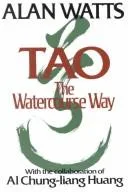
Alan Watts and Al Chung-liang Huang's 2019 book *Tao* clarifies the philosophy of naturalness and spontaneity.
Published in 2019, *Tao* by Alan Watts and Al Chung-liang Huang aims to make the core ideas of Taoism accessible. The book explains key concepts like wu wei, or non-action, and the dynamic interplay of Yin and Yang. It seeks to present Taoist philosophy beyond surface-level understandings for a contemporary readership.
The text considers those interested in comparative religion, philosophy, and Eastern spiritual traditions. It speaks to individuals questioning societal norms or seeking a more balanced way of life. Watts, a frequent interpreter of Eastern thought for Western audiences, collaborated with scholar and practitioner Al Chung-liang Huang to ground the work in authentic Taoist arts and mid-to-late 20th-century intellectual currents.
This book engages with Taoism, an ancient Chinese tradition emphasizing living in harmony with the Tao, the natural order of the universe. It draws from a lineage of Western engagement with Eastern thought, particularly Alan Watts' decades of work interpreting these philosophies for a global audience. The collaboration with Al Chung-liang Huang ensures a connection to the practices and scholarship of Taoist arts, situating the work within both philosophical inquiry and lived tradition.
💡 Why Read This Book?
• Gain a practical understanding of wu wei, the principle of effortless action, as explained through the analysis of natural processes, offering a method for navigating life with less resistance. • Explore the dynamic interplay of Yin and Yang, as detailed in the text's examination of the I Ching, providing a framework for understanding complementary forces in the universe and oneself. • Grasp the concept of the 'uncarved block' (Pu), a symbol of original simplicity and naturalness, presented in the book's philosophical discussions, offering a perspective shift away from manufactured complexity.
⭐ Reader Reviews
Honest opinions from readers who have explored this book.
❓ Frequently Asked Questions
What is the primary philosophical concept explored in Alan Watts' 'Tao'?
The primary concept is the Tao itself, the ineffable, fundamental principle underlying the universe, and its manifestation through principles like wu wei (non-action) and the dynamic balance of Yin and Yang.
When was Alan Watts and Al Chung-liang Huang's 'Tao' first published?
The book 'Tao' by Alan Watts and Al Chung-liang Huang was first published in 2019.
How does 'Tao' explain the principle of wu wei?
The book explains wu wei not as idleness, but as a form of effective action that is spontaneous, natural, and in harmony with the flow of events, much like water flowing around obstacles.
What is the significance of the I Ching within the context of this book?
The I Ching is presented as a practical application and illustration of Taoist principles, demonstrating the cyclical nature of change and the balance of opposing forces (Yin and Yang) in human affairs and the cosmos.
Is 'Tao' suitable for beginners to Eastern philosophy?
Yes, while the concepts are profound, Watts and Huang aim for clarity, making it accessible for beginners interested in understanding the core tenets of Taoism, though some sections may require careful reading.
What does the 'uncarved block' (Pu) symbolize in Taoism according to this book?
The 'uncarved block' (Pu) symbolizes original simplicity, naturalness, and the state of things before they are shaped by human artifice or societal conditioning, representing pure potential.
🔮 Key Themes & Symbolism
The Ineffable Tao
The book grapples with the fundamental concept of the Tao, the ultimate reality or Way that underpins all existence. It emphasizes that the Tao cannot be fully defined or comprehended by rational thought alone, but must be experienced. The text illustrates its elusive nature through paradoxes and analogies, drawing parallels to the unpredictable flow of nature and the inherent order within apparent chaos. Understanding the Tao is presented as a path to living in harmony with the universe.
Wu Wei: Effortless Action
Wu wei, often translated as 'non-action' or 'effortless action,' is a core part of Taoist practice explored in depth. It is not about passivity but about acting in accordance with the natural course of things, without forcing outcomes. The book uses examples from nature, such as water finding its path, to illustrate how aligned action achieves more with less strain. This concept offers a radical alternative to the Western emphasis on constant striving and control.
Yin and Yang Dynamics
The complementary forces of Yin and Yang are presented as essential to understanding the Taoist worldview. This duality is not seen as a conflict but as a harmonious, interdependent relationship that drives change and balance in the cosmos. The text explores how recognizing and integrating these opposing forces—such as light and dark, active and passive—leads to a more holistic perception of reality and a more balanced life.
Naturalness and Spontaneity
Central to the Taoist ethos is the embrace of naturalness (Tzu-jan) and spontaneity. The book critiques artificiality and societal conditioning, advocating for a return to one's innate nature. By observing the uncorrupted patterns of the natural world, practitioners can cultivate a state of being that is authentic and free-flowing. This theme underscores the importance of intuition and living in the present moment.
💬 Memorable Quotes
Direct passages from the work, attributed to the author.
“The Tao that can be told is not the eternal Tao.”
— This iconic opening statement highlights the ineffable nature of the Tao. It suggests that any attempt to articulate or define the ultimate reality through language will inevitably fall short, as the Tao transcends conceptualization and exists beyond the limitations of human expression.
“To the mind that is still, the whole universe surrenders.”
— This concept speaks to the power of stillness and mental quietude in Taoist practice. It implies that by calming the incessant chatter of the mind, one can achieve a state of receptivity where the natural order of the universe becomes apparent and accessible.
“Nature does not hurry, yet everything is accomplished.”
— This observation underscores the principle of wu wei. It contrasts the frantic pace of human endeavor with the steady, unforced progression of natural processes, suggesting that true effectiveness lies in working with, rather than against, the inherent rhythms of existence.
“Simplicity, patience, compassion. Simplicity in your actions and thoughts. Patience with yourself and others. Compassion for all beings.”
— This distillation of Taoist virtues emphasizes a way of life that is unadorned, enduring, and empathetic. It suggests that by cultivating these qualities, one aligns more closely with the natural flow of the Tao, leading to a more peaceful and integrated existence.
“The world is maintained by the one who does not interfere.”
— This statement directly addresses the core of wu wei, illustrating how non-interference allows for natural order to prevail. It suggests that attempting to control or manipulate events often leads to disruption, whereas allowing things to unfold naturally preserves balance.
🌙 Esoteric Significance
Tradition
While not strictly adhering to a single lineage, *Tao* by Watts and Huang engages deeply with the philosophical and practical dimensions of Taoism, a tradition with ancient roots in China. It touches upon concepts found in the Tao Te Ching and the I Ching, often interpreted through a lens that appeals to broader esoteric interests in natural law, cosmic harmony, and inner transformation. It fits within the broader category of perennial philosophy, seeking universal truths across diverse traditions, and serves as a bridge for Western esoteric practitioners to understand Eastern mystical thought.
Symbolism
The book frequently utilizes the symbol of water to represent the Tao – fluid, adaptable, and powerful in its yielding. The Yin and Yang symbols are crucial, illustrating the interdependent duality that governs all phenomena, from the cosmic to the personal. The 'uncarved block' (Pu) is another significant motif, symbolizing original nature, simplicity, and the potential that exists before external conditioning or manipulation shapes it.
Modern Relevance
Contemporary thinkers and practitioners in fields like mindfulness, positive psychology, and ecological philosophy draw upon the principles articulated in *Tao*. The emphasis on naturalness, non-interference (wu wei), and living in harmony with one's environment offers a potent counter-narrative to modern consumerism and technological alienation. Concepts explored here continue to inform self-help literature, leadership studies focusing on 'leading by not leading,' and the ongoing search for sustainable and balanced ways of living.
👥 Who Should Read This Book
• Individuals grappling with stress and burnout: This book offers an alternative framework to constant striving, presenting wu wei as a path to greater efficacy with less effort. • Students of comparative religion and philosophy: It provides clear explanations of core Taoist concepts, contextualizing them within Eastern thought and contrasting them with Western perspectives. • Seekers of personal growth and mindfulness: Readers looking for practical wisdom to cultivate inner peace and a more harmonious relationship with the world will find valuable insights into natural living.
📜 Historical Context
Alan Watts' engagement with Taoism gained significant traction in the mid-20th century, a period marked by a growing Western interest in Eastern philosophies. His work, including *Tao*, published posthumously in 2019 but building on decades of lectures and writings, arrived during a cultural moment where figures like Timothy Leary and the Beat Generation were exploring alternative spiritualities. Watts positioned himself as an interpreter, translating complex concepts from Zen Buddhism and Taoism for an audience often unfamiliar with these traditions. His approach stood in contrast to more academic or rigidly doctrinal studies, offering a more experiential and psychologically attuned perspective. While competing schools of thought like Transcendentalism had previously explored Eastern ideas, Watts' specific focus on the practical implications of Taoist thought for everyday Western life was distinctive. His accessible style, though sometimes criticized by purists, allowed Taoist principles to enter mainstream discourse, influencing counter-culture movements and subsequent generations of spiritual seekers.
📔 Journal Prompts
The Tao's relationship with the uncarved block (Pu).
Contrasting the 'hurry' of human activity with nature's accomplishments.
Identifying instances of wu wei in daily life.
The dynamic balance of Yin and Yang in personal experiences.
Reflecting on the essence of 'naturalness' beyond societal constructs.
🗂️ Glossary
Tao (Dao)
The fundamental principle of the universe in Taoism; the 'Way.' It is considered ineffable, the source and pattern of everything that exists, beyond rational comprehension but discoverable through experience.
Wu Wei
Literally 'non-action' or 'effortless action.' It signifies acting in accordance with the natural flow of things, without force or excessive striving, achieving results through spontaneity and alignment.
Yin and Yang
Two complementary, interdependent forces or principles that underlie all phenomena in the universe. Yin represents passive, dark, feminine qualities, while Yang represents active, light, masculine qualities.
Pu (The Uncarved Block)
A symbol representing the original state of nature, simplicity, and potential before being shaped by external forces, artifice, or societal conditioning. It signifies authenticity and purity.
Tzu-ran
Naturalness; the state of being as it is, spontaneous and self-so. It implies living in accordance with one's innate nature and the rhythms of the universe.
I Ching
The 'Book of Changes,' an ancient Chinese divination text and philosophical classic that explores the principles of change through hexagrams, representing the dynamic interplay of Yin and Yang.
Chuang Tzu (Zhuangzi)
An influential Taoist philosopher (c. 369–286 BCE) whose writings are second only to the Tao Te Ching in importance. His work is known for its paradoxical stories and emphasis on relativity and freedom.
🔮 Readers Also Liked
Browse all →








More by Alan Watts, Al Chung-liang Huang
All books →
More Free Occult Philosophy Books
View all →