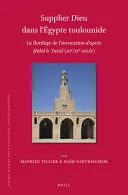
Supplier Dieu Dans L'Égypte Toulounide
 75
75

Supplier Dieu Dans L'Égypte Toulounide
Mathieu Tillier and Naïm Vanthieghem's meticulous edition of Supplier Dieu Dans L'Égypte Toulounide offers a focused examination of a singular devotional text. The strength of this work lies in its precise scholarly apparatus, providing an accessible translation and contextualization for a manuscript that might otherwise remain obscure to non-specialists. The detailed study illuminates the teaching of traditional sciences and the intricate network of knowledge transmitters in 9th-century Egypt, a period ripe for re-examination. A point of limitation might be the highly specialized nature of the source material, which could present a steep learning curve for those unfamiliar with medieval Islamic manuscript traditions. The section detailing the religious policy of the Tulunids, specifically concerning the interplay between state authority and popular devotion, is particularly compelling, demonstrating how such texts functioned within broader socio-political currents. This is an essential resource for specialists in medieval Islamic studies and manuscript culture.
📝 Description
75
A medieval Arabic booklet from 880-881 CE is presented with translation and study.
This volume offers an edition, translation, and scholarly analysis of a medieval Arabic booklet focused on supplications to God. Dated to 267 AH (880-881 CE), the manuscript serves as primary source material for understanding devotional practices and theological discourse in Tulunid Egypt. The work is intended for scholars of Islamic history, religious studies, and manuscript studies, as well as those interested in the intellectual history of the medieval Islamic world. Readers interested in devotional literature and its historical context will find the detailed examination valuable.
The booklet originates from the Tulunid period in Egypt, a time of notable political and cultural change. This era influenced administrative and religious policies, impacting the intellectual currents of the time. The manuscript's existence and content offer insight into the educational systems and scholarly networks active in medieval Egypt, detailing the dissemination of religious texts and teachings. The core of the work concerns divine supplication (du'a) within a specific historical and theological setting, examining how religious knowledge circulated through identifiable scholarly circles.
While not strictly gnostic, this work engages with the devotional and theological dimensions of Islam during a formative period. The focus on personal supplication (du'a) touches upon the individual's relationship with the divine, a theme present in various esoteric traditions that emphasize direct spiritual experience over purely ritualistic or legalistic observance. The study illuminates how such personal piety was articulated and transmitted within specific scholarly circles, reflecting a broader interest in the inner life and spiritual transmission found across different religious expressions.
💡 Why Read This Book?
• Gain an understanding of devotional practices in 9th-century Egypt, specifically through the detailed analysis of supplications presented in the 267 AH (880-881 CE) booklet. • Uncover the methods and networks involved in teaching traditional sciences during the Tulunid period, as revealed by the study of manuscript transmission. • Explore the specific religious policies of the Tulunids and their impact on devotional literature, offering a unique perspective on medieval Egyptian governance.
⭐ Reader Reviews
Honest opinions from readers who have explored this book.
❓ Frequently Asked Questions
What is the original language of the booklet studied in Supplier Dieu Dans L'Égypte Toulounide?
The original booklet is written in Arabic. The work by Tillier and Vanthieghem provides both an edition of the Arabic text and an English translation.
When was the manuscript analyzed in this book originally dated?
The manuscript discussed in Supplier Dieu Dans L'Égypte Toulounide is dated to 267 AH, which corresponds to the Gregorian calendar year 880-881 CE.
Who were the Tulunids mentioned in the book's context?
The Tulunids were a dynasty of Turkic origin who ruled Egypt and Syria from 868 to 905 CE, establishing a period of relative independence from the Abbasid Caliphate.
What does the term 'supplications' refer to in the context of this book?
Supplications, or du'a in Arabic, are informal prayers or requests directed to God. This book examines a specific collection of such supplications from medieval Egypt.
What academic disciplines would benefit most from reading Supplier Dieu Dans L'Égypte Toulounide?
Scholars and students of Islamic history, manuscript studies, religious studies, Middle Eastern history, and medieval intellectual history would find this work particularly relevant.
Does the book discuss the transmission of knowledge in medieval Egypt?
Yes, a central aspect of the study is to shed light on the little-known circles of transmitters and how traditional sciences were taught in Medieval Egypt.
🔮 Key Themes & Symbolism
Medieval Devotional Literature
The work centers on a booklet of supplications to God, offering a direct glimpse into the prayerful life and theological concerns of individuals in 9th-century Egypt. It moves beyond abstract theological concepts to showcase the practical application of faith through personal pleas and invocations. By examining this specific text, the authors illuminate the style, content, and purpose of devotional literature during the Tulunid era, highlighting its role in the spiritual lives of the populace and its connection to established religious sciences.
Manuscript Transmission and Scholarship
Supplier Dieu Dans L'Égypte Toulounide looks at the complex processes by which religious knowledge was transmitted and preserved. The study focuses on identifying specific circles of scholars and scribes responsible for creating and disseminating the booklet. This exploration sheds light on the intellectual networks and pedagogical methods prevalent in Medieval Egypt, revealing how texts were copied, studied, and passed down through generations, often through less documented scholarly lineages.
Tulunid Religious Policy
The booklet's context within the Tulunid period (circa 868-905 CE) allows for an examination of the religious policies and atmosphere fostered by this dynasty. The authors investigate how the ruling administration's approach to religion may have influenced the production and circulation of devotional texts. Understanding these policies is crucial for appreciating the broader socio-political landscape in which the supplication booklet was created and utilized, offering insights into the relationship between state power and religious expression.
Traditional Sciences in Medieval Egypt
Beyond its focus on supplications, the work provides valuable information regarding the teaching of 'traditional sciences' in Medieval Egypt. This encompasses a range of Islamic scholarly disciplines. By analyzing the context and content of the booklet, the authors offer evidence of the curriculum and educational priorities of the time, demonstrating how religious texts like this were integrated into the broader framework of Islamic scholarship and learning.
💬 Memorable Quotes
Direct passages from the work, attributed to the author.
“The booklet is dedicated to supplications to God.”
— This concise statement frames the core subject matter, emphasizing the devotional and prayerful nature of the text under analysis. It highlights the focus on direct communication with the divine within the specific historical context of 9th-century Egypt.
“This manuscript sheds light on the way traditional sciences were taught in Medieval Egypt.”
— This highlights the text's value beyond its devotional content, positioning it as a source for understanding the pedagogical methods and curriculum of Islamic scholarship during the Tulunid era.
“It illuminates little known circles of transmitters.”
— This points to the manuscript's significance in uncovering the identities and roles of scholars and scribes who played a crucial part in the preservation and dissemination of knowledge, often operating outside major, well-documented institutions.
“The work addresses the religious policy of the Tulunids.”
— This indicates that the study contextualizes the devotional booklet within the broader political and administrative field of the Tulunid dynasty, exploring how state actions might have influenced religious expression and practice.
“Dated 267 AH / 880-881 CE.”
— This precise dating anchors the manuscript in a specific historical moment, allowing for detailed analysis of its content in relation to the known socio-political and intellectual currents of the late 9th century in Egypt.
🌙 Esoteric Significance
Tradition
While the booklet itself is rooted in mainstream Islamic devotional practice (du'a), its study within this scholarly edition can illuminate esoteric dimensions often present within Sufi traditions or mystical interpretations of prayer. The focus on specific circles of transmitters and the transmission of 'traditional sciences' hints at lineages of knowledge that could carry both exoteric and esoteric elements, characteristic of many Islamic mystical paths.
Symbolism
The primary symbolism resides in the act of supplication itself – the direct invocation of the Divine. Specific phrases or divine names within the supplications, though not explicitly detailed in the blurb, would carry profound symbolic weight within Islamic mysticism, representing divine attributes and pathways to spiritual proximity. The manuscript's physical transmission also symbolizes the continuity and preservation of sacred knowledge across generations.
Modern Relevance
Contemporary scholars of Islamic mysticism (Sufism), comparative religion, and manuscript studies find value in this work. Practitioners seeking to understand the historical roots of Islamic prayer forms and the transmission of spiritual knowledge may also draw insights. The study's focus on textual transmission and historical context appeals to modern critical approaches to religious texts and their evolution.
👥 Who Should Read This Book
['• Scholars of Islamic History: Gain deeper insights into the Tulunid period, religious practices, and intellectual networks in 9th-century Egypt through primary source analysis.', '• Manuscript Studies Specialists: Benefit from the detailed edition, translation, and study of a specific medieval Arabic manuscript, contributing to the understanding of textual transmission.', '• Researchers of Comparative Religion: Explore the nuances of Islamic devotional literature and its historical context, offering comparative perspectives on prayer and religious expression across traditions.']
📜 Historical Context
Supplier Dieu Dans L'Égypte Toulounide emerges from the vibrant intellectual milieu of 9th-century Egypt, specifically during the Tulunid period (868-905 CE). This era marked a significant phase of regional autonomy from the Abbasid Caliphate, fostering distinct administrative and cultural developments. The booklet itself, dated 267 AH (880-881 CE), provides a tangible link to the religious and scholarly practices of this time. The work explores the transmission of traditional Islamic sciences, a field dominated by various schools of thought and pedagogical approaches. Notably, the study highlights lesser-known scholarly circles, suggesting a more complex network of knowledge dissemination than previously understood. While direct engagement with competing schools of thought isn't the primary focus, the text implicitly situates itself within the broader field of Islamic jurisprudence and theology prevalent at the time. The reception of such specific devotional texts often occurred within localized scholarly communities rather than through widespread public discourse or official channels, making the identification of these 'transmitters' particularly valuable.
📔 Journal Prompts
The methodology for teaching traditional sciences in Medieval Egypt as presented in this study.
The role of obscure circles of transmitters in preserving religious knowledge.
The specific nature of supplications to God within the Tulunid religious policy.
How the 267 AH dating influences the interpretation of the booklet's content.
The function of devotional booklets within the broader field of Islamic scholarship.
🗂️ Glossary
Supplications (Du'a)
In Islam, informal prayers or personal pleas directed to God, distinct from the ritualistic, obligatory prayers (Salat). This booklet focuses on a collection of such personal invocations.
Tulunid Period
The era during which the Tulunid dynasty ruled Egypt and parts of Syria, approximately from 868 to 905 CE. This period was characterized by significant administrative and cultural developments.
Traditional Sciences (Ulum al-Din)
Refers to the established body of Islamic religious knowledge, including theology, jurisprudence, Quranic exegesis, hadith studies, and Arabic language, which formed the core curriculum in medieval Islamic scholarship.
Transmitters
Individuals, often scholars or scribes, responsible for copying, teaching, and passing down texts and knowledge through generations within an intellectual lineage.
Manuscript
A document written by hand, typically ancient or medieval. This study focuses on the critical edition and analysis of a specific Arabic manuscript.
267 AH
An Islamic calendar date corresponding to 880-881 CE. This precise dating is crucial for contextualizing the manuscript within the specific historical and political field of the Tulunid era.
Edition
In textual studies, the process of preparing a text for publication, involving collation of manuscripts, correction of errors, and presentation of the finalized version, often with scholarly commentary.