I Ching 2015
 61
61

I Ching 2015



Celeste Moreau, Divination & Symbolism Reviewer — Robert Trainor's 'I Ching 2015' is a luminous beacon for anyone seeking to engage with the profound esoteric insights of the Book of Changes. Trainor masterfully deciphers the complex symbolism, presenting the hexagrams not as static predictions but as dynamic archetypes of transformation. His interpretation resonates with a deep understanding of Taoist philosophy and occult principles, making this edition an invaluable resource for serious practitioners and curious minds alike. The clarity of his prose, coupled with the evocative explanations, ensures that the ancient wisdom feels both accessible and profoundly relevant. This is not just a translation; it is a spiritual exploration, offering a pathway to self-discovery and cosmic alignment for the discerning reader.
📝 Description
61
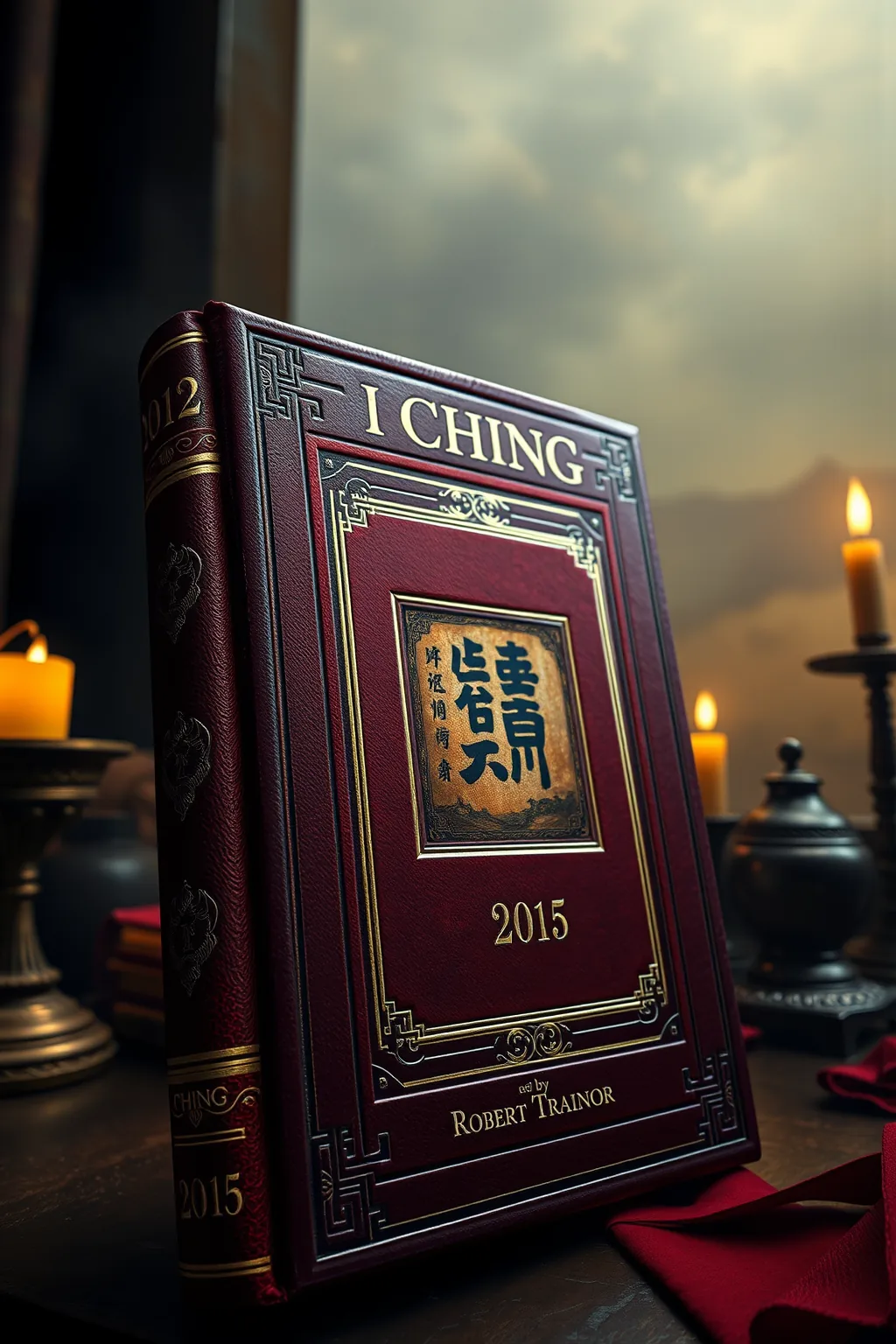
Robert Trainor's 'I Ching 2015' was published in 2015.
Robert Trainor's 'I Ching 2015' provides a modern look at the classic Chinese divination text. It moves beyond simple translation to explain the symbolism and philosophy within the Book of Changes. Trainor focuses on the esoteric aspects of the I Ching, showing how it functions as a tool for divination and a guide to life's patterns. The book treats each hexagram as a source of insight into the balance of yin and yang, and how these forces shape personal and universal events.
This work is for individuals seeking greater understanding and a connection to the unseen forces around them. 'I Ching 2015' creates a quiet space for reflection, where the ancient text's wisdom can be accessed. It encourages readers to interact with this long-standing tradition, learn about change, and find internal balance despite life's constant flux. The edition aims to help practitioners, academics, and those on a spiritual path understand the philosophical weight and practical uses of this ancient oracle.
This edition situates the I Ching within its historical role as a central text in Chinese esoteric traditions, including Taoism and various forms of folk religion and divination. It acknowledges the I Ching's use not only as a philosophical text but as a complex system for understanding cosmic patterns and individual destiny through its hexagrams. Trainor's work connects these ancient practices to contemporary spiritual inquiry, highlighting the text's enduring relevance for those interested in methods of self-reflection and insight beyond conventional Western thought.
💡 Why Read This Book?
Discover the timeless wisdom of the I Ching, revealed anew for the 21st century. 'I Ching 2015' offers profound esoteric interpretations, unlocking hidden layers of symbolism and philosophical insight. Ideal for spiritual seekers, occult scholars, and divination practitioners, this book provides a powerful tool for self-understanding, decision-making, and navigating life's intricate currents with wisdom and clarity. Read this to connect with an ancient oracle and illuminate your path.
⭐ Reader Reviews
Honest opinions from readers who have explored this book.
❓ Frequently Asked Questions
What is the core philosophy behind the I Ching?
The I Ching is rooted in Taoist philosophy, emphasizing the dynamic interplay of yin (passive, feminine) and yang (active, masculine) forces. It posits that change is the fundamental nature of reality, and understanding these cyclical patterns allows for harmonious living and wise decision-making.
How does 'I Ching 2015' differ from other translations?
Robert Trainor's edition goes beyond literal translation to delve into the esoteric and symbolic dimensions, offering profound interpretations for modern spiritual seekers and practitioners of occult arts. It emphasizes the living, transformative nature of the oracle.
Is prior knowledge of the I Ching required to read this book?
While prior familiarity can enhance the experience, 'I Ching 2015' is structured to be accessible to newcomers. Trainor's clear explanations and evocative language guide readers into the core concepts, making it a rewarding entry point.
What are the practical applications of the I Ching?
The I Ching serves as a powerful divinatory tool for guidance, introspection, and decision-making. It helps to illuminate potential outcomes, understand underlying energies, and suggest the most harmonious course of action in various life situations.
What makes this edition suitable for esoteric study?
Trainor's work focuses on the symbolic language, archetypal meanings, and philosophical underpinnings that resonate with esoteric traditions. It encourages a deeper, intuitive understanding of the hexagrams as keys to cosmic principles and personal transformation.
🔮 Key Themes & Symbolism
The Cosmic Dance of Yin and Yang
This theme explores the fundamental Taoist principle of yin and yang as the creative forces governing all existence. Trainor's interpretation reveals how their dynamic interplay shapes the hexagrams, representing the constant flux and transformation within the universe and the human psyche. Understanding this duality is key to navigating life's challenges and opportunities with balance and insight, recognizing the inherent unity within apparent opposition.
Archetypal Symbolism and Transformation
The I Ching's power lies in its archetypal imagery, which transcends cultural and temporal boundaries. 'I Ching 2015' explores the profound symbolic language of each hexagram, presenting them as potent metaphors for the stages of human experience and spiritual evolution. Trainor illuminates how these archetypes serve as mirrors for our inner world, guiding us through cycles of growth, crisis, and renewal, fostering profound personal transformation.
Divination as a Path to Self-Knowledge
Beyond mere fortune-telling, the I Ching is presented as a sophisticated oracle for introspection and self-discovery. This theme highlights how consulting the 'Book of Changes' provides a framework for understanding the subtle energies at play in any situation, offering guidance not as rigid pronouncements, but as clear insights into potential paths. Trainor emphasizes its role in cultivating wisdom, fostering conscious decision-making, and aligning oneself with the natural flow of destiny.
💬 Memorable Quotes
Direct passages from the work, attributed to the author.
“Within the lines, the universe whispers its secrets.”
— This evocative phrase highlights the profound depth and hidden knowledge contained within the I Ching's structure, portraying it as a sacred text capable of revealing cosmic truths to the attuned reader.
“Change is the only constant; wisdom lies in embracing its flow.”
— This expresses the core philosophical tenet of the I Ching, advocating for acceptance and skillful navigation of life's inevitable transformations rather than resistance.
“The oracle serves as a mirror to the soul's deepest queries.”
— This interpretation underscores the I Ching's function as a tool for introspection, reflecting one's inner state and guiding them towards self-understanding and clarity.
💡 Key Ideas
Editorial paraphrase of the work's core concepts — not direct quotes.
The hexagrams are not static pronouncements, but living currents.
This quote emphasizes the dynamic and fluid nature of the I Ching's wisdom, suggesting that its insights are not fixed predictions but rather guiding energies that respond to context and conscious engagement.
Harmony is found not in stillness, but in balanced movement.
This quote speaks to the active, dynamic nature of achieving inner peace, suggesting that true harmony comes from skillfully adapting to and participating in the ongoing processes of life.
🌙 Esoteric Significance
Tradition
The I Ching is intrinsically linked to Taoist philosophy, a major strand of Chinese esoteric thought. It embodies principles of cosmic harmony, the cyclical nature of existence, and the balance of opposing forces (yin and yang). Its study is central to understanding traditional Chinese cosmology and its mystical underpinnings, offering a framework for aligning human actions with universal laws.
Symbolism
The core symbolism revolves around the 64 hexagrams, each composed of six lines representing combinations of yin and yang. These visual and conceptual structures are rich with archetypal imagery drawn from nature and human experience, acting as potent symbols of universal principles, stages of development, and potential outcomes. The trigrams (three-line combinations) are foundational, representing Heaven, Earth, Fire, Water, Mountain, Lake, Wind, and Thunder.
Modern Relevance
In the modern era, the I Ching continues to be profoundly relevant as a tool for mindfulness, decision-making, and understanding complex life transitions. Its emphasis on change, adaptability, and the interconnectedness of all things resonates deeply with contemporary anxieties and aspirations. Esotericists find in it a powerful system for personal growth, spiritual exploration, and psychological insight, offering timeless guidance for navigating an ever-evolving world.
👥 Who Should Read This Book
This edition of the I Ching is a treasure for a wide spectrum of readers. For the **beginner** seeking an accessible yet profound introduction to ancient wisdom, Trainor's clear prose and evocative explanations provide an inviting gateway. **Scholars** of Eastern philosophy, comparative religion, and esoteric traditions will appreciate the depth of interpretation and the focus on symbolic nuances. **Spiritual seekers** yearning for a deeper connection to universal patterns and a tool for self-discovery will find invaluable guidance. **Practitioners** of divination, occult arts, and those interested in Jungian psychology will discover a rich resource for enhancing their understanding and application of archetypal energies and transformative wisdom.
📜 Historical Context
The I Ching, or Book of Changes, boasts a lineage stretching back thousands of years, making it one of the oldest continuously used oracular texts in the world. Its origins are shrouded in legend, attributed to figures like Fu Xi, King Wen, and Confucius. Throughout Chinese history, it served as a central to philosophy, divination, governance, and personal guidance, deeply influencing Taoism, Confucianism, and traditional Chinese thought. Its transmission to the West in the 19th and 20th centuries, notably through scholars like Richard Wilhelm, sparked a profound interest among Western esotericists, psychologists (like Carl Jung), and philosophers. 'I Ching 2015' emerges within this wide range, a modern interpretation seeking to bridge the ancient wisdom with contemporary consciousness, reflecting an ongoing global fascination with its profound symbolic language and divinatory power in an era seeking deeper meaning and connection.
📔 Journal Prompts
Reflect on a recent significant change in your life. Which hexagrams might symbolize this transition, and what lessons does the I Ching offer?
Consider a current dilemma. How would consulting the I Ching provide a different perspective on the situation?
Explore the concept of 'balanced movement' in your daily life. Where can you apply this principle to foster greater harmony?
Identify a personal archetype you feel strongly connected to. How does its symbolism resonate with your current life path?
How can understanding the interplay of yin and yang inform your approach to challenges and opportunities?
🗂️ Glossary
Hexagram
A figure composed of six stacked horizontal lines, representing a specific combination of yin (broken) and yang (solid) lines, forming one of the 64 fundamental archetypes of the I Ching.
Trigram
A figure composed of three stacked lines, representing eight fundamental elemental forces or archetypes (e.g., Heaven, Earth, Water, Fire).
Yin
The passive, receptive, feminine principle in Taoist philosophy, often associated with darkness, coolness, and the moon. Represented by a broken line (--) in the I Ching.
Yang
The active, creative, masculine principle in Taoist philosophy, often associated with light, warmth, and the sun. Represented by a solid line (—) in the I Ching.
Tao
The fundamental principle of the universe in Taoism; the 'Way' or 'Path' that governs all existence, emphasizing naturalness, spontaneity, and effortless action (wu wei).
This book appears in 3 collections
🔮 Readers Also Liked
Browse all →









From the “Tarot” Collection
View all →






More Free Divination & Tarot Books
View all →