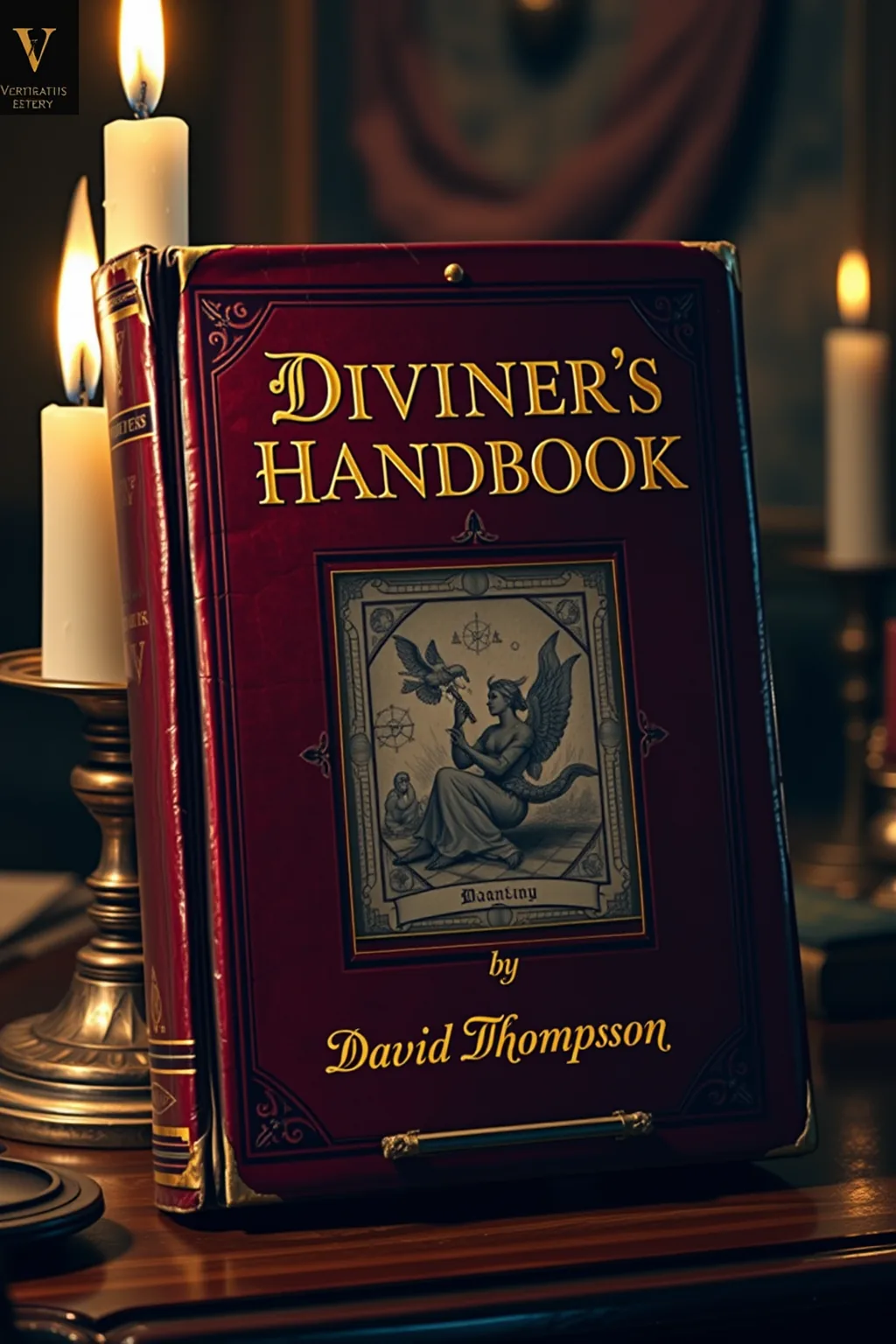
Diviner's Handbook
 62
62

Diviner's Handbook



Cassian Rothmann, Senior Critic, Ancient Wisdom — David Thompson’s 'Diviner's Handbook' stands as a monumental contribution to the esoteric canon. With an authoritative yet accessible voice, Thompson demystifies the complex art of divination, offering profound insights into its spiritual and psychological dimensions. This work is distinguished by its meticulous attention to symbolic interpretation and its deep respect for the divinatory traditions it explores. It transcends simple 'how-to' instruction, instead fostering a genuine connection with the subtle energies that inform our lives. The handbook is an indispensable resource for anyone seeking to deepen their understanding of fate, intuition, and the perennial quest for meaning. Its blend of scholarly rigor and spiritual depth makes it a treasure for both neophytes and seasoned practitioners.
📝 Description
62
David Thompson's 'Diviner's Handbook' was published in 2003, detailing the practice of divination.
David Thompson's 'Diviner's Handbook' examines the ancient art of divination. The book presents divination not just as a predictive tool, but as a method for understanding cosmic connections and personal intuition. Thompson deciphers symbolic languages used in divination, guiding readers to explore the relationship between fate and individual choice. The text aims to connect readers with the forces that shape reality, drawing parallels to ancient oracular traditions and mystic sites. It is written for those interested in foretelling, covering its philosophical basis for beginners and experienced practitioners alike. The handbook encourages engagement with mysteries, attention to celestial patterns, and comprehension of the interplay between current knowledge and future events. It seeks to shift perception from the mundane to the possibilities revealed through divination.
This handbook is situated within the Western esoteric tradition, specifically focusing on practices related to divination. It draws upon concepts found in various historical and contemporary systems, such as astrology, tarot, and other forms of scrying or prophecy. The text treats divination as a means to access deeper levels of consciousness and understand universal patterns, aligning with hermetic principles and the idea of correspondence between the microcosm and macrocosm. It approaches these practices as methods for personal growth and spiritual insight, rather than solely as fortune-telling techniques.
💡 Why Read This Book?
Embark on a journey of profound self-discovery and cosmic connection. 'Diviner's Handbook' offers a rare glimpse into the symbolic language of the universe, empowering you to interpret life's intricate patterns. Ideal for spiritual seekers, students of ancient wisdom, and those yearning to enhance their intuitive abilities, this book provides the keys to unlock hidden knowledge and navigate your destiny with newfound clarity and confidence.
⭐ Reader Reviews
Honest opinions from readers who have explored this book.
❓ Frequently Asked Questions
What is the primary focus of 'Diviner's Handbook'?
The book's primary focus is the ancient art of divination, delving into its symbolic language, philosophical underpinnings, and practical application for understanding destiny and intuition.
Is this book suitable for beginners in divination?
Yes, 'Diviner's Handbook' is structured to guide beginners through the foundational principles of divination while also offering depth for experienced practitioners.
What kind of divination techniques are covered?
The handbook explores various divinatory methods, emphasizing the universal principles of symbolic interpretation that can be applied across different systems.
Does the book discuss the spiritual aspects of divination?
Absolutely. A core tenet of the book is the spiritual significance of divination, viewing it as a tool for self-awareness, spiritual growth, and connection with higher consciousness.
Can this handbook help improve intuition?
Indeed. By understanding the symbolic language and archetypal patterns presented, readers can significantly sharpen their intuitive faculties and their ability to perceive subtle energies.
🔮 Key Themes & Symbolism
The Language of Symbols
This book meticulously deciphers the profound symbolic lexicon that underpins all divinatory practices. It posits that the universe communicates through a collection of archetypal imagery, from the celestial movements to the patterns found in everyday objects. Understanding this language is presented not merely as an intellectual exercise, but as a spiritual discipline that bridges the conscious mind with the subconscious, and the personal self with the collective unconscious. Thompson guides readers to perceive the hidden meanings woven into the fabric of existence, revealing how symbols act as keys to unlock deeper truths about ourselves and the cosmos.
Destiny and Free Will
A central philosophical exploration within the 'Diviner's Handbook' concerns the intricate interplay between destiny and free will. The book does not present a deterministic view of fate, but rather a nuanced perspective where divinatory insights reveal potentials, tendencies, and the energetic currents shaping our path. It empowers the reader to understand that while certain paths may be indicated, the ultimate choices and their consequences remain within the area of personal agency. This perspective encourages a proactive engagement with life, using divinatory knowledge as a compass to navigate challenges and opportunities wisely, rather than as a rigid blueprint.
The Awakened Intuition
This handbook is a profound guide to cultivating and trusting one's innate intuitive abilities. Thompson emphasizes that divination is not solely about predicting the future, but about developing a heightened sense of perception and inner knowing. Through practical exercises and insightful explanations, readers are encouraged to move beyond reliance on external tools and tap into the deep wellspring of wisdom residing within. The book fosters an environment where intuition is revered as a sacred faculty, a direct channel to higher consciousness and a vital tool for working through the complexities of life with wisdom and clarity.
💬 Memorable Quotes
Direct passages from the work, attributed to the author.
“Symbolism is the bridge between the seen and the unseen.”
— Highlights the crucial role of symbols as intermediaries, allowing us to comprehend abstract spiritual concepts and hidden realities.
“Fate is a river, but we are the navigators.”
— Emphasizes the balance between predetermined influences and the power of individual choice in shaping one's life journey.
“Intuition is the soul's compass.”
— Positions inner knowing as a primary, divinely-given tool for guidance and discernment in life's myriad paths.
“To divine is to understand the patterns of becoming.”
— Defines divination not just as prediction, but as a clear insights into the unfolding processes of existence and potential futures.
💡 Key Ideas
Editorial paraphrase of the work's core concepts — not direct quotes.
The stars whisper secrets, if only we learn to listen.
This quote captures the book's core message: the universe is constantly communicating, and divination is the art of attuning oneself to this cosmic dialogue.
🌙 Esoteric Significance
Tradition
This work draws heavily from the Western Esoteric Tradition, encompassing Hermeticism, Neoplatonism, and elements of Kabbalistic thought. It views divination not as mere fortune-telling, but as a sacred practice aimed at spiritual illumination, self-knowledge, and alignment with cosmic principles. The emphasis is on understanding the underlying energetic patterns and archetypal forces that govern existence, making it a tool for inner transformation and conscious evolution.
Symbolism
The handbook places immense importance on symbolic interpretation, viewing symbols as the universal language of the divine. Key symbols explored include celestial bodies, archetypal figures, and natural elements, each acting as a nexus of meaning that connects the material world to spiritual realities. The book teaches how to read these symbols not just in divinatory tools, but in the fabric of everyday life, fostering a deeper, more profound understanding of the interconnectedness of all things.
Modern Relevance
In an age often characterized by disconnection and material focus, 'Diviner's Handbook' offers a vital pathway back to inner wisdom and spiritual awareness. Its teachings on intuition, symbolic understanding, and the balance of fate and free will provide essential tools for working through the complexities of modern life. The book empowers individuals to seek meaning beyond the superficial, fostering resilience, clarity, and a profound sense of purpose in their personal and spiritual journeys.
👥 Who Should Read This Book
This comprehensive handbook is a valuable collection for a wide spectrum of individuals. **Beginners** will find it an accessible yet profound introduction to the foundational principles and ethical considerations of divination. **Scholars** of esotericism will appreciate its insightful synthesis of historical traditions and its rigorous approach to symbolic interpretation. **Spiritual seekers** yearning for deeper self-understanding and connection to the divine will discover a guide to unlocking their inner wisdom. **Practitioners** of Tarot, astrology, runes, or other divinatory arts will find it an invaluable resource for refining their skills and deepening their practice, offering new perspectives on interpretation and application.
📜 Historical Context
The 'Diviner's Handbook' emerges from a rich historical lineage of esoteric thought, particularly those flourishing during periods of intense spiritual and philosophical inquiry. While David Thompson's work is contemporary, its roots delve deep into traditions that saw significant development in the late 19th and early 20th centuries, a time when Western esotericism experienced a resurgence. This era witnessed a renewed interest in ancient mystery schools, Hermeticism, Kabbalah, and various forms of folk magic and divination. The book reflects this scholarly yet mystical approach, aiming to synthesize these diverse influences into a coherent framework for understanding the divinatory arts. It stands as a evidence of the enduring human desire to connect with the divine and comprehend the mysteries of existence, drawing upon centuries of accumulated wisdom while offering a fresh perspective for the modern seeker.
📔 Journal Prompts
Reflect on a recent synchronicistic event in your life. How might the principles of symbolic communication apply?
What recurring symbols have you noticed in your dreams or daily life? What might they be trying to convey?
Consider a current challenge you are facing. How would approaching this situation with a divinatory mindset offer new insights?
Explore the concept of 'fate' versus 'free will' in your own life. Where do you feel most influenced by external forces, and where do you exercise your agency?
Meditate on the meaning of a specific archetypal symbol (e.g., The Sun, The Moon, The Serpent). Record your impressions and intuitive connections.
🗂️ Glossary
Archetype
Universal, archaic patterns and images that derive from the collective unconscious and are the psychic counterpart of instinct. They are fundamental patterns of human experience and behavior.
Esoteric
Relating to or accessible only by a small number of people with a specialized knowledge or interest; intended for or understood by a particular group.
Synchronicistic Event
The occurrence of two or more events at the same time in a meaningful manner, without an apparent causal relationship, as described by Carl Jung.
Symbolism
The use of symbols to represent ideas and qualities by giving them symbolic meanings that are different from their literal sense.
Intuition
The ability to understand something immediately, without the need for conscious reasoning; a direct perception of truth or knowledge.
This book appears in 3 collections
🔮 Readers Also Liked
Browse all →








From the “Tarot” Collection
View all →







More Free Divination & Tarot Books
View all →