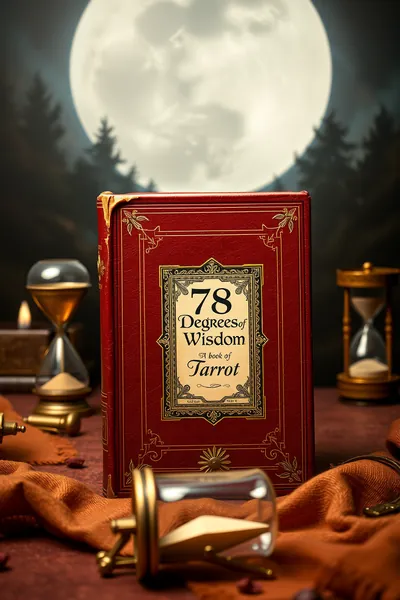
Ultimate Guide to Tarot
 62
62

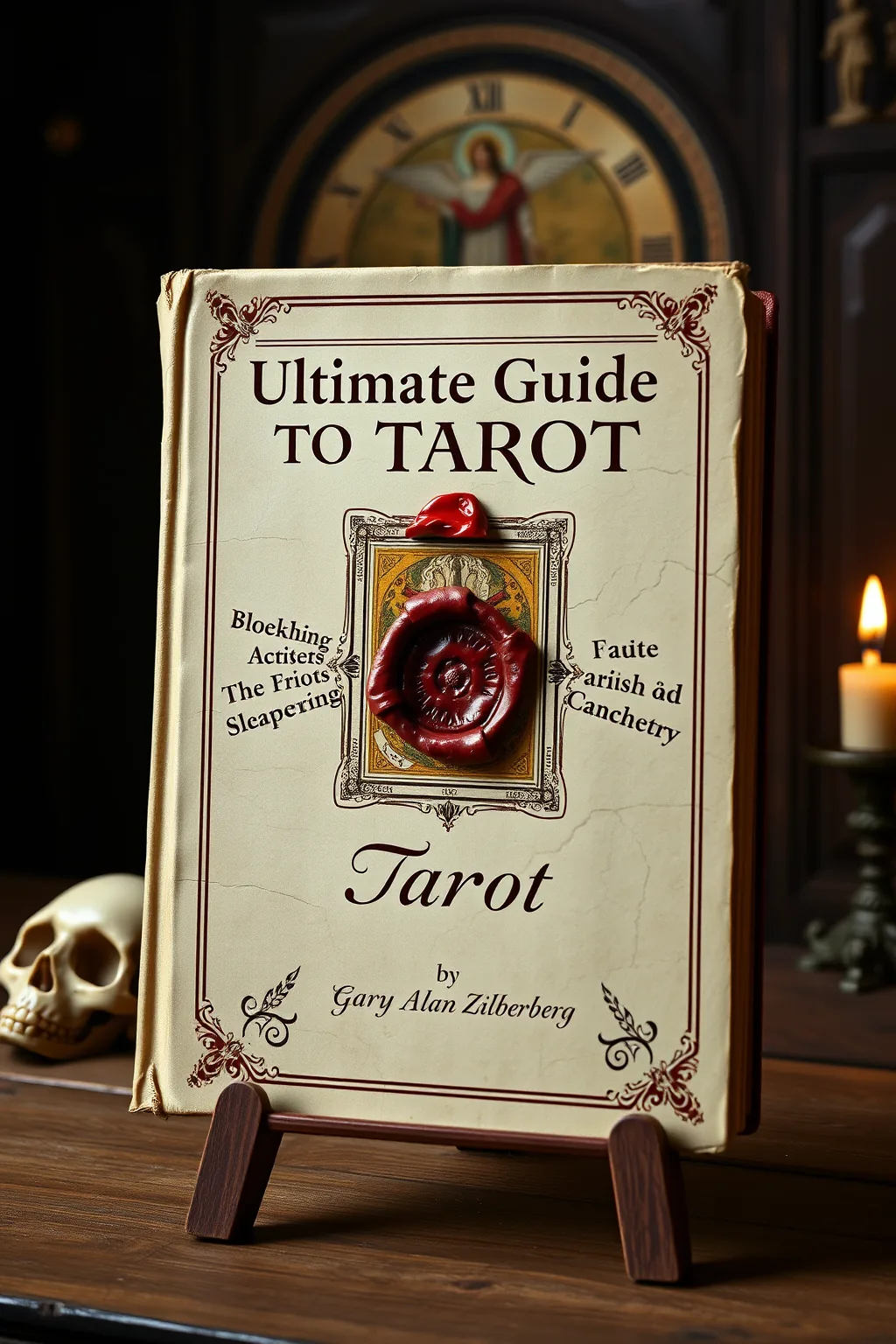
Ultimate Guide to Tarot



Isolde Whitaker, Sacred Texts Editor: Gary Alan Zilberberg's 'Ultimate Guide to Tarot' is a beacon for those seeking authentic esoteric knowledge. Zilberberg's profound understanding of Tarot's mystical lineage shines through, offering insights far beyond superficial interpretations. He masterfully bridges the gap between historical context and practical application, making complex symbolism accessible without sacrificing its depth. This guide is an indispensable companion for serious students of the occult, offering clarity on archetypal energies and empowering readers to forge a potent connection with the cards. It is a testament to the enduring power of Tarot as a sacred art.
📝 Description
62
Gary Alan Zilberberg's 'Ultimate Guide to Tarot' (2007) deciphers the cards' connections to Hermeticism and Kabbalah.
Gary Alan Zilberberg's 'Ultimate Guide to Tarot' examines the symbolism within the Major and Minor Arcana. The book connects this symbolism to Hermeticism, Kabbalah, and archetypal psychology. Zilberberg aims to provide a comprehensive understanding of Tarot as a tool for divination and introspection. The text discusses the philosophical basis of Tarot reading. It also addresses how to hone intuition and achieve self-discovery through the cards. The guide is written for various levels of Tarot practitioners, from beginners to experienced individuals.
The author details the meanings of each card, explaining their place within a larger system of esoteric thought. The book moves beyond simple card meanings to discuss the Tarot's role in understanding the human psyche. Zilberberg's approach emphasizes the practical application of Tarot for personal growth and insight into life's challenges. The goal is to help readers develop their own inner oracle through diligent study and practice.
This guide situates Tarot within Western esoteric traditions, specifically referencing Hermeticism and Kabbalah. These systems often view the Tarot's 78 cards as a symbolic representation of cosmic principles and human consciousness. Hermetic philosophy, originating from texts attributed to Hermes Trismegistus, emphasizes correspondences between the microcosm (human) and the macrocosm (universe). Kabbalah, a Jewish mystical tradition, uses the Tree of Life as a map of creation and spiritual ascent, a structure often paralleled with Tarot spreads. Zilberberg's work connects these traditions to the archetypal psychology of figures like Carl Jung, suggesting the cards reflect universal patterns of the human psyche.
💡 Why Read This Book?
Uncover the esoteric secrets of Tarot, moving beyond simple card meanings to grasp its profound symbolism and philosophical depths. This guide is ideal for spiritual seekers, students of occult traditions, and practitioners eager to deepen their intuitive connection and divination skills. Discover how the Tarot can serve as a powerful mirror to your soul and a compass for navigating life's journey.
⭐ Reader Reviews
Honest opinions from readers who have explored this book.
❓ Frequently Asked Questions
What esoteric traditions influence the Tarot's symbolism?
The Tarot's rich tapestry of symbolism is deeply interwoven with Hermeticism, Kabbalah, Gnosticism, and ancient Egyptian mysteries, reflecting a universal language of spiritual and psychological archetypes.
Is this guide suitable for absolute beginners?
Absolutely. Zilberberg's approach is structured to guide newcomers through the foundational elements of Tarot, building a strong understanding of symbolism and interpretation from the ground up.
How does this guide enhance intuitive reading?
By delving into the archetypal energies and hidden correspondences within each card, the guide cultivates a deeper intuitive resonance, empowering readers to move beyond memorized meanings.
Can the Tarot be used for more than just prediction?
Indeed. This guide emphasizes the Tarot's role as a profound tool for self-reflection, psychological insight, spiritual growth, and understanding the underlying currents of any situation.
What makes this 'Ultimate Guide' stand out?
Its comprehensive scope, meticulous attention to esoteric detail, and Zilberberg's authoritative yet accessible writing style set it apart, offering a complete and profound exploration of the Tarot's mysteries.
🔮 Key Themes & Symbolism
The Archetypal Language of the Soul
This guide examines the Tarot as a profound expression of universal archetypes, the primal patterns of human consciousness. Each card becomes a doorway to understanding the fundamental forces that govern our inner and outer worlds, from the Fool's journey of innocence to the World's completion. Zilberberg illuminates how these archetypes manifest in our lives, offering a rich framework for self-exploration and the recognition of recurring themes in our personal narratives. It's a journey into the collective unconscious, guided by the wisdom of the cards.
Hermetic Principles and Kabbalistic Correspondences
Explore the deep philosophical roots of the Tarot through the lens of Hermeticism and Kabbalah. Zilberberg meticulously details the interconnectedness of the Tarot with these ancient esoteric systems, revealing how the Tree of Life and the principles of 'As Above, So Below' are embedded within the cards. This exploration provides a sophisticated understanding of the numerical, elemental, and planetary associations, transforming the Tarot from a mere divinatory tool into a sacred text of cosmic order and spiritual evolution.
The Art of Intuitive Divination
Beyond rote memorization, this guide cultivates the art of intuitive divination. Zilberberg teaches how to move beyond literal interpretations by connecting with the energetic resonance of each card and the subtle interplay between them in a spread. Emphasis is placed on developing a personal dialogue with the Tarot, fostering a deeper connection to one's inner knowing and the symbolic language of the subconscious. It’s about transforming a reading into a profound act of self-discovery and energetic attunement.
💬 Memorable Quotes
Direct passages from the work, attributed to the author.
“Each card is a whispered secret from the universe.”
— Highlights the Tarot's role as a conduit for cosmic wisdom and hidden knowledge, encouraging an open and receptive approach to its messages.
“The Fool's journey is our own, an endless cycle of potential.”
— Emphasizes the archetypal nature of the Fool card and its representation of new beginnings, courage, and the inherent potential within every life path.
“Symbolism is the language of the divine.”
— Underlines the profound importance of understanding symbolic language as a means to connect with higher consciousness and spiritual truths.
“To read the Tarot is to read the currents of destiny.”
— Positions the Tarot as a powerful tool for discerning the flow of events and understanding the underlying forces shaping our present and future.
💡 Key Ideas
Editorial paraphrase of the work's core concepts — not direct quotes.
The Tarot is a mirror reflecting the soul's deepest truths.
This quote captures the Tarot's primary function as a tool for introspection and self-understanding, revealing hidden aspects of our psyche.
🌙 Esoteric Significance
Tradition
This guide is steeped in the Western Esoteric Tradition, particularly drawing from Hermeticism, Kabbalah, and Neoplatonic thought. It views the Tarot not merely as a divinatory tool but as a microcosm of the universe and a map of the soul's journey towards gnosis and spiritual enlightenment. The emphasis is on understanding the symbolic language as a means to access hidden knowledge and align oneself with cosmic principles.
Symbolism
The esoteric significance lies in its intricate symbolism, where each card represents archetypal forces, cosmic laws, and stages of spiritual development. The Major Arcana depict the soul's grand pilgrimage, while the Minor Arcana illustrate the manifestations of these principles in the material world. Zilberberg deciphers the numerological, elemental, and astrological correspondences, revealing the Tarot as a profound system of universal interconnectedness.
Modern Relevance
In an age often characterized by disconnection and superficiality, the 'Ultimate Guide to Tarot' offers a vital pathway to inner wisdom and self-discovery. Its relevance lies in providing a structured yet intuitive system for navigating personal challenges, understanding psychological dynamics, and fostering spiritual growth. The Tarot serves as an anchor to ancient wisdom, empowering individuals to connect with their intuition and find meaning in the unfolding set of their lives.
👥 Who Should Read This Book
This comprehensive guide is designed for a diverse audience of seekers. Beginners will find a clear and structured entry point into the world of Tarot, with foundational concepts explained accessibly. Scholars of occultism and mythology will appreciate the depth of historical and symbolic analysis, uncovering nuanced connections to esoteric traditions. Spiritual seekers and practitioners of various paths will benefit from its insights into archetypal energies, intuitive development, and the Tarot's potential for personal transformation and divination.
📜 Historical Context
The 'Ultimate Guide to Tarot' emerges from a rich historical range, drawing heavily from the Renaissance revival of esoteric arts and the subsequent flowering of occultism in the 19th and 20th centuries. The Tarot itself, with roots tracing back to 15th-century Italian playing cards, evolved into a complex system of divination and spiritual philosophy during periods of intense intellectual curiosity about ancient mysteries. Figures like Eliphas Lévi, A.E. Waite, and Aleister Crowley were instrumental in codifying its occult interpretations, linking it to Kabbalah, astrology, and Hermetic principles. Zilberberg's work stands on the shoulders of these giants, offering a modern synthesis that acknowledges this lineage while making the profound wisdom of the Tarot accessible to contemporary seekers.
📔 Journal Prompts
Reflect on a recent challenge and identify which Tarot archetype best represents your current state. How can its wisdom guide you?
Consider the Major Arcana as stages of your own life journey. Which card resonates most strongly with your present path?
When you pull a Minor Arcana card, how does its element and suit connect to the practical realities of your daily life?
Explore the concept of 'As Above, So Below' through the lens of a specific Tarot spread. What connections emerge?
How can the symbols on a particular card be reinterpreted to offer a new perspective on a recurring personal issue?
🗂️ Glossary
Arcana
Refers to the divisions within a Tarot deck. The Major Arcana represent significant life events and spiritual lessons, while the Minor Arcana depict everyday experiences and their underlying energies.
Archetype
A universal, archaic symbol or motif that is part of the collective unconscious. In Tarot, archetypes embody fundamental patterns of human experience and consciousness.
Divination
The practice of seeking knowledge of the future or the unknown by supernatural means. In Tarot, it involves interpreting card spreads to gain insight into situations and potential outcomes.
Hermeticism
A philosophical and religious tradition based on the purported teachings of Hermes Trismegistus. It emphasizes the interconnectedness of all things and the pursuit of spiritual wisdom through occult study.
Kabbalah
A system of Jewish mysticism that explores the nature of God and the universe through symbolic interpretation of scripture and the contemplation of the Tree of Life. It profoundly influences Tarot symbolism.
This book appears in 3 collections
🔮 Readers Also Liked
Browse all →
From the “Tarot” Collection
View all →
More Free Divination & Tarot Books
View all →