Study of Palmistry for Professional Purposes
 61
61

Study of Palmistry for Professional Purposes



Isolde Whitaker, Sacred Texts Editor — Comte de Saint-Germain's "Study of Palmistry for Professional Purposes" is a foundational text for any serious student of chiromancy. It masterfully dissects the intricate symbolism of the palm, offering not just predictive techniques but a philosophical framework for understanding human potential and destiny. Saint-Germain's insights into the interplay of planetary influences and hand formations are particularly illuminating. This book is essential for practitioners aiming for a professional, nuanced approach, and for scholars seeking to trace the lineage of divinatory arts. It elevates palmistry from a parlor trick to a profound spiritual discipline.
📝 Description
61
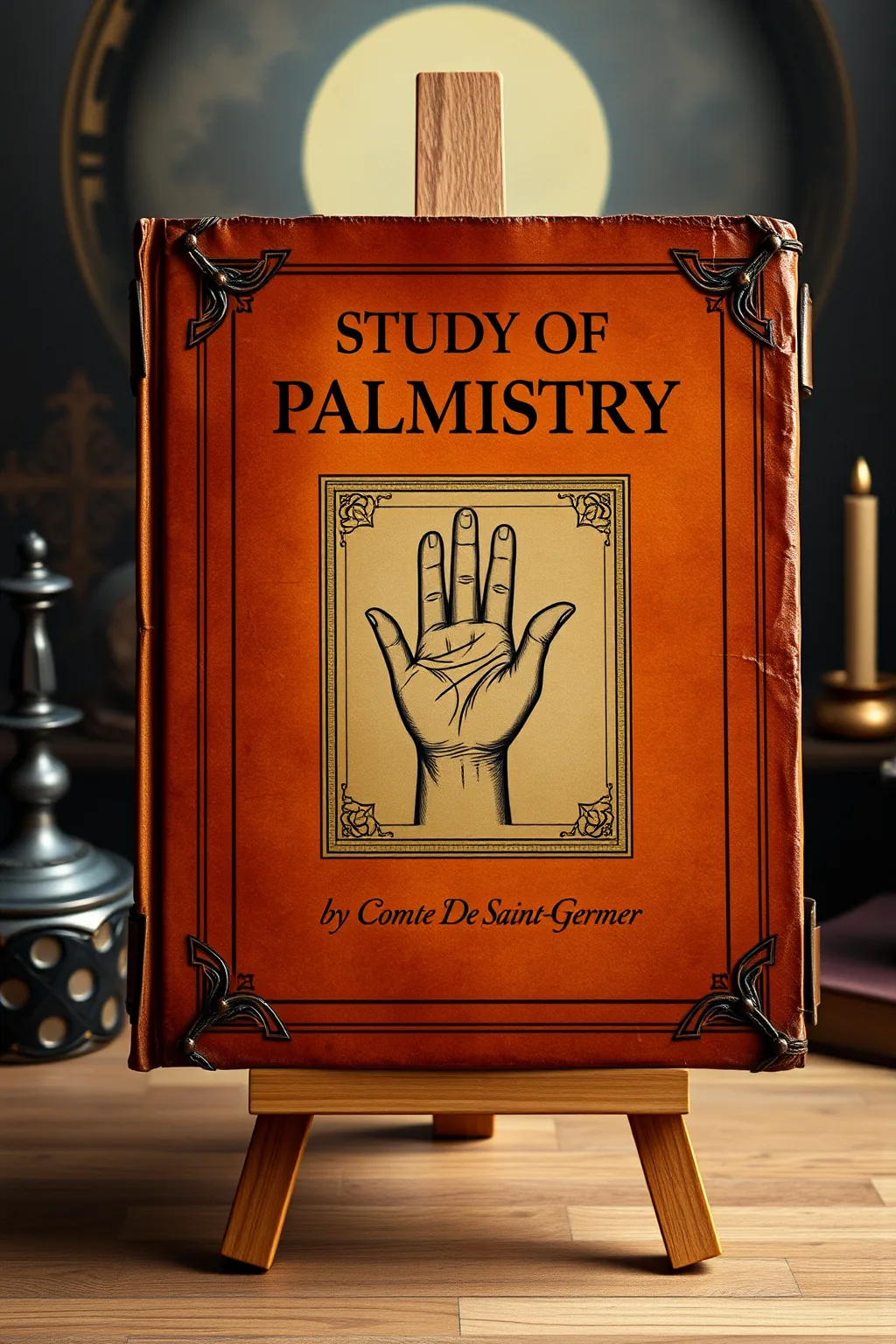
Comte de Saint-Germain's "Study of Palmistry for Professional Purposes" was written for serious practitioners.
This volume by Comte de Saint-Germain approaches palmistry not as simple prediction, but as a system for understanding character and life's subtle currents. The author uses the lines and mounts of the hand as a symbolic language, connecting the individual to the wider universe. Saint-Germain presents a structured method for interpreting these signs, drawing on a rich tradition of esoteric symbolism. The text aims to equip serious students with a comprehensive understanding of this practice. It details how to read the hand for insights into personality and destiny. The book is intended for those dedicated to the study and application of chiromancy. It moves beyond superficial fortune-telling to a more complete system of knowledge.
Saint-Germain, a figure of considerable historical mystique, structures this study to guide the dedicated reader. The work meticulously details the symbolic meanings associated with various hand features. It posits a correspondence between the 'microcosm' of the hand and the 'macrocosm' of the cosmos. This approach offers a framework for self-understanding through the analysis of one's own palm. It is presented as a tool for those wishing to master the art for practical or spiritual purposes. The book seeks to illuminate the deeper connections revealed through this ancient practice.
This work situates itself within the Western esoteric tradition, particularly in its engagement with hermeticism and occult correspondences. Palmistry, or chiromancy, has long been integrated into various esoteric systems, viewed not just as divination but as a symbolic language revealing deeper truths about the individual and the cosmos. Saint-Germain's approach aligns with the hermetic principle of 'as above, so below,' suggesting that the human hand acts as a microcosm reflecting universal patterns and energies. The book draws upon a lineage of occult philosophy that seeks to find meaning and order in the physical world through symbolic interpretation.
💡 Why Read This Book?
Uncover the profound spiritual and psychological insights encoded within your own hands. This book offers a professional-grade understanding of palmistry, bridging ancient wisdom with practical application. Ideal for dedicated seekers, aspiring practitioners, and scholars of occult sciences who wish to deepen their knowledge of divinatory arts and self-understanding through the intricate language of the palm.
⭐ Reader Reviews
Honest opinions from readers who have explored this book.
❓ Frequently Asked Questions
Is this book suitable for absolute beginners?
While comprehensive, the depth of "Study of Palmistry for Professional Purposes" is best suited for those with a foundational interest or a desire for serious study. Beginners may benefit from starting with introductory materials before delving into this advanced work.
What makes this a 'professional' study?
This text emphasizes the diagnostic and characterological aspects of palmistry, moving beyond simple predictions to a nuanced understanding of potential, challenges, and life paths, equipping practitioners with a robust analytical framework.
Does the book discuss different hand types?
Yes, the comprehensive study meticulously details the various hand types and their associated elemental and personality characteristics, providing a cornerstone for accurate interpretation.
Are there illustrations or diagrams?
The original editions are rich with detailed diagrams and illustrations, crucial for understanding the precise markings, mounts, and lines discussed throughout the text. These visual aids are integral to the learning process.
Can palmistry be used for spiritual growth?
Absolutely. Saint-Germain frames palmistry as a tool for self-awareness and spiritual evolution, revealing karmic patterns and latent potentials that can guide one toward a more enlightened existence.
🔮 Key Themes & Symbolism
The Hand as a Cosmic Mirror
This volume posits the palm not merely as a physical appendage but as a divine blueprint, a living map reflecting the soul's journey and its intricate connection to celestial forces. Each line, mount, and subtle marking is presented as a symbol, imbued with cosmic significance and echoing the grand patterns of the universe. The study encourages a perspective where the hand becomes a tangible manifestation of destiny, offering useful insights into the individual's place within the greater cosmic order. It's an invitation to read the universe in miniature, etched upon one's very being.
Symbolism and Esoteric Anatomy
Comte de Saint-Germain meticulously deciphers the profound symbolic language of the palm, viewing its features as an esoteric anatomy of the self. The mounts represent latent spiritual energies and character traits, while the lines delineate the flow of vital forces and karmic pathways. This section studies the ancient understanding of how planetary energies influence specific areas of the hand, revealing a complex system of correspondences. It's a deep dive into the visual lexicon of the soul, where every curve and intersection holds layers of meaning waiting to be uncovered by the discerning practitioner.
Professional Application and Ethical Practice
Beyond mere prediction, this study emphasizes the professional application of palmistry as a tool for guidance, self-understanding, and spiritual development. Saint-Germain outlines methods for interpreting the palm with accuracy and integrity, focusing on how to identify potential challenges, strengths, and life lessons. The work advocates for a responsible and ethical approach, framing palmistry as a sacred trust. It guides the practitioner to use this ancient art not for sensationalism, but as a means to empower individuals, foster personal growth, and illuminate the path toward self-realization.
💬 Memorable Quotes
Direct passages from the work, attributed to the author.
“Each line a whisper of fate, each mount a evidence of spirit.”
— This evocative phrase highlights the dual nature of palmistry – the influence of destiny (lines) and the manifestation of inner strength and potential (mounts).
“To read the palm is to read the cosmos in miniature.”
— This suggests a profound connection between the individual's hand and the universal energies, implying that understanding the hand offers insight into the macrocosm.
“Knowledge of the hand is knowledge of the self.”
— This emphasizes the introspective power of palmistry, positioning it as a primary path to self-awareness and understanding one's own character and destiny.
“The lines are not immutable chains, but pathways of awareness.”
— This offers a hopeful perspective, suggesting that while the palm indicates tendencies, it also highlights areas where conscious choice and awareness can lead to transformation.
💡 Key Ideas
Editorial paraphrase of the work's core concepts — not direct quotes.
The hand is the mirror of the soul's journey.
This quote expresses the core philosophy: the palm is not just flesh, but a divine map reflecting one's inner essence and life's unfolding narrative.
🌙 Esoteric Significance
Tradition
This work deeply draws from the Hermetic and Neoplatonic traditions, viewing the human hand as a microcosm reflecting the macrocosm. It aligns with the ancient belief that the divine order is mirrored in all aspects of creation, including the human form. The interpretation of palm lines and mounts often incorporates astrological correspondences and subtle energy principles, linking chiromancy to a broader understanding of cosmic influences and spiritual evolution.
Symbolism
The palmistry system presented is steeped in strong symbolism. Lines like the Heart, Head, and Life lines are not merely physical features but represent core aspects of human experience: emotion, intellect, and vitality. Mounts named after planets (e.g., Mount of Venus, Mount of Jupiter) symbolize the energies and archetypes associated with those celestial bodies, suggesting how planetary influences manifest in an individual's character and destiny. The intricate interplay of these symbols forms a complex language for understanding the soul's blueprint.
Modern Relevance
In an age seeking deeper self-understanding and meaning, "Study of Palmistry for Professional Purposes" offers a timeless framework for personal growth. Its emphasis on character analysis and potential pathways provides valuable tools for self-awareness, career guidance, and navigating life's challenges. The book's sophisticated approach elevates palmistry beyond simple fortune-telling, making it relevant for modern practitioners and seekers interested in integrating esoteric wisdom with psychological insight and spiritual practice.
👥 Who Should Read This Book
This comprehensive study is an essential resource for aspiring and practicing palmists seeking to refine their skills and deepen their understanding beyond superficial interpretations. It is also useful for scholars of esotericism, occult history, and comparative religion who wish to explore the philosophical underpinnings of divinatory arts. Individuals on a path of spiritual seeking and self-discovery will find the detailed symbolic language and introspective guidance profoundly useful. Those who approach the subject with intellectual curiosity and a desire for clear insights into human nature will be richly rewarded.
📜 Historical Context
Written during an era fascinated by occultism and the hidden sciences, Comte de Saint-Germain's "Study of Palmistry for Professional Purposes" emerged from a rich tradition of esoteric inquiry that flourished in the 18th and 19th centuries. This period saw a resurgence of interest in ancient wisdom, Hermeticism, Kabbalah, and various forms of divination, often fueled by secret societies and enlightened thinkers seeking to reconcile scientific discovery with spiritual understanding. The Comte himself, a legendary and enigmatic figure rumored to possess vast knowledge and longevity, lent his name and likely his insights to works that sought to systematize and elevate these arcane arts. This book stands as a evidence of that era's intellectual and spiritual ferment, aiming to present palmistry not as folk magic, but as a rigorous, divinely inspired science worthy of serious study and professional application.
📔 Journal Prompts
Examine the primary lines on your dominant hand. What dominant themes do they suggest about your emotional, intellectual, and energetic life?
Identify the most prominent mount on your palm. How does the planetary energy associated with that mount manifest in your personality and life experiences?
Consider a specific line or marking that seems challenging. How might understanding this symbol offer a new perspective or a path toward growth?
Reflect on the concept of the hand as a 'cosmic mirror.' What does this metaphor reveal about your connection to the wider universe?
How can the insights gained from studying your palm be applied ethically and constructively in your interactions with others?
🗂️ Glossary
Chiromancy
The practice of divining character and future events by the study of the palm of the hand. It is an ancient art rooted in the belief that the hand reflects the individual's destiny and psychological makeup.
Mounts
The fleshy, raised pads on the palm, typically located at the base of the fingers and the edge of the palm. Each mount is associated with a planet and a specific set of human traits and potentials.
Lines
The creases and furrows on the palm, most notably the Heart, Head, and Life lines. These are interpreted as indicators of emotional disposition, mental faculties, vitality, and significant life events.
Phalange
The segments of the fingers, each often associated with specific qualities or influences. The size and development of each phalange can provide further detail in palm interpretation.
Rascette
The horizontal lines found at the wrist crease. These are often seen as indicators of overall vitality, longevity, and the general fortune of the individual.
This book appears in 1 collection
🔮 Readers Also Liked
Browse all →









More by Comte De Saint-Germain
All books →

From the “Palmistry” Collection
View all →








More Free Divination & Tarot Books
View all →