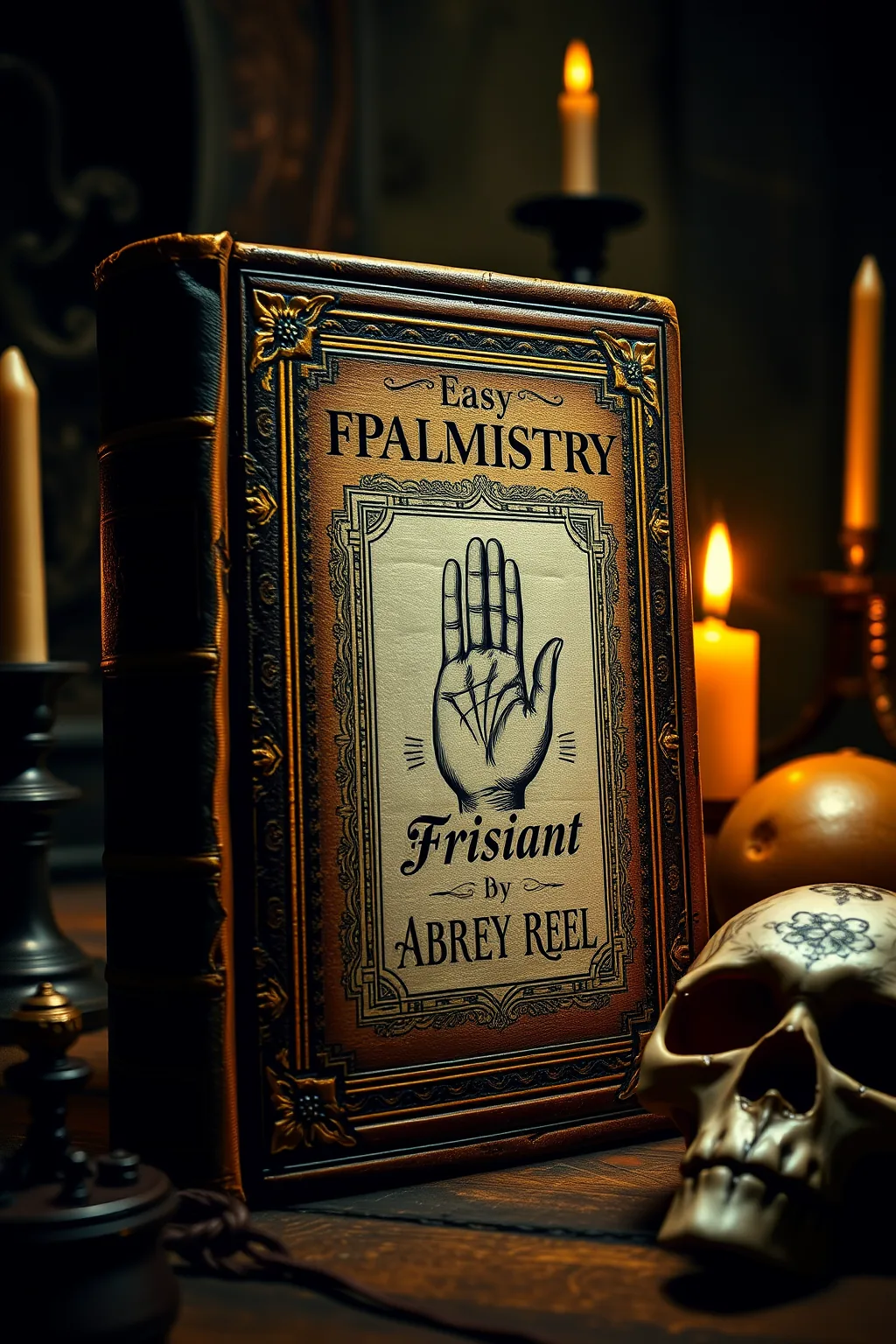
Easy Palmistry (Frisian)
 61
61

Easy Palmistry (Frisian)



Lorelei Sage, Contemplative Literature Editor: Abbey Reel's 'Easy Palmistry (Frisian)' is a rare gem in the realm of divinatory arts. Reel offers a refreshingly clear yet deeply insightful exploration of chiromancy, bridging the gap between novice curiosity and seasoned practitioner. The book’s strength lies in its ability to convey complex symbolic meanings with elegant simplicity, encouraging readers to look beyond mere fortune-telling and embrace palmistry as a profound tool for self-understanding and spiritual growth. This is an indispensable resource for seekers yearning to decipher the hidden narratives within their own hands and connect with ancient wisdom.
📝 Description
61
Abbey Reel's 'Easy Palmistry (Frisian)' was published to make chiromancy accessible.
Abbey Reel's 'Easy Palmistry (Frisian)' aims to make the practice of reading palms understandable for a wider audience. The book breaks down the symbolism found in hand lines, mounts, and fingers. Reel's approach is designed to simplify complex palmistry principles. Readers can learn to identify potential, understand personal patterns, and sense subtle energies influencing their lives.
This guide acts as a tool for increased self-awareness. It encourages a connection to broader universal forces through the practice of palm reading. The book invites readers to see beyond the obvious and interpret the markings on their hands as a form of cosmic communication. It presents palmistry as a method for self-discovery and understanding one's place within a larger framework.
Palmistry, or chiromancy, has a long history within esoteric traditions, dating back to ancient India and Greece. It is considered a form of divination that interprets the physical characteristics of a person's hand as indicators of character and future events. This practice is often linked with astrology and other methods of self-understanding that seek to reveal hidden truths about the individual and their connection to the cosmos. 'Easy Palmistry (Frisian)' situates itself within this lineage by presenting these traditional concepts in a clear and approachable manner.
💡 Why Read This Book?
Discover the profound wisdom etched into your palms. 'Easy Palmistry (Frisian)' offers an accessible gateway to understanding your unique life path, inherent strengths, and karmic lessons. Ideal for the contemplative seeker, the budding practitioner, or the curious scholar, this book illuminates the intricate language of the hand as a map of the soul. Embrace self-discovery and unlock the hidden potential waiting to be revealed.
⭐ Reader Reviews
Honest opinions from readers who have explored this book.
❓ Frequently Asked Questions
What is palmistry and its historical roots?
Palmistry, or chiromancy, is the ancient practice of divining character and predicting the future through the study of the palm. Its roots trace back to India, China, and Persia, with significant development in ancient Greece and Rome.
Are the interpretations in this book fixed or flexible?
While core meanings exist, interpretations are nuanced and flexible, influenced by the individual's life experiences and consciousness. This book provides a foundational understanding to guide your personal insights.
Can palmistry truly predict the future?
Palmistry is more accurately viewed as a guide to understanding potential paths and inherent tendencies, rather than a rigid prediction of unchangeable events. It empowers self-awareness and informed choices.
What are the main lines to focus on for beginners?
Beginners should focus on the three major lines: the Life Line (vitality, life force), the Head Line (intellect, communication), and the Heart Line (emotions, relationships). These offer a foundational understanding of your core traits.
How does 'Frisian' in the title relate to palmistry?
The 'Frisian' aspect likely refers to a specific lineage or regional adaptation of palmistry traditions, perhaps emphasizing certain interpretations or symbolic associations prevalent in Frisian culture, adding a unique esoteric flavor.
🔮 Key Themes & Symbolism
The Hand as a Cosmic Mirror
This theme explores the profound concept of the hand as a microcosm of the universe and a divine blueprint of an individual's existence. It explores how the lines, mounts, and shape of the hand are not random but rather cosmic imprints, reflecting universal energies and archetypal patterns. The book guides readers to perceive their palms as living texts, inscribed with the wisdom of the ages, offering insights into their soul's journey, their inherent talents, and the karmic lessons they are here to learn. It’s an invitation to see the divine hand in the mundane, transforming a simple physical feature into a sacred map of potential and destiny.
Decoding Symbolic Language
The core of 'Easy Palmistry (Frisian)' lies in its ability to translate the intricate symbolic language of the palm into accessible understanding. This theme focuses on the body of meanings associated with each line, mound, and digit. Readers learn to interpret the subtle nuances of the Life Line’s curve, the Head Line’s clarity, and the Heart Line’s depth, understanding them as metaphors for vital energy, intellectual capacity, and emotional landscape. The book empowers individuals to see beyond literal interpretations, grasping the deeper, often esoteric, significance of these markings as expressions of consciousness and the soul's evolution.
Self-Discovery Through Chiromancy
This theme emphasizes palmistry not merely as a predictive tool, but as a powerful catalyst for profound self-discovery and personal transformation. 'Easy Palmistry (Frisian)' encourages readers to engage with their palms as a means of introspection, fostering a deeper connection with their inner selves. By understanding the messages imprinted on their hands, individuals can gain clarity on their strengths, identify areas for growth, and acknowledge their unique life purpose. The book promotes a holistic approach, where chiromancy serves as a spiritual compass, guiding individuals towards greater self-awareness, acceptance, and the conscious creation of their destiny.
💬 Memorable Quotes
Direct passages from the work, attributed to the author.
“Each crease is a story, each mound a mountain of character.”
— This evocative imagery highlights the narrative and archetypal significance of palm features, encouraging a deeper, more symbolic reading of the hand.
“Your palm is a sacred text, waiting for the discerning eye.”
— This emphasizes the importance of careful observation and intuitive understanding when interpreting palmistry, positioning the hand as a source of profound, hidden knowledge.
“Embrace the map, work through the journey.”
— This concise phrase expresses the practical application of palmistry, encouraging readers to use the insights gained as a guide for their life's path.
💡 Key Ideas
Editorial paraphrase of the work's core concepts — not direct quotes.
The lines upon your palm are not chains, but whispers of potential.
This quote reframes the concept of destiny, suggesting that palmistry reveals possibilities and tendencies rather than fixed outcomes, empowering the reader to actively shape their future.
To read the hand is to converse with the soul's ancient wisdom.
This quote elevates palmistry to a spiritual practice, suggesting a profound dialogue with the deeper, inherent knowledge of the self.
🌙 Esoteric Significance
Tradition
This work is rooted in the ancient tradition of Chiromancy, a divinatory art deeply intertwined with Hermeticism and Neoplatonism. It views the human body, specifically the hand, as a reflection of the cosmos and the divine order. The practice aligns with the Hermetic principle of 'As Above, So Below,' suggesting that macrocosmic energies are mirrored in the microcosm of the human form. The esoteric significance lies in its capacity to reveal the soul's journey, karmic imprints, and inherent spiritual potential, offering a path toward self-knowledge and alignment with universal forces.
Symbolism
The symbolism in palmistry is vast and profound. Lines represent the flow of energy and life experiences (e.g., the Life Line for vitality, the Heart Line for emotional currents). Mounts, the fleshy pads on the palm, symbolize different qualities and planetary influences (e.g., Venus for love, Mars for courage). Fingers represent aspects of the personality and intellect. The overall shape of the hand and the interrelation of these elements create a complex symbolic language that speaks to an individual's character, destiny, and spiritual evolution, revealing hidden potentials and challenges.
Modern Relevance
In an age often characterized by rapid change and existential questioning, palmistry offers a grounding and deeply personal form of introspection. Its modern relevance lies in its ability to provide a framework for self-understanding, fostering resilience and clarity. As a tool for self-awareness, it helps individuals navigate life's complexities by understanding their innate patterns and potential. It encourages a mindful approach to personal growth, empowering individuals to make conscious choices aligned with their true selves, rather than being swept away by external forces. It serves as a bridge between the tangible and the intangible, offering solace and guidance.
👥 Who Should Read This Book
This book is a treasure for the introspective soul. Beginners beginning their journey into divination will find it an exceptionally clear and encouraging introduction to the art of palmistry. Scholars of esoteric traditions will appreciate its depth and potential for nuanced interpretation. Seekers yearning for greater self-awareness and a deeper understanding of their life's purpose will discover useful insights. Practitioners of other divinatory arts may find it a valuable complement, enriching their toolkit with the unique wisdom of chiromancy. Ultimately, anyone drawn to the mysteries of the hand will find this guide clear.
📜 Historical Context
The practice of palmistry, or chiromancy, boasts an ancient lineage, with its origins often traced back to India and subsequently spreading through Persia, Greece, and Rome. During the Renaissance, a period marked by a renewed interest in esoteric knowledge and the occult, palmistry experienced a significant resurgence. Scholars and practitioners meticulously studied and documented its principles, often integrating it with astrological and physiognomic theories. This era saw the publication of numerous treatises on palmistry, solidifying its place within the broader field of divinatory arts. 'Easy Palmistry (Frisian)' likely draws upon this rich historical tradition, potentially incorporating unique regional interpretations or stylistic nuances that have evolved over centuries, offering a bridge between historical practice and contemporary understanding.
📔 Journal Prompts
Reflect on the dominant lines on your dominant hand. What do their characteristics suggest about your core energies and life path?
Examine the mounts on your palm. Which ones are most pronounced and what qualities do they represent in your personality?
Consider a significant life event. Can you trace its influence or theme within the lines and markings of your palm?
How does the shape of your hand and fingers align with your perceived personality traits?
What is one hidden potential or area for growth revealed by your palm that you wish to explore further?
🗂️ Glossary
Chiromancy
The art of divination through the study of the palm, often used interchangeably with palmistry. It involves interpreting lines, mounts, and the shape of the hand.
Life Line
The curved line originating near the thumb and extending around the base of the palm. It traditionally symbolizes vital energy, physical health, and significant life experiences.
Head Line
A horizontal line typically found below the Heart Line, representing intellect, mental faculties, communication style, and thought processes.
Heart Line
The uppermost horizontal line on the palm, running across the hand. It is associated with emotions, relationships, love, and emotional well-being.
Mounts
The fleshy, raised pads on the palm, often named after planets (e.g., Mount of Venus, Mount of Jupiter). Each mount symbolizes specific character traits and potentials.
This book appears in 3 collections
🔮 Readers Also Liked
Browse all →









From the “Remote Viewing” Collection
View all →






More Free Divination & Tarot Books
View all →