Tarot
 80
80

Tarot
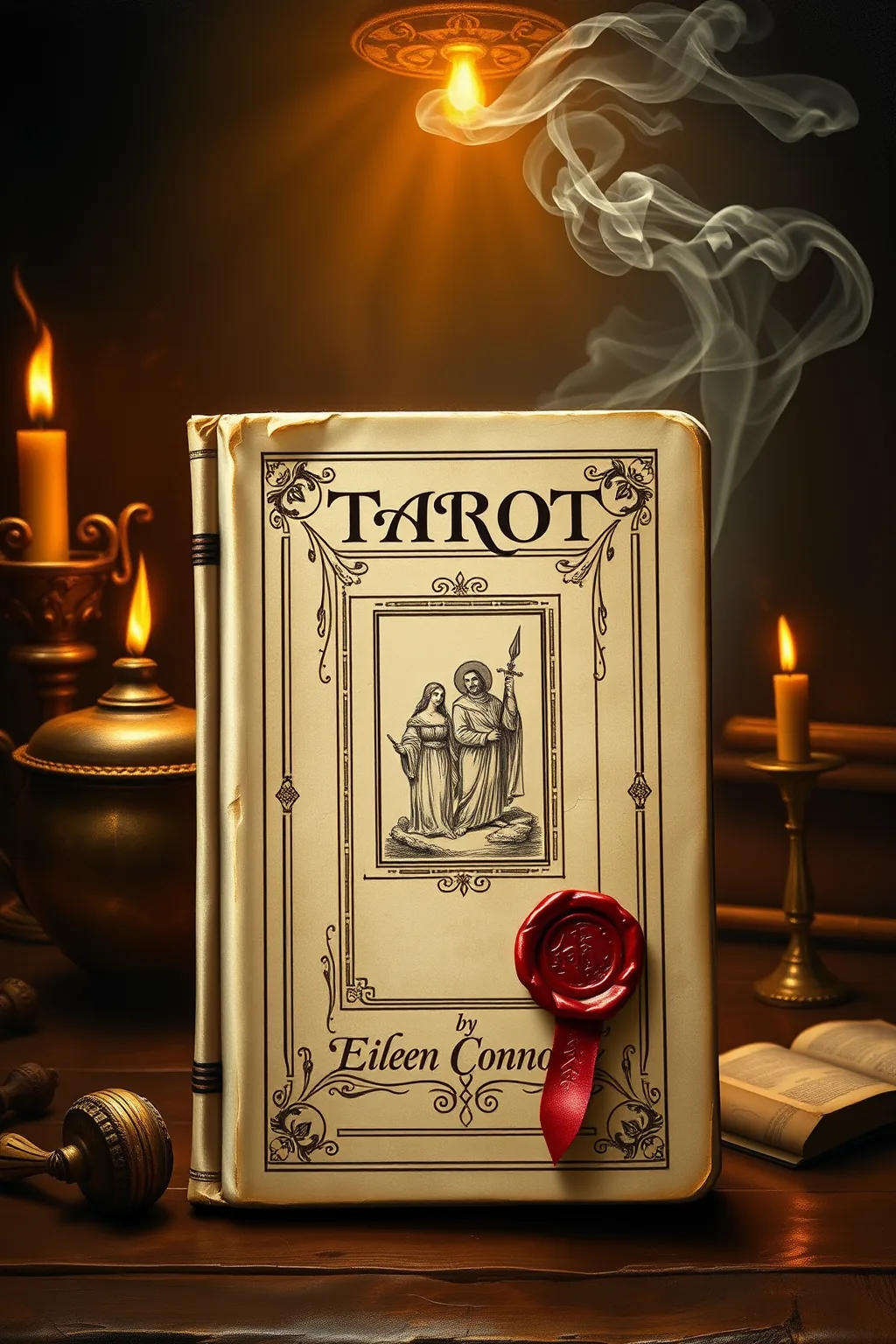
Eileen Connolly's "Tarot" offers a rigorous, almost academic, treatment of the cards, which is both its greatest strength and its most significant hurdle for the casual reader. Published in 1986, it predates the explosion of more visually-driven and intuitively-focused Tarot books. Connolly’s meticulous layering of Qabalistic, astrological, and numerological systems onto the Rider-Waite-Smith deck (though not explicitly stated as the sole focus, it is implied) provides a depth rarely matched. The section detailing the astrological correspondences, for instance, is precise and illuminating, demonstrating a firm grasp of occult correspondences. However, this very thoroughness can render the text dense. A reader seeking quick divinatory answers might find the extensive theoretical groundwork overwhelming. The book excels when it connects the Major Arcana to the Tree of Life, offering a coherent, albeit complex, cosmological map. For those willing to engage with its structured approach, "Tarot" rewards with a profound understanding of the deck's esoteric architecture, but it demands sustained attention.
📝 Description
80
Eileen Connolly's "Tarot" was published in 1986, presenting a structured view of the 78-card deck.
Eileen Connolly's "Tarot," first released in 1986, offers a systematic way to understand the 78 cards. It moves past simple fortune-telling to examine the archetypal patterns and esoteric principles within the Major and Minor Arcana. The book carefully details each card, including its connections to numerology, astrology, and Kabbalah. Connolly structures the deck's progression, from the Fool to the World card, presenting the Tarot as a map of human consciousness.
This book is for dedicated students of Tarot and Western esotericism. It is aimed at those seeking a more thorough and organized grasp of the cards than basic guides usually provide. Readers interested in the historical and philosophical foundations of Tarot, particularly its ties to Hermeticism and the Qabalah, will find "Tarot" a useful reference. It suits individuals who want to incorporate Tarot study into a wider metaphysical framework, focusing on personal growth and spiritual discovery rather than just prediction.
Published in 1986, Connolly's "Tarot" appeared during a time of renewed interest in occult subjects. Unlike popular divination guides of the era, her work emphasized the Tarot's roots in Western occult traditions. Her method aligns with the systematic approaches of earlier figures like A.E. Waite and Paul Foster Case, aiming to codify the esoteric significance of the cards. This period saw significant occult literature, with authors like Lon Milo DuQuette also examining complex Qabalistic systems.
💡 Why Read This Book?
• Gain a structured understanding of the Tarot’s esoteric architecture, as Connolly details the specific Qabalistic Tree of Life correspondences for each Major Arcana card, offering a systematic approach not found in most introductory texts. • Learn the specific astrological associations for each card, as detailed in Connolly's work, providing a framework for understanding celestial influences on human experience through the Tarot. • Explore the numerological significance of each card, as presented in the book, allowing for a deeper interpretation of the Minor Arcana based on numerical progression and elemental associations.
⭐ Reader Reviews
Honest opinions from readers who have explored this book.
❓ Frequently Asked Questions
What is Eileen Connolly's "Tarot" primarily focused on?
Eileen Connolly's "Tarot", first published in 1986, primarily focuses on the esoteric and symbolic meanings of the 78 Tarot cards, integrating Qabalistic, astrological, and numerological systems.
Does Eileen Connolly's "Tarot" explain how to read the cards for prediction?
While it provides meanings, the book's emphasis is on the archetypal and spiritual aspects of the Tarot, rather than purely predictive techniques. It aims for a deeper understanding of the cards' symbolism.
What esoteric traditions are referenced in Eileen Connolly's "Tarot"?
The book heavily references Western esoteric traditions, particularly Qabalah (or Kabbalah), Hermeticism, and Western astrology, explaining how these systems inform Tarot symbolism.
Is Eileen Connolly's "Tarot" suitable for beginners?
It can be challenging for absolute beginners due to its dense theoretical content. It is best suited for those with some prior interest in esoteric studies or a desire for a comprehensive, structured approach to Tarot.
What year was Eileen Connolly's "Tarot" first published?
Eileen Connolly's "Tarot" was first published in 1986, positioning it within a resurgence of interest in occult and metaphysical literature.
Does the book focus on a specific Tarot deck?
While not exclusively tied to one deck, the book's symbolic framework aligns most closely with the Rider-Waite-Smith tradition, which is a common reference point for esoteric Tarot studies.
🔮 Key Themes & Symbolism
The Fool's Journey Archetype
Connolly presents the 22 Major Arcana cards as a narrative arc, charting the soul's progression from innocence (The Fool) through various trials and initiations towards spiritual realization (The World). This archetypal journey is framed as a map of consciousness, illustrating the stages of personal growth and spiritual evolution inherent in the human experience. Each card represents a distinct stage or challenge encountered on the path to self-discovery and enlightenment, as outlined in the book's systematic exploration of the sequence.
Qabalistic Correspondences
A central pillar of Connolly's work is the integration of the Tarot with the Qabalistic Tree of Life. The book meticulously details how the 22 Major Arcana cards correspond to the 22 paths on the Tree, linking them to specific spheres and divine emanations. This framework provides a sophisticated cosmological structure for understanding the interrelationship of the cards and their place within a larger mystical worldview. The 1986 publication highlighted this connection for a generation of occult students.
Astrological and Numerological Systems
Connolly systematically assigns astrological signs, planets, and elements to each card, offering a comprehensive system for interpretation. The Minor Arcana are further explained through their numerical values and elemental associations, providing a detailed breakdown of their significance. This multi-layered approach underscores the book's aim to present the Tarot as a complex symbolic language rooted in ancient esoteric principles and observable celestial patterns.
Tarot as a Tool for Spiritual Discipline
Beyond simple divination, Connolly positions the Tarot as a potent instrument for spiritual discipline and self-awareness. The book encourages readers to use the cards not just to predict events, but to understand the underlying forces at play in their lives and to foster inner transformation. The detailed explanations of symbolism and correspondences serve to illuminate the practical application of these esoteric principles for personal development.
💬 Memorable Quotes
Direct passages from the work, attributed to the author.
“The Tarot is a symbolic representation of the universe and man's place within it.”
— This statement captures Connolly's view of the Tarot not just as a divination tool, but as a comprehensive symbolic map of existence, reflecting a deep metaphysical understanding.
“Each card of the Major Arcana represents a stage in the spiritual journey.”
— This highlights the book's core concept of the Fool's Journey, framing the Major Arcana as a sequence of archetypal experiences crucial for personal growth and spiritual realization.
“Numerology provides a key to understanding the progression within the Minor Arcana.”
— This points to the book's systematic approach, emphasizing how numerical values are integral to deciphering the developmental and sequential meanings of the suit cards.
“The Qabalah offers a cosmic framework for the Tarot's symbolism.”
— This emphasizes the integration of Qabalistic principles, such as the Tree of Life, as essential for grasping the deeper, interconnected meanings within the Tarot deck.
“Astrology reveals the celestial influences woven into the fabric of the Tarot.”
— This underscores the book's detailed exploration of how planetary and zodiacal correspondences enhance the interpretive depth of each Tarot card.
🌙 Esoteric Significance
Tradition
Connolly's "Tarot" firmly sits within the Western Esoteric Tradition, drawing heavily from Hermetic philosophy and, most significantly, Qabalah. It seeks to present the Tarot not merely as a divination tool but as a symbolic embodiment of Qabalistic cosmology, particularly the Tree of Life. The work aligns with the tradition of mapping the spiritual journey through symbolic systems, making it a bridge between practical Tarot use and deeper metaphysical inquiry.
Symbolism
The book emphasizes the symbolic language of the Rider-Waite-Smith deck, particularly the archetypal figures of the Major Arcana and the elemental/numerological progression of the Minor Arcana. Key symbols include the Fool's journey, representing the soul's evolution, and the correspondences to the Tree of Life, where each card maps onto a specific path or sphere, illustrating divine emanations and the structure of consciousness.
Modern Relevance
Connolly's systematic approach continues to influence contemporary Tarot practitioners and occult students seeking a structured understanding of the cards. While modern interpretations may vary, her detailed layering of Qabalistic and astrological correspondences remains a valuable reference for those engaged with traditional Western esoteric systems. Thinkers and practitioners in the Hermetic Order of the Golden Dawn revivalist circles and independent Qabalistic students often refer to such foundational texts.
👥 Who Should Read This Book
• Students of Qabalah and Western Esotericism seeking to integrate Tarot symbolism with established mystical frameworks. • Intermediate Tarot readers desiring a deeper, more structured understanding beyond basic divinatory meanings, particularly those interested in the Rider-Waite-Smith tradition. • Comparative religion scholars or philosophers of symbolism interested in how esoteric traditions codify spiritual and psychological journeys.
📜 Historical Context
Eileen Connolly's "Tarot," published in 1986, arrived during a period of significant resurgence for esoteric studies in the West. Following the less structured, more intuitive explorations of the 1960s and 70s, there was a growing appetite for systematic approaches to occultism. Connolly's work distinguished itself by grounding Tarot interpretation in the complex frameworks of Western esotericism, particularly Qabalah and astrology, echoing the scholarly rigor of earlier figures like A.E. Waite and Paul Foster Case. While authors like Rachel Pollack were exploring more psychological and literary dimensions of the cards, Connolly focused on codifying their esoteric architecture. This era also saw a wider dissemination of Qabalistic texts and practices, making Connolly's structured synthesis particularly relevant. The book found its audience among serious students seeking to move beyond superficial divinatory practices towards a deeper, integrated understanding of occult symbolism.
📔 Journal Prompts
The Fool's journey as represented by the Major Arcana and your own life path.
Qabalistic correspondences and their meaning for the central cards of a reading.
Astrological associations of the court cards and your interpersonal dynamics.
Numerological progression in a spread of Minor Arcana cards.
The Tarot as a symbolic map of consciousness, as presented in the text.
🗂️ Glossary
Major Arcana
The 22 trump cards of the Tarot deck, typically representing significant life events, archetypal forces, and spiritual lessons on the journey of consciousness.
Minor Arcana
The 56 cards of the Tarot deck divided into four suits (Wands, Cups, Swords, Pentacles), representing everyday events, challenges, and circumstances.
Qabalah
A complex esoteric system of Jewish mysticism that uses symbolic interpretations of scripture and spiritual cosmology, often represented by the Tree of Life.
Tree of Life
A central diagram in Qabalistic cosmology, depicting the 10 divine emanations (Sephiroth) and 22 paths, used as a map of creation and spiritual ascent.
Astrological Correspondences
The assignment of specific planets, zodiac signs, or elements to Tarot cards, linking their meanings to celestial influences and cycles.
Numerology
The study of the mystical or symbolic significance of numbers, used in Tarot to interpret the sequential meanings of cards based on their numerical value.
Archetype
A universal, archaic symbol or motif that derives its meaning from the collective unconscious, often personified in figures within the Tarot.
🔮 Readers Also Liked
Browse all →


More by Eileen Connolly
All books →
More Free Divination & Tarot Books
View all →