Guide to Palmistry
 61
61

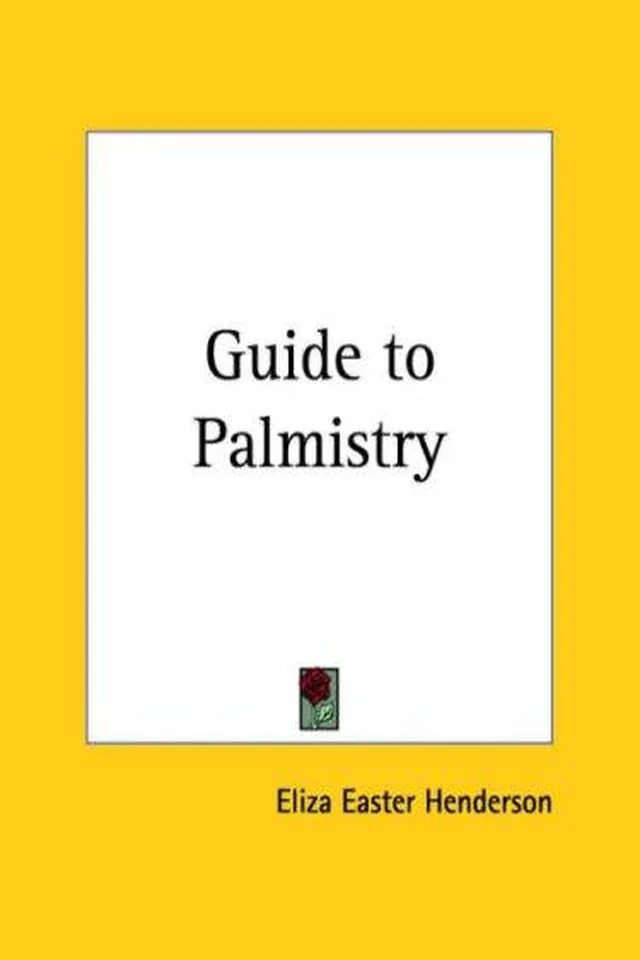
Guide to Palmistry



Silas Hawthorne (Hermetic Studies Editor) — Eliza Easter Henderson's "Guide to Palmistry" stands as a beacon of clarity in the often-murky waters of divination. Henderson's approach, rooted in the D'Arpentigny system, emphasizes the profound connection between the hand's topography and the individual's will, logic, and life force. She skillfully guides the reader through the intricate symbolism of the palm, revealing its capacity as a mirror to the soul's journey. This work is not for the casual glance; it demands contemplative engagement, offering unparalleled insights for serious practitioners and scholars of esoteric arts seeking to deepen their understanding of anthropomancy and its philosophical underpinnings. A truly invaluable addition to any occult library.
📝 Description
61
Eliza Easter Henderson's 1914 Guide to Palmistry deciphers the hidden language etched upon the palm.
Published in 1914, Eliza Easter Henderson's "Guide to Palmistry" decodes the lines, mounts, and contours of the hand. Henderson's approach details how these physical features correlate to an individual's inner life, innate potential, and future trajectory. The book moves beyond simple prediction, encouraging readers to connect with the symbolic meanings of palmistry's elements. It aims to facilitate self-understanding by interpreting the hand as a reflection of cosmic influences. This guide is intended for those seeking a deeper connection to themselves and the wider universe through the practice of chiromancy. It presents a structured method for interpreting palm markings.
Henderson's work emphasizes the practical application of palmistry for personal insight. She breaks down complex interpretations into accessible components, allowing readers to learn the art systematically. The book covers the significance of major and minor lines, various hand shapes, and the distinct qualities of the mounts. It functions as a manual for observing and understanding these details. The goal is to equip the reader with the tools for personal analysis and reflection.
This book sits within the tradition of Western esoteric palmistry, which gained significant traction in the late 19th and early 20th centuries. Influenced by earlier works and occult revivals, practitioners like Henderson sought to systematize and popularize chiromancy. It connects to broader hermetic principles, viewing the human body, and specifically the hand, as a microcosm reflecting universal energies and destinies. Unlike purely fortune-telling systems, Henderson's guide frames palmistry as a means for psychological insight and spiritual understanding, aligning with the era's interest in divinatory arts as pathways to self-knowledge.
💡 Why Read This Book?
Uncover the profound wisdom encoded within your own hands. "Guide to Palmistry" offers practical techniques to interpret the lines, mounts, and fingers, revealing your inherent strengths, potential challenges, and the arc of your life's journey. Ideal for seekers of self-knowledge, practitioners of divination, and anyone curious about the ancient art of reading the palm as a reflection of the inner self and cosmic influences.
⭐ Reader Reviews
Honest opinions from readers who have explored this book.
❓ Frequently Asked Questions
What is palmistry?
Palmistry, or chiromancy, is an ancient art of divination that interprets the lines, shapes, and features of the hand to understand a person's character, potential, and future.
Can anyone learn palmistry?
Yes, with dedication and the right guidance, anyone can learn the principles of palmistry. This book provides a comprehensive framework for understanding its complexities.
What are the main lines in palmistry?
The primary lines typically studied are the Life Line, Head Line, Heart Line, and Fate Line, each offering insights into different aspects of an individual's life.
Is palmistry scientific?
Palmistry is considered an esoteric or occult practice, not a science. Its interpretations are based on symbolism, tradition, and intuitive understanding rather than empirical evidence.
How can palmistry help me?
Palmistry can offer self-awareness, reveal hidden talents, illuminate potential obstacles, and provide a framework for personal growth and understanding your life's path.
🔮 Key Themes & Symbolism
The Hand as a Cosmic Mirror
This theme examines the profound esoteric concept of the hand as a microcosm reflecting the macrocosm. Henderson illustrates how the intricate patterns, lines, and mounts are not arbitrary but rather symbolic representations of universal forces, astrological influences, and karmic imprints. The book encourages a contemplative approach, viewing each crease as a story waiting to be deciphered, a direct connection to the vital energies that govern existence and shape individual destinies. It posits that by understanding the hand, one can gain a deeper insight into the soul's journey and its place within the grand cosmic order.
Willpower and Inner Strength
A central tenet explored is the representation of the will and inner strength through specific features of the hand, particularly the thumb. Henderson elucidates how the size, flexibility, and prominence of the thumb phalanxes offer direct insights into an individual's determination, assertiveness, and capacity to manifest their desires. This theme emphasizes the active role of the individual in shaping their reality, suggesting that the palm is not a fixed destiny but a dynamic map influenced by conscious choices and the cultivation of inner fortitude. It encourages readers to harness their inherent willpower.
The Cartography of the Soul
This theme frames palmistry as a sophisticated form of cartography for the inner self. Henderson guides readers to interpret the various lines—Life, Head, Heart, and Fate—as geographical markers on the map of the soul. Each line is presented as a narrative thread, detailing aspects of one's life journey, intellectual pursuits, emotional landscape, and overall life purpose. The book provides the tools to read these narratives, fostering profound self-understanding, informative past experiences, and offering guidance for navigating future pathways with greater awareness and intention.
💬 Memorable Quotes
Direct passages from the work, attributed to the author.
“Interrogate the great moving power of life,-the will.”
— This evocative phrase points to the core of palmistry as a tool for understanding one's fundamental drives and motivations, particularly the power of intention and determination.
“The first phalanx of the thumb represents the will.”
— A direct symbolic interpretation, emphasizing the physical manifestation of inner strength and resolve within the structure of the hand.
“Then I pass to logic, represented by the second.”
— This illustrates the systematic approach of the D'Arpentigny system, linking specific hand features to cognitive functions and reasoning abilities.
“Your palm is a living proof of your journey.”
— This poetic statement expresses the essence of palmistry as a dynamic and personal record of life experiences, character, and potential.
💡 Key Ideas
Editorial paraphrase of the work's core concepts — not direct quotes.
Every man can be his own fortuneteller.
This quote highlights the empowering nature of palmistry as presented by Henderson, suggesting that the knowledge contained within the hand is accessible to all, fostering self-reliance in understanding one's path.
🌙 Esoteric Significance
Tradition
This work is deeply rooted in the Western esoteric tradition, specifically drawing from the Hermetic principles of "As Above, So Below" and the belief in correspondence between the human body and the cosmos. It aligns with the practices of chiromancy, a form of anthropomancy (divination by observing the human body) that has been recognized across various ancient cultures, including Greek, Roman, Indian, and Chinese traditions. The system by D'Arpentigny, which Henderson references, is a notable contribution to this lineage, focusing on the hand as a precise map of an individual's disposition and destiny.
Symbolism
The palm is a dense collection of symbolism. The lines represent the flow of vital energy and life experiences; the mounts symbolize planetary influences and character traits (e.g., Mount of Venus for love, Mount of Mars for courage). The fingers can correspond to elements or specific deities. The thumb, as noted, is crucial for understanding willpower and logic. Henderson's guide deciphers these symbols, revealing how they interrelate to form a comprehensive portrait of the individual, offering insights into their inner world and external circumstances.
Modern Relevance
In an age often characterized by rapid change and information overload, "Guide to Palmistry" offers a grounding anchor for self-reflection and personal insight. Its emphasis on understanding one's innate character and potential remains highly relevant for individuals seeking authenticity and purpose. The practice of palmistry, as presented here, encourages mindfulness and a deeper connection to oneself, providing a framework for navigating life's complexities with greater self-awareness and intuition, skills that are increasingly valued in contemporary personal development.
👥 Who Should Read This Book
This comprehensive guide is an invaluable resource for a diverse audience. **Beginners** seeking an accessible yet profound introduction to palmistry will find Henderson's clear explanations and systematic approach incredibly helpful. **Scholars of esoteric studies** will appreciate its historical context and detailed exploration of established chiromantic systems. **Spiritual seekers** yearning for deeper self-understanding and a connection to ancient wisdom will discover useful insights into their inner landscape. **Practitioners of divination** looking to refine their skills and expand their knowledge base will find its depth and nuance exceptionally beneficial.
📜 Historical Context
Eliza Easter Henderson's "Guide to Palmistry" emerges from a rich lineage of esoteric thought, likely penned during a period when spiritualism and occult sciences experienced a resurgence. The late 19th and early 20th centuries saw a fervent interest in ancient wisdom, mysticism, and alternative methods of understanding the universe and the human psyche. This era was characterized by a dissatisfaction with purely materialistic explanations and a search for deeper, more spiritual truths. Henderson's work, particularly its reliance on systems like D'Arpentigny's, reflects this intellectual climate, where established scientific paradigms were being challenged by explorations into the unknown. The book stands as a proof of the enduring human desire to find meaning and order in the seemingly chaotic flow of life, drawing upon traditions that stretched back millennia.
📔 Journal Prompts
Analyze the shape and length of your Life Line. What does this suggest about your vitality and life's journey?
Examine the prominence of your Mount of Venus. How does this reflect your capacity for love, passion, and sensuality?
Consider the clarity and depth of your Head Line. What does it reveal about your thought processes and intellectual approach to life?
Reflect on the symbolic meaning of your dominant hand versus your non-dominant hand. What does this duality suggest about your innate potentials and learned behaviors?
How can the insights gained from your palm lines inform your current life decisions and aspirations?
🗂️ Glossary
Chiromancy
An ancient practice of fortune-telling or divination based on the study of the palm of the hand. It is also known as palmistry.
Phalanx
One of the segments of a finger or toe, separated by joints. In palmistry, the phalanges of the thumb are particularly significant.
Mounts
The fleshy, raised pads on the palm, located beneath the fingers and at the base of the thumb. Each mount is associated with a planet and specific character traits.
D'Arpentigny System
A specific method of palmistry developed by the French mystic and physiognomist Jean Charles de La Hire, Baron de D'Arpentigny, focusing on the relationship between hand shape and character.
Anthropomancy
A form of divination that involves the examination of the human body, including the palm, face, and other features, to predict future events or understand character.
This book appears in 1 collection
🔮 Readers Also Liked
Browse all →








From the “Palmistry” Collection
View all →






More Free Divination & Tarot Books
View all →