Sri Ramanuja, the Great Integrator
 71
71

Sri Ramanuja, the Great Integrator
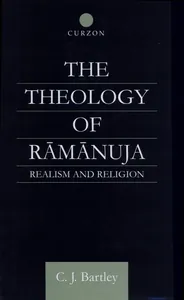
The volume offers a clear exposition of Ramanujacharya's complex philosophical framework. Its strength lies in its systematic breakdown of Vishishtadvaita Vedanta, making intricate doctrines more accessible than many Sanskrit commentaries. The author successfully charts Ramanuja's intellectual lineage and his divergence from Shankara's Advaita, particularly in the foundational chapters. However, the book occasionally suffers from a lack of primary source engagement, relying heavily on secondary interpretations, which can obscure the raw power of Ramanuja's own arguments. A particularly illuminating section discusses the concept of *shariras-shariri bhava* (body-soul relationship) to explain the connection between the individual soul and the Supreme. While comprehensive, the narrative could benefit from more direct engagement with the historical reception of Ramanuja's ideas beyond academic circles. Despite these limitations, it serves as a valuable introduction to a pivotal figure in Hindu philosophy.
📝 Description
71
This book examines Ramanujacharya's Vishishtadvaita Vedanta, a key 11th-century South Indian theological system.
Sri Ramanuja, the Great Integrator, analyzes the life and philosophical work of Ramanujacharya, an 11th-century theologian from South India. The text details his Vishishtadvaita Vedanta system, which aimed to merge devotional practice with philosophical inquiry. It highlights Ramanuja's impact on Hindu thought, particularly his focus on a personal God and salvation through divine grace.
The book places Ramanujacharya within the active intellectual environment of 11th and 12th-century India, a time of significant philosophical debate and flourishing devotional movements. Ramanuja stood out as an important figure, offering a response to the monistic views of Advaita Vedanta, especially those promoted by Adi Shankara. His teachings presented a different perspective, reinforcing the unique reality of the individual soul and the divine. The work also sets Ramanuja's ideas within the context of other philosophical schools and the social and religious conditions of his era.
This work addresses the rich philosophical and devotional traditions within Vaishnavism, a major branch of Hinduism. Ramanujacharya's Vishishtadvaita Vedanta offers a theological framework that emphasizes a qualified non-dualism, asserting both the ultimate reality of Brahman (God) and the distinct existence of individual souls and the material world. It counters purely monistic interpretations by stressing the personal nature of the divine and the possibility of a meaningful relationship between God and the devotee, accessible through grace.
💡 Why Read This Book?
• Gain a structured understanding of Vishishtadvaita Vedanta, specifically how Ramanuja's philosophy posits Brahman as a qualified whole, a concept distinct from pure monism. • Learn about the historical debates surrounding the nature of reality and salvation in 11th-century India, understanding Ramanuja's critical engagement with Advaita Vedanta. • Explore the devotional path (bhakti) as presented by Ramanuja, focusing on the role of divine grace and the guru in achieving liberation (moksha).
⭐ Reader Reviews
Honest opinions from readers who have explored this book.
❓ Frequently Asked Questions
What is Vishishtadvaita Vedanta as presented in Sri Ramanuja, the Great Integrator?
Vishishtadvaita Vedanta, as detailed in the book, is a non-dualistic school of Hindu philosophy established by Ramanujacharya. It posits that Brahman is an absolute reality that is qualified, meaning it comprises both the material world and individual souls as its inseparable aspects or body.
Who was Ramanujacharya and why is he considered a Great Integrator?
Ramanujacharya was a prominent 11th-12th century South Indian Vaishnava theologian. He is called the 'Great Integrator' because his philosophy unified devotional practices (bhakti) with profound philosophical reasoning, reconciling the concept of a personal God with the ultimate reality.
What is the significance of the concept of 'body-soul relationship' in Ramanuja's philosophy?
The book explains that Ramanuja uses the *shariras-shariri bhava* (body-soul relationship) to illustrate how the entire universe, including individual souls and matter, constitutes the body of Brahman (the soul). This emphasizes the interconnectedness while maintaining the distinctness of souls.
How does Ramanuja's philosophy differ from Advaita Vedanta?
The work highlights that Ramanuja's Vishishtadvaita contrasts with Adi Shankara's Advaita by asserting the reality and distinctness of individual souls and the material world as part of Brahman, whereas Advaita emphasizes the ultimate identity of all with Brahman.
What role does devotion (bhakti) play in Ramanuja's path to liberation?
According to the book, Ramanuja's system emphasizes *bhakti* as a primary means to attain liberation (moksha). This devotion is directed towards a personal God, Narayana, and is facilitated by divine grace, knowledge, and the guidance of a spiritual teacher (guru).
When was Sri Ramanuja, the Great Integrator first published?
The book 'Sri Ramanuja, the Great Integrator' was first published in 2017. It aims to provide a comprehensive overview of the philosopher's life and teachings.
🔮 Key Themes & Symbolism
Vishishtadvaita Vedanta
This theme explores Ramanujacharya's philosophical system, Vishishtadvaita, meaning 'qualified non-dualism.' The work details how Ramanuja posited Brahman (the ultimate reality) as an absolute being that is nonetheless qualified by an infinite number of attributes, including the sentient souls (chit) and the non-sentient matter (achit). This approach sought to bridge the gap between impersonal absolutism and devotional theism, presenting a nuanced view of the divine and its relationship with the cosmos. The book elucidates how this philosophy provides a framework for understanding the universe as a unified whole, yet composed of distinct, interdependent parts, all subsisting within the Supreme.
Bhakti and Divine Grace
The text emphasizes Ramanuja's significant contribution to the Bhakti movement, focusing on the path of devotion as a primary means to achieve liberation (moksha). Unlike purely knowledge-based paths, Ramanuja's system highlights the importance of *prapatti* (surrender) and *bhakti* (loving devotion) to a personal God, Narayana. The book illustrates how Ramanuja stressed that divine grace is essential for salvation, attainable through sincere devotion and the guidance of a guru. This integration of devotional sentiment with philosophical rigor offered a more accessible spiritual path for a wider populace.
The Role of the Guru
A central tenet explored is the indispensable role of the spiritual preceptor (guru) in Ramanuja's philosophy. The book details how Ramanuja himself was deeply influenced by his gurus and, in turn, established a lineage of teachers to transmit his teachings. The guru is presented not merely as an instructor but as a divine instrument, facilitating the devotee's understanding of scripture and leading them towards realization. This emphasis on lineage and direct transmission underscores the importance of tradition and personal guidance in the spiritual journey within the Vishishtadvaita framework.
Critique of Advaita Vedanta
The work delineates Ramanuja's philosophical divergences from the dominant Advaita Vedanta school, most notably championed by Adi Shankara. While Advaita asserts the sole reality of Brahman and the illusory nature of the world and individual souls, Ramanuja's Vishishtadvaita maintains the reality and eternal distinctness of souls and matter, which he views as inseparable 'modes' or 'body' of Brahman. This section of the book analyzes Ramanuja's critiques of Shankara's concept of Maya and his arguments for a personal, qualified God as the ultimate reality, presenting a key intellectual contestation in Indian philosophical history.
💬 Memorable Quotes
Direct passages from the work, attributed to the author.
“Brahman is the inner controller of all beings, and all beings are His body.”
— This captures the Vishishtadvaita doctrine of *shariras-shariri bhava*. It explains that the universe, including all souls and matter, is an integrated whole that constitutes the 'body' of the Supreme.
“Liberation is achieved not solely by knowledge, but by the grace of God through devotion.”
— This highlights Ramanuja's emphasis on *bhakti* and divine grace as crucial elements in the path to salvation, distinguishing his approach from purely intellectual or ascetic methods.
“The guru is essential for understanding the true nature of reality and the path to God.”
— This reflects the importance Ramanuja placed on the spiritual teacher and the lineage of transmission in imparting profound spiritual knowledge and guiding devotees.
“God is not merely an impersonal absolute, but a God with infinite auspicious qualities.”
— This interpretation underscores Ramanuja's vision of a personal, accessible deity, Narayana, who is the object of devotion and possesses perfect, benevolent attributes.
💡 Key Ideas
Editorial paraphrase of the work's core concepts — not direct quotes.
The individual soul is real, distinct, and eternally subservient to Brahman.
This paraphrased concept captures Ramanuja's core departure from strict monism. It asserts the enduring existence and unique identity of the soul, positioning it in a devotional relationship of service to the Supreme Being.
🌙 Esoteric Significance
Tradition
This work falls within the broad spectrum of Indian philosophical traditions, specifically the Vedanta school, and more narrowly, the Vaishnava tradition. While not typically categorized under Western esotericism, its exploration of the nature of consciousness, the divine, and liberation aligns with metaphysical inquiries found in esoteric thought globally. Ramanuja's emphasis on a personal God, the interconnectedness of all existence, and the transformative power of devotion offers a framework for understanding spiritual reality that speaks to mystical traditions seeking direct experience of the divine.
Symbolism
The book frequently engages with concepts that carry symbolic weight within Vaishnavism. Brahman, particularly in the form of Narayana, symbolizes the ultimate, all-pervading consciousness and the source of all existence. The *Atman* (individual soul) can be seen as a spark of this divine consciousness, often symbolized by light or a part of the divine whole. The concept of *moksha* (liberation) symbolizes the ultimate return or union with the divine, transcending the limitations of material existence and suffering, often depicted as a state of eternal service or communion.
Modern Relevance
Ramanuja's philosophy continues to be influential today, particularly within the Hare Krishna movement (ISKCON) and other Gaudiya Vaishnava traditions, which draw heavily on his theological underpinnings. Contemporary scholars of comparative religion and philosophy of religion engage with Vishishtadvaita for its sophisticated articulation of theistic non-dualism. Furthermore, its emphasis on devotional practice as a path to spiritual realization and its intricate metaphysical system offer insights for modern spiritual seekers exploring diverse paths to connect with the divine and understand their place in the cosmos.
👥 Who Should Read This Book
• Students of comparative theology and Indian philosophy: To understand an important theological system that integrated devotional practices with complex philosophical reasoning in 11th-century India. • Seekers of devotional paths: To explore the philosophical basis of *bhakti* (devotion) as articulated by Ramanujacharya, focusing on divine grace and the role of the guru. • Researchers of religious history: To examine Ramanuja's critical engagement with existing philosophical schools, particularly his response to Advaita Vedanta and its impact on subsequent Hindu thought.
📜 Historical Context
Sri Ramanuja, the Great Integrator emerges from a crucial period in Indian intellectual history, specifically the 11th and 12th centuries CE. This era was characterized by intense philosophical dialectics, particularly between the burgeoning devotional (Bhakti) movements and the established schools of Vedanta. Ramanujacharya's work directly confronted the prevailing Advaita Vedanta, popularized by Adi Shankara, which posited a non-dualistic reality where individual souls and the world were ultimately identical with Brahman and considered illusory. Ramanuja’s Vishishtadvaita, or 'qualified non-dualism,' offered a powerful alternative, reasserting the reality of individual souls and the material world as integral aspects of Brahman. His philosophical system provided a robust theological foundation for the increasingly popular Bhakti tradition, making the path to spiritual liberation accessible through devotion and divine grace. The work implicitly situates Ramanuja against contemporaries and predecessors who shaped the philosophical landscape, highlighting his unique synthesis.
📔 Journal Prompts
Reflect on the concept of *shariras-shariri bhava* and its implications for the interconnectedness of existence.
Consider Ramanuja's emphasis on divine grace in achieving liberation (moksha). How does this differ from paths focused solely on personal effort?
Explore the role of the guru in transmitting spiritual knowledge, as presented in Ramanuja's philosophy.
Analyze the philosophical distinction between Ramanuja's Vishishtadvaita and Shankara's Advaita.
Consider the practice of *prapatti* (surrender) in the context of modern spiritual seeking.
🗂️ Glossary
Vishishtadvaita
A school of Vedanta philosophy, meaning 'qualified non-dualism,' founded by Ramanujacharya. It posits that Brahman is the ultimate reality, but it is qualified by sentient souls (chit) and non-sentient matter (achit) as its inseparable aspects or body.
Brahman
The ultimate reality or Absolute in Hinduism. In Vishishtadvaita, Brahman is understood as a personal God, often identified as Narayana, who is the supreme controller and sustainer of the universe.
Atman
The individual soul or self. In Ramanuja's philosophy, the Atman is real, eternal, and distinct from Brahman, yet subservient to it, forming part of Brahman's 'body'.
Bhakti
Devotion or loving service to God. Ramanuja considered Bhakti, particularly through *prapatti* (surrender), as a primary means for achieving liberation (moksha).
Moksha
Liberation or salvation from the cycle of birth and death (samsara). In Ramanuja's system, it is achieved through devotion, knowledge, and divine grace.
Guru
A spiritual teacher or preceptor. Ramanuja emphasized the critical role of the guru in guiding disciples on the spiritual path and transmitting sacred knowledge.
Advaita Vedanta
A prominent school of Vedanta philosophy, associated with Adi Shankara, which teaches that Brahman is the sole reality and that the empirical world and individual souls are ultimately identical with Brahman (non-dualism).
![Essential Tales and Poems of Edgar Allan Poe [34 stories, 17 poems]](/img/thumb/essential-tales-and-poems-of-edgar-allan-poe-34-stories-17-poems-edgar-allan-poe-080648.webp)