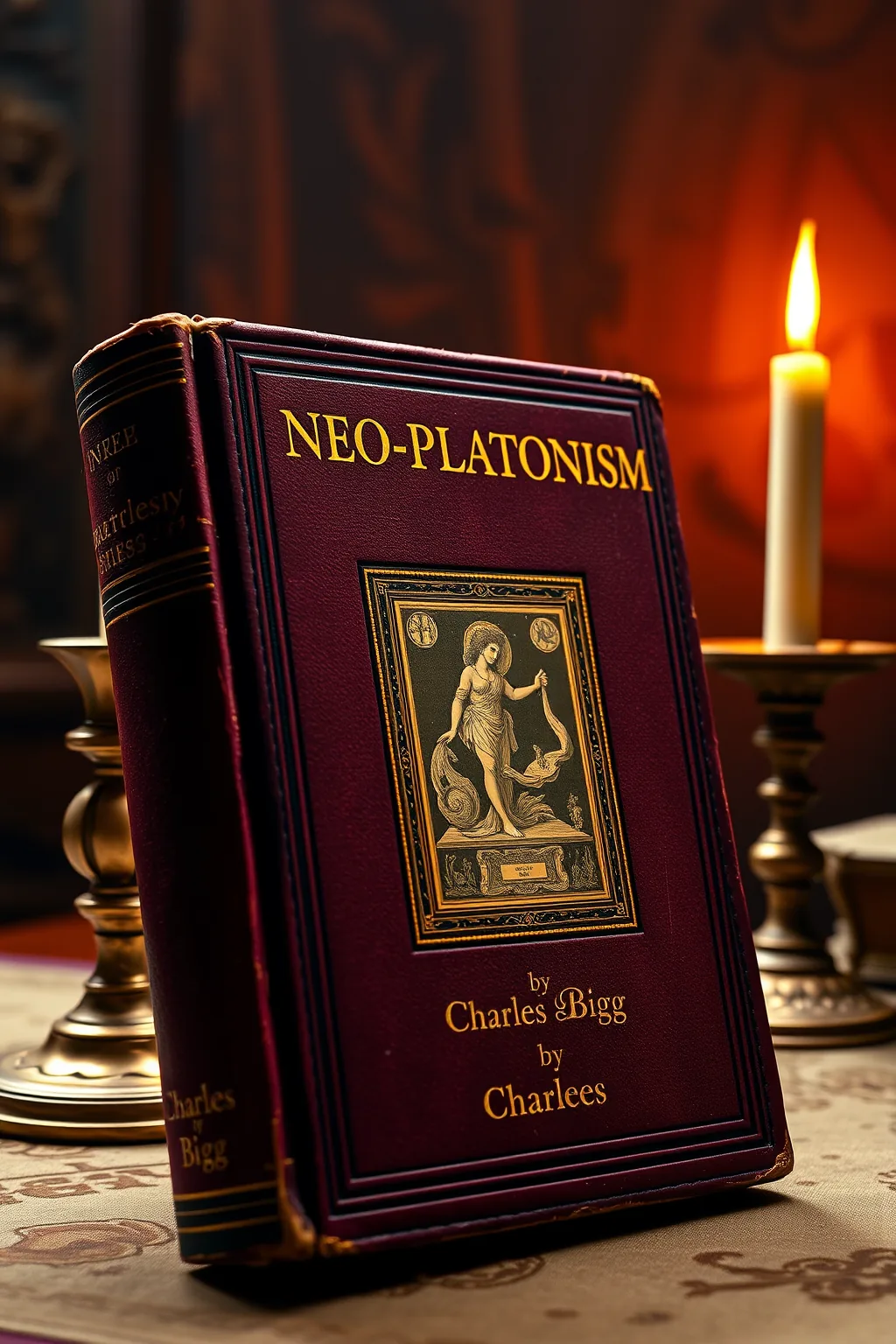
Neo-Platonism
 72
72

Neo-Platonism
Charles Bigg's Neo-Platonism presents a clear, if somewhat dated, exposition of a philosophy that has echoed through centuries of Western thought. The work's strength lies in its systematic approach to explaining complex metaphysical concepts like emanation and the hierarchy of being, making them accessible to those new to the subject. Bigg’s analysis of Plotinus, the movement's most prominent figure, is particularly detailed, outlining the philosophical architecture of the Enneads. However, the book's 2007 publication date means it reflects scholarship of its era, potentially lacking engagement with more recent archaeological or textual discoveries and interpretations that have emerged in Neo-Platonic studies. A passage discussing the concept of the *hypostases* (the One, Intellect, Soul) clearly illustrates the methodical nature of Bigg's exposition. While it offers a solid foundational understanding, it might not satisfy scholars seeking the latest critical discourse. Bigg’s Neo-Platonism serves as a valuable, if traditional, introduction to a foundational esoteric philosophy.
📝 Description
72
Charles Bigg's 1919 book examines Neo-Platonism, a philosophy that flourished in the Roman Empire.
Charles Bigg's work provides a thorough look at Neo-Platonism, the philosophical system that developed in the Roman Empire. The book traces the origins and development of this school of thought. It explains the main ideas, showing how Neo-Platonism was more than just an old doctrine; it was a living intellectual tradition that significantly affected Western philosophy and mysticism.
This book is for students of philosophy, comparative religion, and esoteric traditions. It helps readers grasp the intellectual basis for much of Western mysticism, including medieval Christian mystics and Renaissance Hermeticism. Those looking for a scholarly yet understandable introduction to the Platonic tradition beyond Plato himself will find it valuable. The book covers the historical context from the 3rd century CE, detailing how thinkers like Plotinus and Iamblichus synthesized Platonic ideas with other concepts to create a comprehensive worldview that influenced major religious and philosophical discourse.
Neo-Platonism, as presented by Bigg, formed a bridge between classical philosophy and later mystical traditions. Its emphasis on emanation from an ultimate divine source, the One, and the goal of spiritual ascent toward union with this source, deeply informed various esoteric paths. Thinkers like Plotinus and Porphyry developed a complex metaphysical structure that resonated with mystics seeking direct experience of the divine, influencing Christian, Jewish, and Islamic thought for centuries.
💡 Why Read This Book?
• Gain a foundational understanding of the Neo-Platonic concept of emanation, tracing how all reality is understood to flow from the singular, ineffable One, a core tenet explored in detail. • Grasp the Neo-Platonic pursuit of *henosis*, the mystical union with the divine, and its historical influence on subsequent contemplative traditions, a key aspiration discussed. • Learn about the philosophical lineage stemming from Plato, specifically how thinkers like Plotinus (a central figure discussed) reinterpreted and expanded upon Platonic ideas to create a comprehensive metaphysical system.
⭐ Reader Reviews
Honest opinions from readers who have explored this book.
❓ Frequently Asked Questions
When was Neo-Platonism first developed as a philosophical system?
Neo-Platonism emerged in the 3rd century CE, with its most influential proponent, Plotinus, teaching in Rome during the mid-3rd century. The system built upon the ideas of Plato but offered a unique metaphysical structure.
Who are the key figures associated with Neo-Platonism discussed in this book?
The book likely focuses on key figures such as Plotinus, considered the founder, and his followers like Porphyry and Iamblichus. These philosophers developed and disseminated the core tenets of Neo-Platonism.
What is the concept of 'the One' in Neo-Platonism?
In Neo-Platonism, 'the One' is the ultimate, transcendent source of all existence. It is beyond being, thought, and description, from which all reality emanates in a hierarchical fashion.
How did Neo-Platonism influence later philosophical and religious thought?
Neo-Platonism profoundly influenced Christian theology (e.g., Augustine), Islamic philosophy, and Renaissance Hermeticism. Its concepts of emanation, hierarchy, and mystical ascent provided frameworks for understanding the divine and the cosmos.
What is the Neo-Platonic idea of 'emanation'?
Emanation describes the process by which reality flows from the One without diminishing it. This procession creates a hierarchy of existence, including the Intellect (Nous) and the World Soul (Psyche), before reaching the material world.
What is the primary goal for a Neo-Platonist?
The ultimate aim for a Neo-Platonist is *henosis*, a mystical union or return to the One. This is achieved through philosophical contemplation, ethical purification, and spiritual ascent.
🔮 Key Themes & Symbolism
The Emanation from the One
This work explores the core Neo-Platonic doctrine of emanation, a process by which all existence originates from the supreme, ineffable 'One.' It explains how this divine source, which is beyond being and thought, generates lower levels of reality – the Intellect (Nous) and the World Soul (Psyche) – without being diminished. The book meticulously maps this hierarchical outflow, illustrating how the diversity of the cosmos arises from a singular, absolute origin, a concept crucial for understanding the structure of reality in this tradition.
The Ascent to Henosis
Central to Neo-Platonism is the concept of *henosis*, the mystical union or return to the One. Bigg's text explores the Neo-Platonic path toward this ultimate goal, which involves intellectual contemplation, ethical purification, and spiritual discipline. It details how individuals can ascend through the various levels of reality, shedding material attachments and intellectual limitations to achieve direct, ineffable communion with the divine source from which they originated.
The Tripartite Soul
Bigg's examination illuminates the Neo-Platonic understanding of the human soul, often described as tripartite. This structure typically includes the highest, rational aspect connected to the Intellect (Nous), a middle aspect associated with the World Soul (Psyche), and a lower, mortal aspect tied to the physical body. The book explains how the soul's journey involves purifying its lower aspects and reorienting itself towards its divine, incorporeal origin.
Metaphysics of Being and Non-Being
The work engages with the complex Neo-Platonic metaphysics concerning being, non-being, and the nature of the ultimate reality. It clarifies how 'the One' transcends all categories of being, and how the material world, while real, is the furthest removed from this divine source. This philosophical exploration provides a framework for understanding the Neo-Platonic view of existence as a spectrum, from the absolute unity of the One to the multiplicity and apparent 'non-being' of matter.
💬 Memorable Quotes
Direct passages from the work, attributed to the author.
“The soul's journey is a turning back towards its source.”
— This interpretation reflects the Neo-Platonic ideal of spiritual and philosophical ascent. The ultimate aim is for the soul to reorient itself away from the material world and towards its divine, intellectual origin, a process of recollection and purification.
“Intellect (Nous) contemplates the forms, which emanate from the One.”
— This statement defines the role of the Intellect (Nous) in the Neo-Platonic hierarchy. It acts as a receptacle and processor of the divine ideas or Forms that originate from the One, serving as an intermediary between the ultimate source and the World Soul.
“Matter is the furthest extreme from the divine.”
— This interpretation addresses the Neo-Platonic view of the material world. It is seen as the lowest level in the hierarchy of emanation, furthest from the purity and unity of the One, and thus associated with multiplicity and imperfection.
💡 Key Ideas
Editorial paraphrase of the work's core concepts — not direct quotes.
The One is not a being, but the source of being.
This quote expresses the fundamental Neo-Platonic concept that the ultimate reality, 'the One,' transcends existence itself. It is the generative principle from which all beings arise, but it is not itself a 'thing' or a 'being' in the conventional sense.
All things are one in virtue of the One.
This paraphrased concept highlights how Neo-Platonism posits a fundamental unity underlying the diversity of the cosmos. Despite apparent differences, all entities share a common origin in 'the One,' which serves as their unifying principle.
🌙 Esoteric Significance
Tradition
Neo-Platonism represents a key development within the broader lineage of Western esoteric thought, particularly stemming from the Hellenistic philosophical and mystical milieu. While rooted in Plato's Academy, it evolved into a distinct system that profoundly influenced Gnosticism, Hermeticism, and later Kabbalistic and Christian mystical traditions. It offers a philosophical underpinning for concepts of divine emanation, spiritual hierarchy, and the soul's return to its source, forming a bridge between ancient Greek philosophy and subsequent mystical practices.
Symbolism
Key symbols in Neo-Platonism include 'the One,' representing the ultimate, ineffable unity from which all reality emanates. The concept of 'emanation' itself acts as a symbolic flow from divine light to material darkness. The 'hypostases'—the One, Intellect (Nous), and World Soul (Psyche)—form a symbolic hierarchy of divine principles. The ascent of the soul, often symbolized by a journey upwards or inwards, represents the return to the divine source through purification and contemplation.
Modern Relevance
Contemporary esoteric thinkers and practitioners continue to draw from Neo-Platonic thought. Its concepts of an underlying unity, the spiritual hierarchy, and the possibility of direct experience of the divine inform modern Western Hermeticism, certain strains of New Age spirituality, and contemporary philosophical explorations of consciousness. Thinkers and movements focused on metaphysics, cosmology, and contemplative practices often find Neo-Platonism's intricate philosophical architecture a fertile ground for modern interpretation and application.
👥 Who Should Read This Book
• Students of Western Esotericism: Those seeking to understand the philosophical bedrock of traditions like Hermeticism, Kabbalah, and Renaissance magic will find Neo-Platonism essential for grasping historical influences. • Comparative Religion Scholars: Individuals studying the intersection of philosophy and religion in late antiquity and the Middle Ages will benefit from its exploration of a system that influenced Christianity, Judaism, and Islam. • Metaphysical Philosophy Enthusiasts: Readers interested in sophisticated discussions of metaphysics, cosmology, and the nature of reality, particularly concerning concepts of unity, emanation, and transcendence, will find this work highly rewarding.
📜 Historical Context
Charles Bigg's work on Neo-Platonism examines a philosophical movement that rose to prominence in the Roman Empire, particularly from the 3rd century CE onwards. Emerging in an era of intellectual ferment, Neo-Platonism offered a sophisticated metaphysical synthesis that attempted to reconcile Platonic philosophy with existing religious and mystical traditions. Thinkers like Plotinus, Porphyry, and Iamblichus developed intricate systems of metaphysics and cosmology, heavily influencing late antique thought. This school of thought provided a powerful intellectual framework that competed with and informed emerging Christian theology, with figures like Augustine of Hippo deeply engaging with its ideas. Neo-Platonism's emphasis on an ineffable transcendent One, hierarchical emanation, and mystical ascent offered a compelling alternative to Stoicism and other contemporary philosophies, shaping the intellectual landscape for centuries and laying groundwork for later esoteric traditions.
📔 Journal Prompts
The nature of the One as beyond being.
The soul's journey and its ultimate return.
The hierarchy of hypostases: Intellect and World Soul.
The process of emanation and its implications.
The Neo-Platonic goal of henosis.
🗂️ Glossary
The One
The ultimate, transcendent, and ineffable source of all reality in Neo-Platonism. It is beyond existence, thought, and description, the absolute principle from which all emanates.
Emanation
The Neo-Platonic doctrine describing the process by which reality flows from the One in a hierarchical manner, without diminishing the source. It explains the generation of the cosmos from the divine.
Nous (Intellect)
The first emanation from the One, representing the divine mind or intellect. It contains the Platonic Forms and is the area of pure thought and being.
Psyche (World Soul)
The second emanation, the World Soul, animates the cosmos and bridges the gap between the intelligible area of Nous and the material world. It is the source of life and motion.
Henosis
The Neo-Platonic goal of mystical union or ecstatic return to the One. It is achieved through philosophical contemplation, ethical purification, and spiritual ascent.
Hypostases
The fundamental levels or substances of reality in Neo-Platonism: the One, Nous (Intellect), and Psyche (World Soul). These form the divine hierarchy.
Plotinus
Considered the founder of Neo-Platonism, a philosopher who taught in Rome in the 3rd century CE. His work, compiled by Porphyry as the 'Enneads,' is a foundational text for the school.
🔮 Readers Also Liked
Browse all →









More by Charles Bigg
All books →




More Free Occult Philosophy Books
View all →