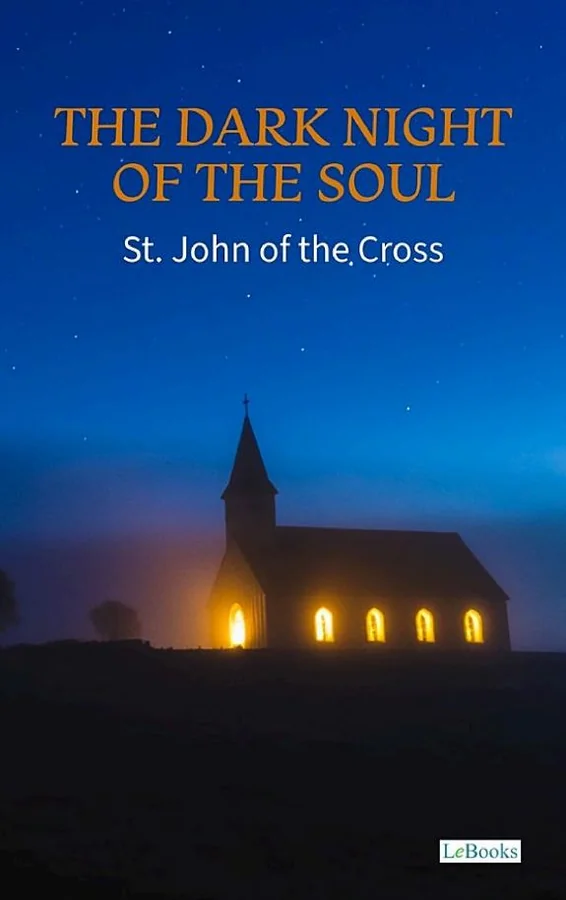
The Dark Night of the Soul - St. John of the Cross
 80
80

The Dark Night of the Soul - St. John of the Cross
St. John of the Cross’s exposition on the soul's arduous ascent offers stark clarity on spiritual desolation. His rigorous analysis of the passive purification, particularly in Book II, Chapter V, where he discusses the "night of the spirit," is unflinching. It eschews sentimentalism for a stark portrayal of divine action. The commentary, though dense, meticulously unpacks the allegorical poem. A limitation for the modern reader might be the dense theological framework, requiring significant background knowledge or careful study. The strength lies in its unvarnished honesty about the difficult, often misunderstood, stages of deep spiritual engagement. The work offers a powerful corrective to superficial notions of spiritual progress.
📝 Description
80
St. John of the Cross penned 'The Dark Night of the Soul' in the 16th century, detailing a path of spiritual purification.
This work by St. John of the Cross, a 16th-century Carmelite friar, explains the soul's difficult but divinely guided journey through spiritual dryness. It begins with initial devotion and moves through stages of desolation, which the author presents not as abandonment but as necessary purification. The book is intended for those engaged in deep spiritual practice who experience periods of inner silence. It speaks to individuals who see these empty phases as essential for spiritual growth. Readers interested in contemplative prayer, the stripping away of ego, and the mechanics of spiritual transformation will find particular value here.
Written during a time of religious intensity in Spain, 'The Dark Night of the Soul' arose from a climate that both revered and questioned mystical theology. St. John himself faced opposition and imprisonment from within his order for his reformist efforts. His writings, including this one, established a theological basis for lived spirituality, often differing from more academic theological discourse.
As a central text in Christian mysticism, 'The Dark Night of the Soul' draws on and articulates the Carmelite tradition, influenced by earlier mystics like Teresa of Ávila and drawing from Scripture. St. John's concept of the 'dark night' describes a process of divine detachment from sensory and spiritual consolations, pushing the soul toward a direct, unmediated experience of God. This contrasts with more intellectual or devotional approaches, emphasizing a passive surrender to God's transformative action.
💡 Why Read This Book?
• Understand the "dark night" as a necessary, active process of spiritual purification, moving beyond mere suffering as described by St. John of the Cross in the 16th century. • Grasp the distinct phases of sensory and spiritual nights, learning how the soul is divested of attachments to reach union with God. • Explore the role of divine love as the active agent in the soul's transformation, even during periods of perceived absence, as detailed in the commentary.
⭐ Reader Reviews
Honest opinions from readers who have explored this book.
❓ Frequently Asked Questions
When was The Dark Night of the Soul written?
The poem was likely written between 1577 and 1579, with the extensive commentary composed later by St. John of the Cross, likely in the 1580s. It reflects the intense mystical and theological climate of Counter-Reformation Spain.
What is the 'dark night' in St. John of the Cross's work?
It refers to a period of spiritual trial where the soul experiences dryness, desolation, and a sense of divine absence. This is interpreted not as abandonment, but as a necessary purification to prepare the soul for union with God.
What is the relationship between the poem and the commentary?
The poem is a short, allegorical work describing the soul's journey. The commentary is St. John of the Cross's own detailed theological and spiritual explanation of each stanza of the poem.
Who was St. John of the Cross?
He was a 16th-century Spanish Carmelite friar, mystic, and theologian, canonized in 1726. He is considered one of the foremost figures in Christian mysticism.
What are the main stages of purification discussed?
The work details two primary stages: the dark night of the senses, which purifies attachments to sensory pleasures and consolations, and the dark night of the spirit, a more profound purification of the intellect, memory, and will.
Is this book suitable for beginners in spirituality?
While profoundly influential, its dense theological language and advanced spiritual concepts make it more suited for those with a dedicated contemplative practice or a strong background in Christian mysticism.
🔮 Key Themes & Symbolism
The Passive Purification
This text meticulously details the soul's passive purification, a divinely orchestrated process where the soul is stripped of its reliance on spiritual consolations and even its own understanding. St. John of the Cross distinguishes between the active purification, where the individual consciously detaches, and the passive, where God Himself acts upon the soul. This latter phase is the core of the 'dark night,' a necessary emptying to make space for divine indwelling, moving the soul from imperfection towards a more direct apprehension of God.
Divine Union
The ultimate aim of the dark night is divine union, a state of profound intimacy and transformation with God. This is not merely an intellectual assent but a reorientation of the entire being. St. John of the Cross describes this union as a "transforming union," where the soul becomes so absorbed in the divine will and love that it participates in the divine life. The journey through darkness is the crucible wherein this ultimate spiritual goal is forged.
The Role of Suffering
Suffering in The Dark Night of the Soul is not gratuitous but is presented as an essential means of spiritual growth. It is the fire that burns away imperfections and attachments, purifying the soul. The text emphasizes that during the dark night, the soul often feels abandoned or in torment, yet this very experience, when embraced with faith, becomes the vehicle for deeper spiritual formation and a more intense experience of divine love.
Disencarnation of the Spirit
A central theme is the detachment from all forms of spiritual gratification, including intellectual understanding and emotional fervor, which St. John of the Cross terms the "night of the spirit." This profound emptying allows the soul to be receptive to God's presence in a way that transcends created means. It is a stripping away of the spirit's own preferences and methods to embrace the divine method of union.
💬 Memorable Quotes
Direct passages from the work, attributed to the author.
“The soul that is attached to anything, however much, will not reach union with God.”
— This principle underscores the necessity of complete detachment from all created things, including spiritual consolations or intellectual pursuits. Attachment, even to seemingly good things, creates an obstacle to the soul's complete surrender to divine will.
“In the evening of life, I shall be judged on love.”
— This attributed saying reflects a core tenet of Christian mysticism: that the ultimate measure of spiritual progress is the soul's capacity for divine love and charity, rather than adherence to external rules or accumulation of knowledge.
“The dark night is a "spiritual purgatory" that purifies the soul.”
— This interpretation of the central metaphor emphasizes the painful yet redemptive nature of the spiritual journey. It functions as a cleansing process, burning away the soul's imperfections to make it fit for union with the divine.
“God is found in the deepest darkness.”
— This concept suggests that it is precisely in the moments of greatest spiritual desolation and apparent absence that the soul is most intimately touched by the divine presence. It is a call to seek God not in light and comfort, but in the void.
💡 Key Ideas
Editorial paraphrase of the work's core concepts — not direct quotes.
To arrive at the experience of the unknowing, one must go by the way of unknowing.
This paraphrased concept highlights the paradoxical path of spiritual growth. True divine knowledge is not attained through accumulation of concepts or understanding, but through a surrender of the intellect and a willing embrace of spiritual ignorance.
🌙 Esoteric Significance
Tradition
While rooted in Christian mysticism, The Dark Night of the Soul profoundly influences esoteric traditions through its exploration of the soul's journey towards unity. It aligns with Neoplatonic concepts of the ascent of the soul and Gnostic ideas of divine illumination through inner experience. Its emphasis on purification and direct divine apprehension appeals to Hermetic principles of "as above, so below" and the transformation of the human microcosm to mirror the divine macrocosm.
Symbolism
The "dark night" itself is the primary symbol, representing not mere absence of God but a transformative void wherein the soul is divested of ego and attachment. Light and darkness are crucial; darkness signifies the unknowable divine essence and the stripping away of sensory/intellectual faculties, while light represents the divine presence that gradually illuminates the purified soul. The journey itself symbolizes the alchemical process of transmutation, turning the lead of the lower self into the gold of spiritual union.
Modern Relevance
Contemporary spiritual seekers, transpersonal psychologists, and practitioners of various contemplative disciplines draw heavily from St. John of the Cross's work. Thinkers exploring the psychology of consciousness and spiritual development often reference his stages of purification. Practices in mindfulness, contemplative prayer, and even certain forms of Western esotericism engage with his ideas on detachment, the stripping of the ego, and the pursuit of direct experience of the divine.
👥 Who Should Read This Book
• Advanced practitioners of contemplative prayer seeking to understand periods of spiritual dryness and desolation as divine purification. • Students of Christian mysticism and comparative religion interested in the rigorous theological framework of the Spanish mystics, particularly St. John of the Cross. • Individuals engaged in deep self-inquiry and psychological work focused on ego dissolution and the transformation of consciousness.
📜 Historical Context
Penned by St. John of the Cross in the latter half of the 16th century, The Dark Night of the Soul emerged during a period of intense religious reform and Counter-Reformation activity in Spain. This era saw profound theological debates and the flourishing of mystical literature, often under the watchful eye of the Inquisition. John of Avila, a contemporary and spiritual mentor, also navigated similar spiritual and ecclesiastical challenges. The work provided a rigorous mystical theology that contrasted with the more scholastic approaches prevalent in universities. Its emphasis on passive purification and direct experience of God offered a path distinct from, and sometimes at odds with, more institutionalized forms of piety, leading to scrutiny of John's own reformist activities within the Carmelite Order.
📔 Journal Prompts
The soul's passive purification as a divine action.
Experiences of spiritual dryness and perceived divine absence.
The transformation of attachments through the dark night.
The nature of divine union as described by St. John of the Cross.
The role of faith during periods of unknowing.
🗂️ Glossary
Dark Night of the Senses
The initial stage of purification where the soul detaches from excessive reliance on sensory pleasures and spiritual consolations, making it more receptive to divine guidance.
Dark Night of the Spirit
A deeper, more profound stage of purification affecting the intellect, memory, and will, where the soul experiences intense dryness and a sense of being overwhelmed by the divine presence.
Transforming Union
The ultimate goal of the spiritual journey, where the soul becomes so united with God that its will is perfectly aligned with the divine will, participating in the divine life.
Spiritual Purgatory
A metaphor used to describe the dark night, emphasizing its painful yet cleansing and redemptive nature in preparing the soul for divine union.
Detachment
The process of voluntarily or involuntarily relinquishing attachment to created things, spiritual experiences, and even one's own will, in favor of God.
Unknowing
A state of spiritual receptivity characterized by the surrender of intellectual understanding and sensory perception, leading to a direct, non-conceptual apprehension of God.
Divine Love
The active, transformative force that drives the purification process and constitutes the essence of the union between the soul and God.
This book appears in 1 collection
🔮 Readers Also Liked
Browse all →








From the “Dark Night of the Soul” Collection
View all →






More Free Occult Philosophy Books
View all →