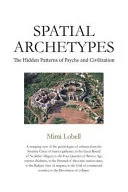
Spatial Archetypes
 80
80

Spatial Archetypes
Mimi Lobell’s *Spatial Archetypes* offers a compelling, if dense, cartography of the human psyche as expressed through societal structures. The book’s strength lies in its ambitious scope, charting a course from the earliest human groupings to the complexities of modern commercial societies, all viewed through the lens of spatial organization. Lobell’s analysis of the "Pyramid" archetype, for instance, vividly illustrates how theocratic nation-states impose a rigid, hierarchical order reflecting a specific consciousness. However, the sheer intellectual density can be a barrier; the work demands significant engagement and may leave readers wishing for more illustrative examples or a more accessible narrative flow in places. The concept of "Radiant Axes" as the organizing principle of empires, though powerful, could benefit from further explication to fully grasp its psychological underpinnings. Ultimately, *Spatial Archetypes* is a valuable, challenging contribution for those seeking to understand the deep patterns of civilization.
📝 Description
80
Mimi Lobell's 2018 book argues that societal structures mirror psychological states.
Spatial Archetypes, published in 2018, examines how the physical and conceptual spaces societies create reflect their underlying psychologies and mythologies. Mimi Lobell traces this connection from early human groups to complex civilizations, showing how distinct spatial arrangements correspond to different stages of collective consciousness. The book suggests that understanding these spatial forms offers insight into the deep structures of human social organization.
Lobell details several archetypal spatial forms, linking each to a specific period of cultural and psychological development. These include Sensitive Chaos, the Great Round, the Four Quarters, the Pyramid, Radiant Axes, the Grid, and Dissolution. Each archetype is presented as a distinct reflection of a society's internal state and worldview. The work offers a counterpoint to solely materialist explanations of cultural change, focusing instead on the psychological and symbolic dimensions.
This book is of interest to students of anthropology, psychology, history, and comparative religion. Architects, urban planners, and designers may find new perspectives on how built environments embody cultural ideals. Esoteric scholars and practitioners concerned with psychogeography and the evolution of myth will find a structured intellectual approach.
Published in 2018, Spatial Archetypes emerged within a renewed interest in Jungian psychology and ancient cosmologies. Lobell's work builds on analyses of myth and symbol, akin to Mircea Eliade and Joseph Campbell, but specifically uses spatial organization as its analytical lens. It offers a perspective that emphasizes the psychological and symbolic dimensions of cultural development, proposing that our physical environments are direct manifestations of collective inner states and belief systems, a concept often explored in esoteric traditions that connect inner and outer worlds.
💡 Why Read This Book?
• Gain a unique framework for understanding societal evolution by analyzing its spatial forms, a concept exemplified by the "Great Round" of Neolithic villages, offering insights unavailable in purely historical accounts. • Explore how collective consciousness is encoded in physical structures, from the "Pyramid" of theocratic states to the "Grid" of commercial societies, providing a new lens for cultural analysis. • Discover the psychological underpinnings of societal collapse through Lobell's "Dissolution" archetype, offering a distinct perspective on civilizational cycles that goes beyond economic or political factors.
⭐ Reader Reviews
Honest opinions from readers who have explored this book.
❓ Frequently Asked Questions
What is the "Sensitive Chaos" concept in Spatial Archetypes?
The "Sensitive Chaos" refers to the fluid, instinctual social organization of hunter-gatherer societies. In Mimi Lobell's 2018 book, this represents the earliest human psychological state, characterized by a close connection to nature and a lack of rigid hierarchical structures.
How does Mimi Lobell connect spatial forms to psychology?
Lobell argues that the physical and conceptual spaces societies create, such as the "Four Quarters" or the "Pyramid," are direct manifestations of their collective psychological states and mythologies, reflecting underlying worldviews.
What historical periods does Spatial Archetypes cover?
The book spans from the pre-Neolithic "Sensitive Chaos" of hunter-gatherers through the Neolithic "Great Round," Bronze Age "Four Quarters," theocratic "Pyramid," imperial "Radiant Axes," commercial "Grid," and finally, societal "Dissolution."
Is Spatial Archetypes suitable for architects or urban planners?
Yes, the book offers novel perspectives on how built environments embody cultural ideals and psychological states, making it relevant for architects and planners interested in the symbolic dimensions of space.
When was Spatial Archetypes first published?
Spatial Archetypes by Mimi Lobell was first published on March 3, 2018, making it a contemporary work in the fields of esoteric studies and cultural analysis.
What is the 'Grid' archetype in Lobell's work?
The 'Grid' archetype, as explored in Spatial Archetypes, represents the spatial organization of commercial societies. It signifies a shift towards abstract, quantifiable systems and a focus on exchange and interconnectedness.
🔮 Key Themes & Symbolism
Archetypal Spatial Organization
This theme examines how distinct spatial arrangements—from the "Sensitive Chaos" of early humans to the "Grid" of modern societies—reflect and shape collective human psychology. Lobell posits that these archetypes are not mere physical structures but potent symbolic expressions of a culture's worldview, myths, and developmental stage. The book systematically details forms like the "Great Round" (Neolithic), "Four Quarters" (Bronze Age), and the "Pyramid" (theocratic states), illustrating how they embody specific consciousness patterns and social dynamics.
Psychology of Civilizational Cycles
Spatial Archetypes provides a unique lens on the rise and fall of civilizations by linking them to evolving spatial consciousness. The "Radiant Axes" of empires, for example, represent expansionist psychological drives, while the "Dissolution" archetype captures the fragmentation and collapse that follows. This framework suggests that the very way a society structures its space is indicative of its psychological health and its susceptibility to decline, offering a cyclical view of history rooted in psychological states.
The Symbolic Field of Culture
Lobell argues that human cultures imbue their environments with deep symbolic meaning, and these meanings are often expressed through spatial organization. The book explores how different cultures have conceptualized sacred geography and the cosmos, translating these into tangible forms. From the circularity of Neolithic villages to the hierarchical linearity of empires, the spatial choices made reveal fundamental beliefs about order, power, and the human place within the universe.
Evolution of Collective Consciousness
The central thesis posits that human collective consciousness evolves through distinct stages, each characterized by a dominant spatial archetype. This evolution is not solely technological or social but deeply psychological. The shift from the "Sensitive Chaos" to the "Great Round" and onward to the "Grid" signifies transformations in how humans perceive themselves, their relationships, and their reality, with spatial metaphors acting as the primary indicators of these shifts.
💬 Memorable Quotes
Direct passages from the work, attributed to the author.
“The Sensitive Chaos of hunter-gatherers.”
— This phrase expresses the primal, instinctual, and fluid social organization of early human groups. It suggests a consciousness deeply embedded in nature, unburdened by rigid structures or abstract concepts, reflecting a state of being rather than structured doing.
“The Great Round of Neolithic villagers.”
— This refers to the circular spatial patterns characteristic of early agricultural communities. The roundness symbolizes wholeness, cyclical time, and a balanced relationship with the earth and cosmos, representing a move towards more stable, communal living.
“The Four Quarters of Bronze Age warrior chieftains.”
— This archetype signifies the division of space and society into distinct quadrants, often reflecting a hierarchical or militaristic order. It suggests a more organized, perhaps territorial, consciousness focused on division, conquest, and defined domains of influence.
“The Pyramid of theocratic nation states.”
— This spatial form embodies extreme hierarchy and centralized power, typical of early nation-states ruled by divine or priestly authority. The pyramid structure reflects a consciousness focused on absolute order, divine mandate, and the subjugation of the many to the few.
“The Dissolution of collapse.”
— This final archetype describes the breakdown of established order and spatial coherence that accompanies societal collapse. It suggests a loss of psychological integration and a return to fragmentation, where established forms lose their meaning and structure disintegrates.
🌙 Esoteric Significance
Tradition
While not explicitly aligned with a single esoteric lineage like Hermeticism or Kabbalah, *Spatial Archetypes* draws heavily from Jungian depth psychology and archetypal symbolism, which themselves have deep roots in Gnostic and Hermetic thought. Lobell’s work can be seen as a modern hermeneutic application of universal symbolic language, treating spatial configurations as archetypal expressions of the collective unconscious. It fits within a broader esoteric tradition that seeks to uncover hidden patterns and symbolic meanings underlying manifest reality, offering a psychological framework for understanding cosmic order.
Symbolism
Key symbols include the "Great Round," representing wholeness, cyclical time, and unity in Neolithic societies; the "Pyramid," symbolizing rigid hierarchy, divine right, and centralized power in theocratic states; and the "Grid," reflecting the abstract, quantifiable, and interconnected nature of commercial societies. These spatial symbols are not merely decorative but are interpreted as direct expressions of a culture's dominant psychological state and its relationship to the cosmos and social order.
Modern Relevance
Contemporary thinkers in fields such as ecopsychology, critical geography, and architectural theory find resonance in Lobell's work. Her emphasis on the psychological impact of spatial organization is relevant to discussions on urban design, sustainable living, and the creation of meaningful environments. The book's archetypal approach also informs modern interpretations of mythology and consciousness studies, offering a sophisticated lens for understanding how deeply ingrained spatial metaphors continue to shape our perceptions and societies.
👥 Who Should Read This Book
• Students of comparative mythology and depth psychology seeking to understand the symbolic underpinnings of societal structures, particularly those interested in Jungian archetypes and the evolution of consciousness. • Architects, urban planners, and designers looking for theoretical frameworks that connect built environments to cultural psychology and historical development, moving beyond purely functional or aesthetic considerations. • Esoteric scholars and practitioners interested in the psychogeography of culture, exploring how collective beliefs and mythologies manifest in tangible spatial forms across different historical eras.
📜 Historical Context
Mimi Lobell's *Spatial Archetypes*, published in 2018, arrived during a resurgence of interest in Jungian psychology, myth criticism, and alternative models of history. It engages with the tradition of scholars like Mircea Eliade, whose work explored sacred geography and cosmology, and Joseph Campbell, known for his comparative mythology. Lobell's approach, however, uniquely centers on spatial organization as the primary driver and indicator of cultural psychology, diverging from purely sociological or economic interpretations. While not directly engaging in polemics with specific contemporaries, her work implicitly challenges reductionist historical materialism by emphasizing symbolic and psychological structures. The intellectual currents of the late 20th and early 21st centuries, marked by postmodern critiques and a renewed appreciation for archetypal patterns, provided fertile ground for Lobell’s synthesis. The book’s meticulous cataloging of spatial forms offers a counter-narrative to linear progressionist views of history, proposing instead a cyclical model deeply tied to evolving consciousness.
📔 Journal Prompts
The "Sensitive Chaos" of hunter-gatherer bands: How does this primal spatial arrangement inform contemporary ideas of freedom and community?
Reflect on the "Great Round" archetype: In what ways do circular forms in modern life (e.g., public spaces, rituals) foster a sense of unity?
Consider the "Pyramid" structure: How does the psychological impulse behind hierarchical spatial organization manifest in current social or political systems?
Analyze the "Grid" archetype: What are the psychological consequences of living within predominantly grid-based urban environments?
The concept of "Dissolution": How can understanding this archetype of societal collapse offer insights for personal or collective resilience?
🗂️ Glossary
Sensitive Chaos
The initial, fluid, and instinctual social and psychological state of hunter-gatherer societies, characterized by a lack of rigid structure and a close connection to the natural environment.
Great Round
The archetypal spatial organization of Neolithic villagers, characterized by circular settlements and communal structures, symbolizing wholeness, cyclical time, and social cohesion.
Four Quarters
A spatial division common in Bronze Age societies, often reflecting a hierarchical, territorial, or cosmological order, representing a more structured and often militarized consciousness.
Pyramid
The archetypal spatial form of theocratic nation-states, signifying extreme hierarchy, centralized power, and a rigid, divinely ordained social structure.
Radiant Axes
The spatial configuration of empires, characterized by radiating lines of power and influence emanating from a central point, reflecting expansionist and hegemonic psychological drives.
Grid
The spatial archetype of commercial societies, emphasizing interconnectedness, abstract order, and quantifiable systems, often associated with rationalization and exchange.
Dissolution
The final archetype described, representing the breakdown of established spatial and social order during periods of societal collapse, signifying fragmentation and loss of coherence.
This book appears in 1 collection
🔮 Readers Also Liked
Browse all →









From the “Archetypes” Collection
View all →






More Free Occult Philosophy Books
View all →