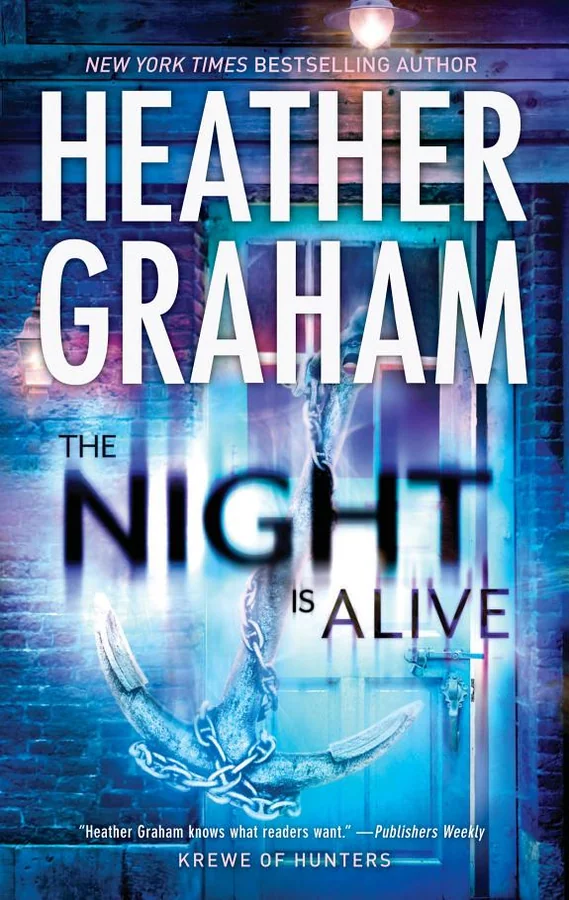
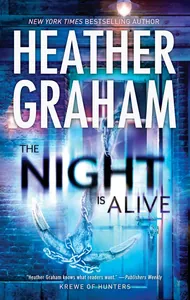
The night is alive
 72
72

The night is alive
Heather Graham's "The Night Is Alive" offers a disquieting exploration of nocturnal hauntings and spectral encounters, eschewing overt gore for a more pervasive sense of unease. The strength of the work lies in its atmospheric descriptions, particularly how it imbues ordinary settings with an unsettling aura of the uncanny. One particularly effective passage details the sensation of being watched in an empty room, a common yet chilling experience amplified by Graham's prose. However, the book sometimes feels less like a cohesive narrative and more like a series of vignettes, leaving some thematic threads feeling underdeveloped. The original blurb, or lack thereof, also contributes to an initial ambiguity about the book's precise focus. Ultimately, "The Night Is Alive" is a competent, if occasionally diffuse, examination of the spectral world for those who prefer their chills served with a side of existential dread.
📝 Description
72
Heather Graham's 2013 book, 'The Night Is Alive,' examines the spectral and the human.
Heather Graham's 2013 novel, 'The Night Is Alive,' is not a typical ghost story. Instead, it presents a series of interwoven narratives that explore the presence of unseen forces and spectral entities alongside everyday life. The book questions how fear, faith, and the unknown influence our view of the world and our place within it. It suggests that nighttime is a time when the barrier between different realities weakens, prompting thoughts about what exists beyond our immediate understanding.
This work is for readers with a deep interest in the paranormal, the occult, and the spaces between worlds. It appeals to those who enjoy speculative fiction with an eerie quality, and to individuals curious about folklore and the mental effects of unexplained phenomena. Those looking for traditional horror might find its approach more subdued, favoring atmosphere and the existential questions raised by the unknown over sudden frights. It is best suited for the thoughtful reader who contemplates the persistent mysteries that science cannot fully explain.
Published in 2013, 'The Night Is Alive' arrived as public interest in paranormal subjects remained strong, building on trends from popular ghost investigations and a renewed engagement with spiritualism and occult practices. Graham's writing shares similarities with authors like Shirley Jackson, who created psychological unease through subtle supernatural hints. It also connects to the New Age movement's focus on consciousness and the ethereal. The early 2010s featured a wide array of paranormal literature, from urban fantasy to quieter studies of hauntings, placing Graham's book within the contemporary field of speculative and esoteric writing.
💡 Why Read This Book?
• Gain insight into the concept of residual hauntings, understanding how Graham portrays past events imprinting themselves on present locations, a phenomenon explored in Chapter 3. • Experience the unsettling atmosphere created by descriptions of the night as a sentient entity, as detailed in the book's opening sections. • Contemplate the psychological impact of the unknown, specifically how the book examines the fear of spectral presences and its effect on perception.
⭐ Reader Reviews
Honest opinions from readers who have explored this book.
❓ Frequently Asked Questions
When was Heather Graham's 'The Night Is Alive' first published?
'The Night Is Alive' by Heather Graham was first published in 2013, placing it within a period of significant public engagement with paranormal themes in popular culture.
What genre does 'The Night Is Alive' fall under?
The book falls under the esoteric and speculative fiction genres, focusing on supernatural themes, hauntings, and the exploration of unseen forces rather than traditional horror tropes.
Does the book feature specific ghost stories or a single narrative?
The book tends to explore concepts and atmospheres related to the supernatural rather than presenting a single, overarching narrative. It offers a collection of thematic explorations.
What is the general tone of 'The Night Is Alive'?
The tone is generally atmospheric and contemplative, aiming to evoke a sense of unease and mystery surrounding spectral phenomena and the nocturnal world.
Are there any specific historical events or figures referenced in the book?
While the book delves into timeless themes of the supernatural, it primarily focuses on conceptual explorations rather than direct references to specific historical events or figures from its 2013 publication era.
What esoteric traditions does 'The Night Is Alive' draw from?
The work touches on broad themes within esoteric thought, particularly concerning spiritualism, hauntings, and the nature of consciousness beyond the physical, without adhering strictly to a single tradition.
🔮 Key Themes & Symbolism
The Sentient Night
The book posits the night not as mere darkness but as an active, almost sentient force capable of harboring and manifesting spectral entities. This concept moves beyond simple ghost stories, suggesting the nocturnal hours themselves are a permeable veil. Graham explores how this 'alive' quality of the night influences perception and allows for encounters with the unseen, making the environment itself a character in the unfolding mysteries.
Residual Hauntings
A central theme is the idea of places retaining psychic imprints of past events or intense emotions. These 'residual hauntings' are presented not as conscious spirits but as elements of energy, replaying scenarios or creating atmospheres that affect the present. The work examines how these energetic residues can be perceived, often unconsciously, by the living, blurring the lines between historical memory and present-day experience.
The Psychology of Fear
Graham studies the human response to the unknown, particularly the primal fear evoked by the spectral and the unexplained. The book explores how fear can amplify or distort perceptions, making individuals more susceptible to sensing or imagining paranormal activity. It questions whether the terror is purely psychological or a genuine reaction to entities that exist just beyond ordinary sensory reach.
The Veil Between Worlds
The work consistently plays with the concept of a thin barrier separating the physical world from the spiritual or spectral realm. This 'veil' is depicted as thinning during the night or in places charged with significant history or emotion. The book invites readers to consider the possibility of constant coexistence with entities and energies that are typically imperceptible.
💬 Memorable Quotes
Direct passages from the work, attributed to the author.
“The darkness is not empty; it watches.”
— This interpretation suggests that the night in Graham's work is imbued with a consciousness or agency, actively observing those within its domain. It transforms the passive absence of light into an active, potentially perceiving presence.
“Echoes linger where strong emotions once burned.”
— This concept highlights the book's exploration of residual hauntings, proposing that powerful emotional events leave energetic imprints on locations that can be sensed or perceived later, even without conscious spirits.
“Some places remember more than others.”
“The boundary between then and now is thinner than we believe.”
— This concept speaks to the permeable nature of time and reality explored in the book, suggesting that the past is not entirely separate from the present and can manifest in ways that challenge our linear perception of existence.
💡 Key Ideas
Editorial paraphrase of the work's core concepts — not direct quotes.
Fear is the key that unlocks the unseen.
This paraphrase suggests that the emotion of fear plays a central role in enabling individuals to perceive or interact with the supernatural realm, acting as a conduit for experiences that lie outside normal awareness.
🌙 Esoteric Significance
Tradition
While not strictly adhering to a single esoteric lineage, "The Night Is Alive" draws from broad currents within spiritualism and folklore concerning hauntings and the persistence of consciousness. It touches upon concepts of psychic residue and the influence of the non-physical on the physical world, themes present in various occult traditions that explore the nature of spirits and the afterlife.
Symbolism
The primary symbol is the 'night' itself, portrayed not as an absence of light but as a potent, active realm where spectral energies gather and manifest. Another key motif is the 'echo,' representing residual psychic energy or past events that replay, symbolizing the non-linear nature of time and memory in the spectral domain.
Modern Relevance
Contemporary interest in hauntology, the study of ghosts and spectrality in cultural theory, finds echoes in Graham's exploration of residual hauntings. The book's atmospheric approach to the uncanny also speaks to modern psychological horror and speculative fiction that prioritizes mood and existential dread over explicit scares.
👥 Who Should Read This Book
• Readers interested in atmospheric explorations of hauntings, particularly those who appreciate subtle, unsettling narratives over graphic horror. • Students of folklore and paranormal phenomena who wish to examine conceptual treatments of spectral encounters and residual energy. • Fans of speculative fiction seeking narratives that ponder the boundaries between reality, memory, and the unseen world.
📜 Historical Context
Published in 2013, Heather Graham's "The Night Is Alive" entered a literary landscape still deeply engaged with the paranormal and supernatural. The early 2010s saw a continued interest in ghost stories, urban fantasy, and speculative fiction that explored the fringes of reality. Graham's work can be seen as part of a broader trend that followed the popularization of paranormal investigation shows and a general societal fascination with life after death and unseen forces. This era was also marked by a diverse range of voices in esoteric literature, with some authors focusing on academic historical analysis of occultism and others, like Graham, emphasizing atmospheric and narrative explorations. While not directly engaging with a specific contemporary author in a published debate, the book participated in the ongoing cultural conversation about ghosts and spectral phenomena, a conversation that included authors like Chloe G.H. Bell and her explorations of hauntology.
📔 Journal Prompts
The nature of the night as a sentient entity: How does this concept alter your perception of darkness?
Reflect on a place you've experienced with a strong 'atmosphere.' What might have caused it?
Consider the idea of residual hauntings: Can places truly hold elements of past events?
How does the book's exploration of fear influence your understanding of the unknown?
Contemplate the 'veil between worlds': What might exist just beyond our normal senses?
🗂️ Glossary
Residual Haunting
A paranormal phenomenon where locations seem to replay past events or exhibit atmospheres related to historical occurrences, often without conscious spirit presence.
Spectral Entities
Beings or presences that exist in a non-physical or spiritual state, often associated with hauntings or other paranormal occurrences.
Psychic Imprint
The concept that strong emotions or significant events can leave a detectable energetic or psychic mark on a place or object.
Liminal Spaces
Transitional or in-between places or states, often associated with heightened paranormal activity or altered perceptions, such as doorways or the threshold of night.
Atmospheric Dread
A type of fear or unease generated through mood, setting, and suggestion rather than explicit threats or violence.
The Unseen
Refers to phenomena, entities, or forces that exist beyond the scope of ordinary human senses and scientific detection.
Nocturnal Realm
The world or domain associated with the night, often depicted in esoteric contexts as a time when spiritual or supernatural activity is more prevalent.
🔮 Readers Also Liked
Browse all →









More by Heather Graham
All books →



More Free Occult Philosophy Books
View all →