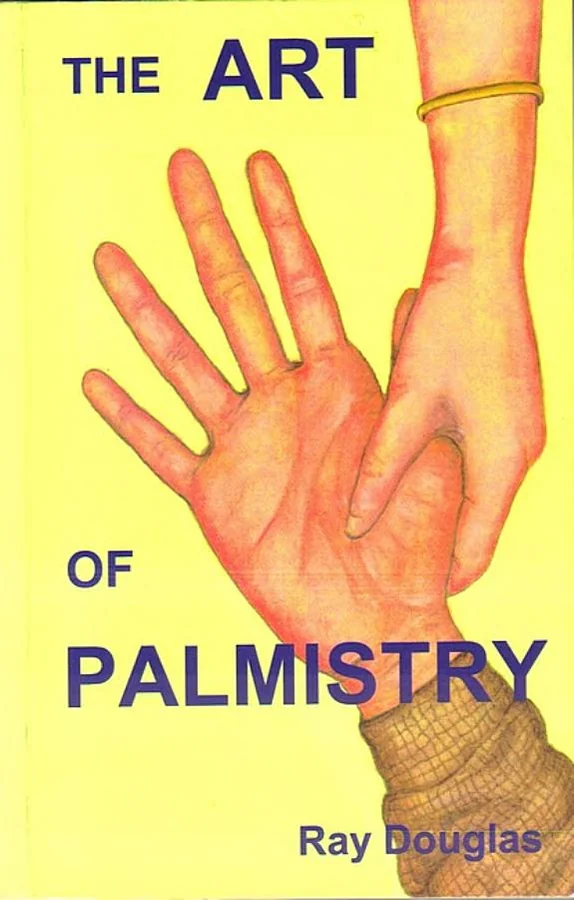
The Art of Palmistry
 75
75

The Art of Palmistry
Ray Douglas’s "The Art of Palmistry" offers a refreshingly grounded perspective on a subject often shrouded in charlatanism. Douglas correctly identifies palmistry as an art of symbolic interpretation rather than fortune-telling, a crucial distinction that underpins the book's clarity. His methodical breakdown of hand anatomy—from the mounts named for classical deities to the nuanced readings of the major lines—is commendable for its accessibility. I found the explanation of the Mount of Luna, often overlooked in simpler guides, particularly insightful for understanding subconscious influences. However, the text occasionally leans towards a simplified presentation that might leave seasoned practitioners wanting deeper comparative analysis with other divinatory systems. While it successfully demystifies the basics, a more robust exploration of the interplay between hand markings and broader astrological or numerological influences would have elevated it further. Nevertheless, for the novice seeking a clear, step-by-step introduction to interpreting the hand's symbolic language, Douglas provides a solid foundation.
📝 Description
75
Ray Douglas's 2009 book, The Art of Palmistry, presents chiromancy as an interpretive art, not a predictive science.
Ray Douglas's "The Art of Palmistry" frames chiromancy as an interpretive art rather than a predictive science. The book explains that a person's hand, with its unique lines and skin patterns, functions as a symbolic representation of their inner self. Douglas details how to analyze the hand's physical features, including the mounts, fingers, and palm shape, along with the major and minor lines. This analysis aims to illuminate personality traits, natural talents, potential difficulties, and life paths. The method focuses on careful observation and symbolic connections.
This book is aimed at individuals curious about palmistry, especially beginners. Douglas organizes the content logically, starting with basic principles and progressing to more detailed interpretations. It serves as a practical guide for enthusiasts looking to understand themselves and others through hand reading. It also appeals to students of divination who seek to grasp the historical and symbolic foundations of chiromancy. The volume provides a structured path for those who wish to learn independently.
Palmistry has ancient origins, appearing in traditions from India, China, and Greece. During the Renaissance, figures like Johannes Trithemius and William Lilly incorporated chiromancy into their occult studies, often alongside astrology. Published in 2009, "The Art of Palmistry" arrived during a period of renewed interest in esoteric subjects, driven by a search for personal insight. Douglas's work contributes to this modern resurgence with a clear, instructional style, differing from the denser historical texts.
💡 Why Read This Book?
• Learn to interpret the symbolic language of the hand's "Mounts," like the Mount of Venus, to understand innate drives and potentials, a concept explored in detail within the book's foundational chapters. • Gain practical skills in analyzing the major "Lines"—Life, Head, and Heart—as indicators of psychological tendencies and life's significant passages, moving beyond simple prediction to symbolic understanding. • Understand the holistic representation of the self through the hand, a core principle presented in the book, allowing for a deeper, non-predictive insight into personality, talents, and challenges.
⭐ Reader Reviews
Honest opinions from readers who have explored this book.
❓ Frequently Asked Questions
Is palmistry considered a science or an art according to Ray Douglas?
Ray Douglas firmly categorizes palmistry as an art, not a science or pseudoscience. He views the hand as a unique symbol representing the entire person, their personality, talents, and life's journey, best understood through interpretive symbolism.
What does the "Mount of Venus" signify in palmistry?
In "The Art of Palmistry," the Mount of Venus, located at the base of the thumb, is associated with love, passion, vitality, and sensuality. Its prominence can indicate a person's capacity for affection and their overall life energy.
How does "The Art of Palmistry" approach the interpretation of hand lines?
The book explains that lines like the Life Line, Head Line, and Heart Line are not literal predictions but symbolic indicators. They represent energy flow, psychological traits, and significant phases or experiences within a person's life.
Is "The Art of Palmistry" suitable for beginners?
Yes, Ray Douglas designed the book to be easy to learn, starting with the basics. It provides a structured approach for those new to palmistry seeking to understand its fundamental principles and interpretive methods.
What is the original publication year of Ray Douglas's "The Art of Palmistry"?
The original publication year for "The Art of Palmistry" by Ray Douglas is 2009. This edition aims to offer a contemporary and accessible guide to the practice.
What does the book suggest about using both hands in palmistry?
Douglas's "The Art of Palmistry" indicates that both hands, when taken together, can symbolize the whole person. This suggests a comprehensive analysis involves examining the dominant hand for current manifestations and the non-dominant hand for inherent potentials.
🔮 Key Themes & Symbolism
Hand as a Symbolic Map
The central thesis of "The Art of Palmistry" is that the human hand functions as a complex symbolic map of the individual. Douglas argues that the intricate patterns of lines, mounts, and shapes are not random but form a unique representation of a person's entire existence. This perspective shifts palmistry from a deterministic practice to one of understanding inherent potentials, personality structures, and life's symbolic narrative. The book details how specific features correlate to talents, strengths, weaknesses, and even health predispositions, offering a holistic view of self-knowledge.
The Art vs. The Science
Ray Douglas makes a deliberate distinction between palmistry as an 'art' versus a 'science' or 'pseudoscience.' This framing emphasizes interpretation, intuition, and the symbolic resonance between the hand and the person, rather than empirical measurement or predictive certainty. The book's pedagogical approach reflects this, teaching the reader how to 'read' the symbolic language of the hand. This artistic interpretation allows for a more nuanced and personal understanding of the information conveyed by the palm, aligning it with contemplative practices rather than rigid formulas.
Interpreting the Mounts and Lines
A significant portion of "The Art of Palmistry" is dedicated to the detailed interpretation of the hand's physical features, specifically the mounts and lines. The mounts, named after classical deities like Venus, Jupiter, and Apollo, are linked to specific human drives and characteristics. Similarly, the major lines—Life, Head, Heart—are explored for their symbolic meaning regarding vitality, intellect, and emotional capacity. Douglas provides a systematic method for analyzing these elements, enabling readers to decode the symbolic messages embedded within the palm's geography.
Holistic Personality Analysis
Douglas's work presents palmistry as a tool for holistic personality analysis. By examining the confluence of various hand features—the overall shape, finger proportions, nail characteristics, and the configuration of mounts and lines—a comprehensive picture of the individual emerges. The book aims to illustrate how these diverse elements work together, offering insights into a person's innate gifts, potential challenges, and overall life path. This integrated approach encourages self-awareness and a deeper appreciation of one's unique makeup.
💬 Memorable Quotes
Direct passages from the work, attributed to the author.
“Palmistry is not a science, nor is it a pseudo-science. It is an art: the art of using the hand... to symbolise the whole person.”
— Douglas's explicit definition positions palmistry as an interpretive discipline focused on symbolic representation. This framing emphasizes intuition and symbolic understanding over empirical proof, setting the tone for a book that guides rather than dictates.
“Forming a pattern unique to the individual in every tiny detail, a person's hand can be seen to represent his or her entire life.”
— This highlights the individuality and specificity of palmistry as presented by Douglas. It suggests that the unique markings on each hand contain personalized information about the owner's life journey and character.
“This book starts with the basics and presents the subject in a way that is easy to learn.”
— This statement directly addresses the book's pedagogical intent. It assures readers, especially beginners, that the complex subject of palmistry has been broken down into manageable steps for accessible study.
“The art of using the hand, or both hands taken together, to symbolise the whole person.”
— This concise definition reinforces the book's central theme, emphasizing the symbolic function of the hand in representing an individual in their entirety, integrating physical form with inner essence.
💡 Key Ideas
Editorial paraphrase of the work's core concepts — not direct quotes.
The hand... can be seen to represent his or her entire life, their personality, talents, strengths and weaknesses, health, fortune and the fates which may befall them.
This quote expresses the book's core premise: that the hand is a comprehensive symbol. It suggests that chiromancy offers a detailed, albeit symbolic, overview of an individual's existence, from their inherent qualities to their external circumstances and potential destiny.
🌙 Esoteric Significance
Tradition
While not explicitly aligning with a single esoteric lineage like Hermeticism or Kabbalah, "The Art of Palmistry" draws from the broad Western tradition of divination and occult symbolism that has historically incorporated chiromancy. This tradition often views the physical body as a reflection of inner states and cosmic influences. Douglas’s work fits within this stream by treating the hand as a divinely or naturally inscribed text, offering insights into the soul's journey and the individual's place within the unfolding patterns of existence.
Symbolism
Key symbols in Douglas's work include the "Mounts" of the hand, named after Roman deities (e.g., Mount of Jupiter, Mount of Venus), which represent specific human drives and potentials. The "Lines"—Life, Head, Heart—are also potent symbols, not of fate, but of psychological energy and life's significant passages. The shape of the hand itself and the proportions of the fingers are further symbolic elements, contributing to a holistic interpretation of the individual's character and life path.
Modern Relevance
Contemporary interest in mindfulness, self-awareness, and personal development often intersects with practices like palmistry. Thinkers and practitioners exploring archetypal psychology, Jungian analysis, or even somatic experiencing might find value in Douglas’s symbolic interpretation of the hand as a map of the psyche. The book's accessible approach makes it relevant for modern self-help communities and individuals seeking tangible, yet symbolic, methods for understanding themselves beyond purely psychological or scientific frameworks.
👥 Who Should Read This Book
• Aspiring practitioners of divination arts seeking a clear, foundational text on chiromancy, moving beyond superstition to symbolic interpretation. • Individuals interested in self-discovery and personality analysis who prefer tangible, visual methods of introspection over purely abstract concepts. • Students of esoteric history curious about the practical application and symbolic language of palmistry as it has been presented in the early 21st century.
📜 Historical Context
Published in 2009, Ray Douglas's "The Art of Palmistry" emerged during a period of renewed interest in esoteric and self-help practices, often seeking personal meaning outside conventional structures. While palmistry's roots are ancient, dating back to Hellenistic Greece and Vedic India, its modern iterations have varied wildly. In the 17th century, figures like William Lilly integrated chiromancy with astrology in works like "Christian Astrology." Douglas’s approach, however, focuses on a clear, instructional method for beginners, differentiating itself from the more complex, often denser, historical treatises. Unlike contemporary occult authors who might engage with comparative mysticism, Douglas’s work is primarily a practical guide. Its 2009 publication places it in a landscape where online resources and simplified guides have become prevalent, yet Douglas aims for a more structured, art-focused presentation, distinct from purely fortune-telling manuals or academic historical analyses.
📔 Journal Prompts
The unique pattern of lines on your hand, as detailed in "The Art of Palmistry."
The symbolic meaning of your dominant hand's Mount of Jupiter.
How the interpretation of your Head Line aligns with your perceived intellectual style.
The significance of your non-dominant hand's Life Line in relation to innate vitality.
The holistic representation of your personality through the combined analysis of your hand's features.
🗂️ Glossary
Chiromancy
The practice of fortune-telling or divination through the study of the palm, including its lines, mounts, and shape. It is often viewed as an art of symbolic interpretation.
Mounts
Fleshy, raised areas on the palm, typically named after Roman gods (e.g., Mount of Venus, Mount of Jupiter). Each mount is believed to correspond to specific personality traits, talents, or energies.
Life Line
A major line on the palm, typically curving around the Mount of Venus. In palmistry, it is interpreted as indicating vitality, physical health, and significant life experiences, rather than a literal lifespan.
Head Line
A prominent line running horizontally across the palm, often associated with intellect, learning, and cognitive processes. Its depth, length, and shape offer insights into one's mental faculties and thinking style.
Heart Line
A horizontal line located in the upper palm, beneath the fingers. It is generally interpreted as relating to emotional capacity, romantic relationships, and the state of one's emotional well-being.
Symbolic Representation
The concept that elements of the hand (lines, mounts, shapes) act as metaphors or symbols that represent deeper aspects of a person's character, potential, or life journey, rather than literal predictions.
Dermatoglyphics
The scientific study of the patterns of skin ridges on fingers, palms, and soles. While "The Art of Palmistry" is not a scientific text, it acknowledges the unique patterns these ridges form on the hand.
This book appears in 1 collection
🔮 Readers Also Liked
Browse all →









From the “Palmistry” Collection
View all →





More Free Occult Philosophy Books
View all →