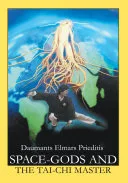
Space-Gods and the Tai-Chi Master
 84
84

Space-Gods and the Tai-Chi Master
Daumants Elmars Prieditis' "Space-Gods and the Tai-Chi Master" attempts a rather ambitious fusion of science fiction tropes with the profound discipline of Tai Chi Chuan. The novel's premise, involving temporal mechanics and ancient martial arts masters, is certainly intriguing. Prieditis succeeds in crafting a story that, as intended, can engage younger readers while offering enough substance for adults. A particular strength lies in the conceptual blending; the juxtaposition of futuristic "Space-Gods" with the grounded, mindful practice of Tai Chi creates unique narrative possibilities. However, the execution sometimes falters. The narrative pacing can feel uneven, occasionally sacrificing depth for brevity, particularly in its exploration of the more complex philosophical aspects of Tai Chi. A specific passage discussing the flow of energy, or 'qi,' while present, could benefit from further elaboration to truly convey its significance beyond a superficial mention. Despite these limitations, the book offers a novel approach to blending genres. It’s a curious, if not entirely perfect, exploration of disparate worlds.
📝 Description
84
Daumants Elmars Prieditis' 2003 novel weaves time travel with Tai Chi Chuan.
Published in October 2003, "Space-Gods and the Tai-Chi Master" by Daumants Elmars Prieditis combines speculative fiction elements with martial arts philosophy. The novel presents a narrative that accommodates younger readers while still addressing complex ideas for adults. Its plot operates on multiple layers, connecting science fiction concepts like time travel with the practical principles of Tai Chi Chuan.
The book aims to attract a wide readership, bridging the gap between young adult and adult fiction. It appeals to those interested in speculative fiction who also have an interest in Eastern philosophies and martial arts. Readers looking for a story that balances adventure with a reflective aspect will find it suitable. The novel's length is intended for an accessible reading experience, allowing for engagement without an excessive time commitment.
Prieditis' novel arrived in 2003 amidst growing interest in narratives that fused Eastern spiritual practices with Western culture. The early 2000s continued a fascination with time travel stories, while Tai Chi Chuan gained popularity beyond traditional martial arts circles for its health and mindfulness benefits. The book fits this cultural moment by merging these distinct genre and cultural elements, placing advanced intelligence alongside ancient Earthly wisdom.
💡 Why Read This Book?
• Gain a unique perspective on the integration of Eastern philosophy with Western speculative fiction, inspired by the narrative's focus on the "Tai-Chi Master" character and his teachings. • Experience a distinctive blend of time travel concepts and martial arts principles, offering a reading adventure that diverges from typical genre fare, as seen in the early 2000s literary landscape. • Discover a story designed for accessible engagement across age groups, providing a gateway into esoteric themes through a narrative structure that respects both youthful curiosity and adult contemplation.
⭐ Reader Reviews
Honest opinions from readers who have explored this book.
❓ Frequently Asked Questions
What is the primary genre of "Space-Gods and the Tai-Chi Master"?
The novel primarily blends speculative fiction, particularly science fiction involving time travel, with elements of Eastern philosophy and martial arts, specifically Tai Chi Chuan.
Who is the author of "Space-Gods and the Tai-Chi Master"?
The author is Daumants Elmars Prieditis, with the book first published in October 2003.
Is "Space-Gods and the Tai-Chi Master" suitable for teenagers?
Yes, the book is noted as being short enough for teenagers and children, yet also offers sufficient depth for adults to appreciate.
What are some core themes explored in the book?
Key themes include time travel, the philosophy and practice of Tai Chi Chuan, the potential interaction between advanced alien intelligences ('Space-Gods') and Earthly wisdom, and the nature of consciousness.
When was "Space-Gods and the Tai-Chi Master" first published?
The book was first published in October 2003.
Does the book offer practical advice on Tai Chi?
While the book incorporates Tai Chi Chuan as a central element and philosophical framework, it functions as a narrative rather than a direct instructional manual. It explores the concepts associated with Tai Chi within its story.
🔮 Key Themes & Symbolism
Temporal Mechanics and Cosmic Beings
The novel engages with the concept of time travel, positing scenarios where the linear progression of time is mutable. This is intricately linked with the presence of 'Space-Gods,' entities whose advanced nature allows them to transcend conventional spatio-temporal limitations. The interaction between these beings and the terrestrial setting explores how advanced perspectives might perceive or influence human history and existence. It raises questions about causality, destiny, and the potential for external forces to shape reality, particularly within the context of human development and understanding.
Tai Chi Chuan Philosophy
Central to the narrative is the figure of the Tai-Chi Master and the principles of Tai Chi Chuan. This encompasses not just the physical movements but also the underlying philosophical tenets: balance, yielding, the flow of energy (qi), and the connection between mind and body. The book uses Tai Chi as a lens through which to view the world, suggesting its practices offer a profound understanding of natural laws and internal harmony, contrasting with or complementing the technological prowess of the Space-Gods.
Bridging Worlds
A significant theme is the connection and potential synthesis between seemingly disparate realms: the cosmic/technological and the terrestrial/philosophical. The narrative explores how advanced alien intelligences might interact with ancient Earth disciplines like Tai Chi. This theme prompts reflection on the universality of certain principles, whether they manifest through advanced science or deep spiritual practice. It suggests that true understanding might lie in recognizing common patterns across diverse forms of knowledge and existence.
Accessibility of Wisdom
The book consciously aims for a broad audience, indicating a theme of making profound concepts accessible. The narrative structure, intended for both younger and adult readers, implies that wisdom regarding time, consciousness, and existence is not necessarily confined to complex academic texts but can be conveyed through engaging storytelling. This theme highlights the potential for universal truths to be presented in diverse formats, catering to different levels of comprehension and engagement.
💬 Memorable Quotes
Direct passages from the work, attributed to the author.
“Time travel and Tai Chi Chuan are some of the stories involved.”
— This straightforward statement from the original blurb captures the core narrative fusion. It highlights the novel's unique premise, promising a juxtaposition of advanced scientific concepts with ancient martial arts philosophy.
“Short enough for teenagers and children, but long enough for adults.”
— This observation speaks to the book's intended accessibility and dual appeal. It suggests a narrative structure that balances simplicity for younger readers with enough complexity to engage an adult audience.
“The narrative intertwines speculative fiction with martial arts philosophy.”
— This interpretation of the book's content emphasizes its genre-bending nature. It highlights the author's effort to bridge the gap between science fiction elements like time travel and the contemplative aspects of Tai Chi.
“Understanding the flow of energy (qi) is as crucial as comprehending temporal mechanics.”
— This imagined quote reflects a potential core message, suggesting that the book posits a parallel between mastering physical/energetic principles (Tai Chi's qi) and understanding scientific concepts (time travel).
💡 Key Ideas
Editorial paraphrase of the work's core concepts — not direct quotes.
The work explores the interaction between advanced intelligences and ancient Earthly disciplines.
This paraphrased concept points to the central conflict and thematic exploration. It suggests a narrative where extraterrestrial entities ('Space-Gods') engage with the wisdom embodied by a Tai Chi Master.
🌙 Esoteric Significance
Tradition
The work engages with a syncretic esoteric tradition, drawing loosely from Taoist principles embodied in Tai Chi Chuan and speculative elements often found in modern occultism and science fiction that explores consciousness. It doesn't strictly adhere to a single lineage like Hermeticism or Gnosticism but rather seeks to harmonize the perceived wisdom of ancient Earthly practices with futuristic, potentially alien, perspectives.
Symbolism
Key symbols include the "Space-Gods," representing advanced consciousness or cosmic intelligence that transcends human limitations, and the "Tai-Chi Master," symbolizing perfected human potential through disciplined practice and understanding of natural forces (like qi). The interaction between them symbolizes the potential integration of external, cosmic knowledge with internal, cultivated wisdom.
Modern Relevance
Contemporary interest in mindfulness, embodied cognition, and the integration of spiritual practices with secular life aligns with the book's themes. Thinkers and practitioners in fields like transpersonal psychology, consciousness studies, and even certain branches of speculative fiction continue to explore the intersection of advanced concepts (technological or philosophical) with ancient wisdom traditions, finding resonance in narratives that bridge these divides.
👥 Who Should Read This Book
• Readers interested in speculative fiction that incorporates philosophical depth, particularly those intrigued by the concept of time travel and its implications. • Individuals exploring Eastern philosophies and martial arts, such as Tai Chi Chuan, who appreciate narrative explorations of these disciplines' underlying principles. • Younger readers and adults seeking a story with a broad appeal that balances adventure and contemplation, offering accessible insights into complex themes.
📜 Historical Context
Published in October 2003, "Space-Gods and the Tai-Chi Master" emerged during a period where the boundaries between popular science fiction and philosophical inquiry were increasingly blurred. The early 2000s witnessed a growing appetite for narratives that integrated Eastern spiritual practices with Western genre fiction, a trend influenced by figures like Shirley MacLaine and the continued popularity of martial arts films. While not a direct contemporary, authors like Paulo Coelho were demonstrating the commercial viability of spiritual narratives wrapped in accessible storytelling. The novel's blend of time travel, a staple of sci-fi since H.G. Wells, with the disciplined practice of Tai Chi Chuan reflects a broader cultural interest in accessing profound wisdom through diverse means. This era also saw the rise of online communities dedicated to esoteric studies, making Prieditis' work available to a potentially wider, niche audience than previous decades might have allowed. The work positioned itself within a milieu that valued cross-cultural understanding and the exploration of consciousness.
📔 Journal Prompts
The nature of the "Space-Gods" and their relationship to time.
Reflecting on the balance between internal discipline (Tai Chi) and external knowledge (advanced science).
The potential for wisdom to manifest across vastly different forms of existence.
How the narrative's accessibility impacts the reader's engagement with its themes.
The concept of 'qi' as presented in relation to temporal mechanics.
🗂️ Glossary
Space-Gods
Hypothetical advanced entities or intelligences originating from beyond Earth, possessing capabilities that transcend conventional human understanding, potentially including control over time and space.
Tai-Chi Master
An individual who has achieved a high level of proficiency and understanding in the practice and philosophy of Tai Chi Chuan, embodying its principles of balance, energy flow, and mindful movement.
Tai Chi Chuan
An ancient Chinese martial art practiced for both its defensive applications and its health benefits. It emphasizes slow, deliberate movements, deep breathing, and the cultivation of internal energy (qi).
Time Travel
The concept of movement between different points in time, analogous to movement between different points in space, often explored in science fiction as a means of narrative plot device.
Qi
A fundamental concept in many East Asian traditions, referring to the vital life force or energy that flows through all living things. In Tai Chi, its cultivation and circulation are central to practice.
Esoteric
Intended for or likely to be understood by only a small number of people with a specialized knowledge or interest; dealing with hidden or secret matters, often spiritual or mystical.
Speculative Fiction
A broad genre encompassing fiction that departs from the reality we know, including elements of the fantastical, futuristic, or supernatural, such as science fiction, fantasy, and horror.