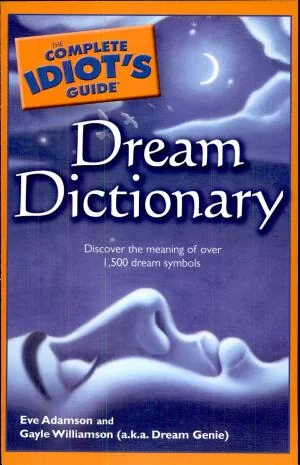
The complete idiot's guide dream dictionary
 82
82

The complete idiot's guide dream dictionary
Eve Adamson's approach in The Complete Idiot's Guide to Dream Dictionary is commendably thorough, presenting a broad spectrum of symbols without undue jargon. The sheer volume of entries is its primary strength, offering a readily accessible reference for a multitude of dream images. However, the guide occasionally leans towards a generalized interpretation, sometimes overlooking the nuanced, deeply personal context that Carl Jung emphasized in his own work on archetypes and the collective unconscious. For instance, the entry on 'water' might offer a standard interpretation of emotional states, but it could benefit from prompting the reader more directly about specific personal associations with different types of water bodies or experiences. Despite this limitation, Adamson provides a solid foundation for anyone beginning to explore their dream world. It serves as a competent, if sometimes broad, initial mapping of the subconscious terrain.
📝 Description
82
Eve Adamson's 2009 'Complete Idiot's Guide to Dream Dictionary' catalogs symbols and their meanings.
Published in 2009, this guide offers a catalog of dream symbols and their interpretations. It aims to help readers understand the meanings within their dreams. The work organizes potential dream imagery, from common experiences like falling to more obscure elements, and presents them in an accessible format. This guide is for individuals curious about dreams, regardless of prior knowledge. It assists those seeking personal growth, self-awareness, or an understanding of recurring dreams. It functions as a practical reference for anyone interested in the symbolic language of the mind. The book's core idea is that dreams carry symbolic meaning. It suggests common dream elements, like animals or situations, can be understood through established symbolic associations. Readers are encouraged to consider both general symbol meanings and their personal relevance, emphasizing the subjective nature of dream interpretation.
The practice of interpreting dreams has a long history, from ancient Mesopotamian divination to the psychoanalytic theories of Freud and Jung. Adamson's guide fits within this tradition by synthesizing various interpretive approaches into a lexicon. Its 2009 publication reflects a continued public interest in self-help and spiritual exploration, often blending psychological and archetypal perspectives.
💡 Why Read This Book?
• Gain a practical framework for understanding common dream symbols like "falling" or "flying," as detailed in the book's extensive catalog, helping you interpret these universal subconscious experiences. • Explore the potential psychological and archetypal meanings behind specific imagery, such as "animals" or "houses," as presented in Adamson's 2009 guide, fostering deeper self-awareness. • Develop a personal dictionary of dream interpretation by cross-referencing general meanings with your own life events, leveraging the book's comprehensive symbol index for personalized insight.
⭐ Reader Reviews
Honest opinions from readers who have explored this book.
❓ Frequently Asked Questions
What is the primary purpose of The Complete Idiot's Guide to Dream Dictionary?
The book serves as an extensive lexicon for understanding the symbolic language of dreams. It provides interpretations for a vast array of images, aiming to help readers decipher the meaning behind their subconscious experiences.
When was The Complete Idiot's Guide to Dream Dictionary first published?
The book was first published in 2009, reflecting a continued interest in dream interpretation and self-discovery in the early 21st century.
Does the book offer interpretations for both common and unusual dream symbols?
Yes, the guide aims for comprehensiveness, covering frequently encountered dream imagery such as 'teeth falling out' as well as more unique or obscure symbols that may appear in one's dreams.
Who is the author of The Complete Idiot's Guide to Dream Dictionary?
The author is Eve Adamson, known for her accessible writing style in various guidebooks, including this exploration of dream symbolism.
How does this book approach dream interpretation compared to psychological theories?
While drawing from general psychological concepts of symbolism, the book primarily offers a curated collection of interpretations, making it a practical reference rather than a deep dive into specific psychological schools like Freudian or Jungian analysis.
Can this guide help in understanding recurring dreams?
Yes, by providing a wide range of potential meanings for recurring symbols, the book can assist individuals in identifying patterns and exploring the underlying messages of persistent dream themes.
🔮 Key Themes & Symbolism
Symbolic Lexicon
The core of this work is its extensive dictionary format, cataloging a vast array of symbols encountered in dreams. From common elements like 'houses' and 'vehicles' to more specific imagery, each entry offers potential interpretations rooted in archetypal associations and common cultural understandings. The book emphasizes that while general meanings exist, personal context is crucial for accurate decipherment, encouraging readers to connect symbols to their individual waking lives and emotional landscapes. This approach positions dreams as a form of symbolic communication from the subconscious.
Subconscious Communication
Adamson presents dreams as a vital channel through which the subconscious mind communicates significant information. The guide suggests that by learning to interpret the symbolic language of dreams, individuals can gain access to hidden desires, unresolved conflicts, and potential future pathways. The work encourages a disciplined yet intuitive approach to dream recall and analysis, treating dreams not as random neural firings but as meaningful messages requiring careful consideration and personal reflection.
Personal Growth Through Dreams
This dictionary is framed as a tool for self-discovery and personal development. By understanding the messages within their dreams, readers are empowered to address psychological imbalances, overcome obstacles, and foster greater self-awareness. The book implies that consistent engagement with dream interpretation can lead to profound personal insights, facilitating emotional healing and a more integrated sense of self. It advocates for dreams as a unique, internal guidance system.
Archetypal Imagery
While not explicitly a Jungian text, the guide implicitly draws upon the concept of archetypes – universal patterns of imagery and symbolism found across cultures and time. Symbols such as 'the wise old man,' 'the shadow,' or common mythological figures might appear, suggesting a connection to the collective unconscious. The book provides accessible entry points for readers to recognize these powerful, recurring motifs within their personal dream narratives.
💬 Memorable Quotes
Direct passages from the work, attributed to the author.
“Dreams are a unique language spoken by your subconscious.”
— This statement captures the book's premise: dreams are not random but carry intentional messages from our deeper selves, using a symbolic vocabulary that can be learned.
“The meaning of a symbol is often deeply personal.”
— This highlights the crucial aspect of individual experience in dream interpretation, cautioning against relying solely on universal meanings and encouraging personal association.
“Consider the context of your waking life when interpreting dreams.”
— This emphasizes the link between dream imagery and lived reality, suggesting that dream symbols gain their full significance when viewed through the lens of current personal circumstances.
“Common symbols like falling or flying appear frequently for a reason.”
— This interpretation suggests that recurring dream themes often point to significant, unresolved psychological or emotional issues that the subconscious is trying to bring to conscious attention.
“Your dream dictionary is a living document, evolving with you.”
— This encourages ongoing engagement with dream work, framing interpretation not as a static process but as a dynamic exploration that changes as the individual grows.
🌙 Esoteric Significance
Tradition
While not strictly adhering to a single esoteric lineage like Hermeticism or Kabbalah, this guide draws from the broader Western esoteric tradition's interest in symbolism and the subconscious. It reflects the Gnostic emphasis on inner knowledge and the Theosophical exploration of planes of consciousness. The work functions as a bridge, translating esoteric concepts of symbolic language and inner guidance into a format accessible to a general audience interested in metaphysical exploration.
Symbolism
Key symbols frequently explored include 'water,' often representing emotions and the unconscious; 'houses,' symbolizing the self and different aspects of the psyche; and 'animals,' which can represent primal instincts, archetypal figures, or specific personal qualities. The guide interprets these symbols through a lens that blends psychological understanding with archetypal resonance, suggesting they are not arbitrary but hold deep meaning within the human psyche.
Modern Relevance
Contemporary practices in mindfulness, journaling, and self-actualization often incorporate dream analysis. Thinkers and practitioners in fields like transpersonal psychology and even some modern witchcraft traditions may utilize such dictionaries as a foundational tool. The guide's accessible format makes it relevant for individuals seeking to integrate subconscious insights into holistic wellness practices and personal spiritual development in the 21st century.
👥 Who Should Read This Book
• Individuals new to dream interpretation seeking a comprehensive starting point, benefiting from the book's extensive symbol catalog and straightforward explanations. • Self-help enthusiasts and personal growth practitioners looking for tools to understand their subconscious mind, using the guide to identify and explore recurring dream themes. • Students of comparative mythology or archetypal psychology interested in a broad overview of common symbolic associations found across various cultures and psychological theories.
📜 Historical Context
Published in 2009, Eve Adamson's guide emerged during a period of sustained interest in popular psychology and self-help literature, building upon a long tradition of dream interpretation. This practice dates back to ancient civilizations like Mesopotamia, where dreams were seen as divine omens, and gained significant traction in Western thought with the psychoanalytic revolution. Sigmund Freud's 1900 work, 'The Interpretation of Dreams,' fundamentally shifted the understanding of dreams from external prophecy to internal psychological processes. Following Freud, Carl Jung expanded this view with his concept of archetypes and the collective unconscious. Adamson's guide synthesizes these historical currents, offering a broad, accessible lexicon that acknowledges both personal associations and common symbolic meanings, without delving deeply into the theoretical debates between Freudians and Jungians, or the more esoteric traditions that also engage with dream symbolism.
📔 Journal Prompts
The symbol of 'a locked door' in your recent dreams.
Recurring imagery of 'a journey' across different dreamscapes.
The emotional impact of encountering 'an animal' in a dream.
Interpreting the meaning of 'water' in a specific dream scenario.
Personal associations with 'flying' or 'falling' dreams.
🗂️ Glossary
Archetype
Universal, archaic patterns and images that derive from the collective unconscious and are the psychic counterpart of a biological instinct. Often manifest in dreams as recurring symbols or figures.
Subconscious Mind
The part of the mind of which we are not directly aware but that influences our thoughts, feelings, and actions. Dreams are considered a primary mode of its expression.
Symbolism
The use of symbols to represent ideas or qualities. In dreams, objects, actions, or figures stand for something else, often abstract concepts or emotions.
Interpretation
The act of explaining the meaning of something, particularly dream imagery, considering both general symbolic associations and personal context.
Dream Recall
The ability to remember dreams after waking. This guide assumes a basic level of recall and encourages practices to improve it.
Collective Unconscious
A concept introduced by Carl Jung, referring to a shared reservoir of instincts, symbols, and memories common to all humankind, from which archetypes emerge.
Personal Context
The unique circumstances, experiences, emotions, and associations of an individual's waking life that are crucial for accurately interpreting their personal dreams.
🔮 Readers Also Liked
Browse all →








More Free Occult Philosophy Books
View all →