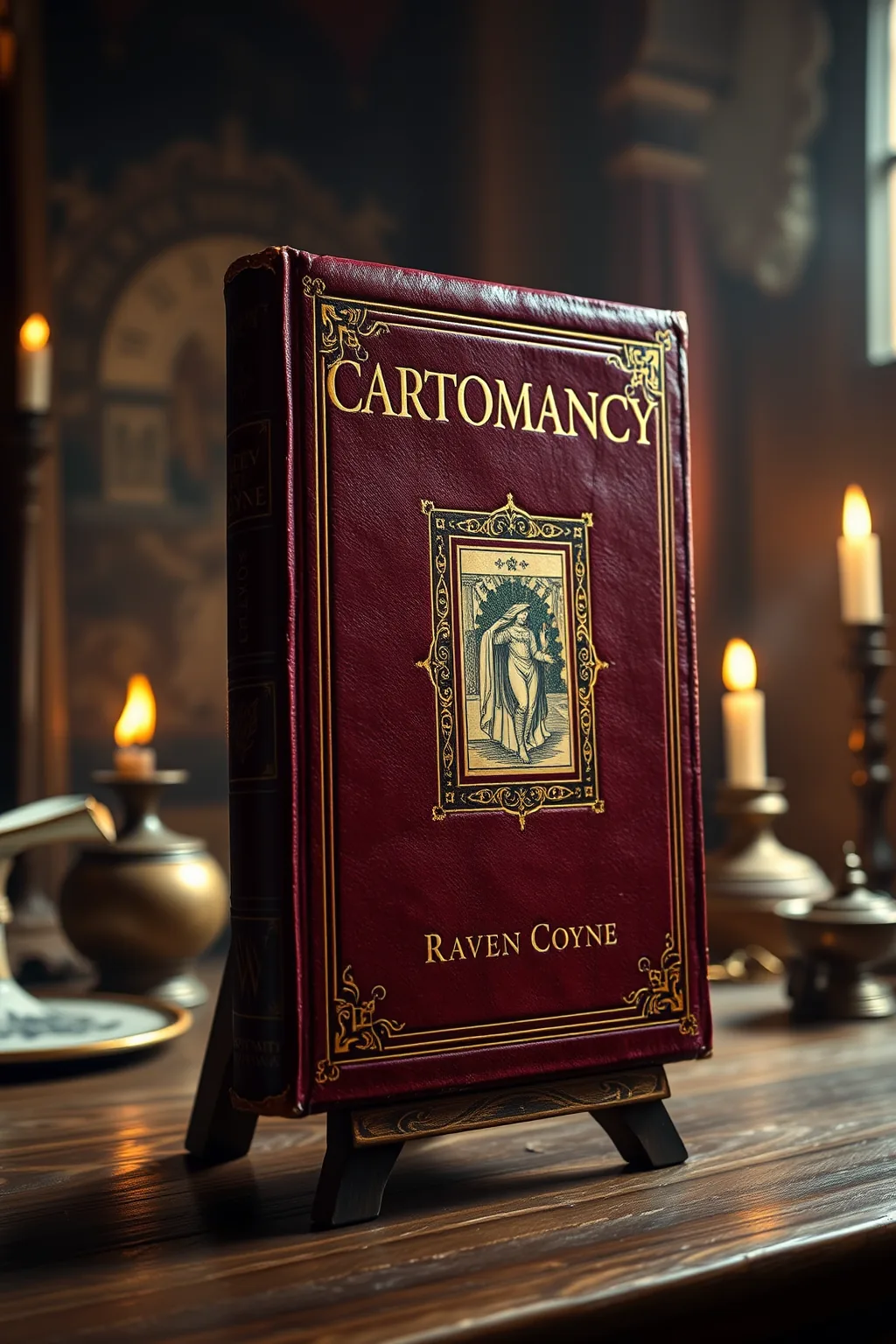
Cartomancy
 77
77

Cartomancy
Raven Coyne’s Cartomancy offers a refreshingly direct pathway into the art of card reading. Unlike many esoteric texts that lean heavily on historical mystique, Coyne grounds the practice in actionable advice, starting with the pragmatic choice of purchasing a suitable deck. The author's 30 years of professional experience are evident in the clear, step-by-step instructions, particularly concerning the business side of cartomancy – a frequently overlooked but crucial element for aspiring professionals. One notable strength is the book's illustration, which aids in understanding card layouts and interpretations. However, the work could benefit from a deeper exploration of the philosophical underpinnings of cartomancy; while practical, it occasionally feels like a manual divorced from its deeper esoteric lineage. The section on interpreting card combinations, while clear, sometimes lacks the nuanced depth found in more scholarly works on divination. Nevertheless, for its intended purpose of practical instruction, Cartomancy is a solid, accessible guide.
📝 Description
77
Raven Coyne's Cartomancy, published in 2022, teaches card reading skills for personal and professional use.
Raven Coyne's Cartomancy is a guide to reading playing cards for divination. The book covers basic card meanings and how to interpret them in spreads. It also includes practical advice on choosing a deck and setting up a cartomancy practice, whether for personal insight or professional client readings. Coyne aims to make cartomancy accessible to newcomers while providing enough detail for experienced readers to improve their skills.
The text addresses how to build a connection with the cards and offers structured methods for performing readings. It moves beyond simple interpretations to show how cards work together to form a narrative. Ethical considerations for client work are also discussed, alongside advice for managing a cartomancy business or hobby. The book provides a step-by-step approach, from selecting tools to the practicalities of client sessions.
Cartomancy, the use of playing cards for divination, has a history intertwined with tarot and other fortune-telling systems. Its development as a distinct practice gained momentum in the 19th century, following figures in the occult revival. Coyne's work connects to this lineage, offering a contemporary perspective on historical methods. The book acknowledges the ongoing use of these techniques within esoteric communities.
💡 Why Read This Book?
• Gain practical instruction on selecting your first deck and understanding its physical and energetic properties, directly addressing the initial hurdles faced by new practitioners, as detailed in Coyne's guidance on "what cards to buy." • Learn structured methods for interpreting card spreads, moving beyond rote memorization to develop an intuitive reading style, supported by the book's "easy to understand examples." • Acquire actionable strategies for setting up and managing a cartomancy business or hobby, including client interaction and ethical considerations, as outlined in the comprehensive guide to running your "Cartomancy business or hobby."
⭐ Reader Reviews
Honest opinions from readers who have explored this book.
❓ Frequently Asked Questions
What is cartomancy and how does it differ from tarot reading?
Cartomancy is the practice of divination using a standard deck of playing cards, distinct from tarot which uses a specialized deck. Raven Coyne's book explains the unique symbolism and interpretation methods specific to playing cards, which have a different historical lineage than tarot.
What kind of playing cards are recommended for cartomancy?
Raven Coyne's Cartomancy suggests specific criteria for selecting cards, emphasizing decks that are well-illustrated and easy to handle. The author advises choosing a deck that feels right energetically and practically for the reader.
How does Raven Coyne suggest learning to read cards?
The book provides a step-by-step method, guiding readers from understanding individual card meanings to interpreting them in spreads. Coyne's approach focuses on building both knowledge and intuitive connection with the cards.
Is this book suitable for absolute beginners in divination?
Yes, Cartomancy is designed as a complete one-volume guide for beginners, covering everything from card selection to interpretation and business setup. The illustrations and clear examples make it accessible for those new to the practice.
Does the book cover how to make a living as a cartomancer?
Absolutely. Raven Coyne dedicates a significant portion of the book to the practicalities of setting up and successfully running a cartomancy business or hobby, offering guidance for professional development.
When was Cartomancy by Raven Coyne first published?
Cartomancy by Raven Coyne was first published on February 24, 2020. This edition provides a contemporary approach to the ancient art of card reading.
🔮 Key Themes & Symbolism
Practical Card Interpretation
This book explains cartomancy by breaking down the interpretation of playing cards into manageable steps. It moves beyond abstract symbolism to offer concrete meanings for each card and how they interact within a spread. Coyne emphasizes developing a personal connection with the deck, encouraging readers to trust their intuition alongside learned meanings. The focus is on generating clear, actionable insights for the querent, making the practice accessible and effective for everyday guidance.
Establishing a Cartomancy Practice
Beyond just reading cards, Coyne addresses the practicalities of building a cartomancy endeavor. This includes advice on selecting the right deck, setting up a reading space, and ethically conducting sessions. Crucially, the book details how to establish and run a successful business or hobby, covering aspects like client relations and professional conduct. This pragmatic approach aims to empower readers to transition from amateur curiosity to confident practice.
The Playing Card Tradition
Cartomancy positions the use of standard playing cards as a distinct and potent divinatory art. It highlights the unique symbolism inherent in a 52-card deck, tracing its lineage and application in fortune-telling. The work implicitly contrasts this with other divinatory systems, such as Tarot, by focusing solely on the playing card structure and its established meanings, presenting it as a self-contained and powerful method.
Intuition and Structure
Coyne strikes a balance between structured learning and intuitive development. While providing clear guidelines and established meanings for each card and spread, the book encourages readers to cultivate their own inner knowing. The interpretation examples and exercises are designed to foster a symbiotic relationship between learned knowledge and personal psychic sensitivity, leading to more nuanced and personalized readings.
💬 Memorable Quotes
Direct passages from the work, attributed to the author.
“The journey begins with selecting the right deck.”
— This highlights the foundational importance of the tools used in cartomancy. Coyne suggests that the physical and energetic connection with one's chosen deck is the crucial first step in developing a successful practice.
“Each card holds a story, and spreads combine them together.”
— This concisely explains the core of cartomancy: understanding individual card meanings and then interpreting their collective narrative within a spread. It emphasizes the dynamic and storytelling aspect of divination.
“Readings should offer clarity, not confusion.”
— This emphasizes the ethical responsibility of the cartomancer to provide understandable and useful guidance. The goal is to illuminate possibilities for the querent, not to create further ambiguity.
“From hobbyist to professional, the steps are learnable.”
— This speaks to the book's comprehensive nature, suggesting that the skills required for both casual card reading and a professional career are attainable through structured learning and practice.
“Understanding the business is as vital as understanding the cards.”
— This underscores the practical advice offered on managing a cartomancy practice. Coyne asserts that the professional aspects are integral to a sustainable and ethical career in divination.
🌙 Esoteric Significance
Tradition
Cartomancy sits within the broader Western esoteric tradition of divination, drawing lineage from the use of playing cards that predates the formalized structure of Tarot. While not explicitly tied to a single school like Hermeticism or Kabbalah, it aligns with the divinatory impulse found across many mystical paths seeking insight into the flow of fate and consciousness. Coyne's work presents it as a practical, standalone system, accessible outside of complex philosophical frameworks.
Symbolism
The symbolism in cartomancy is derived from the standard 52-card playing deck. Key motifs include the four suits (Hearts for emotion, Diamonds for material/intellectual pursuits, Clubs for action/work, Spades for challenges/transformation), the numerical progressions within each suit, and the archetypal figures represented by court cards (King, Queen, Jack). These elements are interpreted to reflect aspects of daily life, personality types, and potential outcomes.
Modern Relevance
In contemporary esoteric circles, cartomancy offers a grounded alternative to more complex systems like Tarot. Thinkers and practitioners interested in accessible divination tools, comparative spirituality, or the history of fortune-telling might draw on Coyne's methodology. Its emphasis on practical application and business development also speaks to modern spiritual entrepreneurs seeking to professionalize their intuitive gifts.
👥 Who Should Read This Book
['• Aspiring cartomancers seeking a structured, step-by-step guide to learning card reading with playing cards, moving from basic interpretation to complex spreads.', '• Individuals interested in divination who prefer the simplicity and historical depth of playing cards over Tarot, looking for a comprehensive introduction.', '• Emerging esoteric practitioners aiming to build a professional divination service, needing practical advice on client interaction, business setup, and ethical conduct.']
📜 Historical Context
Published in 2020, Raven Coyne's Cartomancy emerges in a contemporary esoteric landscape saturated with tarot and pendulum guides. While playing card divination, or cartomancy, has a history stretching back centuries—gaining particular traction in the 19th century alongside occult revivals influenced by figures like Arthur Edward Waite—it often remains less popularized than tarot. Coyne's work taps into this older, less-trodden path, offering a modern, accessible manual. The book's focus on the practicalities of setting up a business situates it within a modern context where esoteric practices are increasingly professionalized, contrasting with earlier eras where such pursuits were often clandestine or purely academic. Its reception is likely within circles seeking foundational, non-tarot specific divination methods.
📔 Journal Prompts
The symbolism of the four suits in your current life situation.
Interpreting the court cards as archetypal influences.
Mapping the numerical progression of a chosen suit to a personal goal.
Reflecting on the 'clarity, not confusion' principle in a recent reading.
The energetic connection with your chosen deck and its implications.
🗂️ Glossary
Cartomancy
The practice of divination using a standard deck of playing cards. It involves interpreting the meanings of individual cards and their combinations within a spread to gain insight.
Spread
A specific arrangement of cards laid out in a pattern for divination. Different spreads are designed to address particular questions or aspects of a situation.
Querent
The person for whom a divination reading is performed. The cartomancer interprets the cards in relation to the querent's question or situation.
Suits
The four divisions of a standard playing card deck: Hearts, Diamonds, Clubs, and Spades. Each suit is associated with specific themes and areas of life.
Court Cards
The King, Queen, and Jack cards within each suit. These cards often represent people, personalities, or specific roles within a reading.
Divination
The practice of seeking knowledge of the future or the unknown by supernatural means. Cartomancy is one form of divination.
Intuition
The ability to understand something immediately, without the need for conscious reasoning. In cartomancy, it complements the learned meanings of the cards.