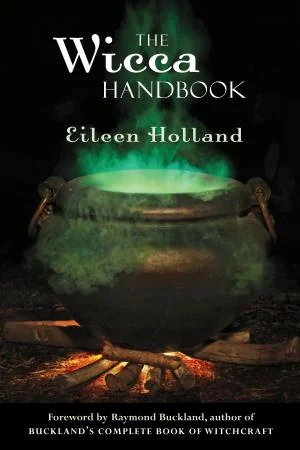
The Wicca Handbook
 84
84

The Wicca Handbook
Eileen Holland's "The Wicca Handbook" (2008) provides a structured entry point into Wiccan practice, particularly for those unfamiliar with its fundamental elements. Its strength lies in the extensive compilation of correspondences, offering a ready reference for spell ingredients and ritual components. Holland’s approach is notably pragmatic, detailing how to create spells for love, health, and money, which can be highly appealing to a beginner seeking tangible results. However, the book sometimes leans towards a prescriptive tone, which might feel limiting for practitioners who prefer a more intuitive or personalized approach to their craft. A particularly useful section details the consecration of tools, explaining the symbolic significance of each step. Ultimately, "The Wicca Handbook" functions effectively as a foundational manual, though experienced Wiccans might find its coverage somewhat generalized.
📝 Description
84
Published in 2008, Eileen Holland's The Wicca Handbook offers a practical guide to Wiccan beliefs and rituals.
Eileen Holland's "The Wicca Handbook," first released in 2008, serves as a practical introduction to Wiccan tenets and practices. The book breaks down the elements of this nature-based spiritual path with clear explanations for newcomers. It moves beyond theory to offer actionable guidance for individuals seeking to understand or begin their Wiccan practice.
This handbook is designed for those interested in applying Wiccan principles to daily life. It lists correspondences for herbs, crystals, and colors needed for ritual work and spellcraft. The book's strength is its instructional approach, giving templates for personal rituals, consecrating tools, and casting spells for common life concerns. It also situates Wicca within its historical and spiritual context, acknowledging the evolution of traditions and referencing key figures and movements that shaped its modern form. Understanding these roots provides context for the rituals and beliefs presented.
This handbook situates modern Wicca within its historical development, acknowledging the evolution of traditions and referencing foundational figures and movements. It connects contemporary practice to these roots, offering context for rituals and beliefs. The work details components for effective practice, including ethical spellcasting, lunar cycles, and ritual symbolism, empowering readers to craft meaningful experiences through focused intent.
💡 Why Read This Book?
• Gain practical skills for spellcasting and ritual creation, directly informed by the detailed correspondence lists for herbs, colors, and planetary energies presented in "The Wicca Handbook." • Understand the foundational concepts and ethical considerations of Wiccan practice, as explained through Holland's systematic approach to creating spells and personal rituals. • Learn how to consecrate essential tools and set up a sacred space, drawing upon the specific guidelines offered in the book for enhancing ritual efficacy.
⭐ Reader Reviews
Honest opinions from readers who have explored this book.
❓ Frequently Asked Questions
What is Wicca according to Eileen Holland's handbook?
Eileen Holland's "The Wicca Handbook" describes Wicca as a nature-based spiritual path focused on the balance of opposites and the celebration of life. It emphasizes personal responsibility, respect for the Earth, and the use of ritual and magic for personal growth and positive change.
What kind of spells are covered in The Wicca Handbook?
The handbook provides guidelines for creating spells addressing common life needs, including those for love, health, and financial well-being. It details the necessary correspondences and ritual structures to effectively manifest desired outcomes.
When was The Wicca Handbook first published?
The Wicca Handbook by Eileen Holland was first published on October 1, 2008, making it a relatively modern introduction to Wiccan practices.
What are Wiccan correspondences?
Correspondences in Wicca are symbolic associations between elements, tools, colors, herbs, crystals, and celestial bodies. "The Wicca Handbook" lists these extensively, providing practitioners with a framework for choosing ingredients that align with the intention of their spells and rituals.
Is The Wicca Handbook suitable for absolute beginners?
Yes, "The Wicca Handbook" is structured to guide absolute beginners through the basics of Wicca, offering clear explanations of concepts, practical instructions for spellcraft, and lists of essential tools and correspondences.
What is the historical context of Wicca presented in the book?
While the handbook focuses on practical application, it acknowledges Wicca's roots in earlier pagan traditions and its modern development. It implicitly situates itself within the neo-pagan revival of the 20th century.
🔮 Key Themes & Symbolism
Foundations of Wiccan Practice
This theme covers the fundamental beliefs and practices of Wicca as presented by Holland. It includes explanations of the Wiccan concept of divinity, often expressed as the God and Goddess, the importance of the Earth and nature, and the ethical framework guiding magical work. The book emphasizes personal experience and connection to the divine through natural cycles and rituals, providing a clear entry point for newcomers to understand the core philosophy.
Practical Spellcraft and Ritual
Central to "The Wicca Handbook" is the application of Wiccan principles through spells and rituals. The work offers detailed instructions on how to design and perform magical workings for specific purposes, such as attracting love, promoting health, or increasing prosperity. This theme highlights the book's utility as a practical guide, equipping readers with the knowledge of correspondences—herbs, colors, tools—necessary to craft effective spells and sacred ceremonies.
Wiccan Tools and Correspondences
A significant portion of the handbook is dedicated to the symbolic tools and extensive lists of correspondences used in Wiccan practice. Items like athames, wands, and chalices are explained, along with their ritual functions. The comprehensive lists of correspondences, ranging from planetary energies to common herbs and crystals, serve as a vital resource for practitioners looking to imbue their rituals and spells with specific energies and intentions, facilitating a deeper connection to the magical forces.
Personal and Spiritual Development
Beyond the mechanics of spellcasting, "The Wicca Handbook" touches upon the spiritual growth and personal development that Wicca aims to foster. It encourages self-discovery, empowerment, and a harmonious relationship with the natural world. The rituals and practices described are presented not just as means to an end, but as pathways to greater self-awareness, inner balance, and a profound connection to the divine and the universe.
💬 Memorable Quotes
Direct passages from the work, attributed to the author.
“The purpose of magic is to effect change in accordance with will.”
— This statement expresses a core tenet of many magical traditions, including Wicca, emphasizing that magic is not passive but an active force used for directed transformation and personal agency.
“Understanding correspondences allows for the amplification of magical intent.”
— This highlights the practical application of symbolic associations in spellcraft, suggesting that selecting specific ingredients based on their energetic properties can significantly enhance the effectiveness of a ritual.
“Every tool used in ritual must be consecrated to its purpose.”
— This emphasizes the sacredness of the practice, indicating that objects used in spellwork or ceremonies require a ritualistic blessing to imbue them with spiritual significance and power.
“Wicca honors the cycles of nature and the divine feminine and masculine.”
— This captures the essence of Wiccan spirituality, pointing to its earth-centeredness and the balance of complementary energies as central to its worldview and worship.
“Ethical considerations are paramount when casting spells.”
— This underscores the importance of responsibility in magic, suggesting that practitioners must be mindful of the potential consequences and adhere to a moral code when influencing events through magical means.
🌙 Esoteric Significance
Tradition
While not explicitly aligning with a single historical lineage like Gardnerian or Alexandrian Wicca, Holland's work draws from the broader contemporary stream of eclectic, nature-based witchcraft. It reflects the modern evolution of Wicca, which often synthesizes elements from various esoteric traditions, including Hermeticism and folk magic, into a personalized spiritual practice focused on immanent divinity and natural cycles.
Symbolism
Key symbols in the handbook include the pentagram, representing the five elements and protection, and the threefold law (or karma), emphasizing that whatever energy one sends out will return threefold. Lunar symbolism is also prominent, with the phases of the moon guiding ritual timing and magical intent, reflecting the cyclical nature of life and magic.
Modern Relevance
Holland's handbook remains relevant for contemporary practitioners seeking a structured approach to Wiccan basics. Its emphasis on practical spellcraft and readily applicable correspondences continues to appeal to individuals exploring personal spirituality outside mainstream religions, echoing trends seen in modern neo-paganism and the wider interest in witchcraft as a spiritual path.
👥 Who Should Read This Book
• Individuals new to Wicca seeking a comprehensive, step-by-step guide to its core beliefs, practices, and ethical considerations. • Aspiring practitioners interested in learning the fundamentals of spellcraft, ritual creation, and the use of correspondences for personal growth and manifestation. • Students of comparative religion or esoteric studies looking for a clear, accessible overview of modern Wiccan traditions and their practical applications.
📜 Historical Context
Eileen Holland's "The Wicca Handbook," published in 2008, emerged during a period of continued growth and diversification within the neo-pagan movement, which had seen significant expansion since the mid-20th century. Wicca, particularly as popularized by figures like Gerald Gardner in the 1950s, was establishing itself as a distinct religious path with numerous traditions and interpretations. By 2008, authors like Scott Cunningham had already made accessible introductions to Wicca, focusing on a more gentle, earth-centered approach. Holland's work fits into this lineage, offering a comprehensive guide that, while practical, implicitly acknowledges the historical development of Wicca from its roots in older European folk magic and ceremonial traditions. The reception of such handbooks generally aimed to explain Wicca for a curious public, often countering sensationalized or inaccurate portrayals that had persisted since the mid-century moral panics surrounding witchcraft.
📔 Journal Prompts
The role of correspondences in crafting effective spells.
Personal interpretation of the threefold law in daily actions.
Designing a ritual to honor the lunar cycle.
The significance of the pentagram as a protective symbol.
Ethical considerations when invoking change through magic.
🗂️ Glossary
Wicca
A contemporary Neopagan religion characterized by its reverence for nature, acknowledgment of divinity in both masculine and feminine forms (God and Goddess), and the practice of magic and ritual.
Spellcraft
The practice of intentionally directing energy, often through ritual and the use of symbolic items (correspondences), to bring about a desired change or outcome.
Correspondences
Symbolic associations between various elements, such as herbs, colors, crystals, planets, and deities, used to enhance the potency and focus of magical workings.
Ritual
A set of actions performed in a prescribed order, often for religious or magical purposes, designed to create a sacred space and connect with spiritual energies.
Consecration
The act of dedicating an object, place, or person to a sacred purpose through ritual, thereby imbuing it with spiritual significance and power.
Pentagram
A five-pointed star, often used in Wicca and other magical traditions, symbolizing the five elements (Earth, Air, Fire, Water, Spirit) and representing protection and balance.
Threefold Law
A Wiccan principle stating that whatever magical energy or intent is sent out into the world will return to the caster multiplied threefold, emphasizing ethical magical practice.
This book appears in 1 collection
🔮 Readers Also Liked
Browse all →









From the “Wicca” Collection
View all →






More Free Occult Philosophy Books
View all →