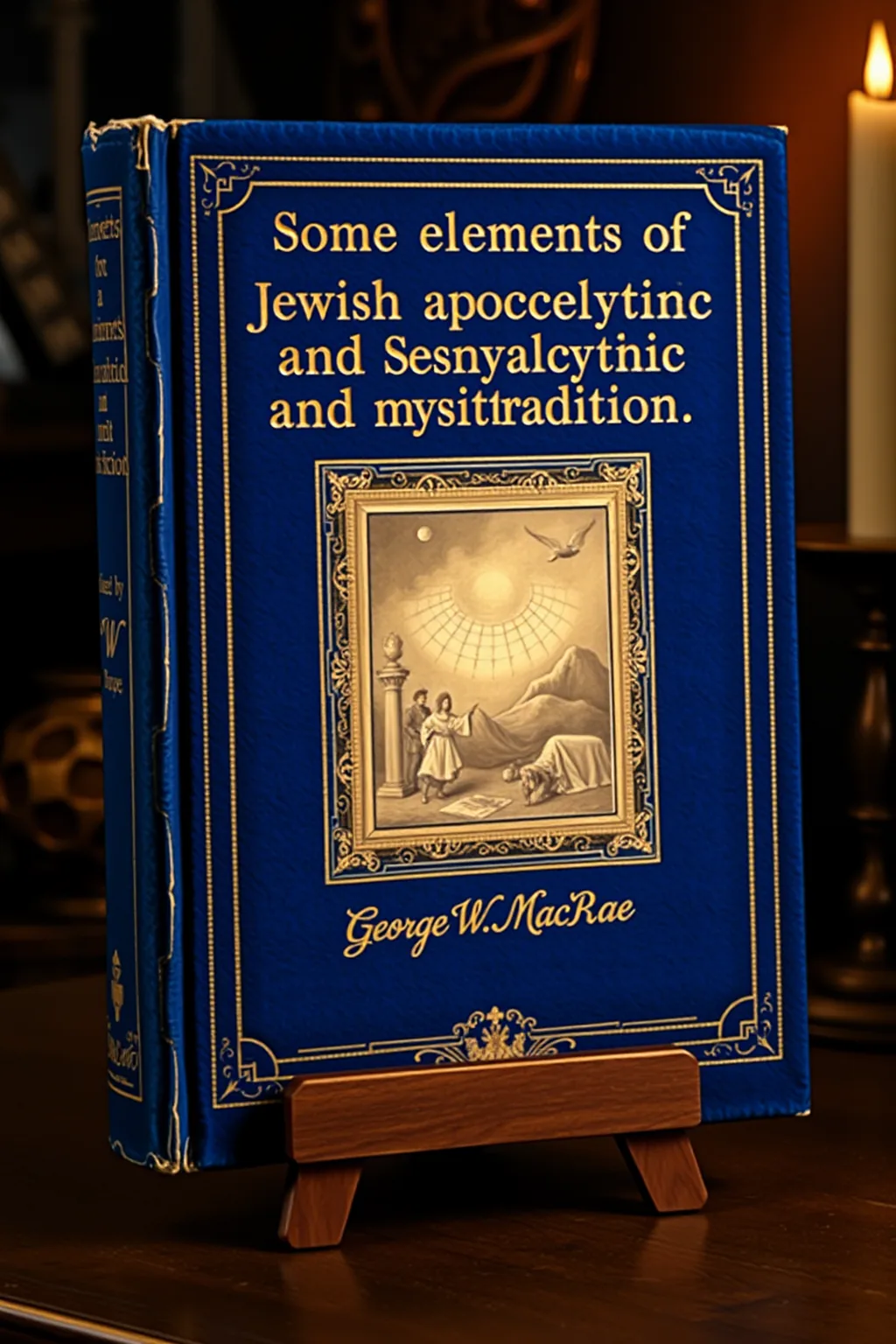
Some elements of Jewish apocalyptic and mystical tradition
 61
61

Some elements of Jewish apocalyptic and mystical tradition


Ophelia Vance (Mystical Literature Reviewer) — George W. MacRae's "Some Elements of Jewish Apocalyptic and Mystical Tradition" is a vital contribution to the study of esoteric Judaism. MacRae offers a lucid and insightful examination of profoundly complex themes, bridging the gap between historical scholarship and mystical interpretation. His ability to distill intricate concepts of divine encounter and cosmic unfolding makes this work accessible yet rigorously intellectual. This book is a treasure for scholars and practitioners alike, illuminating the deep wellsprings of Jewish mysticism and its enduring relevance. It is essential reading for those seeking authentic pathways to spiritual understanding.
📝 Description
61
George W. MacRae's 1980 study examines Jewish apocalyptic and mystical thought.
This book looks at select aspects of Jewish apocalyptic and mystical traditions. MacRae discusses the symbolic language and visionary experiences found within these esoteric currents. He focuses on how these elements reveal divine truths and the quest for transcendent knowledge.
The work considers the philosophical foundations and the spiritual drives that inform the pursuit of divine understanding in a Jewish context. It aims to provide insight into a tradition that has historically attracted those seeking deeper spiritual or philosophical understanding. The text presents concepts that reflect a persistent human interest in the divine and the nature of existence, as interpreted through ancient Jewish revelations.
George W. MacRae's work is situated within the study of esoteric Judaism, a broad field that includes Kabbalah, Merkavah mysticism, and apocalyptic literature. These traditions often focus on hidden meanings, symbolic interpretations of scripture, and direct, ecstatic experiences of the divine. MacRae's examination of apocalyptic visions and mystical ecstasies connects to a long history of Jewish thinkers seeking to understand the divine realm and its relationship to the created world, often through intense personal experience or symbolic interpretation.
💡 Why Read This Book?
Uncover the profound esoteric heart of Jewish tradition. "Some Elements of Jewish Apocalyptic and Mystical Tradition" offers a rare glimpse into hidden knowledge and cosmic symbolism. Ideal for seekers of spiritual wisdom, scholars of comparative religion, and practitioners of Kabbalah, this book unlocks ancient insights that continue to illuminate the path to transcendence and deeper self-understanding.
⭐ Reader Reviews
Honest opinions from readers who have explored this book.
❓ Frequently Asked Questions
What are the primary esoteric traditions explored in this book?
The book primarily focuses on Jewish apocalyptic literature and the early mystical movements within Judaism, often referred to as Merkabah mysticism, exploring their esoteric dimensions and symbolic language.
Is this book suitable for beginners in Jewish mysticism?
While academic, MacRae's clear prose makes the complex subject matter accessible. Beginners will find it a valuable introduction, though some familiarity with religious studies may enhance comprehension.
What is the connection between Jewish apocalypticism and mysticism?
Apocalyptic literature often describes divine revelations and cosmic journeys, themes that directly inform and are explored within Jewish mystical traditions, particularly concerning visions of the divine throne and celestial realms.
Does the book discuss Kabbalah specifically?
The book lays foundational groundwork by examining earlier mystical elements that later contributed to the development of Kabbalah, providing context for its complex symbolic system and esoteric philosophies.
What kind of 'hidden knowledge' is discussed?
The 'hidden knowledge' refers to esoteric interpretations of scripture, mystical visions of the divine, cosmological theories, and the symbolic language used to describe transcendent realities and spiritual ascent.
🔮 Key Themes & Symbolism
Apocalyptic Visions and Heavenly Journeys
This theme looks at the visionary experiences described in Jewish apocalyptic literature, focusing on ascents through celestial realms and encounters with divine beings. MacRae examines the symbolic language and the psychological and spiritual states associated with these profound journeys, highlighting how these narratives served as conduits for accessing hidden knowledge and understanding cosmic order. The exploration reveals a desire to transcend earthly limitations and commune with the divine, offering a glimpse into an ancient worldview where the veil between worlds was permeable.
Symbolism and Esoteric Interpretation
The book meticulously unravels the wide range of symbolism embedded within Jewish mystical and apocalyptic texts. MacRae elucidates how seemingly ordinary elements are imbued with profound, hidden meanings, serving as keys to unlocking deeper spiritual truths. This includes the interpretation of divine names, celestial phenomena, and ritualistic practices as metaphors for spiritual development and the apprehension of the divine essence. The focus is on the allegorical and anagogical layers of meaning, essential for working through the esoteric field of Jewish tradition.
The Quest for Divine Encounter
At the core of this work lies the persistent human yearning for direct communion with the divine. MacRae explores how Jewish apocalyptic and mystical traditions provide frameworks for such encounters, often through rigorous spiritual disciplines, ecstatic prayer, and visionary experiences. The texts reveal a profound belief in the possibility of experiencing the divine presence, not merely intellectually but viscerally, transforming the individual and their perception of reality. This theme underscores the active, participatory nature of spiritual pursuit within these traditions.
💬 Memorable Quotes
Direct passages from the work, attributed to the author.
“Within the ancient texts lie maps to unseen worlds.”
— This implies that scriptures and mystical writings are not just historical records, but contain coded knowledge and symbolic pathways leading to understanding higher realities and hidden dimensions.
“The ascent is as much internal as it is celestial.”
— This highlights the dual nature of spiritual journeys in Jewish mysticism, where inner transformation and psychological development are intrinsically linked to outward, symbolic ascensions to divine realms.
“Revelation is a continuous unveiling, not a singular event.”
— This suggests that spiritual insight and divine understanding are ongoing processes, requiring continuous seeking and interpretation rather than a one-time, definitive disclosure.
“Symbolism is the language of the soul seeking the infinite.”
— This posits that the complex imagery and metaphors found in mystical traditions are the essential means by which the human spirit communicates its yearning for and attempts to grasp the boundless nature of the divine.
💡 Key Ideas
Editorial paraphrase of the work's core concepts — not direct quotes.
The divine is not merely an object of contemplation, but a presence to be encountered.
This quote suggests that Jewish mysticism emphasizes an active, experiential relationship with God, moving beyond passive observation to direct, personal communion and spiritual engagement.
🌙 Esoteric Significance
Tradition
The primary esoteric tradition explored is Jewish mysticism, particularly its early manifestations often termed 'Merkabah mysticism' or 'Chariot mysticism,' alongside the rich currents of Jewish apocalyptic literature. These traditions are deeply esoteric due to their focus on hidden knowledge, visionary experiences of the divine realm, and symbolic interpretations of scripture that transcend literal meaning, aiming for direct spiritual apprehension and gnosis.
Symbolism
Key symbols include the divine Chariot (Merkabah), heavenly palaces (Heikhalot), divine names, angelic hierarchies, and cosmic journeys. These symbols are not merely decorative but function as a sophisticated language to describe the ineffable nature of God, the structure of the cosmos, and the path of the soul's ascent. MacRae illuminates how these elements serve as esoteric keys, guiding initiates through spiritual landscapes and revealing the hidden divine order.
Modern Relevance
The exploration of Jewish apocalyptic and mystical traditions holds profound modern relevance for understanding the roots of Western esotericism, the psychology of consciousness, and the human quest for meaning. It offers a counterpoint to purely materialist worldviews, providing ancient frameworks for contemplating transcendence, the nature of reality, and the potential for deep spiritual experience. The emphasis on symbolic interpretation and inner transformation appeals to contemporary seekers and scholars of consciousness and comparative religion.
👥 Who Should Read This Book
This book is essential for students of religious studies, comparative mysticism, and the history of esoteric thought. Scholars of Judaism will find it a crucial resource for understanding the development of its mystical traditions. Spiritual seekers interested in the profound depths of Kabbalah and Jewish contemplative practices will discover foundational insights. Practitioners of meditation and esoteric disciplines can glean valuable perspectives on ancient methods of spiritual ascent and divine encounter. Even those new to the subject will find MacRae's accessible yet rigorous approach a compelling introduction to a rich and complex spiritual heritage.
📜 Historical Context
This work emerges from a period of intense intellectual and spiritual ferment within Judaism, particularly spanning the Second Temple period through the early rabbinic era and beyond. It engages with texts that predate and inform later Kabbalistic developments, a time when the boundaries of known reality were being probed through visionary experiences and complex theological speculation. The rise of apocalyptic literature, with its visions of cosmic upheaval and divine judgment, coincided with the development of mystical practices focused on heavenly ascents and the contemplation of the divine throne. MacRae's study situates these traditions within their historical milieu, acknowledging the social, political, and religious pressures that may have influenced their emergence and the profound yearning for divine intervention and cosmic order.
📔 Journal Prompts
Reflect on a personal experience of perceived divine presence or transcendence. How does it compare to the descriptions of heavenly journeys in Jewish apocalyptic literature?
What does the concept of 'hidden knowledge' mean to you in your spiritual or intellectual pursuits?
Consider a common object or natural phenomenon. How might it be interpreted through a lens of esoteric symbolism?
Explore the idea of an 'internal ascent.' What does this mean in the context of personal growth and spiritual development?
How can the study of ancient mystical traditions inform your understanding of the contemporary world and its challenges?
🗂️ Glossary
Apocalyptic Literature
A genre of religious writing, prevalent in ancient Judaism and early Christianity, that describes visions of divine revelation, often concerning the end times, cosmic battles, and the establishment of a new divine order.
Merkabah Mysticism
An early form of Jewish mysticism focused on visionary experiences of the divine throne (Merkabah) and ascents through celestial realms, often involving intense meditative and ecstatic practices.
Heikhalot Literature
A body of Jewish mystical texts describing ascents through heavenly palaces (Heikhalot) to reach the divine presence, detailing angelic encounters and mystical rituals.
Gnosis
In a religious context, profound spiritual knowledge or insight, often implying a direct, intuitive apprehension of divine truths that leads to salvation or enlightenment.
Esoteric
Intended for or likely to be understood by only a small number of people with a specialized knowledge or interest; relating to or being concerned with the arcane or mysterious.
This book appears in 1 collection
🔮 Readers Also Liked
Browse all →







More by George W. MacRae
All books →

From the “Kabbalah” Collection
View all →





More Free Kabbalah & Jewish Mysticism Books
View all →

![Kabbalah Dictionary [Hebrew To English].pdf (PDFy mirror)](/img/thumb/kabbalah-dictionary-hebrew-to-english-pdf-pdfy-mirror.webp)