Kabbalah

 64
64

Kabbalah

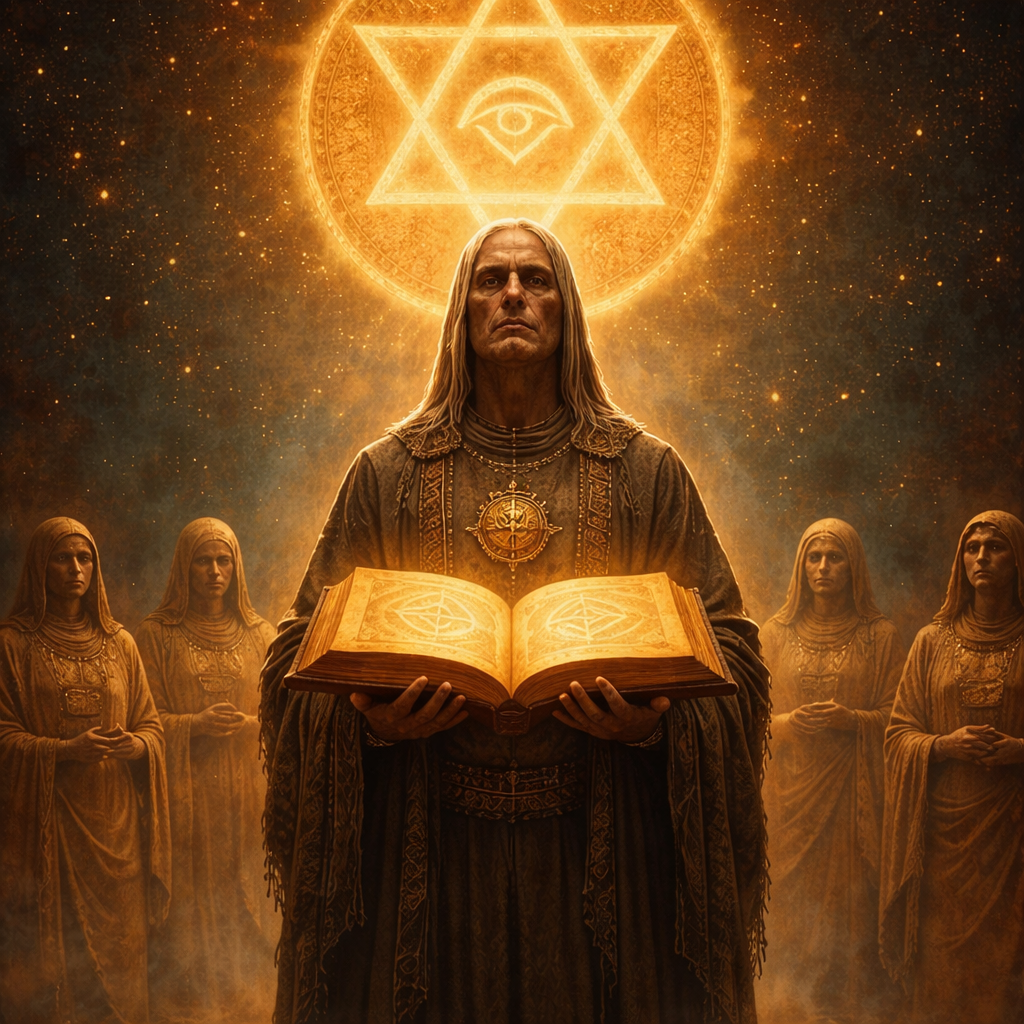

Evander Ashcroft (Alchemy & Hermeticism Editor) — Lawrence Kushner's 'Kabbalah' is a luminous exposition of a profoundly complex mystical tradition. He navigates the labyrinthine pathways of Kabbalistic lore with remarkable clarity, illuminating concepts often shrouded in mystery. Kushner’s ability to weave together theological depth, philosophical inquiry, and practical spiritual application is exceptional. This book serves as an indispensable key for understanding the esoteric dimensions of Judaism, offering potent insights into the Divine's immanence and the soul's journey. Highly recommended for scholars and seekers alike who wish to engage with the rich, hidden currents of Jewish mysticism.
📝 Description
64
Lawrence Kushner's 'Kabbalah' (1975) deciphers the symbolic language of Jewish mysticism for a modern audience.
This book explains the core concepts of Kabbalah, a tradition of Jewish mysticism. Lawrence Kushner uses metaphors and stories to make complex ideas accessible. He discusses the nature of God, creation, and the human soul within this mystical framework. The text connects the vastness of the cosmos with individual human experience, suggesting a path toward spiritual awareness.
Kushner's approach aims to reveal the hidden meanings within Jewish texts and practices. He presents Kabbalah not as an abstract philosophy, but as a lived spiritual path. The book covers ideas like divine emanations and the concept of sparks of divinity scattered throughout existence. It encourages readers to find a deeper connection to the spiritual dimension of life through understanding these concepts.
Kabbalah is a form of Jewish mysticism that developed over centuries, seeking to understand the divine nature and creation. Its origins trace back to ancient Hebrew texts, with major codifications appearing in works like the Zohar in the 13th century. Kabbalistic thought often employs symbolic language, numerology, and meditation techniques to access hidden spiritual truths. It describes a system of divine emanations, known as the Sefirot, through which the infinite God interacts with the finite world. This tradition has influenced various branches of Western esotericism and continues to be studied for its unique theological and mystical insights.
💡 Why Read This Book?
Uncover the esoteric secrets of Jewish mysticism and the profound symbolism of the Kabbalah. Lawrence Kushner offers a clear, accessible, yet deeply insightful exploration of divine connection, cosmic creation, and spiritual awakening. Ideal for seekers of hidden knowledge, students of comparative religion, and anyone yearning to deepen their understanding of the spiritual universe through an ancient, powerful tradition.
⭐ Reader Reviews
Honest opinions from readers who have explored this book.
❓ Frequently Asked Questions
What is Kabbalah?
Kabbalah is the esoteric tradition of Jewish mysticism, focusing on the divine nature, the creation of the universe, and the relationship between God and humanity through symbolic interpretation of the Torah.
Is Kabbalah only for Jewish people?
While originating within Judaism, Kabbalah's universal themes of spiritual connection and divine presence resonate with seekers of all backgrounds interested in mystical and metaphysical exploration.
What are the main concepts in Kabbalah?
Key concepts include the Ein Sof (the Infinite), the Sefirot (divine emanations), the Tree of Life, and the concept of Tikkun Olam (repairing the world).
What is the goal of studying Kabbalah?
The ultimate goal is often described as achieving a direct, unitive experience of God, understanding the divine mysteries, and facilitating spiritual growth and world betterment.
Does this book require prior knowledge of Judaism?
While familiarity with Judaism can enhance understanding, Kushner's accessible style makes 'Kabbalah' suitable for newcomers to the subject, guiding them through its core principles.
🔮 Key Themes & Symbolism
The Hidden Divine
This theme explores the Kabbalistic concept of the Ein Sof, the unknowable, infinite Godhead that lies beyond human comprehension. It explores how the divine essence manifests through the Sefirot, the ten emanations or attributes that form the structure of the universe and the human soul. The text illuminates the idea that divinity is not distant but immanent, interwoven into the fabric of existence, waiting to be discovered through spiritual practice and contemplative insight.
The Tree of Life and Cosmic Mapping
The Tree of Life, a central diagram in Kabbalah, is presented as a cosmic map, a blueprint of creation and consciousness. Kushner deciphers the interconnectedness of its ten Sefirot and 22 paths, revealing how they represent stages of divine outflow, pathways of spiritual ascent, and the very architecture of reality. Understanding this symbolic structure provides a framework for comprehending the journey of the soul and the intricate relationships within the divine realms.
Spiritual Ascent and Tikkun Olam
This theme explores the Kabbalistic understanding of the human role in the cosmic drama. It focuses on the concept of 'Tikkun Olam,' the rectification or repair of the world, emphasizing that through our actions, intentions, and spiritual practices, we can contribute to the restoration of divine harmony. The book illustrates the pathways for spiritual ascent, guiding the reader on how to draw divine light into the world and elevate their own consciousness.
💬 Memorable Quotes
Direct passages from the work, attributed to the author.
“Once there was a king who yearned for his subjects to be close to him.”
— This parable captures the fundamental Kabbalistic desire for divine communion and the underlying yearning of the Infinite to be known and experienced intimately by creation.
“God is not found in grand pronouncements, but in the quiet spaces between breaths.”
— Emphasizes the immanent nature of the divine and the importance of mindfulness and inner stillness for experiencing spiritual presence.
“Every letter is a vessel for divine light.”
— Refers to the Kabbalistic reverence for the Hebrew letters and their potential to unlock profound mystical meanings and connect the reader to sacred energy.
“To know God is to become God.”
— Suggests the ultimate goal of Kabbalistic practice is not mere intellectual understanding but a transformative union with the divine essence.
💡 Key Ideas
Editorial paraphrase of the work's core concepts — not direct quotes.
The world is a mirror.
This quote highlights the Kabbalistic principle of correspondence, suggesting that the physical world reflects the spiritual realms, and by understanding the macrocosm, one can gain insight into the microcosm of the self.
🌙 Esoteric Significance
Tradition
Kabbalah is the premier esoteric tradition within Judaism, offering a systematic, symbolic, and mystical interpretation of the Torah and Jewish cosmology. It provides a framework for understanding the divine, the creation, and the human soul's journey towards God, utilizing complex allegorical language and meditative practices to access hidden spiritual truths.
Symbolism
Central to Kabbalah is its rich symbolic language. The Sefirot, often visualized as the Tree of Life, represent divine emanations. Hebrew letters are seen as fundamental building blocks of reality, imbued with cosmic power. Concepts like light, vessels, and cosmic sparks are employed to describe the intricate interplay between the Infinite and the finite, guiding the practitioner toward deeper comprehension.
Modern Relevance
In contemporary times, Kabbalah continues to offer clear insights into consciousness, the nature of reality, and the human quest for meaning. Its exploration of interconnectedness, divine immanence, and personal transformation speaks to individuals seeking spiritual depth and ethical guidance beyond conventional religious frameworks.
👥 Who Should Read This Book
This book is useful for anyone drawn to the mystical dimensions of spirituality. Beginners to Kabbalah will find Kushner's accessible approach a welcoming entry point. Scholars of religion and philosophy will appreciate the rigorous yet engaging exposition of complex ideas. Spiritual seekers yearning for a deeper connection with the divine will discover profound wisdom and practical contemplation. Practitioners of meditation and contemplative arts may find new avenues for their spiritual exploration within its pages.
📜 Historical Context
Kabbalah emerged in medieval Provence and Spain, flourishing from the 12th to the 15th centuries, a period of intense intellectual and spiritual ferment within Jewish communities. Influenced by Neoplatonism and Gnosticism, it sought to reconcile philosophical speculation with traditional Jewish scripture and practice. The Zohar, its foundational text, emerged in the late 13th century, offering a mystical commentary on the Torah. Kabbalah profoundly impacted Jewish thought, art, and communal life, influencing subsequent mystical movements like Hasidism and continuing to inspire spiritual seekers globally.
📔 Journal Prompts
Reflect on a time you felt a profound sense of connection to something larger than yourself. What elements of Kabbalistic thought resonate with that experience?
Consider the concept of 'divine sparks' within everyday objects or experiences. How can you actively seek and acknowledge these sparks in your daily life?
The Tree of Life is a map of consciousness. Where do you feel you are currently situated on this map, and what paths might lead you higher?
How does the Kabbalistic idea of 'Tikkun Olam' (repairing the world) inspire or challenge your current understanding of your role in the world?
Explore the nature of the 'Infinite' (Ein Sof) as described in Kabbalah. What are your personal contemplations or questions about the ultimate reality?
🗂️ Glossary
Ein Sof
The Kabbalistic term for the Infinite, the unknowable, primordial Godhead that is beyond all comprehension and description. It represents the ultimate divine essence before any emanation or manifestation.
Sefirot
The ten divine emanations or attributes through which the Infinite manifests and interacts with creation. They form the structure of the Tree of Life and represent stages of divine outflow.
Tree of Life (Etz Chaim)
A central diagram in Kabbalah, depicting the ten Sefirot and the paths connecting them. It serves as a map of creation, consciousness, and the divine realms, illustrating the process of emanation and spiritual ascent.
Tikkun Olam
A Hebrew term meaning 'repair of the world.' In Kabbalah, it refers to the cosmic task of restoring divine harmony and wholeness, often through human actions, intentions, and spiritual practices.
Gnosis
Esoteric knowledge, often of a spiritual or mystical nature, that leads to enlightenment or salvation. In Kabbalah, it refers to the direct, intuitive apprehension of divine mysteries.
This book appears in 1 collection
🔮 Readers Also Liked
Browse all →







More by Lawrence Kushner
All books →





From the “Kabbalah” Collection
View all →







More Free Kabbalah & Jewish Mysticism Books
View all →