George W. MacRae
George MacDonald was a Scottish author, poet, and minister, pioneering modern fantasy and influencing many writers with his unique theological perspective.
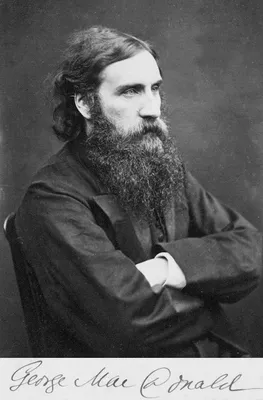
George MacDonald, born in 1824, was a Scottish writer, poet, and Congregational minister recognized as a foundational figure in modern fantasy literature. His upbringing was marked by a rich intellectual and spiritual environment, with family connections to Celtic scholarship and diverse religious backgrounds. Despite early health struggles, including lung ailments, MacDonald pursued theological studies and began his ministry. His unconventional sermons, emphasizing universal love and redemption, were not widely accepted, leading him to resign his pastoral duties. He later found success as a writer, creating influential fantasy novels and fairy tales that explored profound themes. MacDonald also published theological works, including collections of sermons, which significantly impacted later thinkers.
Beyond his literary achievements, MacDonald was a mentor to prominent figures like Lewis Carroll, whose decision to publish 'Alice's Adventures in Wonderland' was influenced by MacDonald's encouragement. He also befriended notable contemporaries such as John Ruskin, Henry Wadsworth Longfellow, and Walt Whitman. His literary approach, using fantasy to delve into the human condition, profoundly shaped subsequent generations of authors, including C.S. Lewis and J.R.R. Tolkien. MacDonald spent his later years in Bordighera, Italy, where he established a cultural center and continued to write prolifically before his death in 1905.
Literary Innovations and Thematic Depth
George MacDonald is widely regarded as a seminal figure in the development of modern fantasy literature. His imaginative works, such as 'Phantastes,' 'At the Back of the North Wind,' and 'The Princess and the Goblin,' blended fairy tale elements with profound philosophical and spiritual explorations. MacDonald stated his aim was to write for the "child-like," regardless of age, suggesting a universal appeal to innocence and wonder. His literary output extended beyond fantasy to include realistic Scottish novels, and he is credited with founding the "kailyard school" of Scottish writing. The impact of his work is evident in the praise from G.K. Chesterton, who found in 'The Princess and the Goblin' a revelation of the proximity of extraordinary truths to everyday life, transforming the mundane into the magical.
Spiritual and Theological Contributions
Beyond his literary contributions, MacDonald was a theologian whose spiritual insights resonated deeply with many, including C.S. Lewis, who considered him a "master." MacDonald's theology, characterized by an emphasis on God's universal love and the potential for universal redemption, diverged from strict Calvinist doctrines prevalent in his upbringing. His sermons, which often explored these themes, were initially met with resistance from his congregation. However, his published theological writings, particularly his collections of sermons, offered a unique perspective that encouraged an intuitive spiritual response and a deeper understanding of faith. His thought is described as celebrating God as Father and fostering a connection to the divine through scripture and nature.
Influence and Mentorship
MacDonald's influence extended significantly into the literary world, most notably through his mentorship of Lewis Carroll. He provided crucial encouragement and advice that led Carroll to publish 'Alice's Adventures in Wonderland.' His home also served as a hub for intellectual exchange, fostering friendships with figures like John Ruskin, Henry Wadsworth Longfellow, and Walt Whitman. MacDonald's innovative use of fantasy as a vehicle for examining the human condition profoundly impacted later authors, including C.S. Lewis, J.R.R. Tolkien, and Madeleine L'Engle. His ideas and writings, particularly his theological perspectives, were instrumental in shaping the spiritual and literary landscapes for subsequent generations.
Key Ideas
- Pioneering figure in modern fantasy literature
- Exploration of the human condition through fantasy
- Theological concept of universal love and redemption
- Writing for the 'child-like' regardless of age
Books by George W. MacRae
3 free public domain books · Read online or download