Shamanism
 80
80

Shamanism
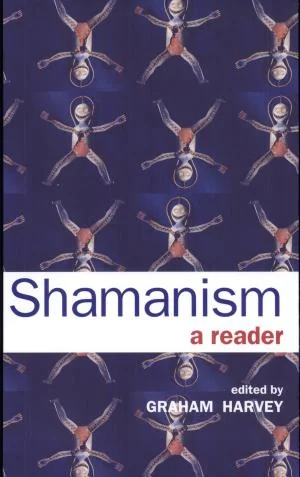
Graham Harvey’s "Shamanism" interrogates the very definition of its subject, moving beyond the romanticized image of the tribal healer. What impresses is the author's commitment to ethnographic detail, particularly in his discussion of how specific cultural contexts shape shamanic expression. For instance, his analysis of the diverse roles shamans play in Siberian societies, as detailed in chapter 3, provides a concrete counterpoint to generalized notions. However, the book's breadth occasionally leads to a slight diffusion of focus, with some sections feeling less developed than others. The exploration of contemporary Western adaptations, while necessary, sometimes feels like an addendum rather than an integrated part of the core analysis. Ultimately, "Shamanism" serves as a vital corrective, urging a more rigorous and culturally sensitive approach to understanding these ancient practices.
📝 Description
80
Graham Harvey's "Shamanism" (2003) examines sophisticated spiritual technologies beyond simplistic notions of tribal magic.
Graham Harvey's "Shamanism," published in 2003, offers a detailed look at shamanic practices across different global cultures. The book moves past common ideas of simple magic to show the complex spiritual methods and beliefs behind shamanism. Harvey emphasizes how shamans act as links between the human world and spirit realms, helping with healing, predicting the future, and supporting the community. It discusses the altered states of consciousness, the spirit guides shamans work with, and the cosmologies that are central to these traditions.
The book is valuable for students in anthropology, religious studies, and comparative spirituality. It also speaks to those involved in modern shamanic or animistic practices who want a solid grasp of their origins. Anyone interested in altered states of consciousness, ecstatic religious experiences, or visionary practices found worldwide will find this work particularly insightful. Harvey's study aims to present shamanism not as a historical curiosity, but as a dynamic and adaptable system of knowledge.
Published in 2003, Harvey's "Shamanism" arrived during a period of renewed interest in shamanism, often colored by New Age perspectives. The book works to place these practices within their authentic cultural and historical settings, cautioning against their uncritical adoption. It acknowledges earlier anthropological work, such as that of Mircea Eliade, but provides a more detailed viewpoint that highlights the active roles of indigenous practitioners. Harvey challenges the idea of shamanism as a uniform entity, underscoring its diverse forms and development over time.
💡 Why Read This Book?
• Learn how shamanic practices are not a single entity but a vast array of culturally specific traditions, as detailed in Harvey's comparative analysis of Siberian and Native American methods. • Understand the crucial role of altered states of consciousness and spirit helpers, a concept explored through ethnographic examples in chapters like 'The Shamanic Journey'. • Gain insight into the historical development of shamanic studies, appreciating the work's critical engagement with figures like Mircea Eliade and its contribution to a more nuanced anthropological understanding since 2003.
⭐ Reader Reviews
Honest opinions from readers who have explored this book.
❓ Frequently Asked Questions
What is the primary focus of Graham Harvey's "Shamanism"?
Graham Harvey's "Shamanism," published in 2003, focuses on the diverse global manifestations of shamanic practices, emphasizing their cultural specificity and the complex roles shamans play as intermediaries and healers.
How does "Shamanism" by Graham Harvey differ from earlier studies?
This work distinguishes itself by moving beyond generalized definitions and engaging critically with earlier anthropological accounts, like those of Mircea Eliade, to present a more nuanced view of shamanism's varied expressions.
Does Graham Harvey discuss contemporary shamanism in his book?
Yes, the book explores shamanic traditions across historical and geographical boundaries, including their presence and adaptation within seemingly ordinary aspects of modern Western culture.
What is a key concept explored in "Shamanism"?
A central concept is the shaman's access to altered states of consciousness, often facilitated by drumming or chanting, enabling communication with spirit allies and other realms.
Who would benefit most from reading Graham Harvey's "Shamanism"?
Students of anthropology, religious studies, and comparative spirituality, as well as those interested in altered states, ecstatic experience, and the global history of shamanic practices, will find this book valuable.
When was Graham Harvey's "Shamanism" first published?
Graham Harvey's comprehensive study "Shamanism" was first published in 2003.
🔮 Key Themes & Symbolism
Cultural Specificity of Shamanism
Harvey emphasizes that shamanism is not a monolithic global religion but a spectrum of distinct practices shaped by unique cultural, historical, and geographical contexts. The book illustrates this through detailed case studies, demonstrating how cosmology, ritual, and the shaman's role vary significantly from the Siberian tundra to the Amazon basin. This approach challenges earlier anthropological tendencies to overgeneralize, stressing the need for ethnographic rigor and respect for indigenous epistemologies. By examining specific traditions, Harvey highlights the adaptive nature of shamanism and its deep embeddedness within local lifeworlds.
Altered States and Spirit Worlds
A core element explored is the shaman's capacity to enter altered states of consciousness, often through rhythmic sound like drumming or chanting. These states are not mere psychological phenomena but are understood within their cultural frameworks as genuine journeys into spirit worlds. Harvey examines the commonalities and variations in these experiences, including the role of spirit helpers—animal, plant, or ancestral guides—who assist the shaman in divination, healing, and spiritual guidance. The book treats these phenomena with serious ethnographic attention, respecting the cosmological beliefs of practitioners.
The Shaman as Specialist
Harvey frames the shaman not as a mystical mystic removed from society, but as a skilled practitioner with specialized knowledge and abilities. They are often healers, diviners, and mediators who occupy a crucial position within their communities. The book explores the training, initiation, and responsibilities associated with shamanic roles, underscoring the practical and social functions these individuals serve. This perspective debunks simplistic portrayals and highlights the intellectual and practical dimensions of shamanic traditions, acknowledging the shaman's active engagement with their community's needs.
Contemporary Relevance and Critique
Published in 2003, the work addresses the contemporary interest in shamanism, particularly in Western cultures. Harvey critically examines how shamanic practices are sometimes appropriated or decontextualized, contrasting this with the authentic, culturally embedded traditions. He implicitly encourages a more informed and respectful engagement with shamanism, urging readers to move beyond New Age stereotypes. The book serves as a scholarly foundation for understanding contemporary animistic or nature-based spiritualities, grounding them in rigorous anthropological research.
💬 Memorable Quotes
Direct passages from the work, attributed to the author.
“The work explores how shamans mediate between human and spirit realms.”
— This highlights the shaman's critical function as a bridge, facilitating communication and interaction between the mundane world and the sacred or unseen dimensions.
“Shamanism is characterized by the shaman's ability to enter altered states of consciousness.”
— This points to the fundamental method of shamanic practice – accessing non-ordinary reality through techniques like drumming or chanting to achieve specific spiritual goals.
“Spirit helpers are crucial allies for the shaman.”
— This emphasizes the collaborative aspect of shamanic work, where the practitioner relies on the assistance and guidance of various spiritual entities for their efficacy.
“The book examines the diverse cultural expressions of shamanic traditions.”
— This underscores the central argument that shamanism is not uniform but varies significantly across different societies and geographical locations.
“Harvey critiques generalized understandings of shamanism.”
— This reflects the author's scholarly approach, aiming to correct simplistic or romanticized views by grounding the discussion in specific ethnographic data and historical context.
🌙 Esoteric Significance
Tradition
While not strictly belonging to a Western esoteric lineage like Hermeticism or Kabbalah, Harvey's work is crucial for understanding the roots of many contemporary animistic and nature-based spiritual practices that draw inspiration from shamanic traditions. It provides an anthropological grounding for concepts often explored in esoteric circles, such as altered states, spirit communication, and ecstatic trance, situating them within their original cultural contexts rather than purely symbolic interpretations.
Symbolism
Key symbols explored include the shamanic journey, often visualized as a path through different realms, and spirit animals, which represent potent forces or guides unique to specific cultures. The drum, a ubiquitous tool for inducing trance, also functions as a potent symbol of rhythmic connection to the spirit world and the heartbeat of the cosmos. These symbols are not merely decorative but are integral to the shaman's cosmology and practice.
Modern Relevance
Contemporary thinkers and practitioners in fields ranging from ecopsychology to neoshamanism frequently reference anthropological studies like Harvey's. His work provides a scholarly counterpoint to more New Age-oriented interpretations, offering a framework for understanding contemporary animistic revivals and nature-based spiritualities with greater cultural sensitivity and historical awareness. Figures exploring indigenous methodologies and comparative religion often engage with his nuanced analyses.
👥 Who Should Read This Book
• Students of anthropology and religious studies seeking a rigorous, ethnographically grounded overview of shamanic practices across cultures. • Practitioners of contemporary shamanic paths who wish to understand the historical and cultural diversity of their traditions beyond generalized concepts. • Skeptics and curious individuals interested in the cross-cultural phenomenon of altered states of consciousness and their role in human spirituality and healing.
📜 Historical Context
Graham Harvey's "Shamanism" was published in 2003, a period marked by significant academic and popular interest in the subject. The field had been heavily influenced by Mircea Eliade's important work "Shamanism: Archaic Techniques of Ecstasy" (1951), which presented a more unified, albeit somewhat romanticized, view. Harvey's book emerged as a critical response, pushing for greater ethnographic specificity and cultural relativism. It engaged with contemporary anthropological debates that questioned Eliade's universalizing tendencies and emphasized indigenous agency. While not facing direct censorship, the work contributed to a scholarly shift away from viewing shamanism as a singular, timeless phenomenon towards understanding its diverse, evolving manifestations rooted in specific historical and social landscapes.
📔 Journal Prompts
The varied roles of shamans across different societies.
Spirit helpers as depicted in Siberian versus Amazonian traditions.
Techniques for achieving altered states of consciousness.
The concept of the shamanic journey.
Critiques of generalized shamanic studies.
🗂️ Glossary
Shaman
An individual recognized within their culture as having the ability to communicate with the spirit world, often acting as a mediator, healer, or diviner.
Altered State of Consciousness (ASC)
A condition of awareness that deviates from ordinary waking consciousness, often induced through practices like drumming, chanting, or ecstatic dance, enabling access to spiritual realms.
Spirit Helper
A spiritual being, often an animal, plant, or ancestral figure, that allies with a shaman and provides assistance, knowledge, or power.
Shamanic Journey
A controlled trance state in which the shaman travels to other domains of reality to retrieve information, effect healing, or interact with spirits.
Cosmology
The understanding of the origin, structure, and workings of the universe within a particular cultural or religious framework, often central to shamanic belief systems.
Ethnography
The systematic study of people and cultures through fieldwork, involving detailed observation and analysis of specific societies and their practices.
Ecstasy
A state of being outside oneself, characterized by intense emotion or spiritual fervor, often associated with shamanic trance and visionary experiences.
This book appears in 1 collection
🔮 Readers Also Liked
Browse all →









From the “Shamanism” Collection
View all →








More Free Occult Philosophy Books
View all →