Selected works
 73
73

Selected works
Paracelsus’s collected works offer a raw, often polemical, glimpse into a mind that straddled the worlds of empirical observation and mystical cosmology. The sheer force of his conviction, particularly in his medical treatises where he rails against the "barbaric" practices of his contemporaries, is striking. One passage, detailing the properties of minerals and their celestial influences, exemplifies his holistic yet intensely practical approach. However, the dense, allegorical language and the sheer volume of his output can make navigating his thought challenging without significant prior grounding in Renaissance hermeticism. The lack of extensive annotation in some editions can compound this difficulty. Still, for those willing to engage, the reward is a direct connection to one of Western esotericism’s most pivotal figures.
📝 Description
73
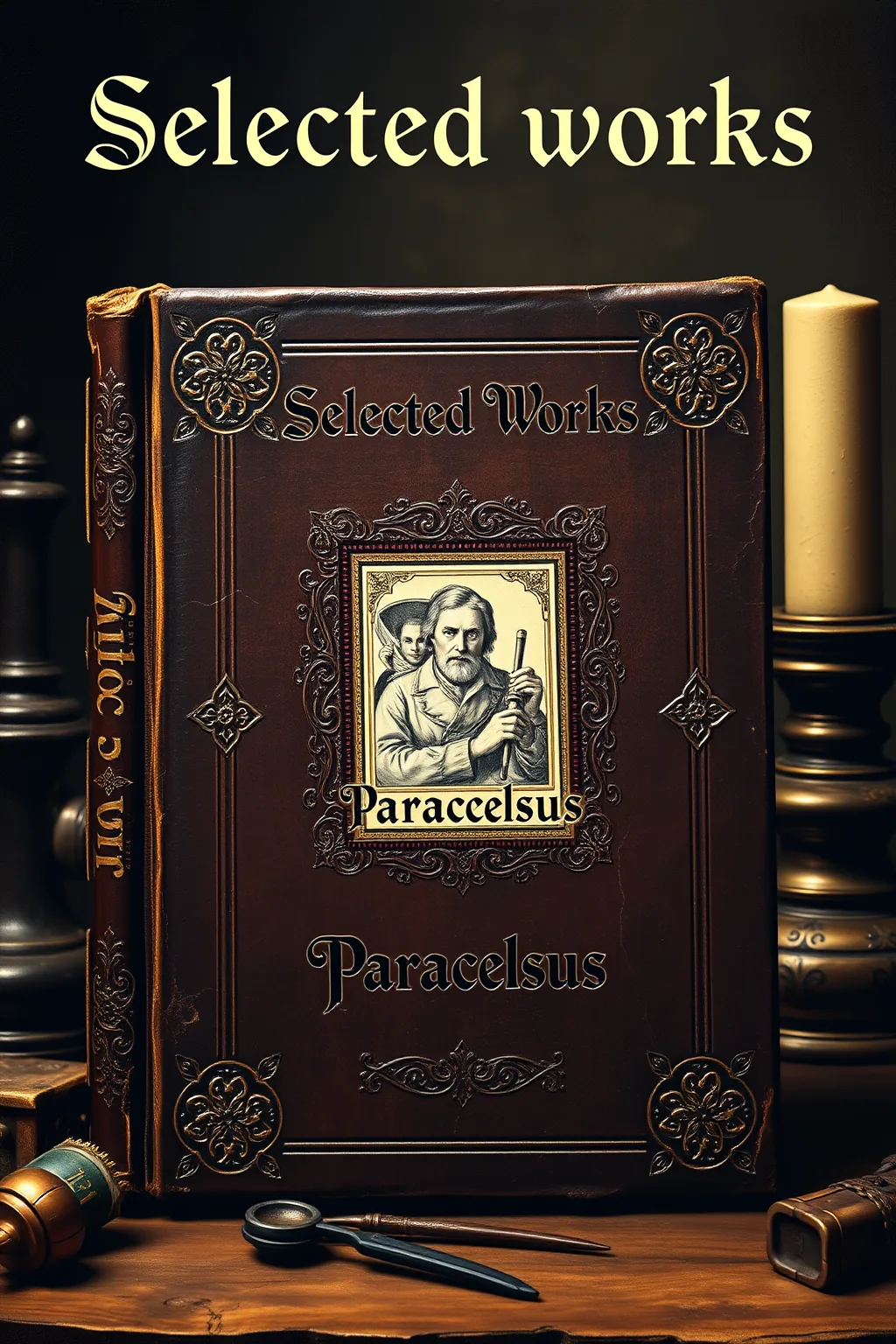
This 1541 collection presents seminal writings by Paracelsus, a physician and alchemist.
Theophrastus von Hohenheim, known as Paracelsus, synthesized Renaissance natural philosophy with alchemy and early medical theory. This volume offers direct access to his unique perspective, which challenged the medical and spiritual understandings of the 16th century. His radical ideas, such as chemical remedies and critiques of Galenic medicine, frequently put him at odds with academic and medical establishments.
Paracelsus published his influential works during the early 16th century, a time of significant religious upheaval. His alchemical pursuits focused on extracting medicinal essences, or *elixirs*, alongside the pursuit of transmutation. The selections delve into core Paracelsian ideas, including the *tria prima* (sulfur, mercury, salt) as fundamental matter principles and the macrocosm-microcosm link between the universe and the human body.
Paracelsus stands as a major figure in Western esotericism, bridging late medieval alchemy with emergent Renaissance thought. His work integrated hermetic principles with practical chemistry and a vitalistic philosophy, influencing both occult traditions and the development of pharmacology. He sought correspondences between celestial bodies, natural substances, and human health, departing from purely scholastic approaches to medicine and cosmology.
💡 Why Read This Book?
• Understand the alchemical basis of early chemical medicine, learning how Paracelsus sought specific medicinal essences from natural substances, a departure from humoral theory. • Grasp the macrocosm-microcosm doctrine, comprehending how Paracelsus believed celestial forces directly influenced human physiology and disease. • Explore the *tria prima* (sulfur, mercury, salt) as fundamental principles, gaining insight into his elemental understanding of matter and its transformation.
⭐ Reader Reviews
Honest opinions from readers who have explored this book.
❓ Frequently Asked Questions
What is the significance of the *tria prima* in Paracelsus's philosophy?
The *tria prima* – sulfur, mercury, and salt – represent the core principles of matter for Paracelsus. Sulfur signifies combustibility and soul, mercury represents volatility and spirit, and salt denotes fixity and the body, forming the basis of his alchemical and medical theories.
How did Paracelsus view the relationship between medicine and alchemy?
He saw alchemy not merely as metal transmutation but as a tool for creating potent medicines. Paracelsus believed alchemical processes could extract the vital essences (elixirs) from minerals, plants, and animals, far superior to contemporary remedies.
What was Paracelsus's main criticism of contemporary medicine?
He vehemently criticized the reliance on ancient authorities like Galen and Avicenna, and the ineffective, often harmful, treatments common in his era. Paracelsus advocated for direct observation and chemical remedies derived from nature.
Who was Paracelsus and when did he live?
Theophrastus von Hohenheim, known as Paracelsus, was a Swiss-German alchemist, physician, astrologer, and theologian of the Renaissance. He lived from approximately 1493 to 1541.
What is the macrocosm-microcosm analogy Paracelsus discusses?
This principle posits a fundamental correspondence between the universe (macrocosm) and the human being (microcosm). Paracelsus believed that understanding the patterns and forces in the cosmos was key to understanding health and disease within the body.
Are Paracelsus's writings considered difficult to read?
Yes, Paracelsus often wrote in a dense, allegorical style, blending technical alchemical terms with philosophical and theological concepts. His works require focused study and often benefit from scholarly commentary.
🔮 Key Themes & Symbolism
Alchemy as Medicine
Paracelsus radically reoriented alchemy, shifting its primary focus from gold-making to the creation of potent medicines. He argued that metals, minerals, and other substances contained essential virtues that could be extracted and purified through alchemical processes to heal the body. This involved understanding the intrinsic properties of elements and their celestial influences, moving beyond the prevailing humoral pathology. His quest was for *elixirs* capable of restoring health and longevity, directly challenging the established medical practices of the 16th century.
The Macrocosm and Microcosm
A central tenet of Paracelsian thought is the profound interconnectedness between the universe (macrocosm) and the individual human being (microcosm). He believed that the same forces, elements, and patterns governing the celestial spheres were mirrored within the human body. Understanding these correspondences was crucial for diagnosing and treating illness, which he often viewed as a disharmony between the inner and outer worlds, influenced by astrological and elemental factors.
The Tria Prima
Paracelsus proposed that all matter was composed of three fundamental principles: Sulfur, Mercury, and Salt. These are not the common elements but rather philosophical essences representing distinct qualities. Sulfur embodies combustibility, spirit, and soul; Mercury signifies volatility, consciousness, and fluidity; and Salt represents corporeality, stability, and the physical body. This framework underpinned his alchemical transformations and his theory of disease and health.
Spiritual and Elemental Powers
Beyond physical substances, Paracelsus acknowledged the influence of invisible forces and spiritual entities. He believed that elements were not merely inert matter but possessed distinct intelligences and powers, often associated with specific celestial alignments. His work implies a vibrant, ensouled universe where divine will and natural forces intertwine, impacting human destiny and well-being. This spiritual dimension informed his approach to both alchemy and medicine.
💬 Memorable Quotes
Direct passages from the work, attributed to the author.
“The book is the physician's best medicine.”
— This highlights Paracelsus's emphasis on knowledge and study as foundational to medical practice, contrasting with rote application of tradition. He valued textual understanding as a vital component of effective healing.
“Nature is the first physician.”
— This points to Paracelsus's belief in the inherent healing power of the natural world. He sought to understand and harness these natural virtues through alchemical processes, rather than relying solely on artificial concoctions.
“Experience is the mother of all certainty.”
— Paracelsus championed empirical observation and practical experimentation over purely theoretical or ancient doctrines. True knowledge, for him, stemmed from direct engagement with the subject matter.
“The physician must know the hidden virtues of things.”
— This refers to his concept of *arcanum* or hidden essences within substances, which alchemy aimed to uncover and utilize for therapeutic purposes, moving beyond superficial appearances.
“Man is a microcosm, a mirror of the great world.”
— This succinctly captures the core of the macrocosm-microcosm doctrine, emphasizing the inherent correspondence and unity between the human being and the entire cosmos.
🌙 Esoteric Significance
Tradition
Paracelsus stands as an important figure in the Western Hermetic tradition, bridging medieval alchemy with Renaissance natural philosophy and early modern medicine. While deeply rooted in Hermetic principles of correspondence and the hidden virtues of nature, he departed from purely speculative alchemy by emphasizing practical application, particularly in medicine. His work integrated Neoplatonic ideas, Kabbalistic concepts of divine emanation, and a vigorous, observational approach to the natural world, creating a unique synthesis that laid groundwork for later Rosicrucian and alchemical movements.
Symbolism
Central to Paracelsus's symbolism are the *tria prima* (Sulfur, Mercury, Salt), representing not just chemical components but philosophical principles of soul, spirit, and body. The Ouroboros, the serpent eating its tail, frequently appears, symbolizing cyclic processes, unity, and the self-contained nature of alchemical transformation. Another key motif is the *arcanum*, the hidden medicinal virtue or secret essence within natural substances, which the alchemist seeks to reveal and purify.
Modern Relevance
Paracelsus's influence persists in various contemporary fields. His emphasis on holistic healing and the connection between the body, mind, and environment speaks to modern integrative medicine and naturopathy. Alchemists and Hermeticists continue to study his texts for insights into spiritual transformation and the philosophy of matter. Furthermore, his pioneering work in chemical medicine and pharmacognosy is acknowledged as a precursor to modern pharmacology and toxicology, demonstrating the enduring impact of his empirical and mystical inquiries.
👥 Who Should Read This Book
• Students of Renaissance intellectual history seeking to understand the interplay between science, magic, and medicine before the Enlightenment. • Aspiring alchemists and Hermetic practitioners interested in foundational texts that bridge theory and practical application in the search for medicinal elixirs. • Medical historians and researchers exploring the evolution of pharmaceutical practices and the critique of established medical dogma in early modern Europe.
📜 Historical Context
Paracelsus’s writings emerged during a period of immense intellectual and religious upheaval in the early 16th century. The Renaissance had spurred a renewed interest in ancient texts, but also a critical re-evaluation of established knowledge. His radical critiques of Galenic medicine and his advocacy for chemical remedies derived from mineral and metallic sources placed him in direct opposition to the conservative medical faculties of universities like Paris and Montpellier. While figures like Leonardo da Vinci were exploring anatomy and mechanics through observation, Paracelsus focused on the hidden virtues and elemental composition of substances, influenced by Hermeticism and Neoplatonism. His embrace of alchemy as a medical science, detailed in works like *De Natura Rerum* (published posthumously), was controversial. Despite facing censure and frequent relocation, his ideas disseminated, influencing later alchemists and the development of iatrochemistry, the branch of chemistry concerned with medicine, bridging natural philosophy and practical pharmacy.
📔 Journal Prompts
The *tria prima* as applied to personal balance.
Macrocosm-microcosm correspondence in daily life.
Paracelsus's critique of medical tradition and its modern parallels.
The role of *arcanum* in discovering hidden potential.
Alchemy's purpose beyond material transmutation.
🗂️ Glossary
Tria Prima
The three fundamental principles Paracelsus identified in all matter: Sulfur (soul/spirit), Mercury (mind/consciousness), and Salt (body/physicality). These represent the philosophical essences, not just common chemical substances.
Macrocosm
The universe or the greater world, considered as a complex system. Paracelsus believed it held patterns and forces that directly corresponded to those within the human body.
Microcosm
The human being, seen as a miniature or smaller version of the universe (macrocosm). The concept emphasizes the interconnectedness and parallel structures between humanity and the cosmos.
Archeus
A vital force or animating principle that Paracelsus believed resided in all living things and governed their growth, form, and health. It could be influenced by external factors and internal balance.
Elixir
In Paracelsian alchemy, a purified medicinal substance derived from natural sources through alchemical processes, believed to have potent healing properties and promote longevity.
Arcanum
The hidden virtue, secret power, or essential property within a substance that alchemy seeks to uncover and utilize, particularly for medicinal purposes.
Iatrochemistry
A branch of alchemy and chemistry focused on the application of chemical principles to medicine and the preparation of remedies. Paracelsus is considered a key founder of this field.
🔮 Readers Also Liked
Browse all →







More by Paracelsus
All books →





More Free Alchemy & Hermeticism Books
View all →