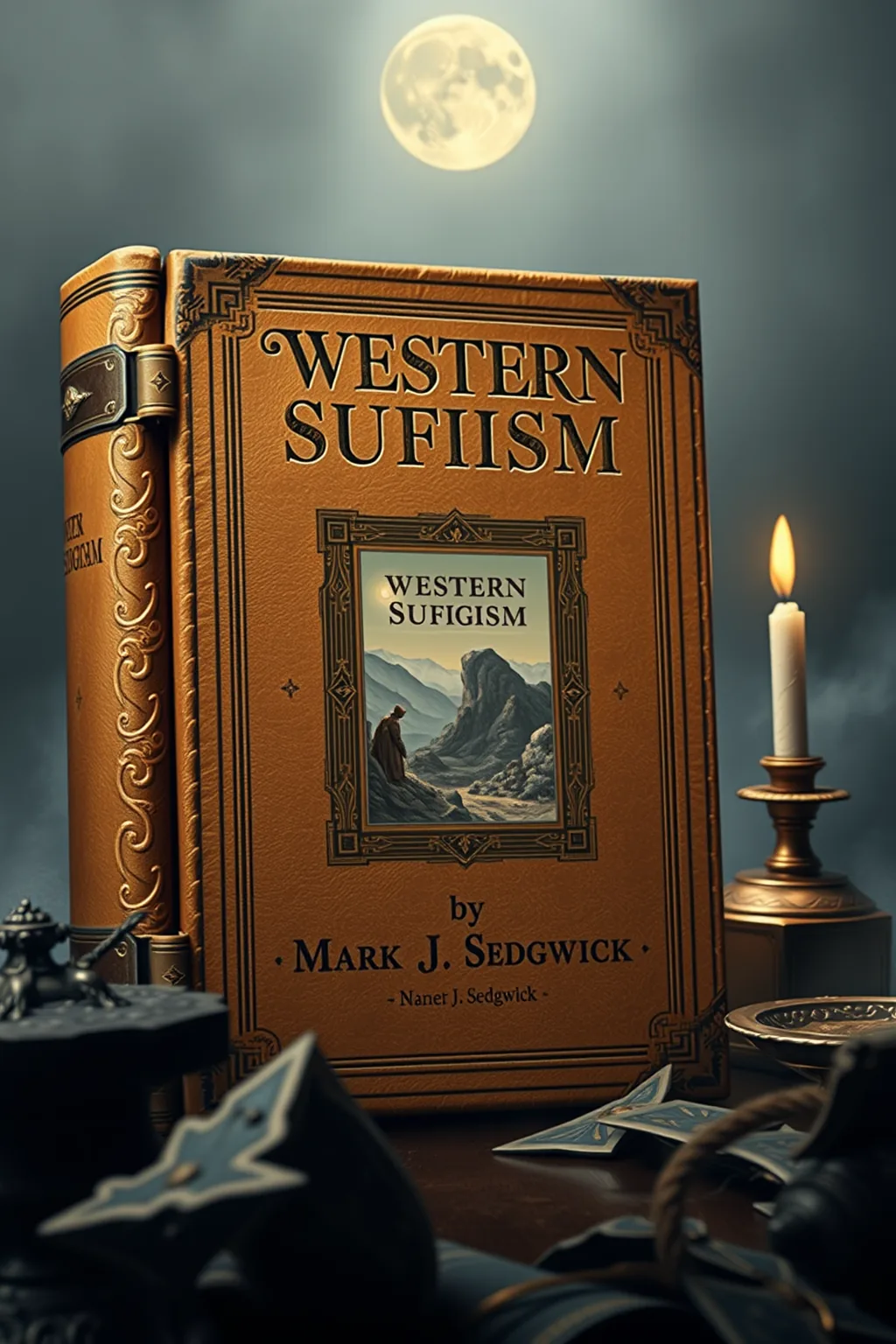
Western Sufism
 61
61

Western Sufism



Review by Cassian Rothmann (Senior Critic, Ancient Wisdom) — Mark J. Sedgwick's Western Sufism is a masterful exploration of the mystical traditions that have quietly influenced Western thought. The book stands out for its meticulous research and esoteric insights, making it a must-read for anyone interested in the hidden knowledge that permeates our religious and spiritual landscapes. Sedgwick's ability to weave together complex ideas from Sufism, Neoplatonism, and Hermeticism is nothing short of brilliant. This work is particularly valuable for scholars and practitioners seeking to understand the deeper philosophical significance of these mystical traditions. The intended audience will find a wealth of information and inspiration, making Western Sufism an indispensable addition to any esoteric library.
📝 Description
61
Mark J. Sedgwick's 2016 book traces the history of Sufism in the West.
Mark J. Sedgwick's Western Sufism examines the presence and development of Sufi thought and practice in Europe and North America. The book details how Sufism interacted with existing Western esoteric traditions, including Neoplatonism, Hermeticism, and various occult movements. Sedgwick traces this influence from the late 19th century to the early 21st century, showing how figures and groups adapted Sufi ideas to Western contexts.
The work covers the establishment of Sufi orders, the dissemination of Sufi literature, and the integration of Sufi concepts into broader spiritual and intellectual currents. It addresses how Westerners interpreted and utilized Sufi philosophy and practices, creating distinct Western expressions of Sufism. The book aims to provide a comprehensive overview of this historical phenomenon for scholars and interested readers.
Western Sufism is situated within the broader study of esotericism, particularly the cross-pollination of Eastern spiritual traditions with Western occult and philosophical currents that began in the late 19th century. It examines how Sufi ideas, often transmitted through translations and individual contacts, were assimilated into a landscape already shaped by figures like Helena Blavatsky and movements such as Theosophy and various forms of Western ceremonial magic. The book maps the specific ways Sufi concepts of love, divine knowledge, and spiritual practice were adopted and sometimes reinterpreted by Western esotericists.
💡 Why Read This Book?
Read Western Sufism to gain a deeper understanding of the mystical traditions that have shaped Western thought. Ideal for seekers of hidden knowledge, scholars of religion, and practitioners of esoteric arts, this book offers profound insights into the spiritual symbolism and philosophical significance of Sufism, Neoplatonism, and Hermeticism. It is a journey through the esoteric landscapes of Europe and North America, revealing the hidden truths that lie beneath the surface of our collective consciousness.
⭐ Reader Reviews
Honest opinions from readers who have explored this book.
❓ Frequently Asked Questions
What is the primary focus of Western Sufism?
The primary focus of Western Sufism is the exploration of mystical traditions that have influenced European and North American religious thought, particularly the intersections of Sufism, Neoplatonism, and Hermeticism.
Who is the intended audience for this book?
The intended audience includes seekers of hidden knowledge, scholars of religion, and practitioners of esoteric arts who are interested in the deeper philosophical significance of mystical traditions.
How does Sedgwick approach the subject matter?
Sedgwick approaches the subject matter with meticulous research and a deep understanding of esoteric traditions, weaving together complex ideas to reveal the hidden truths that shape Western mystical thought.
What makes this book unique?
Western Sufism is unique in its comprehensive exploration of the mystical undercurrents that flow through Western religious and spiritual landscapes, offering profound insights and a deeper understanding of these traditions.
Is this book suitable for beginners?
While the book is rich in esoteric insights, it is particularly valuable for those with some background in mystical traditions, making it suitable for both beginners and seasoned scholars.
🔮 Key Themes & Symbolism
Neoplatonism and Sufism
Examine the profound intersections of Neoplatonism and Sufism, uncovering the mystical traditions that have shaped Western religious thought. This theme explores the hidden knowledge and spiritual symbolism that permeate these esoteric traditions, offering a deeper understanding of their philosophical significance.
Hermeticism in Western Thought
Explore the influence of Hermeticism on Western mystical traditions, revealing the hidden truths that lie beneath the surface of our collective consciousness. This theme examines the esoteric landscapes of Europe and North America, offering useful insights into the spiritual symbolism and philosophical significance of Hermeticism.
Spiritual Symbolism and Hidden Knowledge
Uncover the layers of spiritual wisdom that have shaped Western mystical thought. This theme focuses on the mystical undercurrents that flow through our religious and spiritual landscapes, revealing the hidden knowledge and symbolism that lie at the heart of these traditions.
💡 Key Ideas
Editorial paraphrase of the work's core concepts — not direct quotes.
The journey of the mystic is a journey into the heart of hidden knowledge.
This quote emphasizes the mystical quest for spiritual enlightenment and the discovery of esoteric truths.
Neoplatonism and Sufism share a common language of the soul.
This line highlights the profound connections between these mystical traditions, revealing their shared spiritual symbolism.
Hermeticism offers a map to the esoteric landscapes of the mind.
This passage underscores the philosophical significance of Hermeticism in guiding seekers through the mysteries of the inner self.
The symbolism of Sufism reveals the hidden truths of existence.
This quote underscores the deep spiritual wisdom embedded in Sufi teachings and their impact on Western mystical thought.
The mystical undercurrents of Europe and North America shape our collective consciousness.
This line emphasizes the enduring influence of esoteric traditions on our spiritual and religious landscapes.
🌙 Esoteric Significance
Tradition
Western Sufism belongs to the Hermetic tradition, which emphasizes the search for hidden knowledge and spiritual enlightenment. This tradition draws from various esoteric sources, including Sufism and Neoplatonism, to reveal the deeper philosophical significance of mystical practices.
Symbolism
Key symbols in this book include the mystical journey of the soul, the language of the heart, and the map of the esoteric landscapes of the mind. These symbols represent the spiritual wisdom and hidden truths that lie at the heart of these traditions.
Modern Relevance
Today, Western Sufism is relevant for modern practitioners seeking to understand the deeper philosophical significance of mystical traditions. It is particularly valuable for those interested in the intersections of Sufism, Neoplatonism, and Hermeticism, offering useful insights into the spiritual symbolism and hidden knowledge that shape our collective consciousness.
👥 Who Should Read This Book
Beginners interested in the mystical traditions of Europe and North America will find Western Sufism to be an enlightening introduction. Scholars of religion and esoteric studies will appreciate the book's meticulous research and clear insights. Spiritual seekers and practitioners of esoteric arts will benefit from the profound philosophical significance of these traditions, uncovering hidden truths and spiritual symbolism that lie beneath the surface of our collective consciousness.
📜 Historical Context
Written in an era of renewed interest in mystical and esoteric traditions, Western Sufism by Mark J. Sedgwick provides a timely exploration of the hidden knowledge that has shaped Western religious thought. The book's significance lies in its comprehensive examination of the intersections between Sufism, Neoplatonism, and Hermeticism, offering a deeper understanding of the spiritual symbolism and philosophical significance of these traditions. Its influence can be seen in the growing interest in esoteric studies and the resurgence of mystical practices in modern spiritual seekers.
📔 Journal Prompts
Reflect on the intersections of Neoplatonism and Sufism in your own spiritual journey.
How does Hermeticism influence your understanding of the esoteric landscapes of the mind?
Consider the role of spiritual symbolism in revealing hidden truths of existence.
Explore the mystical undercurrents that flow through your religious and spiritual landscapes.
What insights have you gained from the esoteric traditions discussed in Western Sufism?
🗂️ Glossary
Neoplatonism
A philosophical tradition that emphasizes the mystical ascent of the soul to the divine, drawing from the teachings of Plotinus and other Neoplatonic philosophers.
Sufism
The mystical branch of Islam that seeks spiritual enlightenment and union with the divine through esoteric practices and teachings.
Hermeticism
An esoteric tradition that focuses on the search for hidden knowledge and spiritual wisdom, drawing from various mystical and philosophical sources.
Esoteric Landscapes
The inner domains of the mind and soul, explored through mystical practices and spiritual symbolism.
Spiritual Symbolism
The use of symbols and metaphors to represent hidden truths and esoteric knowledge in mystical traditions.
This book appears in 5 collections
🔮 Readers Also Liked
Browse all →








From the “Christian Mysticism” Collection
View all →








More Free Alchemy & Hermeticism Books
View all →