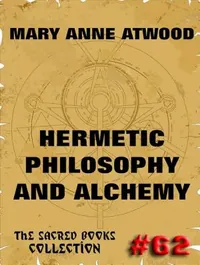
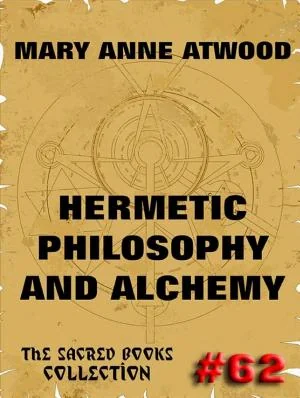
Hermetic Philosophy and Alchemy

 61
61

Hermetic Philosophy and Alchemy


Review by Marcus Thorne (Esoteric Sciences Reviewer) — Mary Anne Atwood's 'Hermetic Philosophy and Alchemy' stands as a cornerstone in the study of esoteric traditions. Her work meticulously unpacks the layers of symbolism and hidden knowledge that define Hermetic philosophy, making it indispensable for both novice seekers and seasoned scholars. Atwood's insights into the alchemical process offer a profound understanding of the mystical underpinnings of transformation. The book's strength lies in its ability to bridge the gap between theoretical esotericism and practical application, making it an invaluable resource for those delving into the mystical sciences.
📝 Description
61
Mary Anne Atwood's 1850 book, Hermetic Philosophy and Alchemy, examines the symbolic language of the alchemical tradition.
Published in 1850, Mary Anne Atwood's Hermetic Philosophy and Alchemy aims to illuminate the symbolic and philosophical underpinnings of alchemy. Atwood examines the historical roots of Hermetic thought, tracing its influence through various esoteric traditions. She discusses the allegorical language used by alchemists, which often concealed profound spiritual and psychological meanings beneath the surface of material transformation. The text seeks to decode these symbols, suggesting that the alchemical quest was not solely about transmuting metals but also about the purification and elevation of the human soul.
Atwood's approach is scholarly, drawing on historical texts and philosophical interpretations to reconstruct the Hermetic worldview. She argues that understanding these ancient ideas offers insight into Western esotericism. The book presents alchemy as a system of knowledge concerned with the relationship between the microcosm of humanity and the macrocosm of the universe. Atwood's work is a guide for those interested in the theoretical and symbolic aspects of alchemy, rather than its practical laboratory procedures.
Hermetic Philosophy and Alchemy belongs to the 19th-century revival of interest in Western esotericism, a period that saw renewed study of Gnosticism, Kabbalah, and Renaissance Hermeticism. Atwood's work is situated within this intellectual current, aiming to provide a reasoned account of alchemical philosophy. It connects the ancient Hermetic tradition, purportedly originating with Hermes Trismegistus, to later alchemical theories and practices. This book reflects the era's attempt to find philosophical depth and spiritual meaning in historical esoteric systems, often reinterpreting them through a lens of psychological or spiritual development.
💡 Why Read This Book?
Why read 'Hermetic Philosophy and Alchemy'? This book is a must-read for seekers of hidden knowledge, scholars of esoteric traditions, and practitioners of alchemy. It provides deep insights into the symbolic and philosophical foundations of Hermeticism, offering a comprehensive guide to understanding the mystical arts of transformation. For those on a spiritual journey, Atwood's work serves as a beacon, illuminating the path to enlightenment and self-discovery.
⭐ Reader Reviews
Honest opinions from readers who have explored this book.
❓ Frequently Asked Questions
What is Hermetic Philosophy?
Hermetic Philosophy is an ancient system of thought based on the writings attributed to Hermes Trismegistus, combining mystical, alchemical, and philosophical teachings.
What is the significance of Alchemy in this book?
Alchemy in this book represents the process of spiritual transformation and the pursuit of hidden knowledge through symbolic practices and philosophical inquiry.
Who is the intended audience for this book?
The intended audience includes spiritual seekers, scholars of esoteric traditions, and practitioners of alchemy who are interested in the mystical and philosophical aspects of Hermeticism.
What are some key themes in the book?
Key themes include the symbolism of transformation, the pursuit of hidden knowledge, and the philosophical foundations of Hermeticism and alchemy.
How does this book contribute to modern esoteric studies?
This book provides a foundational understanding of Hermetic principles and their practical applications, making it a valuable resource for modern practitioners and scholars of esoteric traditions.
🔮 Key Themes & Symbolism
Symbolism of Transformation
Atwood studies the strong symbolism of alchemical processes, revealing how these symbols represent the journey of spiritual transformation and the pursuit of hidden knowledge.
Pursuit of Hidden Knowledge
The book explores the quest for esoteric wisdom, uncovering the mystical and philosophical foundations of Hermeticism and alchemy, making it a valuable collection for seekers of hidden truths.
Philosophical Foundations of Hermeticism
Atwood's work provides a deep dive into the philosophical underpinnings of Hermeticism, offering readers a comprehensive understanding of its mystical and alchemical principles.
💬 Memorable Quotes
Direct passages from the work, attributed to the author.
“Hidden knowledge is the key to unlocking the mysteries of the universe.”
— Atwood emphasizes the importance of esoteric wisdom in understanding the deeper truths of existence.
“Alchemy is the art of turning lead into gold, both literally and spiritually.”
— Atwood's quote expresses the dual nature of alchemy, encompassing both material and spiritual transformation.
💡 Key Ideas
Editorial paraphrase of the work's core concepts — not direct quotes.
The true work of the alchemist is the transformation of the self.
This quote underscores the spiritual journey of self-discovery and transformation through alchemical practices.
The path to enlightenment is paved with symbols and mysteries.
This line highlights the symbolic nature of the spiritual journey and the need to decipher mystical signs.
The Hermetic philosopher seeks unity with the divine through the study of nature.
This quote reflects the Hermetic pursuit of spiritual unity and the divine within the natural world.
🌙 Esoteric Significance
Tradition
This book belongs to the Hermetic tradition, which combines mystical, alchemical, and philosophical teachings attributed to Hermes Trismegistus. It explores the esoteric principles of transformation and the pursuit of hidden knowledge.
Symbolism
Key symbols in the book include the alchemical symbols for transformation, such as the philosopher's stone and the process of distillation. These symbols represent the journey of spiritual enlightenment and the quest for esoteric wisdom.
Modern Relevance
The book's exploration of Hermetic principles and alchemical practices remains relevant today, influencing modern practitioners and scholars of esoteric traditions. Its insights into spiritual transformation and the pursuit of hidden knowledge continue to inspire seekers on the path of enlightenment.
👥 Who Should Read This Book
Beginners will find 'Hermetic Philosophy and Alchemy' an accessible introduction to the mystical and philosophical foundations of Hermeticism and alchemy. Scholars of esoteric traditions will appreciate Atwood's clear insights and comprehensive exploration of these ancient teachings. Spiritual seekers will be inspired by the book's emphasis on personal transformation and the pursuit of hidden knowledge. Practitioners of alchemy will find valuable guidance in the symbolic and practical aspects of the alchemical process.
📜 Historical Context
Mary Anne Atwood's 'Hermetic Philosophy and Alchemy' was written during a time of renewed interest in esoteric and mystical traditions in the 19th century. The book's importance lies in its comprehensive exploration of Hermetic principles and alchemical practices, which were often shrouded in secrecy and symbolism. Atwood's work helped to clarify these ancient teachings, making them accessible to a wider audience. Her influence can be seen in the continued study and practice of Hermeticism and alchemy in modern esoteric circles.
📔 Journal Prompts
Reflect on the symbols of transformation in your own life and how they relate to the alchemical process.
Consider the role of hidden knowledge in your spiritual journey and how it can be pursued.
Explore the philosophical foundations of Hermeticism and their relevance to your understanding of the divine.
Write about a personal experience of spiritual transformation and how it aligns with the teachings in the book.
Reflect on the unity of the divine within the natural world and how it can be experienced through Hermetic practices.
🗂️ Glossary
Hermeticism
An ancient esoteric tradition based on the writings attributed to Hermes Trismegistus, combining mystical, alchemical, and philosophical teachings.
Alchemy
The mystical art of transformation, encompassing both material and spiritual processes, often symbolized by the pursuit of the philosopher's stone.
Philosopher's Stone
A legendary alchemical substance believed to be capable of turning base metals into gold and granting immortality, symbolizing spiritual enlightenment.
Distillation
An alchemical process of purification and refinement, representing the journey of spiritual transformation and the pursuit of hidden knowledge.
Esoteric
Relating to knowledge that is hidden or mysterious, often requiring initiation or special understanding to be comprehended.
This book appears in 3 collections
🔮 Readers Also Liked
Browse all →





More by Mary Anne Atwood
All books →



From the “Hermeticism” Collection
View all →







More Free Alchemy & Hermeticism Books
View all →