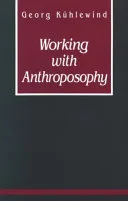
Working with Anthroposophy
 79
79

Working with Anthroposophy
Kühlewind's "Working with Anthroposophy" offers a rigorous, almost ascetic, discipline for the thinking mind. He doesn't merely present ideas; he demands the reader *work* them, transforming abstract concepts into lived experience. The insistence on understanding as a continuous, active process, rather than a static acquisition of knowledge, is the book's signal strength. It challenges the reader to move beyond intellectual assent to genuine inner comprehension. However, the highly concentrated nature of Kühlewind's prose, while precise, can be demanding. A passage discussing the 'activity of thinking' requires sustained focus, potentially leaving those new to anthroposophical terminology feeling adrift without further guidance. The book is a potent tool for those committed to an active spiritual path, but less accessible as an introductory text.
📝 Description
79
Georg Kühlewind's 1992 book teaches developing active, living thinking.
Working with Anthroposophy presents Georg Kühlewind's methods for cultivating an active, living thinking. This approach moves beyond rote memorization or static beliefs, instead focusing on understanding as a continuous, dynamic process. Kühlewind details practical exercises aimed at developing this intuitive capacity, which he frames as fundamental for genuine spiritual growth and a more direct apprehension of truth. The book is written for individuals deeply involved in anthroposophy or similar esoteric paths who wish to deepen their experiential knowledge.
It is particularly suited for those finding traditional study inadequate and seeking a more inwardly engaged way to grasp spiritual ideas. Readers interested in applying Rudolf Steiner's insights in a practical, lived manner will find value in Kühlewind's work. The book emerged in 1992 within a continuing evolution of anthroposophy, aiming to revitalize pedagogical and spiritual methods. Kühlewind contrasts this with purely academic or intellectual interpretations, speaking to a lineage of thinkers dedicated to keeping spiritual science alive through direct inner experience.
Georg Kühlewind's work is situated within the tradition of anthroposophy, founded by Rudolf Steiner in the early 20th century. Anthroposophy seeks to understand the spiritual nature of the human being and the cosmos through a combination of precise thought and inner experience. Kühlewind's specific contribution focuses on the development of thinking itself, viewing it not merely as an analytical tool but as a faculty capable of direct spiritual perception. This emphasis on an active, inwardly generated understanding aligns with a stream within esoteric movements that prioritize experiential knowledge over abstract doctrine.
💡 Why Read This Book?
• Cultivate "living thinking": Learn practical exercises to transform your cognitive processes, moving beyond passive reception to active, intuitive understanding as described by Kühlewind. • Deepen your engagement with Rudolf Steiner's work: Gain methods to experience anthroposophical concepts directly, rather than merely studying them intellectually, as Kühlewind emphasizes. • Develop self-awareness in spiritual practice: Understand the role of the 'I' in generating inner comprehension, a core concept explored in the book's exercises.
⭐ Reader Reviews
Honest opinions from readers who have explored this book.
❓ Frequently Asked Questions
What is "living thinking" according to Georg Kühlewind?
"Living thinking" refers to an active, dynamic process of understanding that is generated inwardly in each moment, as opposed to static, passively received knowledge. Kühlewind's work aims to cultivate this capacity through specific exercises.
When was "Working with Anthroposophy" first published?
The book "Working with Anthroposophy" by Georg Kühlewind was first published in 1992, offering contemporary approaches to anthroposophical study.
Who founded the philosophical movement that inspired this book?
The philosophical and spiritual movement that forms the basis for this book is Anthroposophy, founded by the Austrian philosopher and esotericist Rudolf Steiner in the early 20th century.
What is the primary goal of the methods presented in the book?
The primary goal is to develop the capacity for intuitive, living understanding, enabling readers to grasp spiritual truths dynamically rather than through fixed doctrines.
How does Kühlewind's approach differ from traditional study?
Kühlewind emphasizes active, inner engagement and the continuous generation of understanding, moving beyond the mere acquisition of information or memorization of established teachings.
What role does the "I" play in Kühlewind's system?
The "I" is presented as the central active principle responsible for generating living thought and genuine understanding, making the individual's conscious activity paramount in spiritual development.
🔮 Key Themes & Symbolism
Active Understanding
The central theme is the cultivation of 'living thinking,' an active, moment-by-moment engagement with understanding. Kühlewind argues against static dogma, proposing that truths must be apprehended anew each time. This requires developing the inner capacity to generate comprehension actively, transforming thinking from a passive reception of information into a dynamic organ of spiritual perception. The goal is an understanding that is alive and inwardly experienced.
The Role of the 'I'
Kühlewind places significant emphasis on the human 'I' as the seat of conscious activity and the source of genuine understanding. The book explores how the individual's self-awareness and conscious engagement are crucial for transforming thinking. It is through the active 'I' that one can move beyond mere intellectualization to a direct, intuitive grasp of spiritual realities, fostering personal spiritual development.
Spiritual Science Practice
This work provides practical methods for engaging with spiritual science, specifically Anthroposophy as developed by Rudolf Steiner. It addresses the need for experiential methods that keep the spiritual teachings alive and inwardly accessible. Kühlewind's approach is designed to help practitioners move beyond theoretical knowledge to a lived experience of spiritual concepts, fostering a dynamic relationship with the spiritual world.
Beyond Dogma
A core tenet is the rejection of truth as fixed dogma. Kühlewind, echoing the sentiment in Jörgen Smit's foreword, asserts that truths are dynamic and require continuous, renewed activity of understanding. The book challenges readers to break free from rigid intellectual frameworks and embrace a fluid, responsive approach to spiritual knowledge, encouraging ongoing personal discovery.
💬 Memorable Quotes
Direct passages from the work, attributed to the author.
“Truths are always of a given moment, and, at each moment, must be grasped anew.”
— This highlights the dynamic nature of spiritual truth, emphasizing that it is not static information but requires continuous, active engagement from the individual's consciousness.
“This demands at each moment a renewed activity in relation to the human gift of understanding.”
— The quote underscores the necessity of consciously exercising our capacity for understanding, framing it as an ongoing practice essential for grasping deeper realities.
“The goal of this study is to cultivate the experience of living, intuitive thinking.”
— This statement defines the book's central aim: to foster a mode of thinking that is not merely analytical but intuitively alive and directly connected to the subject matter.
“Truths cannot be transmitted simply as stable dogmas.”
— This challenges the notion of receiving spiritual knowledge as fixed, unchanging doctrines, advocating instead for a personal, active appropriation of truth.
💡 Key Ideas
Editorial paraphrase of the work's core concepts — not direct quotes.
Kühlewind's contribution has a twofold purpose: to cultivate living, intuitive thinking and to deepen the practice of anthroposophy.
This interpretation summarizes the dual aims of the work: developing a specific cognitive capacity and enhancing the practical application of Anthroposophy.
🌙 Esoteric Significance
Tradition
This work is firmly rooted in the tradition of Anthroposophy, a spiritual philosophy and esoteric path initiated by Rudolf Steiner. It builds upon Steiner's cosmology and his emphasis on the evolution of human consciousness. Kühlewind's unique contribution lies in developing specific pedagogical methods to cultivate the 'living thinking' he believed was essential for engaging with Steiner's insights directly and experientially, moving beyond mere intellectual assent.
Symbolism
While not heavily reliant on overt symbolic language in the manner of older esoteric traditions, Kühlewind's work centers on the 'activity of thinking' itself as a profound, almost alchemical, process. The symbol is the thinking process transformed from a mechanical function into a living, spiritual organ. The 'I' acts as the central sun or crucible within this process, where raw perceptions are transmuted into conscious understanding.
Modern Relevance
Kühlewind's focus on developing active, intuitive thinking appeals to contemporary interest in mindfulness, consciousness studies, and cognitive enhancement, albeit from a distinct spiritual-scientific perspective. Thinkers and practitioners in fields related to Waldorf education, biodynamic agriculture, and various anthroposophical initiatives continue to draw upon his methods for fostering deeper understanding and conscious engagement with complex ideas.
👥 Who Should Read This Book
• Students of Anthroposophy: Individuals seeking to move beyond theoretical study of Rudolf Steiner's work and cultivate a more direct, experiential understanding of his teachings. • Practitioners of Esoteric Disciplines: Those engaged in other spiritual or metaphysical paths who wish to develop their capacity for focused, intuitive thinking and inner comprehension. • Educators and Philosophers: Individuals interested in pedagogical approaches that emphasize the active development of consciousness and the nature of understanding itself.
📜 Historical Context
Published in 1992, Georg Kühlewind's "Working with Anthroposophy" emerged within the continuing development of the spiritual science founded by Rudolf Steiner in the early 20th century. The era saw various interpretations and applications of Steiner's vast body of work, with some movements leaning towards academic scholarship and others emphasizing practical, experiential engagement. Kühlewind's approach, focusing on the active cultivation of thinking, can be seen as a response to a perceived need to revitalize the inner dynamism of anthroposophical practice, distinguishing itself from purely theoretical or devotional stances. It engages with the core impulse of Steiner's work to foster conscious spiritual perception in the modern individual, rather than relying on historical authority or prescribed dogma.
📔 Journal Prompts
Reflect on the 'activity of thinking' as described by Kühlewind.
Consider the difference between passively receiving information and actively generating understanding.
How can the 'I' be consciously engaged in the process of grasping truth?
Explore a moment where you experienced 'living, intuitive thinking'.
Analyze a complex concept by attempting to 'grasp it anew' moment by moment.
🗂️ Glossary
Anthroposophy
A spiritual philosophy and esoteric path founded by Rudolf Steiner, seeking to understand the spiritual nature of the human being and the cosmos through specific methods of consciousness.
Living Thinking
A term coined by Georg Kühlewind, referring to a dynamic, intuitive, and actively generated form of understanding that is experienced in the present moment.
The 'I'
In Anthroposophy, the 'I' represents the core spiritual individuality of the human being, the center of self-consciousness and active agency.
Dogma
A principle or set of principles laid down by an authority as incontrovertibly true, often contrasted with dynamic, living understanding.
Intuitive Thinking
A mode of cognition that apprehends truth directly, without reliance on logical deduction or empirical evidence; a form of inner perception.
Spiritual Science
Rudolf Steiner's term for the systematic, conscious investigation of spiritual realities and beings, intended as a rigorous discipline parallel to natural science.
Understanding
In Kühlewind's context, not mere intellectual grasp but an active, inwardly experienced comprehension that transforms the individual.