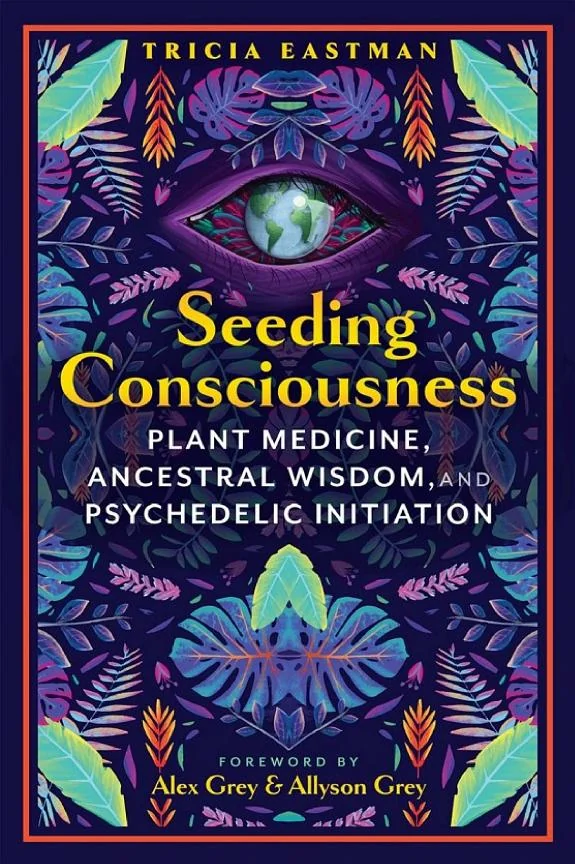
Seeding Consciousness
 84
84

Seeding Consciousness
Tricia Eastman's *Seeding Consciousness* arrives at a moment when the discourse around psychedelics is rapidly expanding, often without sufficient emphasis on grounded practice. The book's strength lies in its clear, step-by-step approach to using these potent tools for healing trauma. Eastman avoids sensationalism, instead offering a methodical blueprint that feels both accessible and respectful of the profound nature of the material. A particularly insightful section details methods for integrating fragmented aspects of the self post-experience, moving beyond mere anecdote to practical application. However, the book's focus on individual transformation, while its core strength, occasionally leaves the broader societal implications or communal healing potentials less explored. The author's connection to ancestral teachings, while present, could be more deeply elucidated with specific examples beyond general principles. Ultimately, *Seeding Consciousness* serves as a valuable and sober guide for the burgeoning field of psychedelic-assisted personal growth.
📝 Description
84
Tricia Eastman's 2024 book, Seeding Consciousness, presents psychedelics as catalysts for personal evolution.
Published in 2024, Seeding Consciousness by Tricia Eastman provides a practical approach to using psychedelics and plant medicines. The book positions these substances as tools for significant personal change, not merely for recreation. It offers a structure for people aiming to heal deep emotional pain and trauma, and to build stronger connections with themselves, the environment, and spiritual realities.
This book is for anyone exploring or already involved with the therapeutic and spiritual uses of psychedelics and plant medicines. It is especially helpful for those looking for structured ways to handle altered states of consciousness, work through difficult psychological issues like ego dissolution and shadow integration, and achieve lasting personal growth. It also appeals to those interested in ancient ideas about interconnectedness.
Eastman's work enters a period of renewed interest in psychedelics, picking up on research from the mid-20th century that was previously halted. The book supports a movement that aims to incorporate these substances into healing and spiritual practices, linking them to historical shamanic customs and early psychedelic studies from the 1950s and 60s. It emphasizes the need for careful usage guidelines, which were less of a focus during the first phase of psychedelic exploration.
Seeding Consciousness situates itself within a growing movement to reintegrate psychedelics into therapeutic and spiritual frameworks. This resurgence builds upon mid-20th-century research and echoes historical shamanic traditions. The book emphasizes conscious intent, preparation, and integration, aligning with practices that seek profound personal and spiritual transformation through altered states of consciousness. It addresses a need for responsible protocols in contemporary psychedelic exploration, linking back to ancestral wisdom regarding interconnectedness.
💡 Why Read This Book?
• Learn specific exercises for planting seeds of transformation within your consciousness, enabling you to actively guide your internal landscape during altered states, directly referencing the methods discussed in the book's core sections on preparation and integration. • Understand how to work with ego death and the shadow self, gaining practical techniques to navigate these challenging psychological phenomena and integrate fragmented parts of your being, as detailed in Eastman's chapter on shadow work. • Explore ancestral teachings on the interconnectedness of all life, gaining a framework to understand your personal healing within a larger spiritual context, drawing upon the book's exploration of these profound, ancient philosophies.
⭐ Reader Reviews
Honest opinions from readers who have explored this book.
❓ Frequently Asked Questions
What is the primary goal of using psychedelics and plant medicines as described in Seeding Consciousness?
The primary goal is to transform pain and trauma into profound connections with oneself, nature, and the spirit world. The book outlines a blueprint for responsible and effective use, focusing on healing and conscious evolution.
What kind of exercises does Seeding Consciousness offer readers?
The book shares exercises designed to help readers plant seeds of transformation in their consciousness, navigate altered states and ego death, work with the shadow self, and integrate fragmented parts of the self, providing practical tools for personal growth.
What ancestral teachings does the book draw upon?
It draws on ancestral teachings concerning the interconnectedness of all life. This perspective frames personal healing as part of a larger spiritual and ecological web, emphasizing a holistic understanding of existence.
Who is Tricia Eastman, the author of Seeding Consciousness?
Tricia Eastman is the author of *Seeding Consciousness*, first published in 2024. She presents herself as a guide for individuals seeking to utilize psychedelics and plant medicines for transformation and healing.
What is the publication year of Seeding Consciousness?
Seeding Consciousness was first published on November 12, 2024. This recent publication date places it within the current wave of renewed interest in psychedelic studies and practices.
Does Seeding Consciousness discuss navigating ego death?
Yes, the book provides guidance and exercises for readers to navigate altered states of consciousness, including the experience of ego death. It aims to equip individuals with tools to process such profound states.
🔮 Key Themes & Symbolism
Conscious Use of Entheogens
The core of *Seeding Consciousness* lies in its methodical approach to the use of psychedelics and plant medicines. Eastman frames these substances as potent allies for transformation, emphasizing that their efficacy is amplified by conscious intent, thorough preparation, and dedicated integration. The book provides a detailed blueprint for engaging with entheogenic states, moving beyond mere experimentation towards deliberate personal and spiritual growth. It advocates for a respectful, informed approach, distinguishing it from recreational or unguided use, and positioning it as a pathway to profound self-discovery and healing.
Trauma Integration and Shadow Work
A significant focus of the book is on addressing and integrating deep-seated pain and trauma. Eastman guides readers through the challenging terrain of the psyche, offering practical exercises for confronting the shadow self—those disowned or repressed aspects of our personality. The work explores how altered states can bring these hidden elements to the surface, facilitating their acknowledgment and eventual integration. This process is presented as crucial for achieving wholeness and moving beyond the limitations imposed by unresolved past experiences, fostering a more complete and authentic self.
Connection to Self, Nature, and Spirit
Eastman posits that effective use of psychedelics and plant medicines can foster profound connections across multiple dimensions. Readers are guided to cultivate deeper relationships with their inner selves, understanding their own consciousness more intimately. The book also explores the interconnectedness of all life, encouraging readers to develop a more profound relationship with the natural world. Furthermore, it addresses the spiritual aspect, suggesting that these practices can open pathways to experiencing the spirit world, leading to a more expansive and meaningful existence.
Ancestral Wisdom and Interconnectedness
Drawing upon ancient wisdom traditions, *Seeding Consciousness* highlights the principle of interconnectedness as a foundational truth. The book suggests that understanding this universal web of life is key to both individual healing and collective well-being. It encourages readers to recognize their place within this larger collection, fostering a sense of belonging and responsibility. By reconnecting with these ancestral perspectives, the work aims to provide a more holistic framework for understanding human experience and our relationship with the cosmos.
💬 Memorable Quotes
Direct passages from the work, attributed to the author.
“Plant the seeds of transformation in your own consciousness.”
— This phrase expresses the book's active, intentional approach. It suggests that personal growth, particularly through altered states, is not passive but requires deliberate cultivation and care, much like nurturing a seed for future bloom.
“Navigate altered states of consciousness and ego death.”
— This highlights the book's practical guidance for managing profound psychological experiences. It frames challenging states like ego dissolution not as something to be feared, but as navigable territory with the right preparation and understanding.
“Work with the shadow, and integrate fragmented parts of the self.”
— This points to the therapeutic aim of confronting and incorporating difficult or repressed aspects of the personality. The goal is wholeness, achieved by acknowledging and making space for all parts of the self, even those deemed undesirable.
“Achieve profound connections with ourselves, nature, and the spirit world.”
— This articulates the ultimate outcome Eastman envisions for responsible entheogenic practice. It speaks to a holistic healing that extends beyond the individual to encompass our relationships with the external world and the unseen realms.
“Explore ancestral teachings on the interconnectedness of all life.”
— This emphasizes the book's philosophical underpinnings, linking modern psychedelic practice to ancient understandings of unity. It suggests that these practices can unlock an awareness of a fundamental cosmic unity.
🌙 Esoteric Significance
Tradition
While not explicitly tied to a single named esoteric lineage like Hermeticism or Gnosticism, *Seeding Consciousness* draws heavily on shamanic traditions and a general animistic or panpsychist worldview. It aligns with contemporary forms of spiritual naturalism and the resurgence of interest in indigenous healing practices that view consciousness as fundamental and pervasive. The work departs from more ritualistic or dogmatic esoteric systems by focusing on direct subjective experience facilitated by entheogens as the primary means of spiritual inquiry and transformation.
Symbolism
The book likely employs symbolism related to growth, germination, and interconnectedness, reflecting its title and themes. The 'seed' itself serves as a potent metaphor for potential, consciousness, and the beginning of a transformative process. Imagery of roots, networks, and the natural world would likely be used to represent the interconnectedness of all life, mirroring concepts found in animistic traditions and certain interpretations of ecological spirituality. The 'shadow' also functions symbolically, representing the hidden, unintegrated aspects of the psyche that must be brought into light.
Modern Relevance
This work is highly relevant to contemporary movements in psychedelic-assisted therapy, consciousness studies, and eco-spirituality. Thinkers and practitioners exploring somatic psychology, transpersonal psychology, and integral theory will find Eastman's emphasis on integration and holistic connection valuable. It speaks directly to a generation seeking meaning beyond materialist paradigms, utilizing modern understandings of neuroscience alongside ancient wisdom to foster psychological healing and a deeper connection to the planet.
👥 Who Should Read This Book
• Individuals exploring the therapeutic potential of psychedelics and plant medicines who seek a structured, responsible approach to preparation, experience, and integration, moving beyond anecdotal accounts. • Those grappling with trauma, pain, or fragmented aspects of the self, who are open to exploring non-ordinary states of consciousness as a pathway to deeper healing and self-understanding. • Students of consciousness, comparative spirituality, or indigenous healing practices interested in how entheogenic substances can facilitate profound connections with nature, the spirit world, and the interconnectedness of all life.
📜 Historical Context
Published in 2024, *Seeding Consciousness* arrives amidst a significant renaissance in psychedelic research and cultural acceptance, a stark contrast to the period of intense suppression following the 1960s. The mid-20th century saw pioneering work by figures like Aldous Huxley and early clinical trials, but this exploration was largely halted by legislative action and social stigma. Eastman's book enters a landscape shaped by contemporary researchers such as Rick Doblin, who has been instrumental in advocating for therapeutic applications and destigmatizing psychedelics. Unlike the more countercultural or purely experimental approaches of the 1960s, this contemporary wave, which Eastman's work exemplifies, emphasizes rigorous therapeutic protocols, integration practices, and a nuanced understanding of consciousness. The book implicitly engages with the legacy of figures like Timothy Leary, offering a more structured and less overtly revolutionary path to exploring altered states, prioritizing personal healing and spiritual connection over broader societal upheaval.
📔 Journal Prompts
Reflecting on the 'seeds of transformation' planted before an experience.
Mapping the contours of your shadow self and its integration.
Identifying moments of profound connection with nature during altered states.
Exploring the feeling of ego dissolution and its aftermath.
Considering ancestral connections to the concept of interconnectedness.
🗂️ Glossary
Psychedelics
A class of psychoactive drugs that can cause hallucinations, change one's ability to think, relate to, and perceive the world. They are often used in therapeutic or spiritual contexts.
Plant Medicines
Refers to psychoactive plants (like ayahuasca, psilocybin mushrooms, peyote) used traditionally for healing, spiritual, and ceremonial purposes. The term emphasizes their therapeutic and sacred nature.
Altered States of Consciousness
Any mental state significantly different from the normal waking state, often induced by meditation, hypnosis, or psychoactive substances. These states can involve changes in perception, thought, and emotion.
Ego Death
A term describing the temporary dissolution of the sense of self or personal identity during intense psychedelic experiences. It is often associated with feelings of unity and transcendence.
Shadow Work
A concept, popularized by Carl Jung, referring to the process of exploring and integrating the unconscious, often repressed or disowned, aspects of one's personality (the 'shadow').
Integration
The process of incorporating insights, experiences, and emotional shifts gained during altered states of consciousness into one's daily life and overall psychological framework.
Interconnectedness
The philosophical or spiritual concept that all beings, phenomena, and the universe itself are fundamentally linked and interdependent, often emphasized in ecological and spiritual traditions.
This book appears in 1 collection
🔮 Readers Also Liked
Browse all →









From the “Ego Death” Collection
View all →






More Free Occult Philosophy Books
View all →