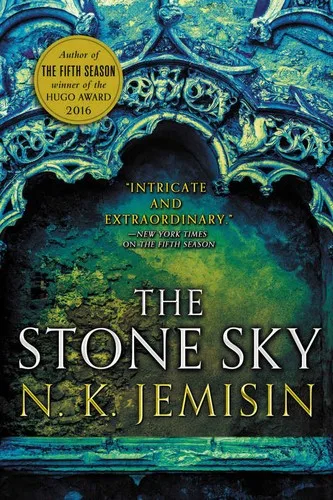
The Stone Sky
 74
74

The Stone Sky
Jemisin’s conclusion to the Broken Earth trilogy, *The Stone Sky*, arrives with a palpable sense of finality and power. The narrative successfully synthesizes the disparate threads of its predecessors, offering a resolution that is both earned and devastating. The exploration of mother-daughter relationships, particularly between Essun and her daughter Nassun, provides a raw emotional core amidst the planet-shattering events. One notable strength is the novel's unflinching portrayal of trauma and its generational impact, forcing characters and readers alike to confront the consequences of immense power wielded through fear. However, the sheer density of world-building and the intricate, non-linear narrative structure, while a hallmark of the series, can occasionally make the pacing feel uneven, particularly in the earlier sections. The depiction of the ultimate Season of Ruin and the choices made by its characters offers a stark, unforgettable moment. *The Stone Sky* solidifies the trilogy's status as a monumental achievement in speculative fiction.
📝 Description
74
N. K. Jemisin's 2017 novel, The Stone Sky, concludes the Broken Earth trilogy.
The Stone Sky is the third book in N. K. Jemisin's Broken Earth trilogy, published in 2017. The story takes place on a geologically volatile planet where humanity survives a constant threat of seismic catastrophes. Central to this world are 'orogenes,' individuals who can control geological forces but are persecuted by the ruling class. The narrative follows Essun as she confronts the forces that have shaped her world and her people.
This novel is for adults who prefer intricate character studies within bleak, meticulously built worlds. It examines systemic oppression, the weight of inherited trauma, and the complex results of wielding extraordinary power. Readers who enjoy speculative fiction that challenges genre conventions and offers sharp social critique will find depth in Jemisin's detailed plotting and emotionally resonant character arcs.
The Broken Earth trilogy, including The Stone Sky, engages with themes often found in esoteric traditions concerning humanity's relationship with powerful, elemental forces. The orogenes' ability to manipulate seismic energy mirrors certain ideas about primal forces and their connection to human will. The society's fear and oppression of these individuals reflect historical patterns of misunderstanding and controlling powers perceived as dangerous or disruptive. The narrative interrogates how such powers shape civilization and individual identity, touching on ideas of innate abilities and societal reactions to them.
💡 Why Read This Book?
• Gain an understanding of 'orogeny' and its societal implications, moving beyond simplistic magic systems to explore the deep ties between power, fear, and oppression as seen in the conflict between orogenes and the Fulcrum. • Experience the intricate exploration of inherited trauma and generational conflict, offering a unique perspective on how past suffering shapes present actions and future possibilities, as personified by Essun's journey. • Witness a masterful conclusion to a narrative arc that began with the catastrophic 'Fifth Season,' providing a resolution that grapples with the cyclical nature of destruction and survival on a geologically volatile world.
⭐ Reader Reviews
Honest opinions from readers who have explored this book.
❓ Frequently Asked Questions
What is the central conflict in The Stone Sky?
The central conflict involves Essun's desperate journey to find her daughter Nassun, who has inherited the power of orogeny and is being manipulated by a dangerous faction. This personal quest is interwoven with the larger struggle to prevent the planet's ultimate destruction during a catastrophic 'Season of Ruin'.
Who are the orogenes and why are they feared in The Stone Sky?
Orogenes are individuals born with the ability to control seismic energy, manipulate earth, and sense geological shifts. They are feared and brutally oppressed by the ruling class, the Fulcrum, because their power is seen as inherently destructive and a threat to societal stability.
What is the significance of the 'Seasons of Ruin' in the book?
The 'Seasons of Ruin' are apocalyptic, planet-wide geological cataclysms that periodically devastate the world. They represent the extreme environmental instability of the planet and serve as a constant threat, shaping the society and driving the desperate need for survival and control.
How does The Stone Sky explore the theme of motherhood?
The book intensely examines motherhood through the fractured relationship between Essun and her daughter Nassun. It delves into the pain of separation, the complex emotions of seeking or avoiding connection, and the difficult choices mothers make under extreme duress.
Is The Stone Sky a standalone novel?
No, The Stone Sky is the third and final novel in the Broken Earth trilogy, following The Fifth Season (2015) and The Obelisk Gate (2016). It is essential to read the preceding books to understand the characters, world, and plot.
What makes the world-building in The Stone Sky unique?
The world-building is unique due to its focus on geology as a central force, the concept of orogeny as a feared and suppressed power, and the societal structures built around surviving constant environmental catastrophe. The narrative also employs unconventional narrative perspectives.
🔮 Key Themes & Symbolism
Orogeny and Societal Control
The Stone Sky meticulously details the concept of orogeny, the innate ability to manipulate geological forces, and its role within a society built on fear and control. Orogenes are simultaneously essential for survival against the planet's seismic upheavals and brutally persecuted by the ruling Fulcrum. This dynamic creates a potent allegory for systemic oppression, where a group possessing unique, powerful abilities is demonized and controlled through brutal means, forcing them into hiding or compliance. The narrative explores how fear is weaponized to maintain power structures, even at the cost of human lives and potential societal advancement.
Inherited Trauma and Generational Cycles
A profound undercurrent in The Stone Sky is the exploration of inherited trauma. Generations of orogenes have suffered under the Fulcrum's iron fist, leading to deep-seated psychological scars that manifest in their behavior and relationships. The protagonist, Essun, grapples with her own trauma and the fear of her daughter Nassun inheriting both her power and the legacy of suffering. The book posits that societal trauma can become cyclical, passed down through families and communities, impacting individual choices and collective destinies. Breaking these cycles requires confronting the past and enacting difficult change.
Geological Instability and Survival
The planet itself, with its recurring 'Seasons of Ruin,' is a character in The Stone Sky. This extreme geological instability is not merely a backdrop but a driving force shaping every aspect of civilization. The narrative examines how societies adapt, or fail to adapt, to constant existential threat. The struggle for survival becomes a lens through which to view power dynamics, resource allocation, and the very nature of humanity when pushed to its limits. The book questions whether true survival lies in control or in adaptation to the planet's inherent, often violent, nature.
Motherhood and Found Family
The complex and often fraught relationship between mothers and daughters is central to The Stone Sky. Essun's relentless search for her daughter Nassun forms a significant emotional arc, highlighting themes of maternal instinct, guilt, and the desperate need for connection. The narrative also explores the concept of 'found family' among oppressed groups, where individuals forge bonds of loyalty and support in the absence of traditional structures. These chosen relationships often become the bedrock of resilience and resistance against overwhelming forces.
💬 Memorable Quotes
Direct passages from the work, attributed to the author.
“We are the earth, and we are the stone.”
— This statement expresses the deep connection between the orogenes and the planet's geological forces. It suggests an intrinsic identity tied to the earth itself, challenging the notion that their power is alien or unnatural. It implies a fundamental belonging that society tries to deny.
“You are a mother. That is your power.”
— This interpretation highlights the profound significance placed on maternal bonds and instincts within the narrative. It reframes motherhood not as a weakness or a societal role, but as a source of immense strength, motivation, and perhaps even a form of primal power that can drive extraordinary actions.
“The Stillness is a lie.”
— This refers to the artificial and oppressive order imposed by the Fulcrum, which seeks to suppress the natural, chaotic power of orogeny. The quote asserts that this imposed 'Stillness' is unsustainable and fundamentally false, suggesting that true peace or progress requires embracing, not denying, inherent forces.
“They are broken. We are broken. The world is broken.”
— This interpretation speaks to the pervasive sense of damage and trauma that permeates the narrative. It extends beyond individual characters to encompass the societal structures and the very planet itself, emphasizing a shared state of brokenness that must be acknowledged before any healing can occur.
💡 Key Ideas
Editorial paraphrase of the work's core concepts — not direct quotes.
The only way to save the world is to destroy it.
This quote reflects the extreme measures and paradoxical choices characters face. It suggests that the existing world order, built on oppression and unsustainable practices, must be fundamentally broken down before anything new or truly viable can emerge from the ashes.
🌙 Esoteric Significance
Tradition
While not explicitly aligned with a single historical esoteric tradition, *The Stone Sky* speaks to Gnostic themes of a flawed, oppressive demiurge (the Fulcrum and its control over orogenes) and a yearning for liberation from a material world riddled with suffering. The planet's cyclical destruction and the innate, often dangerous, power of the orogenes can be seen through a lens of primal, chthonic forces, akin to elemental magic found in Hermetic or alchemical traditions, but divorced from their moralistic frameworks. It explores a form of immanent, geological spirituality rather than transcendence.
Symbolism
The 'Stillness' represents a false, imposed order that seeks to suppress the wild, chaotic energy of orogeny, mirroring esoteric concepts of achieving balance through understanding, not mere suppression, of opposing forces. The 'Season of Ruin' symbolizes apocalyptic cycles and the destructive potential inherent in nature and unchecked power, a common motif in various mythologies and esoteric cosmologies. The stone itself, and the earth, symbolize fundamental reality, deep power, and the enduring, yet mutable, nature of existence, with orogenes acting as conduits for this raw terrestrial energy.
Modern Relevance
Contemporary thinkers and practitioners in speculative fiction and adjacent philosophical circles frequently cite Jemisin's work for its innovative approach to world-building and its potent social commentary. Elements of *The Stone Sky*, particularly its depiction of systemic oppression, the manipulation of powerful individuals, and the deep connection between humanity and environment, find echoes in discussions around climate change activism, intersectional feminism, and critical race theory within speculative narratives. Its exploration of trauma and resilience continues to inform contemporary explorations of mental health and societal healing in fiction.
👥 Who Should Read This Book
• Students of speculative fiction exploring the evolution of the genre beyond traditional fantasy tropes, particularly those interested in N. K. Jemisin's award-winning approach to world-building and narrative structure. • Readers drawn to narratives that engage with themes of social justice, systemic oppression, and the consequences of power, seeking complex allegories for real-world issues within a fantastical setting. • Individuals interested in the interplay between environmental catastrophe, societal collapse, and human resilience, looking for stories that posit survival through adaptation and confronting difficult truths rather than simple heroism.
📜 Historical Context
When N. K. Jemisin's *The Stone Sky* was released in 2017, it concluded a trilogy that had already made significant waves in speculative fiction. The Broken Earth series, beginning with *The Fifth Season* (2015), was published during a period of intense critical re-evaluation within the fantasy genre, with a growing demand for diverse narratives and authors challenging traditional tropes. Jemisin’s work, with its deep engagement with themes of oppression, trauma, and geological catastrophe, resonated powerfully. The series achieved unprecedented critical success, with each installment winning the Hugo Award for Best Novel – *The Fifth Season* in 2016, *The Obelisk Gate* in 2017, and *The Stone Sky* in 2018. This repeated recognition highlighted a shift in mainstream genre awards towards more complex, socially conscious, and stylistically adventurous works. Contemporaries like Marlon James were also pushing boundaries with works like *Black Leopard, Red Wolf* (2019), contributing to a broader literary landscape that increasingly embraced challenging themes and unique mythologies. Jemisin’s success demonstrated the commercial and critical viability of deeply intricate, world-altering science fiction that centers marginalized experiences.
📔 Journal Prompts
The Fulcrum's control over orogenes, reflecting on societal structures that suppress inherent abilities.
Essun's search for Nassun, examining the nature of maternal connection under extreme duress.
The concept of the 'Stillness' versus the chaotic power of the earth, considering imposed order versus natural forces.
The cyclical nature of the 'Seasons of Ruin,' prompting reflection on patterns of destruction and renewal.
The idea that 'They are broken. We are broken. The world is broken,' exploring personal and collective experiences of damage.
🗂️ Glossary
Orogene
An individual possessing the innate ability to sense and manipulate geological forces, including seismic activity, heat, and stone. Orogenes are feared and persecuted by the ruling class for their destructive potential.
The Fulcrum
The governing body responsible for controlling, training, and often brutally suppressing orogenes. They enforce a rigid societal order built on fear and the denial of orogenic power.
Season of Ruin
A recurring, planet-wide geological cataclysm characterized by extreme seismic activity, volcanic eruptions, and climate disruption. These events pose an existential threat to civilization.
The Stillness
The state of enforced stability and control sought by the Fulcrum, often through the subjugation of orogenes. It represents a suppression of the planet's natural, volatile energies.
Stone Eater
A mysterious, ancient, and powerful being associated with the deep earth, capable of consuming geological matter and possessing immense power. Their origins and purpose are central to the trilogy's mystery.
Comm
A form of communion or shared consciousness, often used by orogenes to communicate or sense geological shifts and other orogenes. It implies a connection beyond ordinary sensory perception.
Gaian
Referring to the planet itself, often used to describe forces or phenomena intrinsically tied to the world's geology and environment. The Gaian system is one of inherent, often violent, balance.
🔮 Readers Also Liked
Browse all →









More by N. K. Jemisin
All books →


More Free Occult Philosophy Books
View all →