Psychology of the Future
 76
76

Psychology of the Future
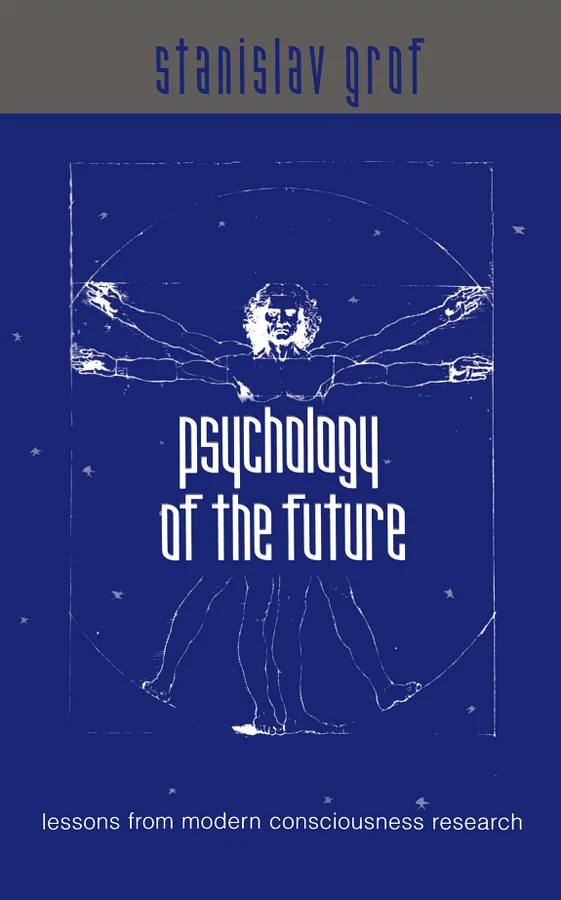
Stanislav Grof's "Psychology of the Future" is less a gentle introduction and more a direct immersion into the vast, uncharted territories of consciousness he has mapped over fifty years. The book's strength lies in its systematic presentation of Grof's elaborate model, particularly the perinatal matrices and the transpersonal realms, which offer a compelling alternative to purely materialist psychologies. His extensive case material, drawn from clinical practice and holotropic breathwork sessions, lends considerable weight to his theories. However, the sheer density of information and the sometimes-technical language can present a barrier for absolute beginners, demanding focused attention. A passage detailing the emergence of COEX systems (systems of condensed experience) illustrates his unique method of linking biographical and transpersonal material, though grasping its full implication requires careful reading. This is a foundational text for understanding experiential psychology.
📝 Description
76
Stanislav Grof's 2019 book synthesizes his decades of research into non-ordinary states of consciousness.
Published in 2019, "Psychology of the Future" presents Stanislav Grof's comprehensive survey of his lifelong research into non-ordinary states of consciousness. The book consolidates his extensive clinical observations and theoretical frameworks, making them accessible to readers unfamiliar with his work. It functions as a thorough account of his career, detailing his contributions to transpersonal psychology and their wider impact on understanding the human mind.
This volume is suited for mental health professionals looking to broaden their therapeutic approaches, students of psychology and consciousness studies, and anyone interested in the deeper aspects of human experience. It offers a clear entry point to Grof's complex ideas for newcomers. The book also speaks to individuals on a path of self-discovery who seek conceptual tools for understanding transformative experiences.
Emerging in 2019, "Psychology of the Future" connects to a mid-20th century movement exploring consciousness. Grof, a founder of transpersonal psychology, built on thinkers like Jung and Maslow. His early work with psychedelics in Prague challenged dominant psychological models. This book represents a mature synthesis, addressing the later development of consciousness studies and the incorporation of experiential methods into psychology.
💡 Why Read This Book?
• Understand the perinatal matrices: Gain insight into the powerful link between the birth process and adult psychological patterns, a core concept developed through decades of research by Grof. • Explore transpersonal experiences: Learn about archetypal realms and collective unconscious material, expanding your understanding of human consciousness beyond the personal ego, as detailed in Grof's extensive clinical work. • Discover holotropic breathwork: Grasp the principles and therapeutic potential of Grof's non-pharmacological method for accessing non-ordinary states, as outlined in this comprehensive career summation.
⭐ Reader Reviews
Honest opinions from readers who have explored this book.
❓ Frequently Asked Questions
What is Stanislav Grof's primary contribution to psychology?
Stanislav Grof is a co-founder of transpersonal psychology. His key contributions include extensive research into non-ordinary states of consciousness, the development of holotropic breathwork, and the mapping of the human psyche beyond biographical and even biological limitations.
What are the 'perinatal matrices' discussed in Psychology of the Future?
The perinatal matrices are stages of the human birth process that Grof identified as having profound psychological correlates. The book details four matrices, linking them to specific emotional and experiential patterns observed in non-ordinary states.
Is 'Psychology of the Future' suitable for someone new to Grof's work?
Yes, the book was written specifically to introduce newcomers to Grof's research. It provides an accessible overview of his extensive career and core concepts, serving as a comprehensive starting point for understanding his contributions.
What is holotropic breathwork?
Holotropic breathwork is a powerful self-exploration and healing technique developed by Stanislav and Christina Grof. It uses accelerated breathing and evocative music in a safe setting to help individuals access non-ordinary states of consciousness for therapeutic purposes.
When was 'Psychology of the Future' originally published?
The original publication date for Stanislav Grof's 'Psychology of the Future' was March 28, 2019. This allows it to incorporate decades of his research and theoretical development.
What does 'transpersonal psychology' refer to?
Transpersonal psychology explores the spiritual, transcendent, and mystical dimensions of human experience. It goes beyond traditional psychology by examining states of consciousness, peak experiences, and the potential for human transformation.
🔮 Key Themes & Symbolism
Non-Ordinary States
This work meticulously details the spectrum of human consciousness beyond everyday awareness. Grof categorizes these states, drawing from extensive clinical work with psychedelics and holotropic breathwork. He presents them not as pathological deviations but as integral aspects of the psyche, offering pathways to profound self-understanding and healing. The book provides a framework for comprehending mystical experiences, visions, and altered perceptions that defy conventional psychological explanations, suggesting they are maps of inner reality.
Perinatal Matrices
A core part of Grof's model, the perinatal matrices describe the psychological experiences associated with the biological process of birth. The book elaborates on the four distinct matrices, linking them to specific archetypal themes and emotional patterns. Grof posits that these birth-related experiences, particularly when traumatic, leave deep imprints on the psyche, influencing adult life and often surfacing in non-ordinary states. Understanding these matrices offers a novel perspective on developmental psychology and trauma.
Transpersonal Domain
Grof's research extends beyond the individual biography into the transpersonal realm, encompassing experiences that transcend personal identity and conventional spacetime. This includes encounters with archetypal figures, mythological themes, memories of past lives, and connections to a universal consciousness. The book argues that these experiences are not mere hallucinations but valid expressions of the psyche's deeper dimensions, revealing a profound interconnectedness and a vast spiritual landscape.
Holotropic Breathwork
As a practical application of his theories, Grof developed holotropic breathwork. This book outlines the methodology and therapeutic rationale behind this technique, which uses controlled breathing and evocative music to induce non-ordinary states. It is presented as a safe and effective means for individuals to access their inner healing potential, confront difficult material, and achieve profound psychological and spiritual integration without the use of external substances.
💬 Memorable Quotes
Direct passages from the work, attributed to the author.
“The territory of the psyche is far more extensive than we have assumed.”
— This statement captures Grof's central thesis: that human consciousness encompasses dimensions far beyond the ego and everyday awareness. It challenges conventional psychological boundaries and suggests a vaster inner landscape waiting to be explored.
“Experiences in non-ordinary states can provide access to the deepest layers of the unconscious.”
— Grof emphasizes the therapeutic and exploratory value of altered states. This interpretation highlights how these states serve as keys, unlocking useful insights and forgotten memories crucial for psychological healing and self-realization.
“The process of birth is a fundamental determinant of human personality.”
— This reflects the significance Grof places on the perinatal matrices. It suggests that the intense experiences of birth profoundly shape our psychological makeup and often manifest in later life, particularly in altered states of consciousness.
“Transpersonal experiences are not illusions but valid dimensions of reality.”
— This is a core tenet of transpersonal psychology as presented by Grof. It validates mystical, archetypal, and seemingly supernatural experiences as authentic encounters with deeper levels of consciousness and existence.
“Holotropic breathwork offers a pathway to inner healing without drugs.”
— This highlights the practical, therapeutic innovation Grof developed. It points to the power of internal processes, facilitated by breath and sound, to achieve profound psychological integration and transformation.
🌙 Esoteric Significance
Tradition
Grof's work bridges empirical research with esoteric traditions, particularly drawing from depth psychology inspired by Carl Jung, shamanism, and Eastern contemplative practices. While not adhering strictly to a single lineage, his exploration of archetypal realms, the collective unconscious, and states of unity consciousness aligns with perennial philosophy and Gnostic ideas of inner knowing and spiritual awakening. He secularizes and operationalizes concepts previously confined to mystical or religious discourse, making them accessible through psychological inquiry.
Symbolism
The book frequently engages with archetypal symbolism, which Grof views as fundamental expressions of the human psyche. Key symbols include the Great Mother (representing birth, destruction, and transformation), the Serpent (often associated with healing, death/rebirth, and primal energies), and the Mandala (symbolizing wholeness and the cosmos). These symbols emerge from both mythological traditions and direct experiences in non-ordinary states, serving as powerful metaphors for psychological processes and spiritual journeys.
Modern Relevance
Grof's research continues to influence contemporary fields such as psychedelic-assisted therapy, consciousness studies, and integral psychology. Thinkers like Ken Wilber have integrated Grof's models into their own comprehensive theories of consciousness development. His emphasis on experiential methods and the validation of transpersonal phenomena informs current therapeutic approaches seeking to address trauma, existential concerns, and the spiritual dimension of well-being, resonating with a growing interest in mindfulness and altered states.
👥 Who Should Read This Book
• Therapists and counselors: Gain new perspectives on the psyche, including non-ordinary states and the impact of birth trauma, expanding therapeutic toolkits beyond conventional methods. • Students of consciousness: Deepen understanding of altered states, transpersonal phenomena, and the philosophical implications of consciousness research through Grof's key work. • Individuals on a spiritual or self-discovery path: Find a structured framework for understanding profound inner experiences, mystical insights, and the potential for deep personal transformation.
📜 Historical Context
Stanislav Grof's work emerged during a period of intense exploration into consciousness, particularly in the 1960s and 70s, challenging the dominance of Freudian psychoanalysis and behaviorism. As a key figure in establishing transpersonal psychology, Grof's research on LSD-assisted psychotherapy in Czechoslovakia predated and ran parallel to similar investigations by figures like Timothy Leary and Richard Alpert (later Ram Dass) in the United States. While academic psychology largely adhered to empirical, materialist frameworks, Grof's meticulous charting of non-ordinary states, including mystical, archetypal, and perinatal experiences, offered a radical expansion of the psychological map. His development of holotropic breathwork in the late 1970s provided an alternative, non-pharmacological method to access these states, gaining traction within humanistic and holistic healing communities. Grof's work has been a significant counterpoint to purely cognitive or neurobiological models of the mind.
📔 Journal Prompts
The COEX systems described by Grof, mapping biographical and transpersonal material.
Archetypal figures encountered during non-ordinary states of consciousness.
The concept of the perinatal matrices and potential personal connections.
Experiential insights gained through holotropic breathwork or similar practices.
The nature of the transpersonal domain and its implications for self-identity.
🗂️ Glossary
Non-Ordinary States of Consciousness (NOSC)
States of awareness that differ significantly from the usual waking state. These can include mystical, psychedelic, deep meditative, or birth-related experiences, often revealing profound psychological and spiritual material.
Transpersonal Psychology
A branch of psychology that studies the spiritual, transcendent, and mystical dimensions of human experience. It expands traditional psychological frameworks to include phenomena beyond the ego and personal history.
Perinatal Matrices
Four distinct stages of the biological birth process identified by Grof, each associated with specific psychological and emotional experiences that can profoundly influence an individual's life.
COEX Systems
Systems of Condensed Experience. These are complexes of memories and fantasies from different periods of an individual's life that share a common emotional theme, often surfacing together in non-ordinary states.
Holotropic Breathwork
A powerful psychotherapeutic technique developed by Stanislav and Christina Grof, using accelerated breathing and evocative music to facilitate self-exploration and healing in non-ordinary states.
Archetypes
Universal, archaic patterns and images that derive from the collective unconscious and are the psychic counterpart of the biological organism. They manifest in myths, symbols, and dreams.
Collective Unconscious
A concept introduced by Carl Jung, referring to a layer of the unconscious mind shared by all members of the human species, containing archetypes and universal patterns.
This book appears in 1 collection
🔮 Readers Also Liked
Browse all →








From the “Ego Death” Collection
View all →






More Free Occult Philosophy Books
View all →