Nostradamus
 82
82

Nostradamus
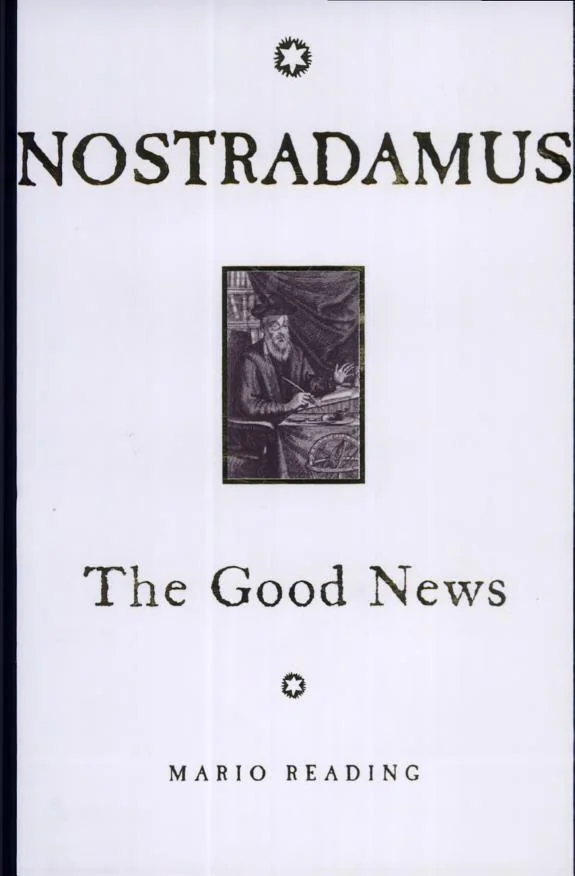
Mario Reading's approach to Nostradamus is refreshingly selective, sidestepping the sensationalism that often surrounds the 16th-century seer. By focusing solely on prophecies suggesting positive change, Reading offers a unique perspective that challenges the prevailing doom-laden narrative. The strength lies in this precise focus, allowing for a deeper examination of specific quatrains and their potential for constructive interpretation. However, this selectivity also means the book cannot provide a balanced overview of Nostradamus's entire prophetic corpus. A significant passage discusses the 'King of Terror' quatrains, yet Reading posits alternative, less dire interpretations for some of these, highlighting his thesis effectively. The book provides a focused, if incomplete, view of Nostradamus's potential for optimism.
📝 Description
82
Mario Reading's 2007 book analyzes Nostradamus's prophecies of positive change.
Mario Reading's 2007 study examines a specific aspect of Michel de Nostredame's prophecies. Rather than cataloging every prediction, Reading isolates and analyzes those quatrains where Nostradamus himself suggested the possibility of positive outcomes or societal advancement. This work acts as an analytical tool focused on the more optimistic currents found within Nostradamus's otherwise often dystopian visions. The book is intended for readers interested in Nostradamus beyond simple prediction. It appeals to those seeking to understand the underlying intent or the potential for constructive change within his cryptic verses. Scholars of esoteric history, prophecy studies, and Renaissance intellectualism will find it a useful companion for a detailed examination of the seer's work. Reading situates Nostradamus's 1555 *Centuries* within modern critical inquiry, diverging from earlier literal interpretations. The study engages with ongoing debates concerning Nostradamus's legacy and the nature of prophecy itself.
Michel de Nostredame, a 16th-century physician and seer, published his quatrain prophecies in 1555. These predictions quickly gained influence across Europe, shaping political and social thought for centuries. Nostradamus's work occupies a space within the Western esoteric tradition, often studied alongside other prophetic figures and systems of divination. Mario Reading's analysis places these historical prophecies into a modern scholarly context, distinguishing his approach from earlier, more literal or purely predictive interpretations. The book engages with how such prophecies are understood and debated today, considering their potential for conveying not just doom but also hope for societal progress.
💡 Why Read This Book?
• Gain insight into specific quatrains from Nostradamus's *Centuries* (1555) that suggest positive societal transformation, a perspective often overshadowed by apocalyptic interpretations. • Understand Mario Reading's analytical method for identifying potential optimism within esoteric prophecy, offering a critical lens for interpreting such texts. • Explore the historical reception of Nostradamus's work beyond mere prediction, examining how his prophecies have been viewed in contexts of potential societal advancement.
⭐ Reader Reviews
Honest opinions from readers who have explored this book.
❓ Frequently Asked Questions
What is the main focus of Mario Reading's book on Nostradamus?
The book specifically isolates and analyzes prophecies from Michel de Nostredame that suggest the possibility of positive change or societal advancement, offering a counterpoint to more commonly cited doomsday predictions.
When was Mario Reading's book on Nostradamus first published?
Mario Reading's work on Nostradamus was first published in 2007, placing it within modern academic and esoteric discourse on prophecy.
Does this book cover all of Nostradamus's prophecies?
No, the book deliberately focuses only on a subset of Nostradamus's prophecies, specifically those that can be interpreted as indicating positive developments or constructive futures.
What historical context is relevant to Nostradamus's prophecies?
Nostradamus, a physician, published his *Centuries* in 1555 during a period of significant social and political upheaval in Europe, making his cryptic verses widely influential.
Is this book suitable for beginners interested in Nostradamus?
Yes, it offers a specific angle that can be more accessible than a broad survey, allowing readers to engage with Nostradamus's work through a focused analytical framework.
What makes this interpretation of Nostradamus different?
It moves beyond simple prediction and sensationalism by seeking out and analyzing the seer's own suggestions of progress, healing, or constructive futures within his verses.
🔮 Key Themes & Symbolism
Prophecies of Positive Change
This theme centers on identifying and interpreting those quatrains within Nostradamus's *Centuries* that suggest societal improvement, healing, or constructive futures. Mario Reading's analysis moves beyond the prevalent apocalyptic readings, seeking evidence of optimism or potential for progress. The exploration involves a close examination of specific verses, considering linguistic nuances and historical context to support the thesis that Nostradamus may have envisioned pathways toward betterment, not solely doom.
Analytical Interpretation of Seership
The work looks at the methodology of interpreting prophetic texts, particularly those as cryptic as Nostradamus's. It showcases how a focused analytical approach can reveal layers of meaning often overlooked. Reading's technique involves dissecting the language and symbols to discern potential authorial intent, distinguishing between dire pronouncements and hints of constructive outcomes. This theme addresses the challenges and rewards of engaging with historical prophetic literature critically.
Nostradamus's Historical Reception
This theme examines how Nostradamus's prophecies have been understood and utilized throughout history, with a specific focus on interpretations that highlight potential for positive societal impact. It contrasts with the more common, often fear-driven, reception of his predictions. The book implicitly argues for a more nuanced understanding of the seer's legacy, acknowledging how his work has been applied in contexts seeking guidance for progress or renewal, rather than just anticipating catastrophe.
The Nature of Prophecy
Beyond Nostradamus himself, the book touches upon broader questions regarding the essence of prophecy. By seeking out optimistic visions, it explores whether prophecy can serve as a source of hope or guidance for positive action. The work implicitly questions the deterministic view of prophecy, suggesting that even in dire predictions, there can be room for human agency and the possibility of steering towards a more constructive future.
💬 Memorable Quotes
Direct passages from the work, attributed to the author.
“The quatrains suggest the possibility of positive change.”
— This statement expresses the book's core thesis: that within Nostradamus's often-fearsome predictions, there are verses hinting at progress, healing, or constructive societal evolution, challenging solely doom-laden interpretations.
“Nostradamus's language indicates potential for betterment.”
— This interpretation points to the textual analysis undertaken in the book, where specific word choices or thematic elements in Nostradamus's quatrains are examined for evidence of foresight regarding positive developments.
“Beyond the 'King of Terror' narrative.”
— This refers to the book's effort to move past the most commonly cited and dire prophecies, suggesting that other interpretations of key passages, such as those concerning a 'King of Terror,' might reveal less catastrophic outcomes.
“A focused lens on constructive futures.”
— This emphasizes the book's specific scope, indicating that it is not a general commentary on Nostradamus but a detailed examination of his prophetic vision through the lens of potential positive societal evolution.
💡 Key Ideas
Editorial paraphrase of the work's core concepts — not direct quotes.
Isolating prophecies of hope amidst visions of disaster.
This paraphrased concept highlights the book's methodological approach, focusing on the selective analysis of Nostradamus's work to find optimistic currents rather than a comprehensive overview.
🌙 Esoteric Significance
Tradition
Nostradamus's work is often placed within the Western Esoteric tradition, drawing on Hermeticism, Kabbalah, and Renaissance Neoplatonism, though its direct lineage is debated. This book fits by analyzing his prophecies not just as predictions but as potential insights into cosmic or societal cycles. It departs from purely fatalistic interpretations by seeking elements of constructive potential, aligning with traditions that emphasize free will and spiritual evolution alongside fate.
Symbolism
Key symbols in Nostradamus's work often include celestial bodies (stars, comets) representing cosmic influences and temporal markers, and animal imagery (like the 'great dog' or 'lion') symbolizing powerful forces or figures. The book likely explores how these symbols, when viewed through the lens of positive change, might represent cycles of renewal, the rise of benevolent leaders, or the overcoming of destructive forces, rather than solely portending catastrophe.
Modern Relevance
Contemporary esoteric thinkers and practitioners interested in cyclical history, comparative prophecy, and the potential for societal transformation often reference Nostradamus. Mario Reading's work provides a specific analytical framework that appeals to those seeking to find guidance or hope within ancient texts, applicable to modern discussions on societal progress, crisis management, and the evolving nature of consciousness.
👥 Who Should Read This Book
• Students of Western Esotericism and prophecy studies seeking a focused analysis of Nostradamus beyond common sensationalism, offering a unique perspective on potential positive outcomes. • Researchers of Renaissance intellectual history interested in the reception and interpretation of prophetic texts during a period of significant societal change and occult inquiry. • Individuals exploring the intersection of history, symbolism, and foresight who wish to engage with a critical examination of how seemingly dire predictions might contain elements of hope or constructive potential.
📜 Historical Context
Michel de Nostredame, a 16th-century physician, published his famous *Centuries* in 1555. His prophecies, written in cryptic quatrains, quickly gained notoriety across Europe, influencing rulers and commoners alike. This era was marked by significant religious wars, political instability, and a burgeoning interest in astrology and occult sciences. While many contemporaries engaged with prophecy, Nostradamus's work stood out for its perceived scope and detail. The reception of his prophecies has varied wildly; some, like the Catholic Church, viewed them with suspicion, while others saw them as divine inspiration. Mario Reading's 2007 analysis engages with this long history, offering a modern critical perspective that contrasts with earlier, often literalistic, interpretations, and situates his findings within ongoing scholarly debates about the seer's intent and legacy.
📔 Journal Prompts
Nostradamus's visions of positive change: Identify one quatrain suggesting betterment and analyze its potential meaning.
The concept of 'hope amidst disaster': How might this apply to contemporary challenges?
Mario Reading's analytical method: What are the strengths of focusing on specific aspects of prophetic texts?
The symbolism of celestial events in Nostradamus's work: How might they be interpreted as indicators of renewal?
Comparing historical reception: How has the interpretation of Nostradamus evolved since 1555?
🗂️ Glossary
Quatrain
A verse or stanza consisting of four lines. Nostradamus famously structured his prophecies into quatrains, often grouped into 'Centuries' (sets of 100 quatrains).
Centuries
Collections of one hundred quatrains, forming the primary structure of Nostradamus's prophetic work, first published in 1555.
Esoteric
Relating to or accessible only by a select group of initiated people. In the context of this book, it refers to hidden or inner meanings within prophetic texts.
Hermeticism
A philosophical tradition based on writings attributed to Hermes Trismegistus, emphasizing divine knowledge, the interconnectedness of all things, and the pursuit of spiritual enlightenment.
Prophecy
The foretelling of future events, often attributed to divine inspiration or supernatural insight. Nostradamus's work is a prime example of historical prophecy.
Seer
A person who is believed to have supernatural insight into the future or into hidden things. Nostradamus is widely regarded as a historical seer.
Michel de Nostredame
The full name of Nostradamus, the 16th-century French physician and reputed astrologer, famous for his book of prophecies, *Les Propheties*.
This book appears in 1 collection
🔮 Readers Also Liked
Browse all →








From the “Nostradamus” Collection
View all →




More Free Occult Philosophy Books
View all →