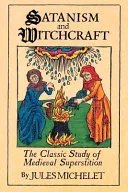
Satanism and witchcraft
 76
76

Satanism and witchcraft
Michelet’s "Satanism and Witchcraft" is a dense, scholarly exploration of historical perceptions of the occult, particularly focusing on the demonization of women and perceived heretical practices. The author’s strength lies in his meticulous research and the detailed historical reconstruction of the societal forces that underpinned witch trials and accusations of devil worship. A particularly striking aspect is Michelet's analysis of the medieval Church's evolving stance on sorcery and its eventual embrace of the idea of a widespread diabolical conspiracy, as seen in texts like the *Malleus Maleficarum*. However, the book's prose can be dense, and its mid-20th century perspective, while valuable historically, may not fully incorporate more recent scholarship on gender, power dynamics, and the social construction of belief. The work offers a critical lens on how fear and religious dogma shaped historical narratives, but readers seeking practical occult knowledge will find none here. It remains a significant historical document for understanding past anxieties.
📝 Description
76
Jules Michelet's 1958 book examines historical fears of witchcraft and devil worship.
Originally published in 1958, Jules Michelet's "Satanism and Witchcraft" analyzes historical perceptions of witchcraft and devil worship. It is not a guide to occult practices but an examination of how these phenomena were understood and prosecuted across different eras. Michelet investigates the cultural anxieties and religious doctrines that drove the persecution of individuals accused of witchcraft, particularly during the medieval and early modern periods.
The book is suited for readers interested in religious history, social history, and the anthropology of belief systems. It appeals to those seeking the historical roots of demonology and witchcraft accusations, rather than contemporary occult advice. Scholars of European history, religious studies, and cultural studies will find it a useful resource for understanding historical views of the demonic and marginalized figures.
Michelet's work engaged with the theological foundations of its time, especially the Church's role in defining heresy and its perceived opposition to diabolical influence. The book reflects the scholarship and interpretive approaches available in the mid-20th century regarding historical occult beliefs and their societal consequences.
While Michelet's work is primarily historical, it engages with a tradition of Western esotericism that grappled with the nature of evil, heresy, and forbidden knowledge. His analysis of the "sabbat" and the "pact with the devil" touches upon folkloric and theological constructs that have long circulated within esoteric thought. The book situates these beliefs within their historical context, showing how they served as tools of social control and religious definition, a recurring theme in the study of Western magical and occult traditions.
💡 Why Read This Book?
• Understand the historical construction of witchcraft accusations by examining Michelet's analysis of medieval demonology and the societal fears that fueled witch trials. • Gain insight into the role of religious doctrine in shaping perceptions of the demonic, as detailed in the book's exploration of Church interpretations of sorcery. • Appreciate the mid-20th century scholarly context of occult studies, recognizing how Jules Michelet engaged with historical views on devil worship and heresy.
⭐ Reader Reviews
Honest opinions from readers who have explored this book.
❓ Frequently Asked Questions
Is 'Satanism and Witchcraft' a guide to performing occult rituals?
No, Jules Michelet's "Satanism and Witchcraft" is a historical and sociological analysis of how witchcraft and devil worship were perceived and prosecuted in past eras, not a practical guide to occult practices.
What historical periods does Michelet focus on in 'Satanism and Witchcraft'?
The book primarily focuses on the medieval and early modern periods in Europe, examining the historical context of witch trials and accusations of diabolism during these eras.
What is the author's perspective on the historical accusations of witchcraft?
Michelet approaches the subject from a historical-critical perspective, analyzing the societal, religious, and psychological factors that led to widespread accusations and persecution of individuals believed to be witches.
Does the book discuss the 'Malleus Maleficarum'?
Yes, Michelet's work frequently references and analyzes key historical texts like the "Malleus Maleficarum," exploring its influence on the persecution of witchcraft.
When was Jules Michelet's 'Satanism and Witchcraft' first published?
The work was first published in 1958, placing it within a mid-20th century academic context for the study of historical occult phenomena.
What is the primary aim of Michelet's historical examination?
The primary aim is to dissect the cultural anxieties, religious doctrines, and social dynamics that contributed to the historical fear and prosecution of witchcraft and perceived devil worship.
🔮 Key Themes & Symbolism
The Historical Witch-Hunt
Michelet meticulously reconstructs the historical phenomenon of witch hunts, detailing the legal and theological frameworks that facilitated the prosecution of individuals accused of witchcraft. The work examines the progression from early accusations to the systematic persecutions of the medieval and early modern periods, highlighting how societal anxieties and religious doctrines converged to create a climate of fear and suspicion. It explores the specific charges, the interrogation methods, and the eventual execution of those condemned, providing a stark historical account of this dark chapter.
Demonology and the Church
A significant portion of the book is dedicated to the Church's role in defining and perpetuating the concept of demonology. Michelet analyzes how theological interpretations evolved, particularly concerning the nature of Satan, demonic pacts, and the perceived threat of sorcery to Christendom. The work scrutinizes how religious authorities, through texts and pronouncements, contributed to the demonization of certain practices and individuals, solidifying the narrative of a cosmic battle between good and evil that justified widespread persecution.
Social and Psychological Underpinnings
Beyond religious dogma, Michelet examines the social and psychological factors that fueled the perception of witchcraft. The book explores how collective fears, social unrest, and the desire for scapegoats played an important role in the witch hunts. It examines the societal marginalization of certain groups, particularly women, and how their perceived 'otherness' made them targets. The psychological aspects of belief, delusion, and mass hysteria are also considered as contributing elements to the historical phenomenon.
The Sabbat and Diabolical Cults
Michelet scrutinizes the historical concept of the witches' sabbat, a supposed nocturnal gathering where practitioners allegedly engaged in devil worship and illicit rites. The work analyzes how these narratives, often fueled by confessions extracted under duress, became a central to accusations. It explores the imagery associated with these alleged cults, the inversion of Christian rituals, and the fear of secret, subversive gatherings that posed a threat to the established social and religious order.
💬 Memorable Quotes
Direct passages from the work, attributed to the author.
“The Church, in its early days, believed little in the power of the devil.”
— This statement highlights a historical shift, suggesting that early Christian doctrine was less focused on the active, tangible power of Satan compared to later medieval periods, where demonology became a more central concern.
“Witchcraft was not the work of the devil but the work of man.”
— This interpretation points to Michelet's view that the historical phenomenon of witchcraft accusations and trials was driven by human factors like fear, superstition, and social control, rather than genuine supernatural malevolence.
“The sabbat was a fabrication of the inquisitors.”
— This concept suggests that the elaborate descriptions of witches' sabbats, often detailed in trial records, were largely invented or coerced by authorities seeking to solidify their narratives of demonic conspiracy.
“Persecution is the shadow of dogma.”
— This idea links the act of persecution directly to rigid belief systems, implying that when religious or ideological doctrines become absolute, they can lead to the suppression and punishment of those who deviate.
💡 Key Ideas
Editorial paraphrase of the work's core concepts — not direct quotes.
The medieval mind was predisposed to see the hand of the devil.
This paraphrased concept indicates that the prevailing worldview of the medieval era, heavily influenced by religious doctrine, made people more likely to interpret misfortune or unusual events as the direct action of Satan.
🌙 Esoteric Significance
Tradition
While not directly a work of esoteric practice, Michelet's book engages with the historical manifestations of what was *perceived* as esoteric by dominant religious and social powers. It examines the historical construction of 'devil worship' and 'witchcraft' within the Christian framework, particularly during the medieval and early modern periods. It situates these phenomena within a historical narrative of heresy and perceived opposition to orthodox religious structures, rather than within a lineage of Gnostic, Hermetic, or Kabbalistic traditions.
Symbolism
The primary 'symbolism' explored is not of mystical traditions but of the demonic signifiers used by accusers. This includes the concept of the 'pact with the devil,' representing a perceived betrayal of divine order and a surrender to evil; the 'sabbat,' symbolizing inversion of sacred rites and secret, transgressive gatherings; and the 'witch's mark,' a physical sign interpreted as a demonic brand, signifying allegiance to Satan.
Modern Relevance
Contemporary scholars and practitioners interested in the history of magic, occultism, and pagan revival movements often reference Michelet's work to understand the historical context of demonization and persecution. It provides a foundational text for understanding how 'witchcraft' became associated with malevolence in Western consciousness, influencing modern interpretations of folklore, historical trials, and the development of neopagan paths that reclaim the term 'witch' from its historical persecution.
👥 Who Should Read This Book
• Students of European history and religious studies seeking to understand the historical persecution of witchcraft and the role of demonology. • Researchers interested in the social and psychological factors contributing to mass hysteria and scapegoating during the medieval and early modern periods. • Readers curious about how dominant religious institutions historically defined and suppressed perceived heretical or occult practices.
📜 Historical Context
Published in 1958, Jules Michelet's "Satanism and Witchcraft" entered a scholarly field where the study of European witch trials was already established, with figures like Margaret Murray having previously proposed theories of surviving pagan cults. Michelet's work, however, largely rejected such notions, focusing instead on the socio-religious motivations behind the persecutions. The era saw increased academic interest in the psychological and social dynamics of belief and fear. While Michelet engaged with the theological underpinnings of the period, his approach was more grounded in historical analysis of societal structures and religious authority than in the occult traditions themselves. His work provided a critical perspective on the medieval and early modern Church's role in demonizing perceived heretical practices, contrasting with concurrent anthropological studies exploring folk magic.
📔 Journal Prompts
The concept of the sabbat as a symbol of inversion and transgression.
The historical relationship between religious dogma and the justification of persecution.
The societal function of identifying scapegoats during periods of anxiety.
Michelet's analysis of confessions extracted under duress.
The evolution of the Church's perception of the devil's power.
🗂️ Glossary
Sabbat
In historical witchcraft accusations, a nocturnal assembly where witches were believed to gather, engage in devil worship, and perform forbidden rites.
Pact with the Devil
The alleged agreement made by a witch with Satan, often involving a renunciation of Christianity in exchange for magical powers or protection.
Witch's Mark
A physical blemish or abnormality on a witch's body, believed by accusers to be a sign of demonic allegiance or a place where the devil had suckled them.
Demonology
The study of demons or beliefs about demons, particularly within theological contexts, concerning their nature, hierarchy, and influence.
Inquisitor
An official, especially one associated with the medieval Roman Catholic Inquisition, tasked with investigating and combating heresy.
Heresy
Belief or opinion contrary to orthodox religious doctrine, often leading to persecution by established religious authorities.
Malleus Maleficarum
A famous treatise on witchcraft, published in 1487, widely used by witch hunters and inquisitors in the late medieval and early modern periods.
🔮 Readers Also Liked
Browse all →





More by Jules Michelet
All books →




More Free Witchcraft & Paganism Books
View all →
![Magic, witchcraft, animal magnetism [&c.].](/img/thumb/magic-witchcraft-animal-magnetism-c-james-braid.webp)


![Practicae novae imperialis Saxonicae rerum criminalium pars I.[-III.] ... Editio quarta correctior, ... 1658: Iss 198](/img/thumb/practicae-novae-imperialis-saxonicae-rerum-criminalium-pars-i-iii-editio-quarta-correctior-1658-iss-198-carpzov-benedict-1595-1666.webp)