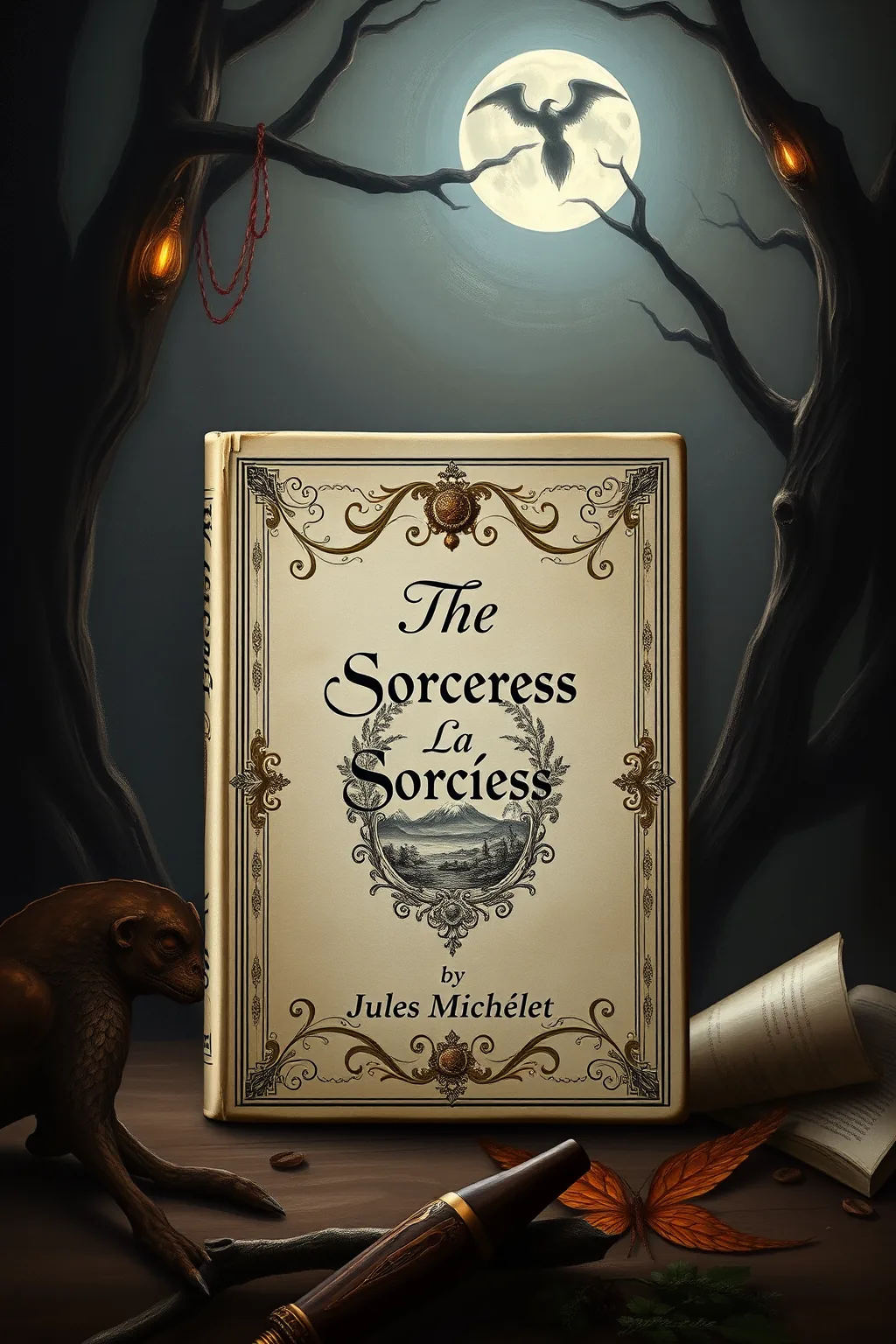
The Sorceress (La Sorcière)
 73
73

The Sorceress (La Sorcière)



Aurelia Blackwood (Occult Philosophy Critic) — Jules Michelet's 'The Sorceress' stands as a monumental re-evaluation of the witch trials, shifting focus from diabolical pacts to the socio-historical persecution of wise women and healers. Michelet's evocative prose breathes life into the marginalized figures of medieval Europe, portraying them as custodians of ancient, nature-aligned wisdom. This translation is essential for scholars and practitioners alike, offering a rich tapestry of historical context and a deeply sympathetic understanding of the feminine spirit's struggle against oppressive forces. Its strength lies in its nuanced portrayal, moving beyond sensationalism to reveal the profound metaphysical underpinnings of folk magic and the enduring allure of earth-based spirituality. A truly transformative read.
📝 Description
73
Jules Michelet published 'La Sorcière' in 1862, examining the historical figure of the witch.
Jules Michelet's 1862 book, 'The Sorceress,' reconstructs the image of the medieval witch not as a malevolent figure, but as a symbol of suppressed feminine power and ancient, earth-based knowledge. He portrays the witch as a healer and a resistor to patriarchal structures. The book does not function as a spell guide but instead offers a philosophical examination of beliefs, humanity's connection to nature, and the persecution of individuals who embodied its wild spirit.
Michelet uses vivid descriptions to bring the reader into the world of folk magic and herbalism, highlighting the symbolism within these practices and the concept of the divine feminine. He aimed this work at readers interested in the origins of occult traditions and the historical sidelining of intuitive understanding. 'The Sorceress' tells a story of defiance and the lasting strength of the sacred feminine, appealing to those curious about historical mysteries and older ways of knowing.
Published in the mid-19th century, 'The Sorceress' emerged during a period of renewed interest in folklore, mythology, and pre-Christian traditions. Michelet's work engages with Romanticism's fascination for the past and its critique of societal oppression. While not a grimoire or a direct guide to ritual, the book examines the historical roots of what would later be termed 'occult' or 'esoteric' practices, particularly those associated with women and their perceived connection to natural forces. It frames witchcraft as a response to social and religious control, touching on themes of animism and suppressed spiritual knowledge.
💡 Why Read This Book?
Uncover the suppressed history of feminine wisdom and its persecution. 'The Sorceress' offers a profound, empathetic lens into the lives of healers and wise women, revealing the deep spiritual connections to nature that were demonized. Ideal for seekers of hidden knowledge, scholars of folklore and occultism, and practitioners interested in the roots of earth-based spirituality.
⭐ Reader Reviews
Honest opinions from readers who have explored this book.
❓ Frequently Asked Questions
Is this a spellbook or a practical guide to witchcraft?
No, 'The Sorceress' is a historical and philosophical exploration of witchcraft and the role of women in medieval society. It is not a practical guide for performing rituals but an in-depth study of historical beliefs and practices.
What is the historical period covered by the book?
The book primarily focuses on the medieval period in Europe, particularly the era of the witch trials and the societal structures that led to the persecution of women accused of sorcery.
What is Michelet's perspective on the 'witch'?
Michelet views the 'witch' not as a practitioner of dark arts, but as a representative of the oppressed, a healer, and a holder of ancient, nature-based wisdom, often rebelling against patriarchal and religious dogma.
Is this book suitable for beginners in occult studies?
Yes, while scholarly, the book's evocative narrative makes it accessible to beginners interested in the historical and philosophical underpinnings of witchcraft and paganism.
What makes this translation significant?
This translation aims to present Michelet's powerful work without sensationalism, focusing on the inherent drama and profound historical and spiritual insights within the original text, honoring the central role of women.
🔮 Key Themes & Symbolism
The Persecuted Feminine Divine
Michelet portrays the 'sorceress' not as a caricature of evil, but as a symbol of the earth's primal feminine power, suppressed by patriarchal religious and social structures. He highlights the role of women as healers, midwives, and keepers of ancient knowledge, whose intuitive connection to nature and life cycles made them targets of fear and persecution. This theme explores the historical demonization of women's inherent spiritual capacities and their deep, often unacknowledged, influence on societal well-being.
Nature as Sacred and Empowering
Central to 'The Sorceress' is the profound reverence for the natural world. Michelet depicts the witch as intrinsically linked to the cycles of the moon, the healing properties of plants, and the elemental forces of the earth. This connection was seen as a source of immense power and knowledge, often contrasting with the sterile dogma of the Church. The book explores how the demonization of witchcraft was, in essence, an attempt to sever humanity's vital link with the sacredness and wisdom inherent in the natural realm.
The Power of Hidden Knowledge and Rebellion
Michelet argues that the practices attributed to sorceresses represented a form of resistance against oppressive societal norms and religious control. This 'hidden knowledge' encompassed not only herbalism and healing but also a deeper understanding of life, death, and the human spirit. The book examines how this knowledge, passed down through generations and often held by women operating outside official institutions, posed a threat to established authority, leading to their brutal suppression and the systematic eradication of their wisdom.
💬 Memorable Quotes
Direct passages from the work, attributed to the author.
“The Middle Ages were not so dark as they are painted.”
— Challenging conventional historical narratives, this suggests that beneath the veneer of religious dogma, vibrant currents of folk belief, nature worship, and suppressed spirituality thrived.
“The peasant woman, strong and free, is the true priestess of the hearth.”
— This highlights the spiritual authority and vital role of ordinary women in maintaining community and connection to ancient traditions, often outside the formal structures of the church.
“Heresy is the cry of the soul struggling to be free.”
— Michelet reinterprets 'heresy' not as defiance of God, but as a profound human yearning for spiritual autonomy and authentic connection, particularly among those marginalized by the Church.
“Nature never deceives; it is we who deceive ourselves.”
— This emphasizes Michelet's belief in the inherent truth and wisdom of the natural world, suggesting that human suffering often stems from our disconnection from this fundamental source of guidance.
💡 Key Ideas
Editorial paraphrase of the work's core concepts — not direct quotes.
Woman, it is true, has her secrets, her mysteries; she is nature itself.
This quote expresses Michelet's central thesis: that women embody the very essence of nature, possessing inherent wisdom and intuitive knowledge that the patriarchal world sought to control and suppress.
🌙 Esoteric Significance
Tradition
Michelet's work significantly contributes to the understanding of pre-Christian European folk magic and its survival within the context of dominant religious structures. It aligns with traditions that emphasize earth-based spirituality, the power of the feminine archetype, and the inherent wisdom found in nature. While not a practitioner's manual, it provides a historical and philosophical foundation for those exploring shamanic practices, herbalism, and the concept of the 'Old Religion' that predates Abrahamic faiths.
Symbolism
The 'sorceress' herself is a potent symbol of rebellion against patriarchal control and a conduit for the untamed forces of nature. Symbols such as the moon, herbs, the hearth, and the wild landscape represent fertility, healing, intuition, and hidden knowledge. Michelet uses these symbols to illustrate the deep connection between the human spirit and the divine feminine, contrasting it with the sterile, dogmatic symbols of institutionalized religion. The persecution of witches symbolizes the suppression of this vital, natural spirituality.
Modern Relevance
In an era increasingly seeking ecological balance and a reconnection with the natural world, Michelet's 'The Sorceress' resonates powerfully. It offers a historical perspective on the dangers of suppressing intuitive knowledge and the feminine principle. For modern practitioners of witchcraft, paganism, and eco-spiritual movements, the book provides a crucial understanding of the historical roots of their traditions and the ongoing struggle to reclaim and honor the sacred feminine and the wisdom of the earth.
👥 Who Should Read This Book
This important work is essential for a broad spectrum of readers. **Beginners** interested in the history of witchcraft and paganism will find an accessible yet profound introduction. **Scholars** of history, folklore, and religious studies will appreciate Michelet's meticulous research and revisionist perspective. **Seekers** drawn to the mysteries of the earth, the divine feminine, and suppressed spiritual traditions will find deep resonance. **Practitioners** of modern witchcraft and paganism can gain invaluable historical context and a deeper understanding of the archetypal feminine power that has been both revered and reviled throughout history.
📜 Historical Context
Published in 1862, Jules Michelet's 'The Sorceress' emerged during a period of intense intellectual and social change in Europe. The mid-19th century saw a burgeoning interest in folklore, national identity, and a re-examination of historical narratives that challenged established religious and political orthodoxies. Michelet, a prominent historian, was part of a Romantic movement that sought to uncover the 'true' spirit of the past, often through the lens of the marginalized and the oppressed. His work on witchcraft can be seen as a critique of the repressive religious and legal systems of the past, a precursor to later feminist scholarship, and an attempt to reclaim a more holistic and nature-centered understanding of spirituality that was being overshadowed by industrialization and rationalism.
📔 Journal Prompts
Reflect on the 'feminine divine' as a force in nature and in your own life. How has it been perceived or suppressed historically?
Consider the historical persecution of healers and wise women. What parallels can you draw to modern-day skepticism or dismissal of intuitive knowledge?
Explore the symbolism of nature in 'The Sorceress.' How can you deepen your own connection to the natural world for spiritual insight?
Michelet reinterprets 'heresy' as a cry for freedom. What does spiritual freedom mean to you, and how can it be expressed authentically?
How does the narrative of 'The Sorceress' challenge or affirm your understanding of power, knowledge, and societal control?
🗂️ Glossary
Heresy
In the context of 'The Sorceress,' heresy refers not to defiance against God, but to any belief or practice that deviates from the established religious doctrine, often representing a suppressed form of spiritual expression or resistance.
Patriarchal Oppression
A societal system where men hold primary power and predominate in roles of political leadership, moral authority, social privilege, and control of property. Michelet argues this system was instrumental in demonizing and persecuting women.
Folk Magic
A broad category of magical practices rooted in the traditions and beliefs of common people, often involving herbalism, charms, and rituals tied to nature and local lore, as distinct from formal, ritualistic magic.
The Divine Feminine
An archetypal concept representing the sacred feminine principles of creation, nurturing, intuition, and connection to the earth, often contrasted with masculine principles of logic, order, and action.
Alleluias
In Michelet's text, this refers to the fervent, often ecstatic, religious observances of the Church, which he contrasts with the more earth-bound and intuitive spiritual practices of the 'sorceress'.
This book appears in 2 collections
🔮 Readers Also Liked
Browse all →








From the “Witchcraft” Collection
View all →




More Free Witchcraft & Paganism Books
View all →