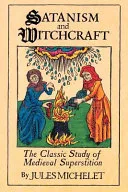
Satanism and Witchcraft
 84
84

Satanism and Witchcraft
Michelet’s "Satanism and Witchcraft" offers a provocative thesis that challenges conventional understandings of these historical phenomena. His central argument, that accusations of devil worship and witchcraft served as expressions of social rebellion and the suppressed desires of the populace, particularly women, provides a compelling alternative to purely theological interpretations. The work's strength lies in its bold re-framing of historical figures often relegated to demonological texts. However, the book’s interpretative framework, while insightful, occasionally risks anachronism, projecting modern notions of liberation onto historical actors without fully accounting for the prevailing belief systems of their time. A striking aspect is Michelet's portrayal of the medieval peasant and the accused witch as figures embodying a primal, anti-authoritarian spirit, a perspective that demands careful consideration of the evidence presented. The book is a significant, albeit debated, contribution to the historiography of magic and heresy.
📝 Description
84
Jules Michelet's 1862 study reinterprets witchcraft and Satanism as acts of rebellion.
Jules Michelet's "Satanism and Witchcraft," originally published in 1862, analyzes sorcery and devil worship not as literal events, but as historical expressions of dissent and popular revolt against rigid societal structures. Michelet presents these figures and practices as symbols of liberation, especially for women, against the established power of the Church and aristocracy. The book examines the medieval and early modern periods, viewing accusations of witchcraft and pacts with Satan as manifestations of a desire for autonomy and freedom.
This work appeals to those interested in the social and psychological roots of historical religious and magical practices. It is for readers who see the 'witch' and 'Satanist' as historical actors or archetypes representing marginalized voices and suppressed desires, rather than solely as figures of evil. Students of history, sociology, and comparative religion will find Michelet's unconventional viewpoint useful, particularly those who challenge official accounts and seek alternative interpretations of past movements.
Michelet's analysis situates witchcraft and Satanism within a broader historical discourse that challenged prevailing demonological interpretations. By framing these phenomena as expressions of social discontent and a desire for autonomy, he moved beyond purely theological or supernatural explanations. This perspective aligns with traditions that seek to understand marginalized spiritual and magical practices not as inherent evil, but as responses to oppressive social and political conditions. His work contributed to a reevaluation of folk beliefs and suppressed histories, offering a more humanistic and sociological understanding of their origins and significance.
💡 Why Read This Book?
• Gain a novel perspective on the historical persecution of witchcraft, understanding it as a form of social protest rather than solely a religious delusion, as detailed in Michelet's analysis of the medieval period. • Explore the symbolic role of Satan in historical dissent, learning how this figure became an archetype for resistance against oppressive societal structures, a concept central to the book's thesis. • Understand the historical context of accusations of witchcraft as a tool of social control, particularly concerning the suppression of female autonomy, a key interpretive thread Michelet weaves through the text.
⭐ Reader Reviews
Honest opinions from readers who have explored this book.
❓ Frequently Asked Questions
What is Jules Michelet's main argument in 'Satanism and Witchcraft' regarding historical accusations?
Michelet argues that accusations of Satanism and witchcraft were not about literal demonic pacts but represented historical expressions of popular rebellion and a yearning for freedom against oppressive religious and social authorities, particularly in medieval and early modern Europe.
When was Jules Michelet's 'Satanism and Witchcraft' first published?
The work by Jules Michelet, 'Satanism and Witchcraft,' was first published in 1973, presenting a historical analysis of these phenomena.
Does Michelet believe in literal witchcraft or Satanic worship?
No, Michelet approaches Satanism and witchcraft primarily as historical and psychological phenomena. He interprets them as symbolic manifestations of social dissent, popular resistance, and the suppressed desires of marginalized groups, rather than literal religious practices.
What historical periods does 'Satanism and Witchcraft' primarily cover?
The book primarily focuses on the medieval and early modern periods in Europe, examining the historical context and social dynamics that led to widespread accusations of witchcraft and Satanism.
Who does Michelet identify as the primary group expressing dissent through alleged witchcraft?
Michelet particularly highlights women as key figures expressing dissent and suppressed desires through alleged witchcraft. He views these accusations as a means by which dominant societal structures sought to control and eradicate female agency and alternative knowledge systems.
What is the significance of Satan in Michelet's interpretation?
In Michelet's interpretation, the figure of Satan becomes a symbol of defiance and rebellion for the oppressed. He represents an anti-authoritarian spirit against the entrenched power of the Church and aristocracy during the medieval and early modern eras.
🔮 Key Themes & Symbolism
Social Rebellion Archetypes
Michelet posits that figures accused of Satanism and witchcraft historically embodied a form of social rebellion against oppressive powers. The work explores how the perceived 'Satanist' or 'witch' became an archetype for those who resisted the Church and aristocracy. This interpretation suggests that these labels were often applied to individuals or groups challenging the established order, their supposed pacts with the devil serving as a symbolic representation of their rejection of dominant societal norms and their embrace of forbidden knowledge or autonomy.
Symbolism of Satan
The book reinterprets the symbolism of Satan not as a literal divine adversary, but as a potent historical symbol for the oppressed. During periods of intense social and religious control, particularly in medieval Europe, Satan represented defiance against authoritarian structures. Michelet suggests that the concept of a pact with Satan became a metaphor for the desire for liberation from feudal obligations and ecclesiastical dogma, embodying a primal urge for freedom and self-determination among the populace.
Female Agency and Persecution
A significant theme is the role of female agency in the context of witchcraft accusations. Michelet's analysis suggests that women, often holding knowledge or practicing traditions outside the Church's purview, became prime targets for persecution. The work interprets accusations of witchcraft as a mechanism to suppress female autonomy, sexuality, and alternative healing practices. The demonization of women through the lens of Satanic association served to reinforce patriarchal control and eradicate perceived threats to societal order.
Historical Interpretation of Heresy
Michelet frames Satanism and witchcraft within a broader historical narrative of heresy and dissent. He moves beyond simple theological explanations to analyze the social, political, and psychological factors driving accusations. The work posits that these phenomena were often manifestations of popular discontent, anti-clerical sentiment, and a desire for a more direct, less mediated spiritual or earthly existence. This approach treats historical accusations as reflections of societal anxieties and power struggles.
💬 Memorable Quotes
Direct passages from the work, attributed to the author.
“Satan was the negro of Europe.”
— This powerful metaphor suggests that Satan, like a marginalized racial group, was used as a scapegoat and an object of fear and oppression by the dominant powers in European society, serving to solidify the social hierarchy.
“The people, in their folklore, have always loved the devil.”
— Michelet interprets this as an expression of the common people's subconscious identification with the figure of the devil as a symbol of rebellion against authority, a romanticized outsider figure who represented freedom from constraints.
“The witch was the last pagan.”
— This concept suggests that accused witches represented the persistence of pre-Christian beliefs and practices, embodying a form of ancient, natural spirituality that was systematically suppressed by the ascendant Christian Church.
“The Middle Ages found its religion in the people.”
— This suggests that Michelet views the religious expressions and beliefs of the common populace, including folk practices and hidden dissent, as a significant, often overlooked, aspect of medieval religious life, distinct from official Church doctrine.
“The Church, by its doctrines, condemned the flesh and the world.”
— This highlights Michelet's view that the Church's emphasis on asceticism and denigration of the material world led to a repression of natural human desires, which in turn fueled the symbolic rebellion represented by devil worship and witchcraft.
🌙 Esoteric Significance
Tradition
While not strictly an esoteric text in the sense of a grimoire or ritual manual, Michelet's work profoundly influences the esoteric understanding of historical dissent. It recontextualizes figures often demonized within orthodox religious frameworks into archetypes of liberation. For traditions that explore suppressed knowledge or alternative spiritualities, Michelet provides a historical lens to view the persecution of those deemed heretical or demonic as a struggle against oppressive forces that sought to extinguish diverse forms of wisdom and autonomy.
Symbolism
The primary symbols explored are Satan and the Witch. Satan, in Michelet's interpretation, transcends his role as a theological antagonist to become a symbol of rebellion, freedom, and the primal urge against absolute authority. The Witch symbolizes suppressed feminine power, natural knowledge, and defiance against patriarchal religious structures. These figures, rather than representing literal evil, are reinterpreted as potent archetypes of resistance and alternative ways of being that were systematically eradicated or driven underground.
Modern Relevance
Contemporary thinkers and practitioners within fields such as radical history, feminist spirituality, and certain branches of occultism draw on Michelet's work. His reinterpretation of witchcraft as a form of proto-feminist resistance appeals to modern pagan and Wiccan movements. Furthermore, his analysis of how dominant powers construct 'evil' figures to maintain control informs critical studies of power, ideology, and the historical construction of marginalized identities in contemporary society.
👥 Who Should Read This Book
• Students of social history and comparative religion seeking to understand the historical persecution of marginalized groups through a critical, non-literal lens. • Readers interested in the psychological underpinnings of belief and societal control, particularly how accusations of 'evil' can serve political and social agendas. • Those exploring feminist spirituality or alternative historical interpretations who wish to understand the roots of modern witchcraft movements and their historical context.
📜 Historical Context
Jules Michelet's "Satanism and Witchcraft" emerged in the mid-20th century, a period marked by critical re-examinations of historical narratives and a growing interest in social history and the perspectives of marginalized groups. Published in 1973, it arrived long after the peak of witch trials, which largely concluded by the late 18th century, and decades after foundational works on the subject like the Malleus Maleficarum (1487) and scholarly analyses by figures such as Henry Charles Lea. Michelet’s approach diverged from earlier, more theological or legalistic interpretations, offering instead a psycho-social analysis. His work can be seen as engaging with a broader intellectual current that questioned established authorities and sought to uncover the hidden histories of the common people, influencing later feminist and Marxist interpretations of historical events.
📔 Journal Prompts
The concept of Satan as the 'negro of Europe' and its implications for understanding scapegoating.
The historical interpretation of the witch as the 'last pagan' and its connection to suppressed natural knowledge.
Michelet's view of Satanism and witchcraft as manifestations of popular revolt against Church and aristocracy.
Reflecting on the suppression of female agency as depicted in the persecution of alleged witches.
The symbolic meaning of the devil in folklore as a figure of rebellion rather than pure evil.
🗂️ Glossary
Satanism (Michelet's interpretation)
In Michelet's analysis, not a literal worship of a demonic entity, but a historical symbol of popular dissent, rebellion against authority, and the suppressed desires of the common people.
Witchcraft (Michelet's interpretation)
Interpreted by Michelet as a manifestation of female agency, suppressed knowledge systems (often pagan or folk-based), and resistance against patriarchal religious and social structures.
Malleus Maleficarum
A notorious treatise on witchcraft published in 1487, widely used by witch hunters. Michelet's work offers a counter-interpretation to the literal demonic framework presented in such texts.
Heresy
Belief or opinion contrary to orthodox religious doctrine. Michelet situates accusations of witchcraft and Satanism within the broader historical context of religious and social dissent labeled as heresy.
Popular Revolt
Actions taken by common people to protest against or overthrow a government or established order. Michelet views witchcraft accusations as a symbolic, or sometimes literal, expression of such discontent.
Patriarchal Control
A social system where men hold primary power and predominate in roles of political leadership, moral authority, social privilege, and control of property. Michelet argues this underpinned the persecution of women as witches.
Archetype
A very typical example of a certain person or thing; a recurring symbol or motif in literature and mythology. Michelet uses Satan and the Witch as archetypes of rebellion and suppressed forces.