Creole Religions of the Caribbean
 84
84

Creole Religions of the Caribbean
The enduring legacy of colonial encounters on spiritual life is laid bare in Olmos and Paravisini-Gebert's study. The authors meticulously chart the intricate fusion of European, African, and indigenous beliefs that define Caribbean religious expression. A particular strength lies in their detailed exploration of how enslaved populations creatively reinterpreted Christian iconography and dogma, imbuing it with their own ancestral cosmologies. For instance, the chapter on the syncretic saints of Santería offers a compelling, specific example of this adaptation. While the book excels in its historical and sociological analysis, its engagement with the lived, embodied experience of these faiths could be further expanded. Nonetheless, Creole Religions of the Caribbean remains a foundational text for understanding the complex genesis of these vital spiritual traditions.
📝 Description
84
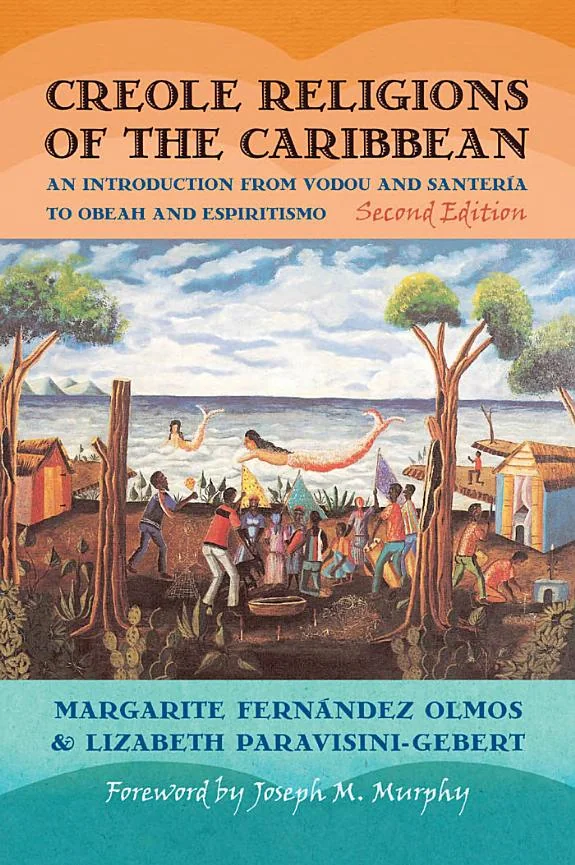
Published in 2011, Creole Religions of the Caribbean details how diverse belief systems fused under plantation conditions.
This 2011 book by Margarite Fernández Olmos and Lizabeth Paravisini-Gebert examines the syncretic religious formations that arose from cultural collisions in the Caribbean. It explains how European Christianity, African spiritual traditions, and indigenous Amerindian practices were combined under the coercive conditions of the plantation system to create unique spiritual expressions. The authors trace the development of these new religious forms, beginning with European colonization as early as the 16th century. The book focuses on the historical context of the transatlantic slave trade and the imposition of European doctrines, showing how enslaved Africans preserved and adapted their spiritual heritage. Indigenous populations also faced dispossession and forced assimilation. This environment of oppression and cultural exchange fostered the development of hybrid religious systems. The central concept is 'creolization,' defined as the dynamic process through which disparate religious and cultural elements coalesce into novel forms. This involves not just the blending of traditions but their transformation into something new. The book addresses the specific religious phenomena and their evolution within this unique historical setting. It is a resource for understanding the dynamics of religious syncretism and the impact of colonialism on spiritual development. Those interested in the resilience of cultural practices under duress will find it informative.
This work situates itself within the study of emergent spiritual traditions born from cultural upheaval. It examines how established religious frameworks interact with and transform under extreme social and political pressure, leading to unique expressions of faith. The book highlights the human capacity to adapt and maintain spiritual connections even when ancestral practices are suppressed or forbidden, demonstrating a form of resilience and innovation in the face of oppression that resonates with broader discussions of how belief systems evolve and persist.
💡 Why Read This Book?
• Gain a nuanced understanding of religious creolization, learning how diverse traditions fused under colonial pressure, a process particularly evident in the formation of Santería. • Discover the historical roots of specific Afro-Caribbean practices, understanding their development from the 16th-century plantation system to contemporary expressions. • Appreciate the adaptive strategies employed by enslaved peoples, recognizing how they preserved African spiritual heritage and reshaped European Christianity into new forms of resistance.
⭐ Reader Reviews
Honest opinions from readers who have explored this book.
❓ Frequently Asked Questions
What is the primary focus of Creole Religions of the Caribbean?
The book's primary focus is the process of religious creolization in the Caribbean, detailing how diverse Christian, African, and indigenous beliefs merged to form new religious systems under colonial rule.
When was Creole Religions of the Caribbean first published?
Creole Religions of the Caribbean was first published in 2011, offering a comprehensive academic study of its subject matter.
Which specific Caribbean religions are discussed in the book?
The book discusses major creolized religions such as Vodou in Haiti, Santería in Cuba, and Obeah across various islands, exploring their shared origins and unique developments.
How did the plantation system influence Caribbean religions?
The plantation system, a key historical context from the 16th century onward, forced diverse peoples into close proximity, creating the conditions for syncretism where African and indigenous traditions were adapted within or alongside imposed Christianity.
What does the term 'creolization' mean in the context of this book?
In this book, 'creolization' refers to the dynamic process of cultural and religious fusion, where elements from different traditions are not merely mixed but actively transformed into new, unique systems of belief and practice.
Who are the authors of Creole Religions of the Caribbean?
The authors are Margarite Fernández Olmos and Lizabeth Paravisini-Gebert, established scholars in Caribbean studies and religious history.
🔮 Key Themes & Symbolism
Religious Syncretism
This theme examines the complex process of religious syncretism, where distinct belief systems, primarily European Christianity, African traditional religions, and Amerindian practices, were compelled to interact and merge. The book illustrates how this fusion was not a passive blending but an active creation of novel spiritual expressions. It highlights the resilience and ingenuity of enslaved populations and indigenous peoples in maintaining their spiritual identities while adapting to imposed religious structures, leading to unique formations like Vodou and Santería.
Colonialism and Resistance
The work critically analyzes the role of colonialism, particularly the brutal sugar plantation system established from the 16th century, in shaping Caribbean religious landscapes. It frames the development of creolized religions as a form of cultural resistance against oppressive forces. By reinterpreting Christian symbols and narratives through the lens of African and indigenous cosmologies, marginalized communities asserted agency and preserved aspects of their heritage, demonstrating how faith became a potent tool for survival and identity formation.
Cultural Transformation
This theme focuses on the profound cultural transformations that occurred as diverse populations were brought together under duress. The book details how the very concept of 'religion' was redefined through creolization, leading to practices that defied easy categorization. It showcases how elements from disparate sources—from Yoruba Orishas to Catholic saints, from Amerindian healing rituals to European liturgical forms—were recontextualized and integrated into dynamic, living traditions that continue to evolve.
African Diaspora Spirituality
A significant aspect of the book is its exploration of African diaspora spirituality. It traces the survival and adaptation of West African religious traditions, including cosmology, divination, and healing practices, among enslaved Africans in the Caribbean. The book demonstrates how these traditions, despite immense pressures to eradicate them, not only persisted but also profoundly influenced the religious character of the region, contributing to the unique spiritual heritage of the African diaspora.
💬 Memorable Quotes
Direct passages from the work, attributed to the author.
“Creolization... is one of the most significant phenomena in Caribbean religious history.”
— This statement expresses the book's central thesis, emphasizing that the fusion of diverse beliefs into new systems is the defining characteristic of religious development in the Caribbean, stemming from the unique historical circumstances of the region.
“Caribbean peoples drew on the variants of Christianity brought by European colonizers, as well as on African religious and healing traditions...”
— This highlights the syncretic nature of Caribbean religions, illustrating the active incorporation of African spiritual resources alongside imposed Christian frameworks, a key process discussed throughout the text.
“...to fashion new systems of belief.”
— This concise phrase underscores the creative and transformative aspect of religious creolization, indicating that the resulting belief systems were not mere imitations but original syntheses born from cultural collision.
“Brought together in the crucible of the sugar plantation...”
— This vividly describes the harsh, oppressive environment of the sugar plantation as the primary site where diverse peoples and their spiritual traditions were forced into interaction, leading to the genesis of creolized faiths.
“...and the remnants of Amerindian practices...”
— This acknowledges the often-overlooked contribution of indigenous Caribbean populations to the syncretic religious landscape, indicating that their surviving traditions also played a role in the formation of new belief systems.
🌙 Esoteric Significance
Tradition
While not strictly adhering to a single Western esoteric lineage, Creole Religions of the Caribbean speaks to the broader Hermetic principle of 'As Above, So Below' through its examination of how macrocosmic societal forces (colonialism, slavery) manifest in the microcosm of individual and community spiritual practice. It aligns with Gnostic ideas of hidden knowledge and the creation of unique spiritual realities from oppressive conditions. The work illuminates how diverse traditions, when forced into contact, can generate potent, emergent spiritual forms, akin to alchemical transformation.
Symbolism
The book frequently engages with the symbolism of saints and spirits, particularly in Santería and Vodou. For example, the identification of Orishas like Ogun with Catholic saints like Saint George represents a potent symbolic act of reappropriation, masking African deities under Christian guise to preserve their veneration. The symbolism of the crossroads, common in many African-derived traditions, signifies points of spiritual power, transition, and encounter between the human and divine realms, reflecting the very creolization process the book describes.
Modern Relevance
Contemporary thinkers and practitioners in fields ranging from comparative religion to post-colonial theory continue to draw on the analytical framework of creolization presented in this work. Modern esoteric practitioners interested in the practical application of syncretism and the resilience of spiritual traditions in diaspora communities find its case studies clear. Furthermore, scholars examining globalization and cultural hybridity in the 21st century revisit its insights on how imposed systems can inadvertently foster new, dynamic cultural and religious expressions.
👥 Who Should Read This Book
• Scholars of religious studies and Caribbean history: Gain a comprehensive understanding of the historical forces and cultural dynamics that shaped unique religious traditions across the region. • Students of comparative religion and anthropology: Explore case studies of profound religious syncretism and cultural adaptation, learning how diverse belief systems interact and transform. • Practitioners of Afro-Caribbean faiths: Deepen your knowledge of the historical origins and syncretic development of traditions like Vodou and Santería, understanding their roots in the colonial era.
📜 Historical Context
The intellectual currents surrounding the publication of Creole Religions of the Caribbean in 2011 occurred within a vibrant academic field of post-colonial studies and religious history. The book emerged decades after foundational works on Afro-Caribbean religions by scholars like Melville J. Herskovits (e.g., *Drums and Shadows*, 1937) and Roger Bastide (e.g., *The African Religions of Brazil*, 1960), which had already established the importance of African survivals. However, Olmos and Paravisini-Gebert's work offers a more contemporary synthesis, explicitly foregrounding the concept of 'creolization' as the overarching framework for understanding religious formations across the diverse islands. The era saw continued debate about the agency of the enslaved and the nature of syncretism, with scholars like Verene A. Shepherd contributing significantly to the understanding of Caribbean social history. The reception was largely academic, solidifying the book's status as a key text for university courses.
📔 Journal Prompts
The concept of creolization as a creative synthesis under duress.
The symbolic reinterpretation of Christian figures within African-derived religions.
The plantation system as a crucible for new spiritual forms.
The role of healing traditions in preserving cultural identity.
Examining the resilience of spiritual practices in diaspora communities.
🗂️ Glossary
Creolization
The process by which diverse cultural and religious elements, brought together under specific historical conditions (like colonialism), merge and transform to create new, unique cultural and religious forms.
Syncretism
The blending of different religious beliefs, practices, and symbols, often occurring when distinct cultures come into contact, resulting in a new synthesis that incorporates elements from each.
Vodou
A religion developed in Haiti from West African Vodun traditions and Roman Catholicism, characterized by spirit possession, ritual drumming, and the veneration of spirits (loa).
Santería
An Afro-Cuban religion that combines Yoruba beliefs and deities (Orishas) with elements of Roman Catholicism, involving divination, animal sacrifice, and spirit mediumship.
Obeah
A system of spiritual or magical beliefs and practices originating in West Africa, prevalent in the Caribbean, often involving healing, divination, and sorcery, with varied forms across different islands.
Orisha
Deities or spirits in the Yoruba religion of West Africa, who are also central figures in Santería and other related Caribbean religions, often associated with natural forces and human activities.
Loa
Spirits or deities in Haitian Vodou, who serve as intermediaries between God (Bondye) and humanity, and are invoked and served through various rituals and ceremonies.
This book appears in 1 collection
🔮 Readers Also Liked
Browse all →







From the “Santeria” Collection
View all →









More Free Sacred Texts & Gnosticism Books
View all →