Sacred Geometry
 84
84

Sacred Geometry
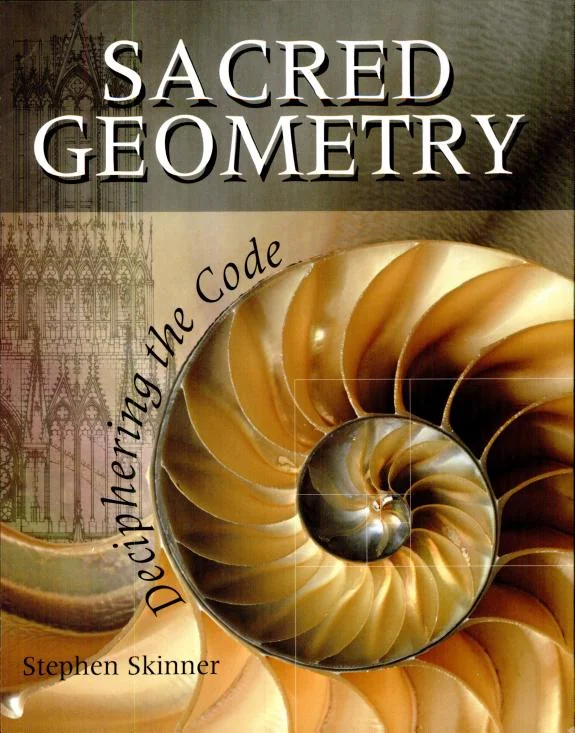
Stephen Skinner’s "Sacred Geometry" is a meticulously researched volume that avoids the usual New Age platitudes. Skinner’s strength lies in his comprehensive cataloging of geometric forms and their historical applications, moving beyond simplistic numerology to detail specific architectural uses and philosophical underpinnings. The book’s examination of the platonic solids and their symbolic weight in ancient Greek philosophy is particularly illuminating. However, the sheer density of information can occasionally feel overwhelming; a more focused narrative thread might have enhanced reader engagement. Skinner’s discussion on the pentagram's varied interpretations, from Pythagorean mysticism to its later demonization, exemplifies the book’s scholarly yet accessible approach. It is a valuable reference for those seeking detailed historical and philosophical context for geometrical symbolism.
📝 Description
84
Stephen Skinner's 2009 book, Sacred Geometry, reveals the hidden geometric order in the cosmos, nature, and human design.
First published in 2009, Stephen Skinner's Sacred Geometry examines the relationship between geometry and the physical world. The book proposes that a structured, ordered framework underlies the universe, natural phenomena, and human constructions. Skinner details how mathematical ratios and shapes appear in living organisms, citing examples like seashell spirals and tree branching. He argues these geometric archetypes are not random occurrences but essential manifestations of universal principles that shape all of existence. The work also covers the purposeful use of sacred geometry in the architecture, art, and rituals of various cultures throughout history. This aspect shows how people have employed geometric ideas to connect physical spaces with spiritual or cosmic energies, mirroring natural order. Ultimately, Sacred Geometry connects mathematical exactness with mystical insight, presenting a view of the world as an interconnected system governed by discoverable geometric laws.
This book sits within the Western esoteric tradition that seeks correspondences between the material and spiritual realms through symbolic systems. It draws from Neoplatonic ideas about the divine mind expressing itself through mathematical harmony, a concept also found in Renaissance Hermeticism and Rosicrucianism. Skinner connects these historical threads to contemporary understandings of pattern recognition in nature, bridging ancient cosmological views with scientific observation. The work assumes a universe structured by intelligible, though often hidden, principles that can be apprehended through geometry.
💡 Why Read This Book?
• Understand the geometric principles underpinning the Pythagorean worldview, including the significance attributed to the five Platonic solids, offering a concrete link to ancient Greek mathematical philosophy. • Discover how specific geometric patterns, such as the Golden Ratio (phi), are intentionally incorporated into iconic architectural achievements like Gothic cathedrals, providing a tangible connection to historical building practices. • Explore the complex symbolism of the pentagram across different historical periods and cultures, moving beyond superficial interpretations to grasp its multifaceted esoteric meanings.
⭐ Reader Reviews
Honest opinions from readers who have explored this book.
❓ Frequently Asked Questions
What is the historical significance of Plato's contribution to sacred geometry?
Plato, around 360 BCE, described the five Platonic solids (tetrahedron, cube, octahedron, dodecahedron, icosahedron) as the fundamental building blocks of the universe in his dialogue 'Timaeus,' a concept Skinner extensively explores.
How does "Sacred Geometry" explain the presence of geometric patterns in nature?
The book details how natural phenomena, from the Fibonacci sequence in plant growth to the hexagonal structure of snowflakes, demonstrate underlying mathematical principles that govern organic development and form.
What is the Golden Ratio and its role in art and architecture?
The Golden Ratio, approximately 1.618, is a mathematical proportion found in aesthetically pleasing designs. Skinner discusses its use in ancient structures and Renaissance art to achieve visual harmony.
Does the book discuss the Kabbalistic Tree of Life in relation to geometry?
Yes, Skinner's work touches upon how geometrical arrangements, including those related to the Sephiroth on the Kabbalistic Tree of Life, have been used to map spiritual concepts and cosmic order.
What is the significance of the Vesica Piscis in sacred geometry?
The Vesica Piscis, formed by the intersection of two circles of the same radius, is a foundational symbol representing creation, duality, and union, appearing in religious iconography and architectural designs.
When was Stephen Skinner's 'Sacred Geometry' originally published?
Stephen Skinner's 'Sacred Geometry' was first published in 2009, offering a contemporary synthesis of historical and philosophical ideas about geometric order.
🔮 Key Themes & Symbolism
The Platonic Solids
Skinner dedicates significant attention to the five Platonic solids, which were considered by ancient philosophers like Plato to be the fundamental elements of the cosmos. The book details their properties, geometrical construction, and symbolic associations within Greek philosophy, linking them to Earth, Air, Fire, Water, and the Aether. This exploration reveals how these perfect polyhedra were seen not just as abstract shapes but as divine blueprints for reality, influencing subsequent mystical and scientific thought.
Geometric Proportion in Nature
A core theme is the pervasive presence of geometric patterns in the natural world. Skinner illustrates concepts like the Fibonacci sequence and the Golden Ratio (phi) through examples ranging from the arrangement of leaves on a stem (phyllotaxis) to the spiral growth of galaxies. This section emphasizes that these mathematical regularities are not accidental but are intrinsic to life's evolutionary processes, suggesting a universal language of form that governs biological structures.
Architecture and Sacred Space
The book examines how sacred geometry has been applied in the design of temples, churches, and other significant structures throughout history. Skinner explores the use of specific ratios, proportions, and symbols, such as the circle, square, and equilateral triangle, to create spaces intended to resonate with cosmic energies or divine principles. Examples often include ancient Egyptian temples, Greek Parthenon, and Gothic cathedrals, highlighting the intentional use of geometry for spiritual alignment.
Symbolism of Shapes
Skinner examines the symbolic meanings attributed to fundamental geometric shapes and their combinations. The circle represents unity and the divine, the square signifies the material world, and the triangle can denote trinity or aspiration. The interplay of these forms, such as in the Vesica Piscis or the Star of David, is analyzed for its representation of universal concepts and its role in esoteric traditions and iconography.
💬 Memorable Quotes
Direct passages from the work, attributed to the author.
“The universe is built upon the foundation of number and geometry.”
— This core assertion suggests that mathematical principles are not merely descriptive tools but are constitutive of reality itself, implying an underlying order accessible through geometrical study.
“Nature repeats its patterns, revealing the geometric code of creation.”
— This highlights the book's central argument: that observable forms in nature, from crystal structures to biological growth, are manifestations of recurring mathematical principles, echoing a divine or cosmic design.
“Humanity has long sought to replicate cosmic harmony in its built environments.”
— This points to the intentional application of sacred geometry in architecture and art, aiming to align physical structures with perceived universal laws and spiritual realities.
“The Platonic solids are the archetypes from which all forms derive.”
— This statement expresses a key philosophical concept explored in the book, presenting these specific geometric solids as foundational blueprints for the material world.
“Geometry is the language through which the divine communicates its order.”
— This interpretation suggests that understanding geometrical principles is akin to deciphering a divine message, revealing the intelligent design inherent in the cosmos.
🌙 Esoteric Significance
Tradition
Skinner's work draws heavily from the Western Esoteric tradition, particularly Hermeticism, Neoplatonism, and Pythagoreanism. It fits within these lineages by positing a universe governed by intelligible, mathematical principles that mirror divine order. The book acts as a compendium, synthesizing ideas about number, form, and cosmology that have been central to these traditions for centuries, presenting them in an accessible format for modern practitioners and students.
Symbolism
Key symbols explored include the Platonic solids, representing the fundamental elements and cosmic structure, and the Golden Ratio (phi), seen as a divine proportion manifesting in both natural beauty and human art. The Vesica Piscis, formed by intersecting circles, is another crucial motif, symbolizing creation, duality, and the intersection of the spiritual and material realms, prevalent in religious art and architecture.
Modern Relevance
Contemporary thinkers and practitioners in fields such as sacred architecture, sustainable design, consciousness studies, and certain branches of New Age spirituality frequently reference the principles outlined in "Sacred Geometry." Architects seeking harmonious spaces, artists exploring symbolic representation, and individuals interested in the philosophical underpinnings of reality find Skinner's work a valuable resource for understanding the tangible manifestation of universal order.
👥 Who Should Read This Book
• Students of comparative religion and ancient philosophies seeking to understand the mathematical underpinnings of various spiritual traditions. • Architects, artists, and designers interested in the historical and symbolic use of proportion and form in creating aesthetically and spiritually resonant works. • Individuals exploring esoteric traditions like Hermeticism or Pythagoreanism who wish to grasp the foundational role of geometry in cosmic and spiritual mapping.
📜 Historical Context
Published in 2009, Stephen Skinner's "Sacred Geometry" emerged during a period of renewed public interest in esoteric symbolism, partly fueled by popular fiction like Dan Brown's "The Da Vinci Code." The book positions itself within a long lineage of thinkers who have explored the divine proportions and cosmic order, tracing roots back to ancient Greek mathematicians and philosophers like Pythagoras and Plato. It engages with Renaissance thinkers such as Luca Pacioli, who explored the Golden Ratio in his "De Divina Proportione" (1509), and acknowledges the influence of Hermetic and Neoplatonic traditions. Skinner's work can be seen as a response to and synthesis of these historical currents, offering a comprehensive overview for a contemporary audience. While not facing overt censorship, the academic reception of sacred geometry often remains divided, with some scholars viewing it as historical curiosity and others as a significant philosophical or spiritual framework.
📔 Journal Prompts
The Platonic Solids and their elemental correspondences.
Nature's geometric patterns and the Fibonacci sequence.
The geometric principles in ancient temple design.
The symbolism of the Vesica Piscis.
The Golden Ratio in art and architecture.
🗂️ Glossary
Platonic Solids
Five convex regular polyhedra (tetrahedron, cube, octahedron, dodecahedron, icosahedron) considered by ancient philosophers to be the fundamental geometric forms of the universe.
Golden Ratio (Phi)
An irrational number approximately equal to 1.618, found when a line is divided into two parts such that the longer part divided by the smaller part is also equal to the whole length divided by the longer part.
Fibonacci Sequence
A sequence where each number is the sum of the two preceding ones, usually starting with 0 and 1 (0, 1, 1, 2, 3, 5, 8...). Its ratios approximate the Golden Ratio.
Vesica Piscis
A shape formed by the intersection of two circles with the same radius, intersecting in such a way that the center of each circle lies on the circumference of the other. Symbolizes creation and duality.
Sacred Space
A location considered holy or sacred, often designed using specific geometric principles and proportions to align with spiritual or cosmic energies.
Archetype
In this context, a fundamental, original pattern or model, such as the Platonic solids, from which other forms are derived or exemplified.
Hermeticism
A philosophical and religious tradition based on writings attributed to Hermes Trismegistus, emphasizing divine wisdom, cosmic unity, and the interconnectedness of all things.
This book appears in 1 collection
🔮 Readers Also Liked
Browse all →








From the “Sacred Geometry” Collection
View all →






More Free Occult Philosophy Books
View all →




![A LITTLE HISTORY - [ Truth about ] THE SHEPHERDING MOVEMENT](/img/thumb/a-little-history-truth-about-the-shepherding-movement-allan-clare-bill-hamon-ern-baxter-charles-simpson-derek-prince-don-basham-bob-mumford-john-bevere-r-c-sproul-bredesen-juan-carlos-ortiz-bruce-metz.webp)