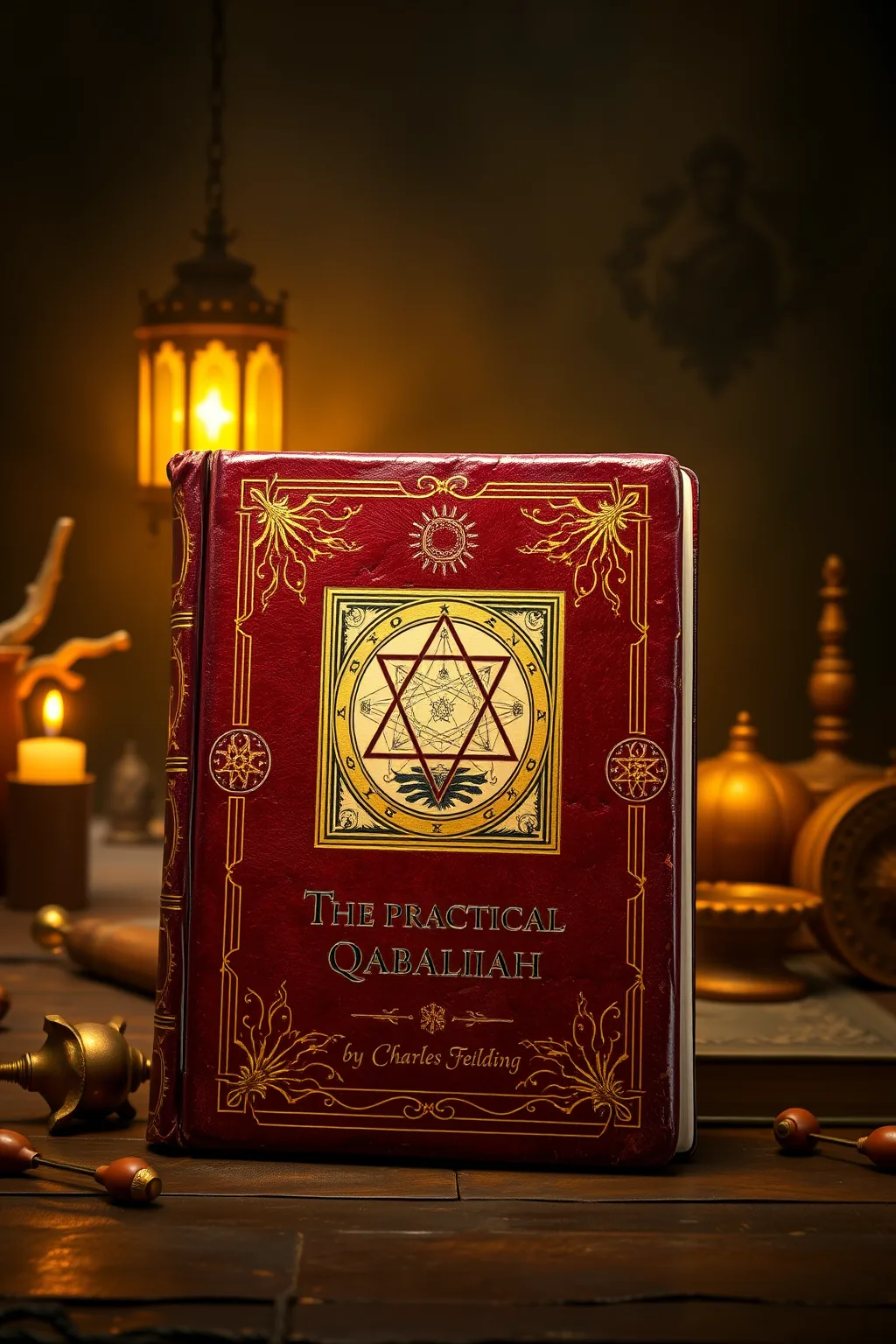
The Practical Qabalah
 82
82

The Practical Qabalah
Fielding's "The Practical Qabalah" attempts to bridge the gap between abstract Qabalistic theory and accessible psychological practice, a commendable goal for esoteric literature. The strength lies in its clear exposition of the Tree of Life and its direct application to techniques like pathworking. The integration of Jungian archetypes, particularly in Chapter 4's discussion on dream work, feels surprisingly contemporary for a 1990 text, offering a tangible method for self-exploration. However, the book's primary limitation is its brevity; while aiming for simplicity, it sometimes sacrifices depth, leaving the reader wanting more detailed explanations of the more advanced Qabalistic concepts or deeper dives into the Jungian connections. The section on pathworking procedures, while instructive, could benefit from more varied examples. Despite this, Fielding's work remains a solid, if introductory, guide for those new to the Western Mystery Tradition, presenting complex ideas without undue jargon.
📝 Description
82
Charles Fielding published "The Practical Qabalah" in 1990, detailing Qabalistic principles and the Tree of Life.
Charles Fielding's "The Practical Qabalah," first published in 1990, examines Qabalistic principles and the Tree of Life. The book acts as an introduction to Western occultism, connecting core Qabalistic ideas with modern psychological concepts. It goes beyond theory to offer practical methods for personal growth. This work is for those seeking a solid approach to esoteric studies, especially within the Western Mystery Tradition. It helps students of occultism grasp the Qabalah's symbolic language and apply its tenets practically. Individuals interested in the link between ancient mysticism and contemporary psychology will find it valuable. The book presents the Tree of Life as a map of consciousness, not just a diagram. Fielding connects Qabalistic paths and Sephirah to Jungian archetypes. It stresses practical use through techniques like pathworking, dream analysis, and visualization for self-understanding and better communication.
Published in 1990, "The Practical Qabalah" entered a period of renewed interest in esoteric traditions. It serves as an accessible entry into Qabalistic thought, situated within Western esotericism. The book draws from figures like Aleister Crowley and Dion Fortune, while also incorporating emerging psychological ideas. Its appearance coincided with growing academic and popular attention to these subjects, making Fielding's text a relevant resource.
💡 Why Read This Book?
• Learn practical pathworking techniques derived from Qabalistic principles, offering a structured method for inner exploration not found in purely theoretical texts. • Understand the symbolic language of the Tree of Life by connecting its 22 paths to Jungian archetypes, providing a unique framework for self-analysis introduced in the 1990 publication. • Develop skills in dream interpretation and visualization grounded in Qabalistic cosmology, enhancing communication with your subconscious and others as detailed in the book's practical exercises.
⭐ Reader Reviews
Honest opinions from readers who have explored this book.
❓ Frequently Asked Questions
What is the Tree of Life in Qabalah?
The Tree of Life is a central symbol in Qabalah, representing the structure of the cosmos and the path of creation. It consists of ten interconnected spheres (Sephirah) and 22 paths, mapping spiritual and psychological energies.
How does "The Practical Qabalah" relate to Jungian psychology?
The book integrates Qabalistic concepts with Carl Jung's theory of archetypes. It suggests that the paths and Sephirah on the Tree of Life correspond to universal psychological patterns, aiding in dream analysis and visualization.
What is pathworking in Qabalah?
Pathworking is a Qabalistic meditative practice involving mentally traversing the paths on the Tree of Life. It aims to explore different states of consciousness, gain insight, and foster personal transformation.
When was "The Practical Qabalah" first published?
"The Practical Qabalah" by Charles Fielding was first published on January 1, 1990.
Is this book suitable for beginners in esotericism?
Yes, the book is designed as an introduction to the Western Mystery Tradition and Qabalistic symbolism, making it accessible for those new to these subjects.
What are the main benefits of practicing Qabalistic visualization as described in the book?
Practicing Qabalistic visualization, as outlined in the book, can enhance self-awareness, facilitate communication with one's subconscious, and provide a framework for understanding personal challenges through symbolic language.
🔮 Key Themes & Symbolism
The Tree of Life as a Map
The book presents the Tree of Life not as a static diagram but as a dynamic map of consciousness and creation. Fielding details the ten Sephirah and 22 paths, explaining their correspondences and energies. This framework serves as the primary tool for understanding both the outer cosmos and the inner workings of the psyche, linking esoteric cosmology directly to personal experience.
Qabalah and Jungian Archetypes
A significant contribution of this work is its explicit connection between Qabalistic symbolism and Carl Jung's concept of archetypes. Fielding explores how the energies and lessons associated with each Sephirah and path can be understood through the lens of universal psychological patterns, providing a modern interpretative layer for ancient mystical structures.
Practical Application: Pathworking and Visualization
Moving beyond theory, Fielding emphasizes practical techniques. Pathworking, the meditative journey through the Tree of Life, is detailed, alongside methods for using dreams and visualization. These practices are presented as tools for self-communication, emotional integration, and fostering a deeper connection with oneself and the surrounding world.
Western Mystery Tradition Introduction
The book serves as an accessible entry point into the broader Western Mystery Tradition. It introduces core Qabalistic concepts that underpin many esoteric systems, offering readers a foundational understanding of symbolic language, spiritual development, and the historical currents of Western esotericism.
💬 Memorable Quotes
Direct passages from the work, attributed to the author.
“Dreams offer direct access to subconscious patterns.”
— This statement emphasizes the practical utility of dream analysis within the Qabalistic framework presented. It positions dreams as a vital communication channel from the deeper self, a resource to be actively explored.
“Pathworking requires focused visualization.”
— This interpretation underscores the active, participatory nature of Qabalistic pathworking. It suggests that successful engagement with the Tree of Life necessitates directed mental imagery and sustained focus.
“The Qabalah provides a symbolic language for the soul.”
— This interpretation positions Qabalistic symbolism not just as abstract theory but as a living language capable of expressing the nuances of the soul's journey and its relationship with the divine.
💡 Key Ideas
Editorial paraphrase of the work's core concepts — not direct quotes.
The Tree of Life is a map of the human psyche.
This paraphrased concept highlights Fielding's core thesis: that the ancient Qabalistic diagram is not merely a cosmological model but a profound representation of the stages and potentials within human consciousness.
Archetypes structure our experience of reality.
Reflecting the integration of Jungian psychology, this paraphrased idea suggests that the universal patterns identified by Jung are fundamental to how we perceive and interact with the world, mirroring Qabalistic energetic principles.
🌙 Esoteric Significance
Tradition
This work firmly belongs to the Western Esoteric Tradition, specifically within the Hermetic and Kabbalistic branches. It draws heavily on the Lurianic Qabalah's structure of the Tree of Life but adapts it for practical, psychological application. Fielding's approach departs from purely mystical or theological interpretations, emphasizing the Qabalah as a system for personal growth and consciousness exploration, aligning with modern esoteric psychologies.
Symbolism
The primary symbol is the Tree of Life, presented as a dynamic map of creation and consciousness. Fielding also focuses on the 22 paths connecting the ten Sephirah, interpreting them through Jungian archetypes. The concept of 'pathworking' itself becomes a symbolic act, representing the individual's journey through these energetic and psychological landscapes.
Modern Relevance
Fielding's work remains relevant for contemporary practitioners interested in the intersection of esoteric psychology and practical occultism. It informs modern approaches to Jungian-informed magical practice and consciousness studies. Thinkers and groups exploring embodied spirituality and the psychological application of ancient symbolic systems often find "The Practical Qabalah" a useful foundational text.
👥 Who Should Read This Book
• Aspiring practitioners of Western esotericism seeking a clear introduction to Qabalistic principles and their practical application. • Students of Jungian psychology interested in exploring the symbolic correspondences between archetypes and mystical systems. • Individuals looking for structured methods of self-exploration, including dream work and visualization techniques rooted in a defined symbolic framework.
📜 Historical Context
First published in 1990, Charles Fielding's "The Practical Qabalah" entered a landscape where esoteric studies were experiencing a revival, moving from niche communities to wider academic and popular interest. This period saw a surge in accessible introductions to various occult traditions, often seeking to synthesize them with modern psychological thought. Fielding's work sits within this trend, directly engaging with the Western Mystery Tradition, a lineage that includes figures like Eliphas Lévi and Aleister Crowley. Unlike purely academic treatises, Fielding's text aimed for practical application, differentiating it from more theoretical works. Its integration of Jungian psychology offered a contemporary lens, contrasting with earlier, more purely mystical interpretations prevalent in the mid-20th century. The book's emphasis on active practice like pathworking and visualization reflected a growing desire among practitioners for experiential engagement with these systems.
📔 Journal Prompts
The Tree of Life as a map of your current psychological landscape.
Reflecting on a recent dream through the lens of Qabalistic archetypes.
Visualizing a specific Sephirah and its associated energies.
How does the concept of pathworking apply to your daily life?
Exploring the connection between Qabalistic symbolism and personal experiences.
🗂️ Glossary
Qabalah
A complex system of esoteric teachings and mystical traditions that originated in Jewish mysticism but has been adapted by Western esotericists, focusing on cosmology, divine emanation, and spiritual development.
Tree of Life
The central symbolic diagram in Qabalah, comprising ten interconnected spheres (Sephirah) and 22 paths, representing the structure of the universe and the human psyche.
Sephirah
Singular: Sephirah. The ten spheres or divine emanations on the Tree of Life, each representing a distinct aspect of divine energy and consciousness.
Path
The connections or channels linking the Sephirah on the Tree of Life. There are 22 paths, often associated with letters of the Hebrew alphabet and specific psychological or spiritual lessons.
Pathworking
A practical Qabalistic technique involving meditative visualization to traverse the paths of the Tree of Life, intended for spiritual insight and psychological exploration.
Archetype
A concept from Jungian psychology referring to universal, archaic patterns and images that derive from the collective unconscious and are the psychic counterpart of the instinct.
Western Mystery Tradition
A broad term encompassing various esoteric, occult, and spiritual traditions originating in Western civilization, including Hermeticism, Qabalah, Rosicrucianism, and Freemasonry.