Zhong ji lü cheng

 78
78

Zhong ji lü cheng
Robert A. Monroe's *Zhong ji lü cheng* continues his lifelong investigation into the nature of consciousness beyond the physical body. The text is most potent when detailing the practical methodologies Monroe developed for inducing and navigating altered states, particularly his "Focus Levels" system. These descriptions offer a rare clarity on a subject often mired in vagueness. However, the book occasionally leans into speculative assertions that, while intriguing, lack the rigorous evidential support one might desire. The passage describing "Locale II" offers a vivid, if unverified, glimpse into what Monroe posits as a non-physical realm, showcasing the author's descriptive power. While not without its limitations in empirical grounding, the work's enduring value lies in its systematic approach to subjective experience, offering a structured map for the exploration of consciousness.
📝 Description
78
Zhong ji lü cheng, published in 2016, examines consciousness separation from the physical form.
This 2016 text, Zhong ji lü cheng, details personal accounts and theoretical models regarding states of being outside the physical body. It aims to clarify phenomena often considered fringe, presenting a structured method for studying altered awareness. The author develops the "Focus Levels" concept, a system for classifying distinct consciousness states and their associated characteristics. These levels are described as accessible realities, not simply psychological conditions. The book also touches upon "the Gate," suggesting a transition point or dimension within these non-physical experiences. It is written for individuals interested in parapsychology, consciousness studies, and the philosophical questions surrounding subjective experience. Those curious about out-of-body experiences, astral projection, and the potential for consciousness to exist apart from the brain will find relevant material. The work provides ample food for thought for readers with backgrounds in psychology, comparative religion, or philosophy who are open to unconventional ideas.
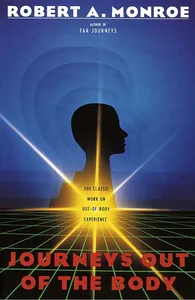
The book arrives amidst a renewed interest in consciousness, blending scientific approaches with older esoteric traditions. Its ideas echo ancient shamanic and mystical practices found globally, yet it speaks to a contemporary audience. This follows Robert Monroe's own earlier popularization of out-of-body experiences, notably in works like *Journeys Out of the Body* from 1971. The text emerges as neuroscience increasingly investigates consciousness, fostering a dialogue between empirical research and direct experience.
Zhong ji lü cheng connects with a long lineage of spiritual and mystical traditions that posit consciousness's existence beyond the physical body. Its exploration of altered states and non-physical realities has roots in shamanic practices from various cultures, as well as Western esoteric movements like Theosophy and various astral projection societies. The book's framework of "Focus Levels" can be seen as a modern attempt to map and systematize experiences previously described through more poetic or symbolic language in ancient texts. It engages with a contemporary audience interested in these phenomena, bridging historical esoteric concepts with modern inquiry.
💡 Why Read This Book?
• Gain a structured understanding of altered states of consciousness through Monroe's "Focus Levels," providing a conceptual framework distinct from purely psychological interpretations. • Explore the concept of the "Universal Body" and its implications for consciousness existing independently of physical form, offering a unique perspective on identity and existence. • Learn about "Locale II" and "Locale III," specific non-physical environments described within the text, which provide concrete examples of hypothesized realities beyond the physical world.
⭐ Reader Reviews
Honest opinions from readers who have explored this book.
❓ Frequently Asked Questions
What are "Focus Levels" as described in Zhong ji lü cheng?
Focus Levels are a system developed by Robert A. Monroe to categorize distinct states of consciousness and awareness achievable through specific techniques, representing different planes of existence or perception.
What is the "Gateway Experience" in the context of this book?
The Gateway Experience refers to the systematic process outlined by Monroe for intentionally entering non-physical states of consciousness, often associated with out-of-body experiences.
Does Zhong ji lü cheng offer practical exercises for achieving altered states?
Yes, the book details techniques and principles derived from Monroe's personal experiences and research, guiding readers on how to explore consciousness beyond the physical body.
What is the significance of "Locale II" and "Locale III"?
These terms denote specific non-physical environments or realities that Monroe describes encountering and mapping during his explorations of consciousness outside the physical form.
Who was Robert A. Monroe and what is his contribution to consciousness studies?
Robert A. Monroe was an American businessman and author who pioneered research into out-of-body experiences, founding the Monroe Institute to study and teach about altered states of consciousness.
When was Zhong ji lü cheng first published?
Zhong ji lü cheng was first published in 2016, building upon decades of Monroe's prior work and research into consciousness.
🔮 Key Themes & Symbolism
Focus Levels of Consciousness
The central organizing principle of the book, Focus Levels, presents a taxonomy of consciousness states. Monroe posits that these are not merely subjective psychological phenomena but distinct realities accessible through specific mental and energetic techniques. Each level is described as having unique characteristics, inhabitants, and laws governing experience. This framework provides a structured map for reading through the non-physical dimensions, moving beyond anecdotal accounts to offer a systematized approach to exploring consciousness's expanded potentials. The progression through these levels is key to understanding the book's experiential philosophy.
The Universal Body
This concept refers to a non-physical form or energetic body that can operate independently of the physical organism. Monroe suggests that consciousness is not solely reliant on the biological brain for its existence or experience. The Universal Body is presented as the vehicle for consciousness during altered states, such as out-of-body experiences. Understanding this concept challenges conventional materialism and opens avenues for contemplating the nature of self, identity, and existence beyond corporeal limitations. It implies a continuity of being that transcends physical death.
Non-Physical Environments
Zhong ji lü cheng details specific non-physical environments, notably "Locale II" and "Locale III." These are not abstract philosophical concepts but described regions of conscious experience populated by entities and governed by distinct principles. Locale II is often characterized as a place of learning and interaction with non-physical beings, while Locale III is presented as a more fundamental, energetic plane. The meticulous, albeit speculative, descriptions of these locales offer readers a glimpse into a perceived multi-layered reality accessible through consciousness exploration.
The Gateway Experience
This term captures the methods and protocols Monroe developed to facilitate entry into non-physical states of consciousness. It is presented as a learnable skill, accessible through focused intention and specific techniques designed to disengage consciousness from its physical anchor. The Gateway Experience is the practical application of the Focus Levels framework, enabling individuals to consciously explore the subjective realities described within the book. It bridges the gap between theory and personal discovery in the field of consciousness studies.
💬 Memorable Quotes
Direct passages from the work, attributed to the author.
“Consciousness can be trained and directed, much like a muscle.”
— This statement highlights the book's premise that altered states and non-physical experiences are not random occurrences but can be cultivated through deliberate practice and mental discipline.
“The separation of consciousness from the physical body is not an end, but a transition.”
— This interpretation suggests that out-of-body experiences or death are viewed not as cessation but as a shift in the mode of existence, emphasizing continuity of awareness.
“Locale II is a place where thought becomes immediately manifest.”
— This describes a core characteristic of a specific non-physical environment, indicating that the usual lag between intention and manifestation is absent, leading to a direct experience of creation through thought.
“The Universal Body is the true form of awareness.”
— This assertion posits that the non-physical, energetic body is the fundamental aspect of our being, with the physical body being a temporary manifestation or vehicle.
“Focus Levels provide a map for the unmapped territories of the mind.”
— This metaphorical quote emphasizes the book's attempt to bring order and structure to the often chaotic and subjective experiences of altered consciousness, offering a guide for exploration.
🌙 Esoteric Significance
Tradition
While not strictly adhering to a single established esoteric lineage like Hermeticism or Gnosticism, Monroe's work draws heavily on themes found across various mystical traditions that posit the existence of non-physical planes and the potential for consciousness to traverse them. His systematic approach, particularly the "Focus Levels," carries the structured cosmologies and meditative disciplines found in traditions like Theosophy and certain branches of Western esotericism that map spiritual hierarchies and planes of existence. It departs by focusing primarily on direct experiential accounts and developing practical techniques rather than theological or philosophical doctrine.
Symbolism
The "Universal Body" serves as a potent symbol for the eternal, non-physical self, representing the soul or consciousness independent of its material vessel. The concept of "Focus Levels" itself can be seen as symbolic of hierarchical spiritual or conscious realities, akin to the planes described in Kabbalistic or Theosophical models. "Locale II" and "Locale III" function as symbolic representations of distinct existential realms, offering archetypal landscapes for the conscious explorer, where thought and intention hold immediate power.
Modern Relevance
Monroe's work continues to influence contemporary consciousness researchers, neuroscientists, and practitioners of various mind-body disciplines. His methodologies, particularly those developed at the Monroe Institute, are still utilized by individuals seeking to explore altered states, lucid dreaming, and OBEs. Thinkers in transpersonal psychology and those exploring the potential of virtual reality and artificial intelligence to simulate or understand consciousness often reference or are indirectly influenced by the experiential frameworks he established. The book remains a foundational text for those investigating the boundaries of subjective reality.
👥 Who Should Read This Book
• Individuals interested in the practical exploration of consciousness beyond the physical body, seeking structured techniques for out-of-body experiences and lucid dreaming. • Researchers and students of parapsychology and transpersonal psychology looking for detailed experiential accounts and theoretical frameworks concerning non-physical realities. • Those questioning the materialistic view of consciousness and seeking alternative perspectives on the nature of self, reality, and existence, particularly as presented through empirical subjective investigation.
📜 Historical Context
Published in 2016, *Zhong ji lü cheng* arrives within a contemporary landscape where consciousness studies have gained academic traction, intersecting with a long-standing tradition of esoteric literature. Robert A. Monroe, the author, was already a significant figure in popularizing out-of-body experiences (OBEs) through his earlier seminal works like *Journeys Out of the Body* (1971). This book builds upon that foundation, offering a more detailed systematization of his findings. It emerged during a period of renewed interest in subjective phenomena, paralleled by advancements in neuroscience attempting to correlate brain activity with conscious states. While Monroe's work diverges from purely materialistic scientific approaches, it engages with similar questions about the mind's nature. His research was contemporary with figures like Stanislav Grof, who explored altered states through holotropic breathwork, and the broader New Age movement, which often embraced concepts of consciousness expansion and non-physical realities. The reception of such works often navigates between skepticism rooted in scientific empiricism and enthusiastic acceptance from those with direct experiential correlations.
📔 Journal Prompts
The concept of "Focus Levels" in *Zhong ji lü cheng* suggests distinct realities; describe a hypothetical "Locale IV" based on your current understanding.
Reflect on the "Universal Body" and its implications for personal identity beyond physical form.
Consider the "Gateway Experience"; what internal or external barriers might prevent access to these states for you?
Analyze the descriptions of "Locale II" and "Locale III"; how do these compare to your own intuitive understanding of non-physical space?
How might the training of consciousness, as implied by the "Focus Levels," be applied to daily waking life?
🗂️ Glossary
Focus Levels
A system developed by Robert A. Monroe to categorize distinct states of consciousness and awareness, representing different planes or realities accessible through specific techniques.
Gateway Experience
The process and methodology outlined by Monroe for intentionally entering and navigating non-physical states of consciousness, often leading to out-of-body experiences.
Universal Body
A concept referring to the non-physical energetic form or vehicle of consciousness that can exist independently of the physical body.
Locale II
A specific non-physical environment described by Monroe, often characterized as a place of learning, interaction, and immediate manifestation of thought.
Locale III
Another described non-physical environment, presented as a more fundamental energetic plane or reality accessed through advanced consciousness exploration.
Out-of-Body Experience (OBE)
A subjective experience where a person feels their consciousness has temporarily separated from their physical body, perceiving themselves from a vantage point outside their physical form.
Consciousness Training
The deliberate practice and application of techniques aimed at expanding, directing, and altering states of awareness beyond ordinary waking consciousness.
🔮 Readers Also Liked
Browse all →








More by Robert A. Monroe
All books →




More Free Occult Philosophy Books
View all →