Sacred Geometry
 75
75

Sacred Geometry
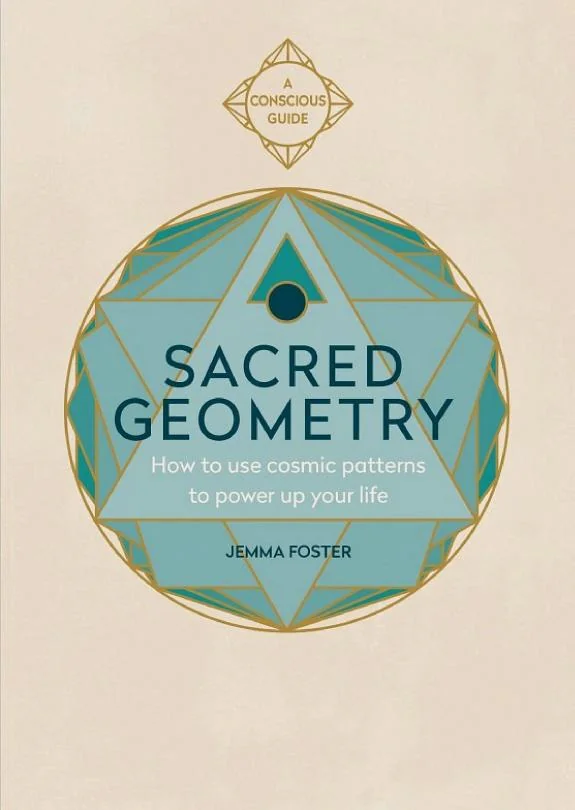
Jemma Foster's "Sacred Geometry" attempts to bridge the gap between abstract mathematical principles and their perceived manifestation in the natural and spiritual worlds. The strength of the book lies in its detailed cataloging of geometric forms and their appearance in diverse natural phenomena, from the hexagonal structure of snowflakes to the pentagonal symmetry of starfish. Foster’s explanation of the Golden Ratio’s prevalence is particularly well-articulated. However, the work occasionally falters in its enthusiastic leap from observation to assertion, sometimes presenting interpretations as established fact without sufficient empirical backing. For instance, the claim that the "sub-atomic" realm directly mirrors galactic structures through specific geometric constants requires more rigorous substantiation than offered. Despite this, the book serves as an accessible primer on a fascinating subject, encouraging readers to look for patterns in their surroundings.
📝 Description
75
Jemma Foster's 2020 book, Sacred Geometry, argues geometry is a cosmic language.
Published in 2020, Sacred Geometry by Jemma Foster argues that geometry is more than mathematics; it is a fundamental language of the cosmos. Foster shows how these geometric principles appear in nature, from seashell spirals to tree branches, and influence scales from the subatomic to the galactic. The book presents geometry as a pure expression of number and form, capable of describing hidden dimensions and acting as a path to heightened awareness.
This book suits individuals interested in the overlap between mathematics, spirituality, and natural philosophy. It speaks to those who want to grasp the universe's underlying order, practitioners of esoteric paths, artists, and designers seeking core principles, or anyone curious about how old cultures used geometric patterns in rituals and for achieving enlightenment. A willingness to consider metaphysical interpretations of scientific and mathematical ideas is needed.
Foster's work connects to the long history of sacred geometry. This tradition began with ancient civilizations, including the Pythagoreans in 6th century BCE Greece, who saw numbers and shapes as keys to cosmic understanding. Later thinkers like Plato linked geometric forms to ideal realities. The Renaissance revived interest, with artists and architects such as Leonardo da Vinci employing proportions and harmony from geometric studies. Foster updates these ideas for today's readers.
Sacred geometry has a history stretching back to ancient Greece, with figures like Pythagoras believing numbers and shapes revealed cosmic truths. Plato further developed this, connecting geometric forms to perfect, ideal realities. This tradition resurfaced during the Renaissance, influencing art and architecture through principles of proportion and harmony. Foster's book engages with this lineage, reinterpreting these ancient concepts for a modern, often spiritually inclined, audience. It places mathematical forms within a framework of universal order and consciousness.
💡 Why Read This Book?
• Gain a foundational understanding of geometric principles as symbolic representations of universal order, as explored through the text's detailed examination of shapes like the circle and square. • Discover concrete examples of sacred geometry in nature and ancient architecture, such as the specific mention of mandalas and stone circles, to deepen your appreciation for cosmic design. • Learn how to potentially apply geometric concepts for personal growth and consciousness-raising, drawing parallels between the book's discussion of labyrinths and meditative practices.
⭐ Reader Reviews
Honest opinions from readers who have explored this book.
❓ Frequently Asked Questions
What is Sacred Geometry according to Jemma Foster?
Jemma Foster's "Sacred Geometry" defines it as the universal language of creation, expressing number and form. It's presented as existing in nature, from microscopic to galactic scales, and as a means to navigate unseen dimensions and raise consciousness.
When was Sacred Geometry by Jemma Foster first published?
The book "Sacred Geometry" by Jemma Foster was first published on September 3, 2020.
What natural phenomena are cited as examples of Sacred Geometry?
The book cites numerous natural examples, including the unfurling of a rose bud, the pattern of a tortoise shell, the spiral of a nautilus, and the hexagonal structure of snowflakes, illustrating geometry's presence across scales.
How has Sacred Geometry been used historically?
Historically, sacred geometry has been utilized in the construction of stone circles, mandalas, labyrinths, and temples. These structures were often built to harness universal laws for raising consciousness and communicating with the divine.
What is the relationship between Sacred Geometry and consciousness?
Foster's work suggests a direct link, proposing that understanding and applying sacred geometric principles can lead to an elevation of consciousness and a deeper connection to the underlying order of reality.
Is Jemma Foster's Sacred Geometry suitable for beginners?
Yes, the book is generally accessible to beginners interested in the subject. It explains complex ideas clearly, making it a good starting point for those new to esoteric or philosophical interpretations of geometry.
🔮 Key Themes & Symbolism
Geometry as Cosmic Language
This theme posits that geometric forms and numerical ratios are not arbitrary but constitute the fundamental language through which the universe is expressed and organized. Foster illustrates this by showing how patterns like the Fibonacci sequence and the Golden Ratio appear consistently in natural structures, from plant growth to planetary orbits, suggesting a universal blueprint.
Nature's Geometric Order
The book extensively explores the presence of geometric principles in the natural world. It highlights how phenomena such as the spiral of a seashell, the hexagonal symmetry of a honeycomb, or the branching patterns of trees are manifestations of underlying mathematical laws, suggesting that nature itself is a proof of divine proportion.
Geometry and Consciousness
A central tenet is that sacred geometry serves as a tool for spiritual development and consciousness expansion. The text explains how ancient cultures used geometric designs in sacred spaces like temples and mandalas to facilitate meditation, attunement, and communication with higher realms, viewing these forms as conduits for divine energy.
The Unseen Dimensions
Foster suggests that sacred geometry provides a framework for understanding realities beyond our three-dimensional perception. By studying these pure expressions of number and form, readers are encouraged to contemplate the existence of subtler dimensions and the interconnectedness of all things through a shared geometric foundation.
💬 Memorable Quotes
Direct passages from the work, attributed to the author.
“The sub-atomic to the galactic share a common geometric thread.”
— This highlights the book's central argument that fundamental geometric principles underpin reality across all scales, from the smallest particles to the vastness of the cosmos, implying a unified cosmic structure.
“Geometry is the language of creation.”
— This statement captures the book's thesis that mathematical forms and ratios are not mere abstract concepts but the very building blocks and communicative medium of the universe itself.
“Patterns in nature reveal universal laws.”
— This concept emphasizes that observable phenomena in the natural world, such as spirals and symmetries, are not random occurrences but evidence of underlying, consistent mathematical and geometric principles governing existence.
“Sacred geometry aids in raising consciousness.”
— This suggests a practical application of geometric study, positing that engaging with these forms can lead to heightened awareness, spiritual insight, and a deeper connection to the divine or universal order.
“The unfurling of a rose bud mirrors cosmic proportion.”
— This specific example illustrates the book's broader point about finding sacred geometry in everyday natural occurrences, linking the micro-level beauty of a flower to grander universal mathematical constants.
🌙 Esoteric Significance
Tradition
This work aligns with the Western Esoteric tradition, drawing heavily from Neoplatonic and Hermetic concepts that view the material world as a reflection of divine, mathematical order. It carries the Pythagorean belief in the musicality of the spheres and the Gnostic idea of a structured, intelligible cosmos accessible through contemplation of its underlying forms.
Symbolism
Key symbols include the circle, representing unity and wholeness; the square, symbolizing the material world and stability; and the equilateral triangle, often representing divine manifestation or the Trinity. The Golden Ratio (Phi), frequently discussed, symbolizes perfect proportion and aesthetic harmony, believed to be woven into the fabric of creation.
Modern Relevance
Foster's work appeals to contemporary movements in consciousness studies, fractal geometry, and fields like bio-architecture and sustainable design, which seek to integrate natural patterns and principles into human endeavors. Thinkers exploring cymatics and the vibrational nature of reality also find common ground with the book's premise.
👥 Who Should Read This Book
• Students of Hermeticism and Pythagorean philosophy seeking to understand the mathematical underpinnings of these traditions. • Artists, designers, and architects interested in the foundational principles of proportion, harmony, and natural aesthetics. • Spiritual seekers exploring the relationship between the physical universe, consciousness, and divine order through symbolic representation.
📜 Historical Context
The study of sacred geometry stretches back millennia, with foundational ideas attributed to the Pythagoreans in 6th century BCE Greece, who saw number and form as the essence of reality. Plato further elaborated on this, linking geometric shapes to ideal Forms. The Renaissance saw figures like Leonardo da Vinci integrating geometric principles into art and architecture, seeking divine proportion. Jemma Foster's "Sacred Geometry," published in 2020, arrives in an era where interest in esoteric traditions has seen a resurgence, often alongside scientific exploration of complex systems. While not directly engaging with a specific contemporary rival school of thought in its core presentation, it stands within a broad field influenced by Theosophy and New Age interpretations of ancient wisdom, and its reception is part of a wider modern discourse on consciousness and cosmology.
📔 Journal Prompts
The geometric patterns observed in the tortoise shell, as discussed in the text.
The application of geometry in constructing ancient stone circles and temples.
The concept of the Golden Ratio (Phi) and its presence in natural forms.
The use of mandalas as tools for raising consciousness.
The connection between sub-atomic structures and galactic formations through geometry.
🗂️ Glossary
Platonic Solids
Five regular, convex polyhedra (tetrahedron, cube, octahedron, dodecahedron, icosahedron) whose faces are identical regular polygons. In esoteric thought, they are often associated with the classical elements and cosmic structure.
Golden Ratio (Phi)
An irrational number approximately equal to 1.618. It is often found in nature, art, and architecture, believed to represent ideal proportion and aesthetic harmony.
Mandala
A geometric configuration of symbols, often circular, used in spiritual traditions as a tool for meditation, representing the universe or a microcosm of it.
Labyrinth
A complex, winding path, typically unicursal (having only one path), used for walking meditation or ritual. Unlike a maze, it has no dead ends.
Consciousness
In this context, refers to the state of awareness, perception, and understanding, often explored in relation to its potential expansion through esoteric practices and contemplation.
Universal Law
Principles believed to govern the cosmos, often seen as immutable and discoverable through observation, reason, and spiritual insight, with sacred geometry being one such law.
Fibonacci Sequence
A sequence in which each number is the sum of the two preceding ones, usually starting with 0 and 1 (0, 1, 1, 2, 3, 5, 8...). Its ratios approximate the Golden Ratio.
This book appears in 1 collection
🔮 Readers Also Liked
Browse all →







From the “Sacred Geometry” Collection
View all →








More Free Occult Philosophy Books
View all →