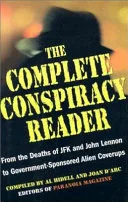
The Complete Conspiracy Reader
 73
73

The Complete Conspiracy Reader
The "Complete Conspiracy Reader" presents a formidable array of texts, effectively mapping the terrain of hidden histories and secret explanations. Its strength lies in the sheer breadth of its compilation, offering primary source material that is often difficult to access. A particular standout is the inclusion of early 20th-century pamphlets detailing anxieties about global finance, which feel eerily relevant. However, the work’s primary limitation is its lack of critical commentary or editorial framing. It largely allows the texts to speak for themselves, which, while preserving the raw nature of the material, leaves the reader without guidance in discerning fact from fiction or understanding the evolution of these ideas. The section on alleged UFO cover-ups, while historically significant, could have benefited from contextualization regarding the post-WWII era's fascination with the unknown. Ultimately, it is an invaluable, if uncurated, archive for the dedicated researcher.
📝 Description
73
This compilation gathers texts on conspiracy theories, spanning from early pamphlets to modern analyses.
This anthology collects various writings on conspiracy theories, presenting a wide range of narratives often found outside common discourse. It does not promote a single viewpoint but instead showcases a spectrum of ideas and historical accounts concerning hidden influences and alternative explanations for world events. The collection spans different time periods, implicitly charting the development of conspiratorial thought. Early pamphlets and manifestos appear alongside recent analyses, allowing readers to see changes in both the subjects discussed and the methods of argument. The book notes how events like the French Revolution and anxieties during the Cold War provided fertile ground for these narratives.
The anthology touches on recurring themes like secret societies, the hidden aims of powerful groups, and the concept of a manipulated public. It addresses ideas such as 'false flags,' 'deep states,' and the perceived control by unseen forces. The work also looks at the language used to build these narratives, including appeals to secret knowledge and the rejection of official accounts. This volume is for scholars of sociology, history, and cultural studies, as well as those interested in belief psychology, information spread, and the social effects of widespread skepticism. It targets the serious investigator rather than the casual sensationalist.
Within the study of secret societies and Freemasonry, this book serves as a compilation of texts that explore the underlying structures and narratives of conspiracy theories. It examines how ideas of hidden influences and alternative explanations for world events have developed over time. The focus on secret societies, perceived control by unseen entities, and appeals to hidden knowledge places it within traditions that analyze clandestine organizations and their supposed roles in shaping history.
💡 Why Read This Book?
• Understand the historical roots of popular conspiracy narratives, such as those surrounding the assassination of Archduke Franz Ferdinand, by examining the primary texts that shaped early 20th-century discourse on hidden powers. • Gain insight into the rhetorical strategies employed in conspiracy literature, including the use of coded language and the interpretation of seemingly mundane events as evidence of clandestine operations. • Explore the concept of 'false flag' operations as presented in the book, by analyzing specific historical instances discussed to comprehend how state-sponsored deception is theorized within these frameworks.
⭐ Reader Reviews
Honest opinions from readers who have explored this book.
❓ Frequently Asked Questions
What historical periods does "The Complete Conspiracy Reader" cover?
The anthology implicitly spans several centuries, featuring materials that touch upon events from the Enlightenment era, through the anxieties of the early 20th century and the Cold War, up to texts reflecting more recent concerns.
Does the book present evidence for or against conspiracy theories?
The "Complete Conspiracy Reader" primarily functions as an anthology of texts related to conspiracy theories. It presents various narratives and historical accounts without explicitly endorsing or refuting them, allowing readers to draw their own conclusions.
Who is the intended audience for this book?
The book is intended for scholars, researchers, and serious students of sociology, history, cultural studies, and the psychology of belief systems. It is for those who wish to examine the literature of conspiracy theories critically.
What kind of sources are included in the reader?
The reader includes a diverse range of sources, such as manifestos, pamphlets, historical documents, and analyses that have contributed to the discourse on conspiracy theories throughout different eras.
Is "The Complete Conspiracy Reader" an academic work or a collection of theories?
It is best described as a compilation of texts *about* conspiracy theories and related historical narratives. While it serves academic research, it is not a singular academic thesis but rather a sourcebook of primary and secondary materials.
Can I find information on specific conspiracy theories like QAnon in this book?
Given its original publication date of 2003, the book predates the widespread emergence of QAnon. However, it provides foundational context for understanding the broader patterns and historical precursors of such contemporary theories.
🔮 Key Themes & Symbolism
The Architecture of Secrecy
This theme examines how narratives of conspiracy are constructed, focusing on the recurring elements that form their underlying structure. It looks at the consistent portrayal of hidden actors, clandestine meetings, and the manipulation of information to maintain control. The reader looks at how these narratives often posit a world governed by secret pacts and unseen hands, providing examples from various historical periods and concerning different alleged cabals, from early critiques of Freemasonry to later theories about global financial elites.
Historical Catalysts for Suspicion
The anthology highlights specific historical events and periods that have served as fertile ground for the proliferation of conspiracy theories. It implicitly or explicitly references moments of societal upheaval, political instability, or rapid technological change, such as the aftermath of the French Revolution or the Cold War era. These periods are presented as times when official narratives are questioned, and alternative explanations, often involving secret manipulation, gain traction among segments of the population.
Dissemination and Rhetoric
A significant aspect explored is the method by which conspiracy theories spread and the rhetorical devices employed to persuade adherents. The reader includes examples of pamphlets, manifestos, and early writings that demonstrate appeals to hidden knowledge, selective interpretation of evidence, and the construction of an 'us versus them' mentality. It showcases how these theories often rely on a logic that dismisses contradictory evidence as part of the conspiracy itself.
The 'Deep State' Archetype
The collection traces the evolution of the concept of a 'deep state' or a shadow government that operates independently of, or in opposition to, elected authorities. Early texts might refer to monarchical conspiracies or secret societies influencing policy, while later materials address more modern interpretations involving intelligence agencies and bureaucratic power structures. This theme explores the enduring archetype of an unelected, hidden authority shaping world events.
💬 Memorable Quotes
Direct passages from the work, attributed to the author.
“The official account is merely the first layer, obscuring deeper truths for those with the eyes to see.”
— This interpretation captures a core tenet of conspiratorial thinking: the belief that mainstream explanations are deliberately misleading, designed to hide a more complex and often sinister reality accessible only to a select few.
“Documentation can be fabricated, witnesses silenced, but the pattern remains for the discerning mind.”
— This highlights the reliance on pattern recognition and intuition within conspiracy circles, often prioritizing perceived connections over verifiable evidence, and viewing contradictory information as further proof of deception.
“To question is not paranoia; it is the duty of an informed citizen.”
— This statement reframes skepticism as a civic virtue, justifying the act of questioning official narratives and encouraging a critical, if not suspicious, approach to information presented by authorities.
💡 Key Ideas
Editorial paraphrase of the work's core concepts — not direct quotes.
Every major event carries the signature of unseen hands guiding its course.
This quote reflects the idea of pervasive control, suggesting that no significant occurrence is accidental or solely the result of natural or political forces. Instead, it implies a hidden agency orchestrating outcomes.
Societies are built on foundations of secrets, and power resides with those who guard them.
This paraphrase points to the belief that power structures are inherently linked to the control of hidden knowledge and that those who possess or protect secrets are the true wielders of influence.
🌙 Esoteric Significance
Tradition
While not strictly adhering to a single esoteric lineage, "The Complete Conspiracy Reader" draws heavily on traditions that emphasize hidden knowledge and secret histories, such as Gnosticism's concept of a demiurge or a hidden creator, and Hermeticism's focus on 'as above, so below' applied to societal structures. It speaks to esoteric thought that views manifest reality as a veil over deeper, often concealed, truths and power dynamics.
Symbolism
The recurring symbol of the 'all-seeing eye,' often associated with Freemasonry and divine providence, frequently appears in texts concerning secret societies and hidden governance, representing surveillance and omnipresent knowledge. Another motif is the 'serpent,' symbolizing hidden wisdom or a deceptive influence, depending on the context, often linked to ancient myths of creation and manipulation. The concept of the 'labyrinth' also emerges, representing the complex, hidden pathways of power and information that adherents must navigate.
Modern Relevance
Contemporary thinkers exploring the sociology of belief, digital culture, and the impact of misinformation continue to draw upon the historical patterns documented in this reader. Movements focused on alternative media, governmental transparency (or lack thereof), and critiques of global power structures often reference the historical precedents and archetypes found within its pages. It informs discussions on how narratives of control and hidden agency persist and evolve in the digital age.
👥 Who Should Read This Book
• Students of sociology and cultural studies seeking primary source material on the historical development and thematic evolution of conspiracy theories. • Researchers interested in the psychology of belief, examining how alternative narratives are constructed and disseminated across different eras. • Individuals curious about the historical context of secret societies and alleged hidden influences on world events, from early manifestos to Cold War anxieties.
📜 Historical Context
Published in 2003, "The Complete Conspiracy Reader" emerged during a period of heightened global uncertainty, marked by the post-9/11 security landscape and the burgeoning digital age. This era saw a significant increase in the accessibility and dissemination of alternative narratives, partly fueled by the internet. The collection implicitly engages with intellectual currents stemming from the Enlightenment's critique of power, the anxieties of the Cold War regarding covert operations, and the counter-cultural movements of the late 20th century. It stands apart from purely academic analyses by foregrounding primary source materials. While not directly engaging with a specific contemporary author in its presentation, its very existence as an anthology speaks to a broader cultural fascination with theories that challenged established narratives, a fascination mirrored in works by scholars like Richard Hofstadter, whose "The Paranoid Style in American Politics" (1964) offered an earlier critical examination of similar themes.
📔 Journal Prompts
The concept of the 'all-seeing eye' as a symbol of hidden governance.
Recurring patterns in the dissemination of clandestine information across historical periods.
The 'deep state' archetype as a narrative construct.
Analysis of the 'false flag' operation as a rhetorical device.
The symbolic meaning of the 'serpent' in conspiracy narratives.
🗂️ Glossary
False Flag Operation
An act, typically covert, committed with the intent of implicating a party that did not actually commit it. In conspiracy theory, these are often attributed to governments or secret groups to justify actions or sow discord.
Deep State
A clandestine network of power within a state, often involving intelligence agencies, military factions, or entrenched bureaucrats, alleged to operate independently of democratically elected leadership.
Cabal
A secret political clique or faction, typically composed of a small group of people who are believed to be plotting in secret, often for nefarious purposes.
Manifesto
A public declaration of policy and aims, especially one issued before an election by a political party or candidate. In this context, often refers to foundational documents of secret societies or movements.
Shadow Government
A group of people who secretly attempt to influence or control government policy and actions from behind the scenes, distinct from the visible, elected authorities.
Esoteric Knowledge
Information or understanding that is restricted to a small group of people with a specialized background or interest, often implying hidden or secret wisdom.
Anachronism
A thing belonging or appropriate to a period other than that in which it exists. In conspiracy theories, often refers to the misapplication of historical events or symbols to modern alleged plots.