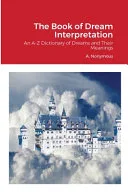
The Book of Dream Interpretation
 73
73

The Book of Dream Interpretation
A. Nonymous's The Book of Dream Interpretation arrives in a crowded field, yet it manages to carve out a distinct space by prioritizing a methodical, almost academic, approach to a subject often mired in New Age vagueness. The author’s insistence on grounding interpretation in the dreamer's personal context, rather than relying solely on universal symbols, is a notable strength. The section discussing the 'Shadow Figure' as a representation of unacknowledged aspects of the self is particularly well-articulated, offering a clear pathway for introspection. However, the book occasionally falters in its accessibility; some of the theoretical discussions, while accurate, could benefit from more illustrative examples beyond the generalized. The lack of a robust glossary for some of the more nuanced terms, like 'anima projection,' might leave newer readers searching for external resources. Despite these minor drawbacks, the work offers a valuable, structured perspective for serious dream explorers.
📝 Description
73
Published in February 2022, The Book of Dream Interpretation offers a systematic method for understanding dream symbols.
This book moves past simple dream dictionaries to examine the psychological and archetypal aspects of dreams. It establishes a way to analyze dream images as meaningful messages from the unconscious, not random events. The work details concepts like personal symbolism, archetypal images, and the dream narrative. It provides methods for spotting recurring motifs and grasping their possible significance in the dreamer's life. The book stresses that dream interpretation is subjective, with the strongest meanings arising from individual experiences and psychological makeup.
It is written for people interested in personal growth, psychological study, and esoteric subjects. Readers seeking to unlock the personal meaning of their dreams will find it useful. Therapists looking for theoretical support for dream analysis and students of symbolism and mythology will also find value. No prior knowledge is needed, only a willingness to examine one's inner world.
Although published in 2022, the book's ideas connect with a long history of dream study. Its techniques recall the psychoanalytic work of Freud and Jung, especially Jung's focus on archetypes and the collective unconscious. The book places itself within the current interest in Jungian and depth psychology. It provides modern readings of ancient symbolic systems, linking them to contemporary understanding of the unconscious mind.
💡 Why Read This Book?
• Gain a structured method for analyzing your personal dream symbols, moving beyond generic dictionary meanings, as outlined in the 'Personal Symbolism' chapter. • Understand the concept of the 'Shadow Figure' and how to integrate these unacknowledged aspects of yourself, a key theme explored in the book. • Develop a more nuanced appreciation for the archetypal dimensions of dreams, informed by the tradition of Jungian psychology, evident in the book's theoretical framework.
⭐ Reader Reviews
Honest opinions from readers who have explored this book.
❓ Frequently Asked Questions
When was The Book of Dream Interpretation first published?
The Book of Dream Interpretation was first published on February 14, 2022, positioning it as a recent contribution to the field of dream analysis and esoteric studies.
Does the book rely on traditional dream dictionaries?
No, the book moves beyond simplistic dream dictionaries, emphasizing the personal and archetypal significance of dream imagery within the individual's life context.
What is the 'Shadow Figure' concept discussed in the book?
The 'Shadow Figure' in the book represents unacknowledged or repressed aspects of the dreamer's personality, which often appear in dreams as figures or scenarios the dreamer finds unsettling.
Is prior knowledge of psychology required to read this book?
While beneficial, prior expertise is not strictly required. The book is accessible to individuals interested in personal growth and psychological exploration, offering a framework for understanding dreams.
What is the author's approach to dream interpretation?
The author advocates for a systematic approach that integrates personal context with an understanding of archetypal symbolism, viewing dreams as meaningful communications from the unconscious.
What historical figures or movements influence the book's approach?
The book's methods are influenced by the psychoanalytic work of figures like Carl Jung, particularly his theories on archetypes and the collective unconscious.
🔮 Key Themes & Symbolism
Personal Symbolism
This theme explores how dream imagery is deeply personal, deriving meaning from the individual's unique life experiences, memories, and emotional landscape. The book argues against a one-size-fits-all approach to dream symbols, instead guiding the reader to uncover the specific significance of recurring motifs or characters within their own psyche. It emphasizes that a symbol's power lies not in its universal definition but in its particular resonance with the dreamer, encouraging diligent self-reflection and journaling to map these personal connections.
Archetypal Imagery
Drawing implicitly from Jungian psychology, this theme addresses the presence of universal patterns and figures within dreams. These archetypes, such as the Hero, the Wise Old Man, or the Great Mother, represent fundamental aspects of the human psyche shared across cultures and time. The book helps readers identify these powerful figures and understand their potential messages, offering a bridge between the personal unconscious and the collective unconscious, thereby enriching the interpretation of dream narratives.
The Dream Narrative
This section focuses on the structure and flow of dreams, treating them as stories with their own internal logic and progression. The book analyzes how dream plots, settings, and character interactions contribute to the overall message. It encourages readers to consider the dream's beginning, middle, and end, as well as the emotional tone of the narrative, to gain a holistic understanding. Recognizing the dream as a dynamic process, rather than a static collection of images, is central to unlocking its deeper meaning.
Shadow Integration
A crucial concept within the work is the exploration of the 'Shadow Figure.' This theme looks at the parts of ourselves that we deny, repress, or are unaware of. The book posits that these shadow aspects often manifest in dreams through antagonistic characters, challenging situations, or unsettling imagery. Understanding and acknowledging the shadow is presented not as a path to perfection, but as a vital step toward wholeness and psychological integration, enabling a more authentic engagement with oneself and the world.
💬 Memorable Quotes
Direct passages from the work, attributed to the author.
“The dream is not a message to be decoded, but a conversation to be entered.”
— This highlights the active role the dreamer must take in understanding their dreams. It suggests that dreams are dynamic and require engagement, rather than passive deciphering, implying a process of dialogue with the unconscious.
“Symbols gain their potency from the dreamer's lived experience.”
— This emphasizes the subjective nature of dream interpretation, moving away from rigid, universal meanings. It underscores that the most profound understanding of a symbol comes from its personal connection to the individual's life history and emotions.
“The Shadow Figure often appears as an antagonist, yet holds vital undiscovered potential.”
— This captures the paradox of the shadow self. It is often perceived negatively, but the book suggests that confronting and understanding these denied aspects can lead to significant personal growth and untapped capabilities.
“Archetypes are the primal patterns through which the unconscious communicates.”
— This statement points to the universal, instinctual nature of archetypal imagery. It suggests that these fundamental patterns are the language the deeper mind uses to convey its messages, connecting individual experience to broader human psychology.
“Treat the dream narrative as a drama unfolding within the psyche.”
— This encourages a holistic view of the dream, focusing on its plot, characters, and emotional arc. It frames the dream as a dynamic process, a psychological play that offers insights into the internal world of the dreamer.
🌙 Esoteric Significance
Tradition
This work aligns with the broader esoteric tradition of depth psychology, particularly its Jungian and post-Jungian branches. While not strictly occult, it operates within a framework that acknowledges non-material realities of the psyche, including archetypes and the collective unconscious. It departs from purely materialist psychology by treating dreams as meaningful symbolic communications, echoing Hermetic principles of correspondence and the idea that the microcosm (individual psyche) reflects the macrocosm (universal consciousness).
Symbolism
Key symbols explored include the 'Shadow Figure,' representing repressed aspects of the self, often appearing as an antagonist or unsettling presence. The book also looks at archetypal figures (e.g., the Wise Old Man, the Anima/Animus) which function as universal psychic patterns. Another motif is the 'Dream Landscape,' symbolizing the dreamer's internal world and current psychological state, with specific locations often carrying distinct symbolic weight.
Modern Relevance
Contemporary thinkers in transpersonal psychology and somatic experiencing may find resonance with the book's emphasis on the psyche's symbolic language and its connection to emotional well-being. Practitioners of various modern esoteric paths, including those influenced by Jungian archetypes or depth psychology, utilize its principles for personal development and understanding the unconscious. Its structured approach offers a valuable resource for those seeking to integrate dream work into mindfulness or therapeutic practices.
👥 Who Should Read This Book
• Individuals seeking to understand the symbolic language of their dreams for personal growth, moving beyond basic dream dictionaries. • Students of psychology and comparative mythology interested in the theoretical underpinnings of dream analysis and archetypal symbolism. • Therapists and counselors looking for frameworks to deepen their work with clients' dream material.
📜 Historical Context
Published in 2022, The Book of Dream Interpretation engages with a rich, often contentious, history of dream analysis. Its methodical approach implicitly draws from the psychoanalytic revolution initiated by Sigmund Freud in the late 19th and early 20th centuries, and significantly from Carl Jung's subsequent development of analytical psychology. Jung's theories on archetypes and the collective unconscious, detailed in works like 'Man and His Symbols' (1964), provide a conceptual lineage for the book's exploration of universal dream motifs. The work emerges during a period of renewed interest in depth psychology and esoteric traditions, a trend that gained momentum following the counter-cultural shifts of the 1960s. It implicitly responds to, and offers an alternative to, both purely mechanistic interpretations of dreams and overly simplistic pop psychology guides. While no direct contemporary controversies are cited, the book's stance aligns with a broader academic and therapeutic movement seeking to reintegrate symbolic understanding into psychological practice.
📔 Journal Prompts
Reflect on the 'Shadow Figure' encountered in a recent dream.
Analyze the 'Dream Landscape' from your most vivid dream.
Identify personal symbols and their connection to your waking life.
Consider the archetypal patterns present in your recurring dreams.
Explore the narrative structure of a dream you wish to understand better.
🗂️ Glossary
Archetype
Universal, archaic patterns and images that derive from the collective unconscious and are the psychic counterpart of a biological instinct. They are fundamental structures of the human psyche.
Collective Unconscious
A concept introduced by Carl Jung, referring to a layer of the unconscious mind that is shared by all humanity, containing inherited archetypes and instincts.
Dream Narrative
The plot or story of a dream, including its sequence of events, characters, settings, and emotional arc, which together convey symbolic meaning.
Personal Symbolism
Symbols within a dream that derive their primary meaning from the individual dreamer's unique life experiences, associations, and psychological context.
Shadow Figure
An archetype representing the repressed or unacknowledged aspects of the personality, often appearing in dreams as a dark or antagonistic character.
Anima/Animus
The unconscious feminine aspect in men (Anima) and the unconscious masculine aspect in women (Animus), representing a bridge to the collective unconscious.
Psychic Integration
The process of bringing conscious and unconscious aspects of the personality into a more harmonious and unified whole.