The Hobbit
 81
81

The Hobbit
The Hobbit's enduring appeal lies not in complex philosophical pronouncements, but in its remarkably clear depiction of an archetypal quest. Bilbo's transformation from a contented homebody to a resourceful adventurer is rendered with a deceptive simplicity that belies its psychological depth. The encounter with Gollum in the goblin caves, where Bilbo finds the Ring, is a pivotal moment, illustrating a crucial test of wits and inner resourcefulness. A limitation, however, is that the narrative's straightforwardness can, for some mature readers, feel somewhat unadorned compared to the dense allegorical layers found in later fantasy works. Nevertheless, the book successfully captures the essence of embarking on a path of self-discovery, even when the destination is a dragon's hoard. It remains a foundational text for understanding the modern fantasy genre and its mythic underpinnings.
📝 Description
81
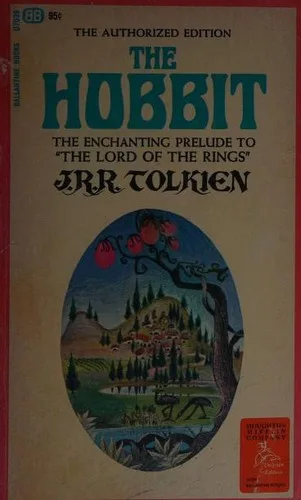
J.R.R. Tolkien published "The Hobbit" in 1937, a tale of a reluctant adventurer.
Bilbo Baggins, a hobbit content with his quiet life, is drawn into a quest by the wizard Gandalf and thirteen dwarves. Their goal is to reclaim the Lonely Mountain and its riches from the dragon Smaug. Though often seen as a children's story, its structure and Bilbo's transformation suggest deeper interpretations.
The narrative centers on Bilbo's growth from a home-loving creature to someone capable of facing great peril. He encounters dangers that test his courage and force him to rely on wit as much as bravery. The story also examines the corrupting influence of greed, particularly through the dragon and the dwarves' obsession with their lost treasure. Its archetypal elements have led many to see it as a modern myth.
Published before widespread academic study of mythology, The Hobbit tapped into archetypal patterns familiar from older myths. Its depiction of a hero's journey, where an ordinary individual undergoes trials to achieve a goal and gain wisdom, echoes ancient narrative traditions. The story's engagement with concepts of treasure, dragons, and magical intervention aligns with motifs found in folklore and early fantasy, suggesting an exploration of the collective unconscious through a modern fable.
💡 Why Read This Book?
• You will learn about the structure of the 'ordinary world' before a hero's departure, as depicted in Bilbo's Shire home, providing a tangible model for identifying personal comfort zones. • You will feel the impact of confronting primal archetypes, such as the dragon Smaug, understanding how ancient symbols represent internal struggles with greed and possessiveness. • You will gain insight into the concept of a 'call to adventure,' exemplified by Gandalf's arrival and the dwarves' proposition, to recognize external catalysts for personal growth.
⭐ Reader Reviews
Honest opinions from readers who have explored this book.
❓ Frequently Asked Questions
When was J.R.R. Tolkien's The Hobbit first published?
The Hobbit by J.R.R. Tolkien was first published in 1937, establishing a foundational narrative for modern fantasy literature.
What is the main goal of the dwarves in The Hobbit?
The primary objective of Thorin Oakenshield and his company of thirteen dwarves is to reclaim their ancestral home, the Lonely Mountain, and its vast treasure from the dragon Smaug.
Who is the wizard who instigates Bilbo's adventure?
The wizard Gandalf is the catalyst for Bilbo Baggins's adventure, persuading him to join the dwarves on their quest to the Lonely Mountain.
What magical item does Bilbo find that proves significant?
Bilbo Baggins discovers a magical ring in the goblin tunnels after his encounter with Gollum; this ring grants invisibility.
What is the name of the dragon that guards the treasure?
The fearsome dragon guarding the treasure within the Lonely Mountain is named Smaug.
What is the name of Bilbo's home?
Bilbo Baggins resides in a comfortable hobbit-hole in the Shire, a peaceful region inhabited by hobbits.
🔮 Key Themes & Symbolism
The Unlikely Hero's Awakening
The narrative centers on Bilbo Baggins, a hobbit who embodies the 'ordinary world' before transformation. His initial reluctance and eventual courage in facing peril, such as the encounter with Gollum and the finding of the One Ring, illustrate the potential for heroism residing in the seemingly unremarkable. This theme aligns with Gnostic ideas of hidden divine sparks within the mundane, waiting to be awakened through trial and self-discovery.
The Corrupting Influence of Greed
The dragon Smaug and the dwarves' obsession with the hoard within the Lonely Mountain serve as potent symbols of avarice. The story depicts how the pursuit of material wealth can lead to isolation, conflict, and moral compromise. This speaks to Hermetic principles that caution against attachment to transient material possessions, suggesting that true wealth lies in inner development and wisdom.
The Nature of Courage and Providence
Bilbo's journey is marked by a progression of courage, from simple cleverness in escaping goblins to a more profound moral fortitude. The narrative suggests that events unfold with a sense of guiding hand or providence, even if not explicitly divine. This echoes Theosophical notions of a guiding cosmic plan and the unfolding of karma, where challenges are opportunities for spiritual growth and the realization of one's true potential.
The Threshold and Transformation
The journey beyond the Shire represents a crossing of a significant threshold, moving from a state of comfortable ignorance to one of experiential knowledge. The various encounters—with trolls, elves, goblins, and ultimately Smaug—serve as rites of passage. This aligns with alchemical symbolism where dissolution and trials are necessary precursors to the creation of the philosopher's stone, symbolizing personal transmutation.
💬 Memorable Quotes
Direct passages from the work, attributed to the author.
“It's a dangerous business, Frodo, going out your door.”
— This sentiment, spoken by Bilbo to Frodo in a later work but embodying the spirit of his own journey, highlights the inherent risks and uncertainties of leaving the familiar and beginning any significant undertaking.
“In a hole in the ground there lived a hobbit.”
— This opening line immediately grounds the reader in Bilbo's comfortable, earth-bound existence, contrasting sharply with the adventure that is about to unfold and establishing the 'ordinary world' of the hero's journey.
“There is more in you of good than you know, child of the kindly West.”
— This remark, made by Gandalf to Bilbo, suggests an inherent potential and goodness within the hobbit that he himself is not yet aware of, pointing to the discovery of inner strength through adversity.
“If I say it, it is true. If I say it was, it was.”
— This boast by the dragon Smaug exemplifies the absolute, self-proclaimed authority of immense power and possessiveness, representing the ultimate obstacle driven by ego and material fixation.
“Of course there is a special reason... and the reason is that I am not going to be left behind.”
— Bilbo's assertion of his desire to join the quest, despite his initial fear and lack of martial prowess, signifies the dawning of his own agency and the courage to participate actively in his own destiny.
🌙 Esoteric Significance
Tradition
While not explicitly aligned with a single esoteric school, The Hobbit’s narrative structure and archetypal characters strongly echo principles found in Jungian psychology and comparative mythology, fields that have themselves been deeply influenced by esoteric traditions. The journey mirrors the individuation process, a core concept in Jungian thought, where the ego confronts the shadow and integrates unconscious elements. Its allegorical depth invites readings consistent with Gnostic narratives of a soul journeying through a material world towards spiritual awakening.
Symbolism
The dragon Smaug represents the primal forces of avarice and destructive power, a classic symbol of the hoard that corrupts and isolates. The One Ring, found by Bilbo, functions as a powerful symbol of hidden power, temptation, and the burden of responsibility, echoing alchemical concepts of transformation through a potent, often dangerous, catalyst. The Lonely Mountain itself symbolizes a lost inheritance and a spiritual goal, the attainment of which requires overcoming internal and external obstacles.
Modern Relevance
Contemporary practitioners of Jungian analysis and mythographers continue to draw upon The Hobbit as a prime example of the hero's journey. Its themes of courage, greed, and the discovery of inner strength remain relevant in self-help and personal development circles, often framed within archetypal psychology. Modern fantasy authors frequently cite Tolkien's work as a foundational influence on their own myth-making and world-building endeavors.
👥 Who Should Read This Book
• Students of comparative mythology and archetypal psychology will find a clear, accessible example of the hero's journey, as conceptualized by figures like Joseph Campbell. • Readers interested in the roots of modern fantasy literature will gain an understanding of the foundational narrative that shaped the genre, first published in 1937. • Individuals exploring themes of personal growth and courage will find Bilbo Baggins's transformation from a reluctant hobbit to a resourceful adventurer a relatable and inspiring narrative arc.
📜 Historical Context
The Hobbit, published in 1937, emerged from a rich period of British literary output, influenced by folklore, mythology, and emerging fantasy traditions. J.R.R. Tolkien, a philologist, drew heavily on his academic expertise in ancient languages and myths, particularly Norse sagas and Anglo-Saxon poetry. This era saw contemporaries like C.S. Lewis, who would later collaborate with Tolkien in the Inklings literary group, exploring similar thematic ground in works like 'The Pilgrim's Regress'. While The Hobbit was not met with immediate academic scrutiny as a 'mythic' text, its popular reception was warm, though some critics noted its simplicity compared to more adult fare. Its publication predated the widespread academic formalization of comparative mythology and the hero's journey archetype, which Joseph Campbell would later synthesize in works like 'The Hero with a Thousand Faces' (1949). The book's success laid the groundwork for Tolkien's main work, The Lord of the Rings, which would later cement its place in literary history.
📔 Journal Prompts
Bilbo's initial comfort in his hobbit-hole, the Shire.
Gandalf's unexpected arrival and the proposition for adventure.
The discovery of the One Ring during the encounter with Gollum.
Smaug's greed and its destructive consequences on the Lonely Mountain.
Thorin Oakenshield's possessiveness over the treasure.
🗂️ Glossary
Hobbit
A fictional race of small, human-like beings created by J.R.R. Tolkien, known for their love of peace, quiet, and good food, and for their surprisingly resilient nature.
The Shire
The peaceful, idyllic homeland of the Hobbits, characterized by rolling hills, farms, and a generally comfortable, agrarian lifestyle.
Gandalf
A wise and powerful wizard, a mentor figure who guides and assists Bilbo and the dwarves on their quest, though often from a distance.
Dwarves
A race of stout, bearded beings, skilled miners and craftsmen, with a strong sense of honor and a deep love for treasure and their ancestral homes.
Lonely Mountain
The ancestral home of Thorin Oakenshield's dwarves, which was conquered by the dragon Smaug, becoming the primary objective of the quest.
Smaug
A fearsome and avaricious dragon who stole the treasure of the dwarves and took up residence in the Lonely Mountain.
The One Ring
A magical artifact of immense power, created by Sauron, which grants invisibility to its wearer and has a corrupting influence; discovered by Bilbo.
🔮 Readers Also Liked
Browse all →








More by J.R.R. Tolkien
All books →





More Free Occult Philosophy Books
View all →