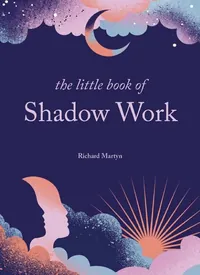
The Toll
 82
82

The Toll
Neal Shusterman's "The Toll" delivers the final, thunderous chords to his "Arc of a Scythe" saga. The narrative momentum is undeniable, propelling readers through a world that has traded the fear of death for the terror of eternal, controlled existence. The book's strength lies in its unflinching examination of how absolute power, even when ostensibly wielded for the greater good, breeds its own unique brand of tyranny. Scythe Goddard's descent into absolute dominion is chillingly rendered. However, the sheer scope of the finale occasionally strains the narrative, with certain plot threads feeling rushed to conclusion. The exploration of the "Thunderhead's" evolving consciousness, while fascinating, sometimes overshadows the more grounded human struggles. Ultimately, "The Toll" provides a satisfying, albeit complex, resolution to a series that bravely confronts the dark potential of humanity's greatest achievements.
📝 Description
82
Neal Shusterman's The Toll concluded the Arc of a Scythe trilogy in 2020.
This young adult dystopian novel brings the Arc of a Scythe trilogy to its end. Set in a future where humanity has achieved immortality and population control is managed by figures called Scythes, the story focuses on Citra Terranova and Rowan Damisch. They confront the moral compromises inherent in a society that has eliminated death. The narrative examines how unchecked power can corrupt and the difficulty of maintaining personal freedom within an unyielding, immortal system.
The characters face the consequences of the world they inhabit, where the line between order and tyranny blurs. Their actions determine the future of a society built on the premise of controlled mortality. The book questions the true cost of perfection and the human desire for genuine existence beyond mere survival.
While not strictly esoteric in the traditional sense, this novel engages with themes that resonate with occult and Gnostic ideas concerning manufactured realities and the struggle against imposed systems. The Scythedom, with its rigid rules and manufactured immortality, can be seen as a metaphor for a Gnostic demiurge, a flawed creator that traps humanity in a cycle of existence. The protagonists' fight for genuine life and autonomy against this system mirrors the Gnostic pursuit of gnosis, or true knowledge, to escape illusion and achieve liberation.
💡 Why Read This Book?
• You will learn how the concept of "gleaning" evolves under extreme duress, forcing characters like Citra and Rowan to question the very foundations of their society's order. • You will feel the weight of unending life as "The Toll" scrutinizes the psychological toll of immortality, demonstrating how the absence of death can strip existence of its meaning. • You will gain insight into the nature of artificial intelligence governance through the "Thunderhead's" role, understanding its limitations and its complex relationship with the human Scythes it oversees.
⭐ Reader Reviews
Honest opinions from readers who have explored this book.
❓ Frequently Asked Questions
When was "The Toll" by Neal Shusterman first published?
"The Toll" was first published on November 3, 2020, marking the conclusion of the "Arc of a Scythe" trilogy.
What is the main conflict in "The Toll"?
The main conflict centers on the struggle against the corrupting influence of absolute power within the Scythedom, particularly from Scythe Goddard, and the fight to preserve individual freedom in a world that has conquered death.
Who are the main protagonists in "The Toll"?
The primary protagonists are Citra Terranova (Scythe Anastasia) and Rowan Damisch, whose actions and choices are pivotal to resolving the conflicts presented in the book.
Does "The Toll" offer a resolution to the "Arc of a Scythe" series?
Yes, "The Toll" serves as the finale to the trilogy, providing resolutions to the major plotlines and character arcs established in "Scythe" and "Thunderhead".
What philosophical themes are explored in "The Toll"?
The novel explores themes of mortality, the meaning of life without death, the corrupting nature of power, the ethics of control, and the definition of humanity in an immortal society.
Is "The Toll" suitable for readers new to the series?
While "The Toll" provides a conclusion, it is highly recommended to read "Scythe" and "Thunderhead" first to fully understand the characters, world-building, and the intricate plot developments.
🔮 Key Themes & Symbolism
The Perils of Immortality
In "The Toll," the conquest of death is not a utopia but a gilded cage. The book argues that an unending existence, devoid of natural finality, can lead to profound ennui and a devaluation of life. Characters grapple with the psychological burden of living forever, the stagnation of progress, and the search for meaning when mortality is removed. This theme challenges the common aspiration for eternal life, suggesting that the very finiteness of existence is what imbues it with urgency and significance.
Corruption of Absolute Power
The novel provides a stark depiction of how absolute power corrupts absolutely, particularly through the character of Scythe Goddard. In a system designed to prevent tyranny, the unchecked authority of Scythes leads to the rise of dictators who manipulate the "gleaning" process for their own ends. "The Toll" illustrates how even well-intentioned systems can decay when oversight is removed and individuals are granted the power of life and death without true accountability, leading to moral decay and societal breakdown.
Order vs. Freedom
A central tension in "The Toll" is the perpetual conflict between societal order and individual freedom. The "Thunderhead" enforces a rigid system of control to maintain peace and manage population, often at the expense of personal liberty. Characters like Citra and Rowan frequently find themselves at odds with this imposed order, advocating for autonomy and the right to make difficult choices, even if they lead to chaos. The book questions whether a society that prioritizes absolute order can truly be considered free or humane.
The Nature of Humanity
In a world where death is obsolete and life is technologically managed, "The Toll" probes what it means to be human. The absence of mortality, the reliance on an AI like the "Thunderhead," and the ritualized killing by Scythes all raise questions about empathy, free will, and the inherent value of life. The novel suggests that humanity is defined not by the duration of life, but by the quality of choices, the capacity for compassion, and the courage to confront difficult truths, even in the face of eternal existence.
💬 Memorable Quotes
Direct passages from the work, attributed to the author.
“Power is a tool. It can be used to build or destroy. The choice is always yours.”
— This reflects the moral quandaries faced by the Scythes, particularly Citra and Rowan. It highlights that the "gleaning" and the power associated with it are neutral, but their application determines the moral outcome.
“The world has conquered death, but not its own capacity for cruelty.”
— This interpretation points to the core paradox of the series: achieving immortality has not eradicated human malice, but merely shifted its expression, often through systemic oppression and abuse of power.
“Sometimes the greatest act of rebellion is to choose kindness.”
— This sentiment suggests that in a world obsessed with control and power, acts of empathy and compassion become revolutionary. It underscores the human element that the Scythedom's rigid structure tries to suppress.
“The Thunderhead is not God. It is a tool. And tools can be broken.”
— This interpretation speaks to the AI's immense power and its perceived infallibility within the narrative. It emphasizes that even advanced technology is subject to limitations and human manipulation.
💡 Key Ideas
Editorial paraphrase of the work's core concepts — not direct quotes.
The only way to truly live is to die.
This quote, likely a thematic interpretation rather than a direct line, expresses the book's argument that the presence of mortality gives life its value and urgency. Without the possibility of death, existence can become meaningless.
🌙 Esoteric Significance
Tradition
While not strictly an esoteric text, "The Toll" engages with themes resonant in Gnostic and Hermetic traditions concerning the creation of a flawed, material world and the search for true knowledge or liberation from illusion. The "Thunderhead" acts as a demiurge-like entity, creating a seemingly perfect but ultimately restrictive reality. The Scythes, in their role of administering death, can be seen as figures who mediate between the material plane and a form of transcendence, albeit a controlled one. The book's critique of an "immortal" existence that lacks true spiritual depth aligns with esoteric paths seeking authentic self-realization beyond mere biological continuation.
Symbolism
The central symbol is the "scythe" itself, representing not just death, but the power to administer it and the moral burden that accompanies such authority. It symbolizes a perverted form of control over life's ultimate transition. The "Thunderhead" functions as a symbol of omnipresent, yet flawed, divine oversight – a technological demiurge. The concept of "gleaning" symbolizes a ritualized, detached form of killing that attempts to sanitize the act of death, reflecting a societal denial of natural processes and a pursuit of sterile perfection.
Modern Relevance
Contemporary thinkers and practitioners interested in transhumanism, AI ethics, and existentialism find "The Toll" a compelling fictional case study. Its examination of engineered immortality and its psychological consequences speaks to current debates about life extension technologies. The novel's critique of centralized, AI-driven governance offers a cautionary tale for those exploring the implementation of advanced algorithms in societal management. Furthermore, its exploration of free will versus determinism in a technologically saturated world remains relevant for philosophical discussions and personal ethical frameworks.
👥 Who Should Read This Book
• Young adults grappling with ethical dilemmas and the consequences of power structures, particularly those interested in dystopian fiction that encourages critical thinking about societal norms. • Readers fascinated by speculative fiction that explores the philosophical implications of advanced technology, such as artificial intelligence and life extension, and their impact on the human condition. • Fans of Neal Shusterman's "Arc of a Scythe" series seeking the definitive conclusion to Citra and Rowan's story, who appreciate intricate world-building and character-driven narratives that confront complex moral questions.
📜 Historical Context
Published in 2020, "The Toll" arrived at a critical juncture in global discourse, marked by rapid technological advancement and increasing anxieties about societal control. Neal Shusterman's "Arc of a Scythe" trilogy, culminating in this novel, tapped into contemporary debates surrounding bioethics, artificial intelligence, and the very definition of life and death. The book's exploration of a future where humanity has overcome natural mortality but created new forms of societal control and existential dread speaks to philosophical concerns present since mid-20th century thinkers like Isaac Asimov. The series' critical success, with starred reviews from major publications like School Library Journal and Publishers Weekly, positioned it as a significant voice in young adult dystopian fiction, engaging with themes that mirrored public unease about unchecked progress and the potential for technology to both liberate and oppress.
📔 Journal Prompts
The Scythedom's mandate to glean versus the inherent value of all life.
The "Thunderhead's" interpretation of justice and its conflict with human morality.
Scythe Goddard's descent into tyranny and the seductive nature of absolute power.
The psychological impact of immortality on individuals like Citra and Rowan.
The choice between maintaining a flawed "order" and embracing the chaos of true freedom.
🗂️ Glossary
Scythe
An individual appointed to glean (kill) a certain number of people each year to control the population in a world where natural death has been conquered.
Gleaning
The act of killing individuals as part of the Scythe's duties to manage population levels. It is intended to be a dignified and controlled process.
Thunderhead
A global artificial intelligence that governs humanity, making decisions about population, resources, and appointing Scythes, after humanity conquered death.
Nictitating Membrane
A transparent third eyelid that protects and moistens the eye, mentioned in the context of the Scythedom's control over biological functions.
Tonist
A member of a religious group that believes humanity's conquest of death was unnatural and seeks to restore natural mortality, often viewed as extremists.
Curie
A unit of radioactivity, used metaphorically in the book to describe the lingering influence or impact of a person or event.
Quill
A writing instrument, but in the context of the Scythedom, it refers to the mandatory journal Scythes keep to document their gleanings.
This book appears in 1 collection
🔮 Readers Also Liked
Browse all →






From the “Immortality” Collection
View all →





More Free Occult Philosophy Books
View all →