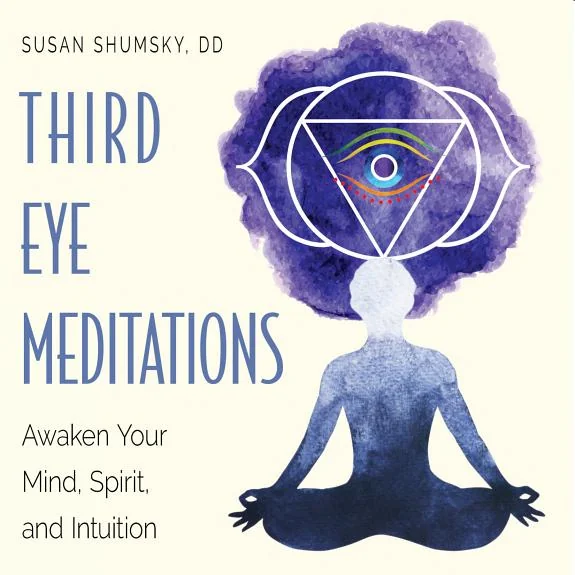
Third Eye Meditations
 72
72

Third Eye Meditations
Susan Shumsky's Third Eye Meditations arrives as a welcome antidote to the often overly complex or intimidating meditation guides saturating the market. Its strength lies in its direct, no-nonsense promise: profound results without prior skill. The concept of 'effortless' meditation, while potentially bordering on oversimplification, is genuinely empowering for novices. A particularly effective section details simple visualization techniques that, when applied, do yield a noticeable sense of calm and focus, validating Shumsky's core premise. However, the book's primary limitation is its brevity; while accessible, some readers might desire a deeper exploration of the underlying metaphysical principles or a more nuanced discussion of potential challenges encountered during practice. The promise of "joyful ways to enjoy profoundly uplifting results" is delivered, albeit with a light touch. Ultimately, for those seeking a quick, effective entry into meditative states, this work offers a valuable, if brief, pathway.
📝 Description
72
Susan Shumsky's Third Eye Meditations, published in 2020, simplifies deep meditation for immediate results.
Third Eye Meditations, by Susan Shumsky, presents a straightforward method for meditation, published in 2020. It bypasses the need for extensive training or prior experience, offering techniques designed for quick effectiveness. The book focuses on achieving relaxation, spiritual upliftment, and healing. Shumsky aims to make the benefits of deep meditation accessible to everyone, removing perceived barriers related to skill or dedicated practice. This approach is particularly helpful for those who find traditional meditation difficult or elusive. It caters to individuals seeking stress reduction and greater spiritual awareness but who may not have the time or patience for conventional methods. Busy people and beginners in spiritual exploration will appreciate its promise of immediate, positive outcomes from contemplative practice. Those interested in expanding consciousness and connecting with their inner selves will find its approach encouraging.
Emerging in the early 21st century, a period marked by widespread interest in mindfulness, Third Eye Meditations addresses a growing desire for simpler meditation techniques. It stands apart from more demanding paths, such as certain Zen Buddhist or yogic traditions that often require years of study. Shumsky's work responds to a need for accessible practices promising significant results with minimal prerequisites, contrasting with earlier, more structured approaches to inner development.
💡 Why Read This Book?
• Learn to access profound meditative states without prior training, a core promise of the book's approach to meditation, making it distinct from programs requiring extensive practice. • Discover specific, joyful techniques for spiritual upliftment and relaxation, as detailed in Shumsky's methods, offering an immediate sense of peace unavailable in more complex spiritual systems. • Experience the potential benefits of 'Third Eye' activation through accessible practices, a concept explored in Chapter 3, providing a unique avenue for enhancing intuition beyond generic mindfulness exercises.
⭐ Reader Reviews
Honest opinions from readers who have explored this book.
❓ Frequently Asked Questions
What is the main difference between Third Eye Meditations and other meditation books?
Third Eye Meditations emphasizes effortless, joyful techniques for immediate results, requiring no prior training or skill. This distinguishes it from many guides that demand extensive practice or adherence to specific, often complex, traditions.
Who is Susan Shumsky and what is her background?
Susan Shumsky is an author and spiritual teacher with decades of experience in spiritual development. She has studied with various masters and is known for her accessible teachings on divine reality, meditation, and spiritual enlightenment.
When was Third Eye Meditations first published?
Third Eye Meditations was first published in 2020, positioning it as a contemporary guide within the modern resurgence of interest in meditation and spiritual practices.
Does this book require any prior meditation experience?
No, the book is specifically designed for individuals with no previous training, skill, talent, or practice in meditation, making it highly accessible for beginners.
What does the 'Third Eye' refer to in this book?
In Third Eye Meditations, the 'Third Eye' refers to a spiritual center associated with intuition, inner vision, and higher consciousness, which the book provides methods to awaken or activate.
Can these meditation techniques help with relaxation and stress?
Yes, the book explicitly states that its techniques are designed to provide relaxing, healing, and spiritually uplifting experiences, aiming for positive effects that include stress reduction.
🔮 Key Themes & Symbolism
Effortless Meditation
The central theme is the accessibility of deep meditative states through methods that require no prior training or skill. Shumsky argues against the notion that profound spiritual experiences are reserved for the highly disciplined. Instead, she offers techniques designed to bypass mental resistance and cultivate joy in practice, making meditation an immediate and rewarding experience for anyone. This approach challenges the traditional view that mastery requires years of dedicated, often arduous, effort.
Third Eye Activation
This theme focuses on awakening the 'third eye,' a concept prevalent in many esoteric traditions, symbolizing intuition, inner sight, and higher perception. The book provides practical exercises aimed at stimulating this energetic center, encouraging practitioners to develop their innate spiritual awareness and access deeper levels of consciousness. It presents this activation not as a mystical feat but as an achievable outcome through guided practice.
Spiritual Upliftment and Healing
Third Eye Meditations promises not just relaxation but also profound spiritual growth and healing. The practices are framed as pathways to connect with one's higher self and divine reality, leading to a sense of well-being and transformation. The emphasis is on the positive, transformative effects that meditation can have on one's overall state of being, addressing both the mental and spiritual dimensions of the practitioner.
Joyful Practice
A significant aspect of Shumsky's methodology is the integration of joy and ease into the meditative process. She posits that the most effective spiritual practices are those that are approached with happiness and a sense of lightness, rather than obligation or struggle. This perspective aims to make the spiritual path more inviting and sustainable, fostering a positive relationship with one's inner work.
💬 Memorable Quotes
Direct passages from the work, attributed to the author.
“Meditation has become more popular than ever. Though millions practice it, many are not getting the relaxing, healing, spiritually uplifting experiences or positive effects they desire.”
— This observation highlights a perceived gap in contemporary meditation practices, suggesting that widespread engagement does not always equate to achieving the desired profound benefits, setting the stage for Shumsky's alternative approach.
“Third Eye Meditations is different. It offers effortless, joyful ways to enjoy profoundly uplifting results without previous training, skill, talent, or practice.”
— This statement expresses the book's unique selling proposition: immediate, significant spiritual and emotional benefits are achievable through simple, accessible methods, challenging the common assumption that deep meditative states require extensive preparation.
“Many are not getting the relaxing, healing, spiritually uplifting experiences or positive effects they desire.”
— This interpretation points to a widespread dissatisfaction with current meditation outcomes, underscoring the need for alternative techniques that can more reliably deliver the promised benefits of relaxation and spiritual growth.
💡 Key Ideas
Editorial paraphrase of the work's core concepts — not direct quotes.
The book offers effortless, joyful ways to enjoy profoundly uplifting results.
This paraphrased concept emphasizes the book's core promise: achieving significant positive outcomes in meditation through methods that are both easy to perform and inherently pleasant, aiming to democratize spiritual progress.
The book provides ways to enjoy profoundly uplifting results without previous training.
This paraphrased concept stresses the book's accessibility for absolute beginners, assuring readers that transformative meditative experiences are within reach regardless of their past experience or perceived innate abilities.
🌙 Esoteric Significance
Tradition
This work aligns with the broader New Age movement's synthesis of various spiritual traditions, particularly drawing from concepts found in Hinduism (chakras, kundalini) and Western esotericism (the 'third eye' as a concept in Theosophy and later New Age thought). It departs from rigid, lineage-bound practices by emphasizing immediate, experiential results accessible to a secularized audience, prioritizing psychological and energetic shifts over adherence to specific dogma or ritualistic frameworks.
Symbolism
The primary symbol is the 'third eye' itself, often depicted as being located on the forehead, representing intuition, inner vision, and psychic abilities. The book likely explores its activation through meditation, symbolizing the opening of higher consciousness and spiritual perception. Other potential symbols could include light, divine presence, or energetic centers (chakras), all used to guide the practitioner toward inner awareness and spiritual connection.
Modern Relevance
The principles in Third Eye Meditations resonate with contemporary trends in self-help, mindfulness apps, and accessible spirituality. Thinkers and practitioners focusing on rapid personal transformation, intuitive development, and practical spirituality often draw from similar accessible methodologies. Its emphasis on ease and immediate results aligns with the digital age's demand for quick solutions and experiences, making its concepts relevant to modern seekers who may lack the time or inclination for more traditional, lengthy spiritual disciplines.
👥 Who Should Read This Book
• Absolute beginners in meditation seeking an immediate and simple entry point into spiritual practice, who are intimidated by more complex or demanding techniques. • Individuals interested in developing intuition and inner vision, looking for practical exercises to activate their 'third eye' beyond theoretical discussions. • Busy professionals and students who desire the benefits of meditation—relaxation, stress reduction, spiritual upliftment—but have limited time for extensive practice.
📜 Historical Context
The early 21st century witnessed a significant boom in the popularity of mindfulness and meditation, driven by an increasing societal focus on well-being, stress reduction, and spiritual exploration. This era saw a proliferation of books, apps, and courses, many catering to a general audience. Third Eye Meditations, published in 2020, emerged within this context, responding to a growing demand for accessible spiritual tools. It contrasted with more traditional, often demanding, meditative disciplines that require years of devoted practice, such as those found in Tibetan Buddhism or certain yogic lineages. While contemporaries like Eckhart Tolle were popularizing presence and awareness, Shumsky's work focused specifically on direct, almost immediate, techniques for achieving heightened states of consciousness and third eye activation, bypassing the philosophical depth or intricate ritual often associated with older esoteric traditions.
📔 Journal Prompts
Reflect on the concept of 'effortless meditation' as presented in the book.
Explore the potential of your 'third eye' and how its activation might influence your daily life.
Identify one 'joyful way' to approach meditation suggested by Shumsky.
Consider the 'uplifting results' you hope to achieve through these practices.
Describe a moment where you experienced intuitive insight, relating it to the book's themes.
🗂️ Glossary
Third Eye
A spiritual concept, often located on the forehead, representing a center of intuition, inner vision, psychic abilities, and higher consciousness. Activation is believed to enhance perception beyond the ordinary senses.
Meditation
A practice where an individual uses a technique – such as mindfulness, or focusing the mind on a particular object, thought, or activity – to train attention and awareness, and achieve a mentally clear and emotionally calm and stable state.
Spiritual Upliftment
A state of enhanced emotional and spiritual well-being, characterized by feelings of joy, peace, connection to a higher power or universal consciousness, and a sense of purpose.
Intuition
The ability to understand something immediately, without the need for conscious reasoning. It is often described as a 'gut feeling' or inner knowing, closely linked to the concept of the third eye.
Consciousness
The state of being aware of and responsive to one's surroundings; a person's awareness or perception of something. In spiritual contexts, it can refer to higher states of awareness or divine connection.
Chakra
In Hindu and Tantric traditions, chakras are energy centers within the subtle body. While not explicitly detailed in the blurb, they are often associated with the energetic pathways related to the third eye and overall spiritual development.
Esoteric
Intended for or likely to be understood by only a small number of people with a specialized knowledge or interest. In this context, it refers to spiritual or mystical teachings.
This book appears in 1 collection
🔮 Readers Also Liked
Browse all →









From the “Visualization” Collection
View all →







More Free Occult Philosophy Books
View all →