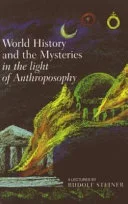
World History and the Mysteries in the Light of Anthroposophy
 73
73

World History and the Mysteries in the Light of Anthroposophy
Rudolf Steiner’s "World History and the Mysteries in the Light of Anthroposophy" offers a fascinating, if challenging, reinterpretation of historical development through an esoteric lens. Its primary strength lies in its ambitious scope, linking the rise and fall of civilizations to the evolution of human spiritual perception. Steiner’s detailed accounts of the ancient Orient and the Hellenic mysteries, in particular, provide vivid imagery and novel connections. However, the work’s reliance on Anthroposophical terminology and conceptual frameworks can present a significant barrier to entry for those unfamiliar with Steiner’s specific cosmology. A passage describing the development of memory, for instance, requires careful study to grasp its implications beyond mere psychological function, positing it as a key driver of historical epochs. While offering a unique perspective, readers must be prepared for a dense, non-conventional historical narrative that demands considerable intellectual engagement. It is a work best approached with an open mind and a willingness to engage with a highly specific spiritual science.
📝 Description
73
Rudolf Steiner delivered lectures on world history and its spiritual underpinnings between 1910 and 1912.
Rudolf Steiner's "World History and the Mysteries in the Light of Anthroposophy" presents a spiritual-scientific view of human evolution. Delivered as lectures between 1910 and 1912, the work examines historical periods and cultural developments not as random events, but as manifestations of spiritual forces and the growth of human consciousness. Steiner argues that humanity's understanding of itself and the cosmos has transformed through distinct epochs, with a significant focus on the role of ancient mystery traditions in shaping spiritual life.
The book details how human memory and spiritual perception have evolved, influencing historical trajectories. It traces this development from early human epochs up to the early 20th century. Steiner's approach seeks to move beyond purely materialistic or conventional historical accounts, offering a framework for understanding history through the lens of spiritual science. This perspective emphasizes the interconnectedness of historical events, cultural formations, and the inner spiritual development of humanity.
This work is situated within the tradition of Anthroposophy, a spiritual philosophy developed by Rudolf Steiner. Anthroposophy posits that human history and the development of consciousness can be understood through a spiritual scientific approach, viewing events as influenced by non-material forces and spiritual beings. Steiner's lectures here engage with the spiritual currents of his time, including Theosophy, while asserting a distinct path of spiritual knowledge. The book connects historical epochs to specific stages in human spiritual evolution and the development of faculties like memory and intuition.
💡 Why Read This Book?
• Gain an esoteric perspective on the evolution of human consciousness, understanding historical epochs not just as political or social shifts but as stages in spiritual development, as exemplified by Steiner's analysis of the ancient mysteries. • Explore the transformation of human memory as a central theme, learning how Steiner connects this faculty to humanity's changing self-understanding and perception of the world, particularly in his discussions of the transition from ancient Babylonia to Greece. • Discover the enduring influence of ancient mystery traditions on subsequent spiritual movements and contemporary life, as detailed in Steiner's tracing of their impact from antiquity through to the modern era.
⭐ Reader Reviews
Honest opinions from readers who have explored this book.
❓ Frequently Asked Questions
What is Anthroposophy and how does it relate to this book on world history?
Anthroposophy, a spiritual-scientific philosophy founded by Rudolf Steiner, views human history as a progression of consciousness. This book applies Anthroposophical principles to interpret world events and cultural developments, seeing them as manifestations of spiritual forces and evolving human capacities, rather than solely material or social phenomena.
How does Steiner discuss the role of ancient mysteries in world history?
Steiner posits that ancient mystery traditions, from Babylonia to Greece, were crucial spiritual training grounds that preserved essential knowledge for humanity's evolution. He argues their understanding of the cosmos and the human being profoundly influenced subsequent spiritual and cultural life, shaping consciousness across epochs.
What does Rudolf Steiner mean by the 'evolution of memory' in this context?
In this work, Steiner views the evolution of memory not just as a psychological faculty but as a fundamental force shaping human consciousness and history. He traces its transformation through different historical periods, linking its development to changes in how humans perceive themselves and the spiritual world.
Is this book a traditional history text?
No, "World History and the Mysteries in the Light of Anthroposophy" is not a conventional history book. It offers an esoteric interpretation of history based on Anthroposophical principles, focusing on spiritual forces and consciousness development rather than empirical historical data alone.
Who was Rudolf Steiner and why is his perspective on history significant?
Rudolf Steiner (1861-1925) was an Austrian philosopher and esotericist who founded Anthroposophy. His perspective on history is significant for offering a spiritual-scientific framework that seeks to understand the underlying cosmic and spiritual impulses guiding human evolution, distinct from materialistic viewpoints.
What connections does Steiner draw between ancient Greece and modern spiritual life?
Steiner explores how the spiritual understanding cultivated in ancient Greek mysteries, particularly concerning the individual's relationship to the cosmos and the divine, laid foundations that continue to influence modern spiritual thought. He suggests these ancient impulses can be reawakened through inner development.
🔮 Key Themes & Symbolism
Evolution of Consciousness
Steiner posits that human history is fundamentally a journey of evolving consciousness. He details how humanity's perception of itself and the cosmos has transformed through distinct epochs, moving from collective, instinctual awareness in ancient times to individual self-consciousness. This evolution is driven by spiritual impulses and the development of faculties like memory and spiritual perception, as explored in his analysis of the transition from the ancient Orient to Greece.
Ancient Mystery Traditions
The book places significant emphasis on the role of ancient mystery cults in preserving and transmitting spiritual knowledge vital for human development. Steiner views these mysteries not as primitive religions but as sophisticated spiritual training grounds that provided humanity with essential insights into cosmic laws and the nature of the soul. Their influence, he argues, extends far beyond their historical period, shaping subsequent cultural and spiritual expressions.
The Role of Memory
Steiner identifies the evolution of human memory as a critical factor in historical progression. He distinguishes between different forms of memory across epochs – from a more collective, dreamlike memory in early humanity to the individualized, intellectual memory of later periods. This development is directly linked to humanity's capacity for self-awareness, moral judgment, and the ability to engage with spiritual realities.
Spiritual Science and History
This work represents an application of Anthroposophy, Steiner's spiritual science, to the study of world history. It seeks to reveal the hidden spiritual causes and guiding forces behind historical events and cultural phenomena. By interpreting history through this lens, Steiner aims to provide a deeper understanding of humanity's spiritual destiny and the cosmic processes at play.
💬 Memorable Quotes
Direct passages from the work, attributed to the author.
“The ancient mysteries were schools for the development of the soul.”
— This captures Steiner's view of mystery traditions not just as religious rites, but as structured environments designed to cultivate specific spiritual faculties and understanding within initiates, preparing them for higher perception.
“Humanity's self-understanding has changed drastically from the ancient Orient to Greece.”
— This reflects Steiner's observation of distinct phases in human self-perception, moving from a more cosmic or divinely connected sense of self in ancient Eastern cultures to a burgeoning individual consciousness and intellectual inquiry in the Hellenic world.
“Spiritual forces guide the course of world history.”
— This statement reflects the core Anthroposophical premise that history is not merely a product of material causes but is actively shaped by spiritual beings and forces working through human evolution.
“The influence of the mysteries extends into the spiritual life of the present day.”
— This suggests that the wisdom and impulses originating from ancient mystery traditions have not vanished but continue to exert a subtle, often unrecognized, influence on modern consciousness, culture, and spiritual seeking.
💡 Key Ideas
Editorial paraphrase of the work's core concepts — not direct quotes.
The evolution of memory is the key to understanding the evolution of humanity.
This paraphrased concept highlights Steiner's central thesis that changes in human memory—its nature and capacity—are directly correlated with the major shifts in consciousness and historical development across different epochs.
🌙 Esoteric Significance
Tradition
This work is firmly rooted in the Western esoteric tradition, particularly as developed through Anthroposophy, which draws from Gnosticism, Hermeticism, Kabbalah, and Christian mysticism. Steiner builds upon the Theosophical lineage but refines and expands its cosmology, presenting a unique spiritual-scientific path. It departs from simpler occultism by emphasizing a rigorous, observable spiritual research method and a Christocentric orientation within its cosmic narrative.
Symbolism
Key symbols include the evolution of human consciousness itself, depicted as a journey from a primal, unified state to increasing individuality. The 'ancient mysteries' function as a powerful motif, representing preserved spiritual knowledge and initiatory paths. Steiner also frequently uses the imagery of cosmic and earthly evolution, linking astronomical cycles and geological epochs to stages of human spiritual development and the incarnation of consciousness.
Modern Relevance
Steiner's work, including this lecture cycle, continues to influence various contemporary movements. Anthroposophical study groups remain active globally, applying his insights to education (Waldorf schools), agriculture (biodynamics), medicine, and the arts. Thinkers and practitioners in fields like integral spirituality and depth psychology often engage with Steiner's ideas on consciousness, karma, and spiritual evolution, seeing them as offering a bridge between ancient wisdom and modern scientific inquiry.
👥 Who Should Read This Book
• Students of Rudolf Steiner and Anthroposophy seeking a comprehensive overview of his historical and cosmological perspective, particularly how he interprets the development of human consciousness. • Researchers in comparative religion and mythology interested in esoteric interpretations of ancient mystery traditions and their influence across cultures and epochs. • Individuals exploring alternative frameworks for understanding history, who are drawn to a spiritual-scientific approach that posits underlying cosmic forces guiding human development.
📜 Historical Context
Rudolf Steiner delivered these lectures between 1910 and 1912 in Dornach, Switzerland, a period marked by significant intellectual and spiritual currents in Europe. The early 20th century saw a widespread questioning of purely materialistic interpretations of history and science, fostering interest in alternative worldviews. Steiner's work emerged within this milieu, offering a spiritual-scientific counterpoint to prevailing historical scholarship and burgeoning psychological theories. His earlier involvement with the Theosophical Society (from which he later broke away) had already positioned him as a prominent figure in esoteric circles. This lecture series can be seen as articulating core tenets of Anthroposophy, his distinct spiritual philosophy, which sought to provide a comprehensive framework for understanding human evolution and cosmic processes. Contemporaries like Carl Jung were also exploring the depths of the human psyche and symbolism, albeit from a different theoretical foundation, highlighting a broader cultural interest in the non-material dimensions of existence.
📔 Journal Prompts
The development of memory across epochs: How might your personal memory reflect historical stages?
Ancient mysteries as spiritual training: What 'mysteries' of existence do you seek to understand today?
The transition from ancient Orient to Greece: Reflect on shifts in self-perception you've witnessed or experienced.
Spiritual forces in history: Identify a contemporary event and consider its potential spiritual underpinnings.
The influence of ancient wisdom: How might forgotten knowledge inform present-day challenges?
🗂️ Glossary
Anthroposophy
A spiritual philosophy founded by Rudolf Steiner, seeking to investigate the spiritual world through a method of thinking that combines scientific rigor with intuitive and imaginative faculties.
Spiritual Science
The term Steiner used for Anthroposophy, emphasizing its aim to study spiritual realities with a methodology analogous to natural science, but employing expanded human capacities.
Mystery Traditions
Ancient religious or spiritual systems, particularly prevalent in antiquity, that involved secret teachings and initiatory rites intended to convey profound spiritual knowledge to their members.
Consciousness Evolution
The Anthroposophical concept that human consciousness has developed through distinct stages throughout history, moving from more instinctual and collective awareness to greater individualization and spiritual perception.
Ancient Orient
In Steiner's context, this generally refers to the civilizations predating the Greco-Roman period, including ancient India, Persia, Babylonia, and Egypt, which he saw as representing earlier stages of human spiritual development.
Hellenic Mysteries
Referring to the spiritual traditions and initiatory practices of ancient Greece, which Steiner analyzed for their role in fostering individual consciousness and a new relationship between humanity and the divine.
Karma
A fundamental concept in Anthroposophy, referring to the law of cause and effect governing moral and spiritual development, influencing reincarnation and the unfolding of human destiny across lifetimes.