What is the Flower of Life?
The Flower of Life is a geometric pattern composed of multiple evenly-spaced, overlapping circles arranged in a flower-like pattern with six-fold symmetry. It is considered a symbol of sacred geometry, containing fundamental forms of space and time. Throughout history, this pattern has appeared in various cultures and spiritual traditions, often associated with creation, unity, and the interconnectedness of all life. Its precise construction and the mathematical relationships it embodies have led to its study in fields ranging from art and architecture to metaphysics and consciousness studies.
Best Books for Complete Beginners
For those new to the Flower of Life, starting with accessible introductions is key. 'The Flower of Life' by Tina Ketch offers a clear entry point into the visual and conceptual aspects of the pattern. 'Awaken' by Sarah Michelle Wergin provides a more personal exploration of its potential impact. 'The Flower of Life Pattern' by BRENT. CROWDER presents the geometric construction in a straightforward manner. These books introduce the core ideas and visual language without overwhelming the reader, setting a solid foundation for further study.
Intermediate Reading
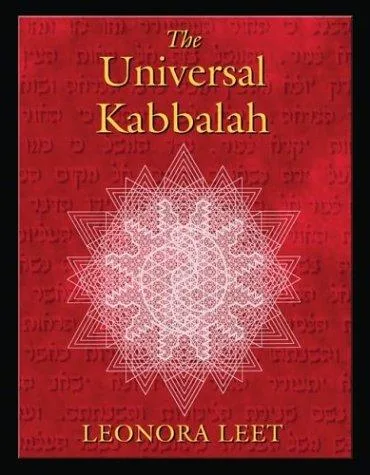
Moving beyond the basics, intermediate texts delve deeper into the symbol's applications and related concepts. 'Sacred Geometry and Numerology' by Moustafa Gadalla connects the Flower of Life to broader systems of symbolic meaning. 'Sacred Geometry and Geomancy' by Trisha Keel explores its use in earth-based divination and spatial understanding. 'The Universal Kabbalah' by Leonora Leet offers insights into how this geometry relates to mystical traditions. These works expand the understanding of the Flower of Life's role in various esoteric frameworks.
Classical / Advanced Texts
Advanced study involves engaging with texts that explore the Flower of Life's historical and mystical roots. Drunvalo Melchizedek's 'The Ancient Secret of the Flower of Life, Volume 1' and 'Volume 2' are seminal works that synthesize extensive research and personal experience. 'Messiah and the Throne: Jewish Merkabah Mysticism and Early Christian Exaltation Discourse' by Timo Eskola provides scholarly context on related mystical traditions. 'The Complete Magicians Tables' by Stephen Skinner, though broader, touches upon geometric systems used in esoteric practices.
Reading Order — Step by Step
Begin your journey with 'The Flower of Life' by Tina Ketch or 'The Flower of Life Pattern' by BRENT. CROWDER for foundational understanding. In Month 2, explore 'Sacred Geometry and Numerology' by Moustafa Gadalla to link the symbol to broader esoteric systems. For Month 3, immerse yourself in Drunvalo Melchizedek's 'The Ancient Secret of the Flower of Life, Volume 1.' Continue with Volume 2 thereafter. For advanced readers, 'Messiah and the Throne' by Timo Eskola offers historical depth in Month 4, followed by Stephen Skinner's 'The Complete Magicians Tables' for comparative geometric studies.
Frequently Asked Questions
Which Flower of Life book should I read first?
For a gentle introduction, start with 'The Flower of Life' by Tina Ketch or 'The Flower of Life Pattern' by BRENT. CROWDER. These books clearly present the basic geometry and concepts, making them ideal for beginners.
What is the connection between the Flower of Life and sacred geometry?
The Flower of Life is a foundational pattern within sacred geometry. It is considered a visual representation of the interconnectedness of all life and contains within it many other sacred geometric shapes, such as the Seed of Life and Metatron's Cube.
Are there different interpretations of the Flower of Life?
Yes, interpretations vary. Some focus on its mathematical perfection and role in creation myths, while others explore its use in meditation, consciousness expansion, and its appearance in diverse cultural and spiritual traditions worldwide.
What is Merkabah mysticism and how does it relate?
Merkabah mysticism is an ancient Jewish esoteric tradition focused on visionary experiences of divine chariots and ascents. Texts like Timo Eskola's 'Messiah and the Throne' explore how symbols like the Flower of Life and related geometric forms are integral to these mystical practices and concepts of spiritual transport.
Can the Flower of Life be used for meditation?
Many practitioners use the Flower of Life pattern for meditation. Gazing at its structure or visualizing it can help focus the mind, promote a sense of unity, and facilitate deeper states of awareness by connecting with its perceived universal order.
Where can I find primary sources on the Flower of Life?
Drunvalo Melchizedek's two-volume series, 'The Ancient Secret of the Flower of Life,' is considered a comprehensive modern compilation and exploration of the symbol's teachings. For historical context on related geometric and mystical systems, 'The Complete Magicians Tables' by Stephen Skinner is valuable.
Is the Flower of Life pattern found in ancient cultures?
Yes, the Flower of Life pattern, or similar geometric arrangements, has been found in ancient sites and artifacts across various cultures, including Egypt, Israel, India, and China, suggesting its widespread recognition as a significant symbol throughout history.
What is the difference between the Seed of Life and the Flower of Life?
The Seed of Life is a component of the Flower of Life, typically consisting of seven overlapping circles. It is often seen as representing the initial stages of creation or the seven days of creation, while the Flower of Life is a more complex expansion of this fundamental pattern.