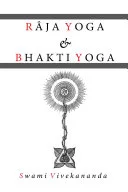
Raja Yoga & Bhakti Yoga
 75
75

Raja Yoga & Bhakti Yoga
Vivekananda's dual exposition of Raja Yoga and Bhakti Yoga offers a potent distillation of Indian spiritual science for the modern seeker. His clarity in presenting Patanjali's eightfold path, particularly the often-misunderstood yamas and niyamas, provides a robust framework for ethical and mental discipline. The 'Bhakti Yoga' section, while perhaps less systematically detailed than its Raja counterpart, pulsates with an infectious fervor for divine love, making the abstract accessible through concrete examples of devotional practice. A notable strength lies in Vivekananda's ability to bridge the philosophical depth of Vedanta with practical application, avoiding purely academic discourse. However, the 2018 publication date suggests this is likely a compilation of older works, and the introductory context for a reader entirely new to these concepts might feel sparse. The true limitation surfaces when the reader desires more granular instruction on specific meditative techniques, which are alluded to more than explicitly detailed. Nevertheless, the fusion of intellectual rigor and devotional passion remains compelling.
This volume stands as a crucial, albeit demanding, introduction to Vivekananda's influential spiritual synthesis.
📝 Description
75
Swami Vivekananda's 1896 'Raja Yoga' and 'Bhakti Yoga' explain Indian spiritual disciplines.
This volume collects Swami Vivekananda's writings on Raja Yoga and Bhakti Yoga, two distinct paths within Indian spiritual traditions. 'Raja Yoga,' first published in 1896, interprets Patanjali's Yoga Sutras, presenting the eight limbs of yoga as a systematic method for controlling the mind and achieving higher consciousness. Vivekananda frames this practice not as mere physical exercise, but as a science of the mind, intended to lead to self-realization.
Complementing this is 'Bhakti Yoga,' which focuses on the path of devotion. Vivekananda outlines how intense love and surrender to the Divine can be a powerful means of spiritual attainment. He discusses the nature of God, the role of the guru, and the transformation that occurs through sincere devotion. Together, these texts offer a structured view of yogic philosophy and practice, aimed at those seeking inner transformation through both disciplined contemplation and heartfelt worship.
Vivekananda's work emerged in the late 19th century, a period when Western intellectuals became increasingly interested in Indian philosophies. He presented Vedanta and Yoga not as foreign superstitions, but as sophisticated spiritual sciences. His approach aimed to demonstrate the universality of these practices, showing how they could lead to profound inner change and understanding of consciousness. This volume connects the practical discipline of Raja Yoga with the devotional intensity of Bhakti Yoga, illustrating two primary avenues within Hindu thought for spiritual development.
💡 Why Read This Book?
• Gain a structured understanding of Raja Yoga's eight limbs, including the ethical observances like *ahimsa* and *brahmacharya*, as outlined in 'Raja Yoga', providing a systematic path to mental control. • Explore the devotional path of Bhakti Yoga, learning how to cultivate divine love and surrender through practices described by Vivekananda, offering an alternative to purely intellectual spiritual pursuits. • Understand the historical impact of Vivekananda's 1893 Parliament of Religions presentation, contextualizing his work within the introduction of Vedanta to the Western world and its reception.
⭐ Reader Reviews
Honest opinions from readers who have explored this book.
❓ Frequently Asked Questions
What is the primary difference between Raja Yoga and Bhakti Yoga as presented by Swami Vivekananda?
Raja Yoga, as detailed by Vivekananda, focuses on the control of the mind through systematic discipline, meditation, and concentration, aiming for self-realization via internal mastery. Bhakti Yoga, conversely, emphasizes devotion, love, and surrender to the Divine as the primary means of spiritual union.
When was Swami Vivekananda active and when was this specific edition first published?
Swami Vivekananda was active in the late 19th century, famously speaking at the 1893 Parliament of Religions. This particular edition of 'Raja Yoga & Bhakti Yoga' was first published on April 13, 2018.
Does 'Raja Yoga & Bhakti Yoga' include original Sanskrit texts or just commentary?
The book primarily contains Swami Vivekananda's explanations and commentaries on concepts derived from classical Indian texts like Patanjali's Yoga Sutras and the Bhagavad Gita, rather than presenting extensive original Sanskrit verses.
Is this book suitable for absolute beginners in Yoga?
While Vivekananda's explanations are renowned for their clarity, the book delves into philosophical and psychological concepts that may require some initial exposure or a willingness to engage deeply. Beginners might benefit from supplementary introductory materials on Yoga philosophy.
What is the significance of 'Om' in Vivekananda's teachings?
Vivekananda explains 'Om' as the most sacred mantra in Hinduism, representing the primal sound of the universe and the ultimate reality. Chanting and meditating on Om is presented as a powerful means to connect with the Divine and achieve higher consciousness.
How did Swami Vivekananda influence the perception of Hinduism in the West?
Through his eloquent lectures, starting prominently at the 1893 Parliament of Religions, Vivekananda presented Hinduism not as a primitive belief system but as a profound philosophy and 'science of religion,' fostering respect and scholarly interest in Vedanta and Yoga.
🔮 Key Themes & Symbolism
The Science of Mind Control
This volume presents Yoga not merely as physical exercise but as a rigorous 'science of the mind'. Vivekananda meticulously outlines the steps of Raja Yoga, derived from Patanjali's Yoga Sutras, focusing on concentration (Dharana), meditation (Dhyana), and absorption (Samadhi). The emphasis is on understanding and mastering the fluctuations of consciousness (vrittis) through ethical discipline (Yamas and Niyamas) and internal focus, offering a practical methodology for achieving mental clarity and spiritual insight accessible through disciplined practice.
Devotion as Liberation
Bhakti Yoga explores the transformative power of love and devotion directed towards the Divine. Vivekananda presents this path not as blind faith but as a rational and emotional engagement with the highest ideal. He discusses various forms of devotion, from hearing and chanting the glories of God to remembering, serving, and surrendering to Him. This section highlights how cultivating intense love can dissolve ego-boundaries and lead to spiritual union, offering solace and a direct route to experiencing the Absolute.
Vedanta's Universal Appeal
Vivekananda's work champions the core tenets of Vedanta, emphasizing the inherent divinity within all beings and the ultimate unity of existence. He frames these teachings as a universal 'science of religion,' seeking common spiritual threads across diverse traditions. His efforts, particularly following his 1893 Chicago address, were instrumental in introducing these profound philosophies to the West, challenging sectarian views and promoting a more inclusive understanding of spirituality.
The Symbolism of Om
Central to Vivekananda's teachings on Raja Yoga is the concept of 'Om' (Aum). He explains it as the symbolic representation of Brahman, the ultimate reality, and the primal sound from which all creation emanates. Meditating on Om is presented as a potent practice for quieting the mind and realizing the underlying unity of the universe. Its repetition and contemplation are key techniques for achieving higher states of consciousness.
💬 Memorable Quotes
Direct passages from the work, attributed to the author.
“Each Jiva is Lord of his own destiny.”
— This statement underscores the principle of individual responsibility and the inherent power within each soul. It suggests that external forces are less significant than one's internal choices and efforts in shaping one's spiritual and material future.
“The goal is to attain Kaivalya, or liberation.”
— This refers to the ultimate aim of Raja Yoga: complete freedom from the cycle of birth and death, and from the limitations of the physical and mental realms. It signifies a state of pure consciousness and non-attachment.
“Bhakti is the easiest path.”
— Vivekananda suggests that for many, the path of intense love and devotion towards a personal God is more accessible than the rigorous intellectual and meditative discipline of Raja Yoga, providing a direct emotional connection to the Divine.
“The mind is the instrument of knowledge.”
— This highlights the central role of the mind in both perception and spiritual understanding. Vivekananda emphasizes that by purifying and controlling the mind, one can access deeper truths and achieve self-realization.
“We must not forget that religion is caught, not taught.”
— This interpretation emphasizes the experiential nature of spiritual realization. True understanding and transformation come not just from intellectual instruction but from direct inner experience and assimilation of spiritual principles.
🌙 Esoteric Significance
Tradition
Vivekananda's work bridges ancient Indian traditions, particularly Vedanta and Yoga, with a modern, accessible framework. While not strictly Hermetic or Gnostic, his emphasis on self-knowledge, inner mastery, and the direct experience of the Absolute aligns with core esoteric principles found across diverse lineages. He presents Yoga as a universal spiritual science, applicable regardless of specific religious affiliation, resonating with the Hermetic ideal 'As Above, So Below' through the microcosm of the mind reflecting the macrocosm.
Symbolism
The most prominent symbol is 'Om' (Aum), representing the primordial sound and the ultimate reality (Brahman). Vivekananda elucidates its significance as a mantra for concentration and a gateway to understanding cosmic unity. Another key concept is the 'lotus' of the heart, often used metaphorically in yogic traditions to symbolize the seat of consciousness and spiritual awakening, where devotion and higher awareness blossom.
Modern Relevance
Contemporary mindfulness movements, secularized meditation practices, and integrated wellness philosophies owe a significant debt to Vivekananda's popularization of Yoga and Vedanta. Thinkers and practitioners in fields ranging from positive psychology to consciousness studies continue to draw upon his systematic approach to mental discipline and his emphasis on the inherent potential of the human mind. His holistic view of spirituality, encompassing both intellectual understanding and practical application, remains highly relevant.
👥 Who Should Read This Book
['• Students of comparative religion seeking to understand the historical introduction of Vedanta and Yoga to the Western world through the influential figure of Swami Vivekananda.', '• Aspiring practitioners of Raja Yoga interested in a foundational text that details the eight limbs of yoga, including ethical precepts and meditative techniques.', '• Individuals drawn to devotional spirituality who wish to explore Bhakti Yoga as a path to connection with the Divine, as articulated by Vivekananda.']
📜 Historical Context
Swami Vivekananda’s teachings emerged during a period of intense cultural and intellectual exchange between India and the West in the late 19th century. His central role began with his address at the 1893 Parliament of Religions in Chicago, where he introduced the philosophical depth of Vedanta to a global audience. This event marked a significant shift in how Eastern spirituality was perceived, moving beyond exoticism towards serious philosophical consideration. Vivekananda presented Hinduism not as a collection of dogmas, but as a universal 'science of religion,' a concept that challenged the prevailing, often critical, views held by Western missionaries and scholars. His work offered an alternative to both the materialist philosophies gaining traction in the West and the more ritualistic interpretations of religion prevalent at the time. Contemporaries like Max Müller were exploring Indian texts, but Vivekananda provided a living, dynamic interpretation grounded in practice, making his influence particularly potent.
📔 Journal Prompts
The eight limbs of Raja Yoga: identify one Yamas or Niyamas practice to integrate this week.
The concept of 'Om': reflect on its representation of primal sound and universal unity.
The role of devotion in Bhakti Yoga: consider how surrender can foster spiritual growth.
Vivekananda's 'science of religion': analyze its challenge to traditional religious dogma.
The goal of 'Kaivalya': contemplate what absolute freedom signifies for your spiritual path.
🗂️ Glossary
Raja Yoga
The 'royal path' of Yoga, systematized by Patanjali, focusing on mental control, concentration, and meditation to achieve self-realization and liberation (Kaivalya).
Bhakti Yoga
The path of devotion and love towards the Divine, emphasizing surrender, worship, and chanting as means to spiritual union.
Samadhi
A state of profound meditative consciousness, absorption, or ecstasy, representing the culmination of yogic practice where the mind becomes one with the object of meditation.
Om (Aum)
The sacred syllable representing the ultimate reality (Brahman) and the primal sound of the universe in Hinduism, used as a mantra for meditation.
Yamas
The ethical restraints or moral disciplines in Raja Yoga, including non-violence (ahimsa), truthfulness (satya), and non-stealing (asteya).
Niyamas
The observances or disciplines in Raja Yoga that focus on self-purification and spiritual practices, such as contentment (santosha) and self-study (svadhyaya).
Kaivalya
The ultimate goal of Raja Yoga; absolute freedom, liberation, or isolation of the Purusha (true self) from Prakriti (matter and mind).