Buddhist Thought
 82
82

Buddhist Thought
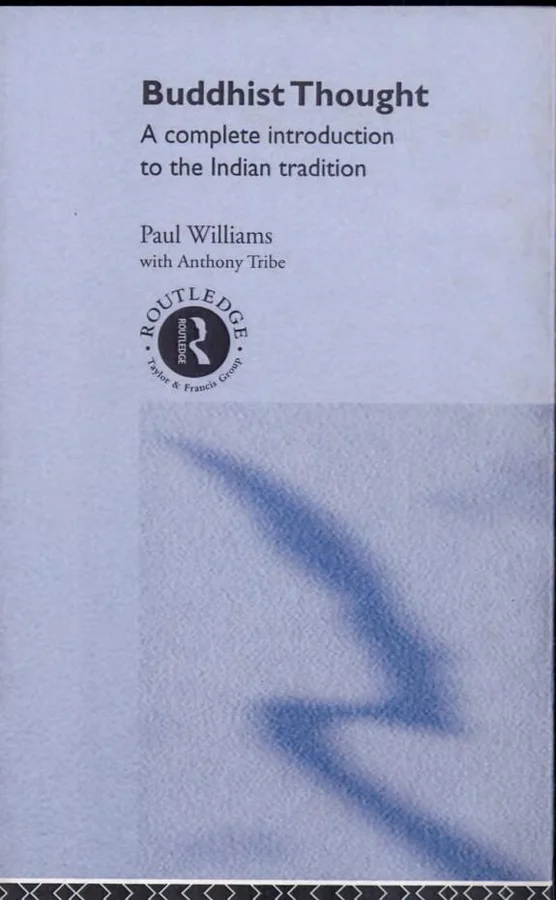
Paul Williams and Anthony Tribe's Buddhist Thought offers a rigorous and often challenging survey of Indian Buddhist philosophy. Its strength lies in its detailed exposition of complex arguments, particularly concerning epistemology and metaphysics. The authors do not shy away from the intricate debates within schools like the Madhyamaka, presenting scholastic analyses with commendable precision. For instance, their treatment of Nagarjuna's philosophy of emptiness provides a clear, albeit dense, pathway through his dialectics. However, the book’s academic focus, while a virtue for scholars, can sometimes render it less approachable for the general reader. The sheer volume of technical terms and the dense prose, particularly in chapters discussing Yogacara and later developments, demand considerable concentration. Despite this, the work serves as an indispensable reference for anyone serious about understanding the intellectual architecture of Buddhism. It is a meticulous academic study, not a devotional text.
📝 Description
82
Paul Williams and Anthony Tribe's Buddhist Thought, published in 2000, clarifies complex Indian Buddhist philosophy.
This book provides a thorough look at Indian Buddhist philosophy, moving past simple explanations to focus on the core ideas that formed this tradition over centuries. Williams and Tribe aim to make difficult philosophical arguments clear and organized, suitable for readers who want to engage intellectually with Buddhist concepts. The book covers a wide range of thought, from the earliest Buddhist groups to later Mahayana developments.
It is written for serious students of philosophy and comparative religion, including university students and independent researchers. Those who find Buddhist thought intimidating will discover this text a useful guide to its main principles and history. It is a scholarly work, not a guide for self-help.
The book places Indian Buddhist thought in its historical setting, following its growth from the time of the Buddha in the 5th century BCE to the medieval era. It discusses the intellectual environment of ancient India and its interactions with other philosophical systems. The authors show how Buddhist philosophy changed due to various challenges and internal discussions, particularly the rise of Mahayana Buddhism and its specific philosophical schools.
Buddhist Thought examines a tradition often considered esoteric due to its focus on internal states, complex philosophical systems, and practices aimed at transcending ordinary consciousness. The book details concepts like *anatta* and dependent origination, which challenge conventional views of self and reality. It traces how these ideas developed within specific Indian schools, engaging with sophisticated logical arguments and metaphysical debates that formed the intellectual basis for contemplative practices. Understanding these philosophical underpinnings is crucial for grasping the deeper dimensions of Buddhist mysticism and its contemplative paths.
💡 Why Read This Book?
• Gain a precise understanding of *anatta* (no-self) by examining its philosophical arguments as presented in Chapter 4, a concept crucial for distinguishing Buddhist thought from other spiritual traditions. • Grasp the intricacies of dependent origination (*pratītyasamutpāda*) through the detailed analysis in Chapter 5, which clarifies the causal chains central to Buddhist cosmology and ethics. • Appreciate the development of Mahayana philosophy by studying the specific doctrines discussed in Chapters 10-12, understanding how later schools like Yogacara expanded upon earlier frameworks.
⭐ Reader Reviews
Honest opinions from readers who have explored this book.
❓ Frequently Asked Questions
What is the primary focus of Buddhist Thought by Paul Williams and Anthony Tribe?
The book focuses on the philosophical and doctrinal development of Indian Buddhist thought, exploring key concepts from its inception through to later Mahayana schools, rather than on Buddhist practices or modern interpretations.
Is Buddhist Thought suitable for beginners in Buddhism?
While comprehensive, the book is written for a scholarly audience. Beginners may find its academic rigor and density challenging, though it provides a solid foundation for serious study.
What historical period does the book cover?
It covers the span of Indian Buddhist thought, beginning with early Buddhism around the 5th century BCE and extending through various Mahayana developments up to the medieval period.
Does the book discuss Buddhist meditation or mindfulness practices?
No, the book's primary emphasis is on the philosophical and metaphysical doctrines of Buddhism, not its meditative or practical aspects.
When was Buddhist Thought first published and by whom?
Buddhist Thought was first published in 2000 by Paul Williams and Anthony Tribe.
What distinguishes Indian Buddhist thought from other Buddhist traditions discussed in the book?
The book differentiates Indian Buddhist thought by detailing its specific philosophical schools, concepts like *anatta* and *pratītyasamutpāda*, and its evolution within the Indian subcontinent before its spread to other regions.
🔮 Key Themes & Symbolism
The Doctrine of No-Self (Anatta)
Buddhist Thought rigorously dissects the concept of *anatta*, or non-self, a central tenet distinguishing Buddhist philosophy from other Indian traditions. It moves beyond a simple denial of a permanent soul, exploring the philosophical implications for personal identity, agency, and the nature of suffering. The book examines how the aggregates (*skandhas*) are analyzed to demonstrate the absence of an enduring, independent self, offering a clear academic perspective on this foundational doctrine. Understanding *anatta* is presented as key to comprehending the Buddhist path to liberation from suffering.
Dependent Origination (Pratītyasamutpāda)
This theme focuses on *pratītyasamutpāda*, the principle of dependent origination, which explains the interconnectedness of all phenomena. The work meticulously details the twelve links of existence, illustrating how suffering arises and ceases through a chain of causes and conditions. This concept serves as the philosophical bedrock for understanding karma, rebirth, and the very nature of reality within Buddhism. Williams and Tribe clarify its complex implications, demonstrating its role in both cosmological explanations and ethical frameworks, providing a nuanced view of Buddhist causality.
Mahayana Philosophical Developments
The book explores the significant philosophical shifts introduced by the Mahayana tradition. It details concepts such as emptiness (*shunyata*) as articulated by Nagarjuna and the consciousness-only school (*Yogacara*). The authors trace the evolution of Buddhist thought, highlighting how these later developments offered new interpretations of core doctrines and expanded the scope of Buddhist philosophy. This section is crucial for understanding the diversity within Indian Buddhism and the intellectual dynamism that characterized its historical trajectory.
The Path to Nirvana
Central to Buddhist Thought is the examination of the ultimate goal: *nirvana*. The text outlines the philosophical underpinnings of the path to liberation, including the role of wisdom (*prajna*) and ethical conduct. It discusses the nature of enlightenment and the cessation of suffering, often contrasting different interpretations across various Buddhist schools. The book provides a philosophical framework for understanding what liberation entails, moving beyond simplistic notions to explore the profound cessation of conditioned existence described in Buddhist texts.
💬 Memorable Quotes
Direct passages from the work, attributed to the author.
“The doctrine of *anatta* is not a nihilistic denial of existence but a refutation of a specific kind of self.”
— This statement highlights that the Buddhist concept of no-self does not negate our experience of existing, but rather rejects the notion of a permanent, unchanging, independent entity that constitutes a 'self'.
“Emptiness (*shunyata*) is not a void, but the absence of inherent existence.”
— This interpretation clarifies that *shunyata* in Mahayana philosophy refers to the lack of independent, self-sufficient existence in all phenomena, rather than absolute nothingness.
“Liberation (*nirvana*) is the cessation of suffering, achieved through the eradication of ignorance and craving.”
— This interpretation defines *nirvana* as the ultimate goal in Buddhism, attained by overcoming the root causes of suffering, namely misunderstanding reality and having unquenchable desires.
💡 Key Ideas
Editorial paraphrase of the work's core concepts — not direct quotes.
All phenomena are dependently originated; there is nothing that arises independently.
This paraphrase captures the essence of *pratītyasamutpāda*, emphasizing the interconnectedness and causal conditioning of all things within the Buddhist worldview, where nothing exists in isolation.
The aggregates (*skandhas*) are impermanent, unsatisfactory, and devoid of a self.
This paraphrase summarizes the analysis of the five components of existence (form, feeling, perception, mental formations, consciousness) as the basis for understanding the non-existence of a permanent self.
🌙 Esoteric Significance
Tradition
While not explicitly an esoteric text in the Western sense (Hermetic, Kabbalistic, etc.), Buddhist Thought engages with philosophical systems that have profound esoteric implications for practitioners. Its detailed examination of consciousness, emptiness, and the nature of reality informs contemplative practices aiming for liberation, which can be seen as an inner, transformative journey. The work provides the intellectual architecture for understanding the goals of advanced Buddhist meditative states, aligning with the esoteric pursuit of ultimate knowledge and transformation.
Symbolism
Key symbolic concepts explored include the Wheel of Life (*Bhavacakra*), which visually represents dependent origination and the cycle of rebirth, illustrating the interconnectedness of actions and consequences. The lotus flower, though less central to philosophical discourse here, symbolizes purity and enlightenment arising from the muddy waters of samsara. The book's focus on *emptiness* (*shunyata*) can be seen as a symbolic representation of the dissolution of conceptual limitations, leading to a profound realization of interconnectedness.
Modern Relevance
Contemporary thinkers and practitioners in fields like mindfulness, contemplative science, and philosophical psychology draw heavily on the foundational concepts analyzed in this book. Philosophers of mind and consciousness studies often reference Buddhist ideas concerning the non-self and the nature of subjective experience. Furthermore, academic departments of religious studies and philosophy continue to utilize this text as a standard for understanding the historical and philosophical trajectory of Buddhism, informing new scholarship and cross-cultural dialogues.
👥 Who Should Read This Book
• Academic researchers in Buddhist studies and comparative philosophy seeking a detailed, source-based understanding of Indian Buddhist philosophical traditions. • Graduate students in religious studies or philosophy who need to engage with the core doctrines and historical debates of Buddhism for their coursework and dissertations. • Serious practitioners of Buddhism who wish to deepen their intellectual grasp of the philosophical underpinnings of their path, moving beyond experiential aspects to doctrinal clarity.
📜 Historical Context
Published in 2000, Paul Williams and Anthony Tribe's Buddhist Thought emerged during a period of robust academic engagement with Asian philosophies. It directly addresses the legacy of Indian Buddhist thought, a tradition that flourished for over a millennium before its intellectual centers declined in India around the 12th century CE. The book's detailed analysis of concepts like *sunyata* and *yogacara* places it within ongoing scholarly debates that have engaged figures like T.W. Rhys Davids and later scholars such as Richard Gombrich. It also implicitly engages with the intellectual currents of Western philosophy by presenting Buddhist arguments in a systematic, analytical framework. The reception of such works in the late 20th and early 21st centuries reflects a growing academic interest in comparative philosophy and the nuanced study of non-Western intellectual traditions, moving beyond earlier, more syncretic or devotional approaches.
📔 Journal Prompts
The concept of *anatta* as presented in Chapter 4.
Dependent origination (*pratītyasamutpāda*) and its twelve links.
The philosophical implications of Nagarjuna's Madhyamaka philosophy.
The distinction between *shunyata* and nihilism.
The aggregates (*skandhas*) and their relation to the notion of self.
🗂️ Glossary
Anatta
The doctrine of non-self, asserting that there is no permanent, unchanging, independent self or soul in any phenomenon or being.
Pratītyasamutpāda
Dependent origination; the principle that all phenomena arise in dependence upon causes and conditions, forming a causal chain.
Shunyata
Emptiness; the concept, particularly prominent in Mahayana Buddhism, that all phenomena lack inherent existence or independent self-nature.
Skandhas
The five aggregates or heaps that constitute a sentient being: form, feeling, perception, mental formations, and consciousness.
Nirvana
The ultimate goal of Buddhism; the cessation of suffering, craving, and the cycle of rebirth (samsara).
Yogacara
A major Mahayana philosophical school that emphasizes the role of consciousness in the arising of phenomena, often translated as 'mind-only' or 'consciousness-only'.
Madhyamaka
A Mahayana school founded by Nagarjuna, emphasizing the doctrine of emptiness (*shunyata*) through dialectical reasoning.
This book appears in 1 collection
🔮 Readers Also Liked
Browse all →








From the “Buddhism” Collection
View all →





More Free Sacred Texts & Gnosticism Books
View all →