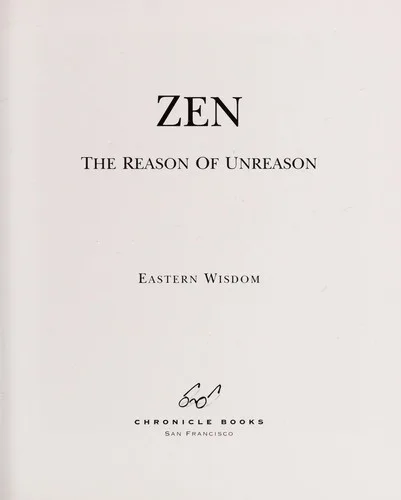
Zen
 73
73

Zen
The 1993 compilation titled "Zen" is an unusual but not entirely unsuccessful attempt to draw parallels between three major contemplative traditions. Its strength lies in its conciseness, offering a gateway into complex ideas without overwhelming the novice. The juxtaposition of Zen's emphasis on direct experience, Taoism's naturalism, and Sufism's devotional fervor is handled with a commendable lack of dogmatism. However, the inherent danger of such broad strokes is a certain superficiality. For instance, the section on Sufism, while touching on Rumi's poetic expressions of divine love, could feel reductive to those familiar with the depth and diversity within Islamic mysticism. A particularly illustrative concept is the Taoist notion of wu wei, presented here as 'effortless action.' While accurate, its practical application and nuanced interpretation across different contexts warrant more detailed exploration than this collection allows. It serves as an introduction, not an exhaustive study. Ultimately, "Zen" offers a valuable, albeit brief, overview for those beginning their comparative spiritual exploration.
📝 Description
73
Published in 1993, this collection distills core principles from Zen, Taoism, and Sufism.
This volume, credited to "Zen, Tao, Sufism," arranges key ideas from three distinct spiritual traditions for readers interested in contemplative practices. It is not an academic comparison but an accessible introduction to the shared and separate paths within Zen Buddhism, Taoism, and Sufism. The book aims to illuminate common threads that lead toward inner realization.
The work is suited for those beginning their exploration of Eastern philosophies and Islamic mysticism, or for individuals already familiar with one tradition who wish to see its connections to others. Students of comparative religion, philosophy, and psychology will find it a useful primer for grasping the essential tenets of these influential paths. The collection emerged during a time of growing Western interest in Eastern spirituality, synthesizing ideas for a broader audience.
Emerging in 1993, this collection reflects a late 20th-century trend of increased Western engagement with Eastern spiritual traditions and Islamic mysticism. It follows figures like Thomas Merton who had already begun fostering interfaith dialogue. The book synthesizes key concepts from Zen, Taoism, and Sufism, making them more accessible to a general readership at a time when interest in mindfulness and contemplative practices was gaining momentum.
💡 Why Read This Book?
• Gain an introductory understanding of *wu wei* (effortless action) from Taoism, a concept that can inform approaches to daily tasks and challenges, promoting a sense of flow rather than forceful exertion. • Explore the Zen Buddhist concept of *sunyata* (emptiness), which offers a framework for understanding detachment and reducing suffering by recognizing the impermanent nature of phenomena. • Appreciate the Sufi emphasis on divine love and the purification of the heart, providing a devotional perspective that can enrich one's understanding of spiritual connection and inner transformation.
⭐ Reader Reviews
Honest opinions from readers who have explored this book.
❓ Frequently Asked Questions
What are the primary traditions covered in the book 'Zen'?
The book 'Zen', first published in 1993, primarily covers the core principles and practices of Zen Buddhism, Taoism, and Sufism, aiming to highlight commonalities and distinct spiritual paths.
Is 'Zen' a scholarly comparison of these traditions?
No, 'Zen' is not a scholarly comparative study. It's presented as a distillation of core ideas intended for introductory purposes, making spiritual concepts accessible to a broader audience.
Who is the intended audience for this book?
The book is intended for individuals curious about contemplative life, spiritual inquiry, and the practices of Eastern philosophies and Islamic mysticism, including beginners and those seeking inter-traditional understanding.
What is the significance of the 1993 publication date?
The 1993 publication date places the book within a period of growing Western interest in Eastern spirituality, making synthesized spiritual teachings more widely available and accessible.
Does the book offer practical guidance for spiritual practice?
Yes, the book introduces foundational concepts and practices such as Zen meditation (zazen), Taoist 'effortless action' (wu wei), and Sufi purification of the heart, offering a basis for personal exploration.
Can 'Zen' help someone understand Rumi?
The book touches upon Sufism and mentions figures like Rumi, offering a brief introduction to the tradition's focus on divine love and ecstatic states, which can serve as a starting point for further study of Rumi's work.
🔮 Key Themes & Symbolism
The Tao: The Ineffable Way
This theme looks at the Taoist concept of the Tao, presented not as a deity but as the fundamental, ineffable principle underlying all existence. The work explores how the Tao governs the natural order and how alignment with this 'Way' is achieved through observation and a receptive attitude. It highlights the paradox of the Tao being both the source of all things and beyond description, a concept crucial for understanding Taoist cosmology and its emphasis on natural spontaneity and cosmic harmony. The text suggests that grasping the Tao involves a form of intuitive understanding rather than intellectual dissection.
Zen and Emptiness (Sunyata)
Focusing on Zen Buddhism, this theme examines the concept of sunyata, often translated as emptiness or voidness. It's presented not as nihilism, but as the lack of inherent, independent existence in all phenomena. The work likely explains how understanding emptiness can lead to liberation from attachment and suffering, as it reveals the impermanent and interdependent nature of reality. This concept is tied to the practice of mindfulness and meditation (zazen), aiming to cultivate a direct, unmediated experience of this fundamental truth, moving beyond conceptual frameworks.
Sufi Love and Heart Purification
This theme addresses the mystical path of Sufism, emphasizing its core tenets of divine love (ishq) and the purification of the heart (tazkiyat al-nafs). The work likely touches upon the Sufi aspiration to achieve union or close proximity with the Divine through devotion, remembrance (dhikr), and ecstatic experiences. It may reference the importance of a spiritual guide (shaykh) and the journey of the soul towards recognizing its origin and ultimate return to the Beloved. The focus is on the transformative power of love as the central driving force in the Sufi path.
Effortless Action (Wu Wei)
Central to the Taoist perspective presented, wu wei is explored as 'effortless action' or 'non-action.' This theme clarifies that wu wei does not signify passivity or idleness, but rather acting in accordance with the natural flow of the Tao, without forcing or striving against the inherent course of events. It involves a state of being so attuned to the situation that actions arise spontaneously and effectively, achieving results with minimal resistance. The work likely contrasts this with conventional, ego-driven efforts that often create more problems than they solve.
💬 Memorable Quotes
Direct passages from the work, attributed to the author.
“The Tao that can be told is not the eternal Tao.”
— This classic Taoist aphorism underscores the ineffable nature of the ultimate reality. It suggests that any attempt to define or describe the Tao using language inevitably falls short, as the true essence lies beyond conceptualization and verbal expression.
“Love is the oil of the lamp of the heart.”
— This is a representative interpretation of Sufi thought, emphasizing the central role of divine love in spiritual life. The heart, seen as the seat of spiritual perception, is illuminated and awakened by love, guiding the seeker towards the Divine.
“To act without acting is the way of the sage.”
— This captures the essence of wu wei in Taoism. It suggests that wisdom lies in aligning one's actions with the natural flow of the universe, allowing events to unfold organically rather than imposing one's will forcefully.
“The path is the goal.”
— This common spiritual maxim, applicable across Zen, Taoism, and Sufism, highlights the importance of the present moment and the process of spiritual unfolding. It implies that true realization is found in the journey itself, not solely in a future destination.
💡 Key Ideas
Editorial paraphrase of the work's core concepts — not direct quotes.
All phenomena are empty of inherent existence.
This paraphrased concept from Buddhist philosophy, particularly relevant to Zen, points to the doctrine of sunyata. It means that things do not possess a fixed, independent self, but are instead interdependent and impermanent, a realization crucial for overcoming attachment.
🌙 Esoteric Significance
Tradition
This work draws from three major contemplative traditions: Zen Buddhism, Taoism, and Sufism. While distinct, they share an esoteric emphasis on direct experience, inner transformation, and transcending ordinary consciousness. Zen represents a Mahayana Buddhist path focused on sudden enlightenment; Taoism, an indigenous Chinese philosophy and religion emphasizing harmony with the natural order; and Sufism, the mystical dimension of Islam, focused on divine love and direct knowledge of God. The collection attempts to bridge these traditions, suggesting a common underlying quest for spiritual realization that transcends cultural and religious boundaries.
Symbolism
Within Zen, the concept of *sunyata* (emptiness) serves as a key symbol, representing the lack of inherent self-nature and the interconnectedness of all things. In Taoism, the *Tao* itself is the ultimate symbol – the unnamable, ineffable principle of existence. The symbol of *water* is often used to represent the Tao's yielding yet powerful nature. For Sufism, the *heart* (qalb) is a central symbol, the locus of divine perception and love, which must be purified to reflect the Divine light. The *rose* is also a common symbol in Sufi poetry, representing the Beloved and the beauty of the Divine.
Modern Relevance
Contemporary mindfulness practices, secularized meditation techniques, and positive psychology often echo concepts found in this book, particularly from Zen and Taoism. The emphasis on presence, non-striving, and aligning with natural processes appeals to modern wellness movements. Furthermore, the cross-cultural spiritual seeking that the book represents continues in the 21st century, with many individuals exploring diverse traditions for personal growth. Thinkers and practitioners interested in embodied wisdom, non-dual awareness, and the integration of contemplative practices into daily life find enduring relevance in the principles outlined here.
👥 Who Should Read This Book
• Individuals new to comparative spirituality: This book offers a foundational, accessible introduction to the core ideas of Zen Buddhism, Taoism, and Sufism, providing a starting point for further exploration. • Seekers interested in contemplative practices: Those looking to understand meditation (zazen), effortless action (wu wei), and devotional practices can find introductory concepts here. • Students of philosophy and religion: This volume serves as a primer for understanding key tenets and potential commonalities between major Eastern and mystical traditions.
📜 Historical Context
The collection "Zen," published in 1993, arrived at a central moment in the Western engagement with Eastern spiritual traditions. The preceding decades had seen a significant influx of Buddhist and Taoist thought, partly fueled by counter-cultural movements and increased global exchange. Sufism, while having a longer history in the West through Islamic scholarship and theosophical movements, also experienced renewed interest in its mystical dimensions. This book emerged in a landscape shaped by figures like Alan Watts, who popularized Zen and Taoism, and the growing academic study of comparative religion. It competed with more scholarly works and devotional texts, but its aim was to offer a more accessible synthesis. The early 1990s were also characterized by a burgeoning interest in 'New Age' spirituality, where such cross-traditional explorations found a receptive audience, even as more traditional institutions sometimes viewed them with skepticism. The work reflects a broader cultural trend towards seeking universal truths across diverse belief systems.
📔 Journal Prompts
The Tao's ineffability: Reflect on a concept you find difficult to articulate but deeply understand intuitively.
Sunyata and attachment: How does recognizing impermanence in one aspect of your life affect your attachment to it?
Wu wei in practice: Identify a situation where applying 'effortless action' might be more effective than forceful intervention.
The purified heart: Consider what 'purification of the heart' might mean in your personal spiritual context.
Bridging traditions: What commonalities do you perceive between the essence of Zen, Taoism, and Sufism after reading this?
🗂️ Glossary
Tao
The fundamental, ineffable principle underlying all existence in Taoism. It is the natural order, the Way, the source and guiding force of all things, beyond human comprehension or description.
Wu Wei
A Taoist concept often translated as 'effortless action' or 'non-action.' It means acting in accordance with the natural flow of the Tao, without force or excessive striving, achieving results spontaneously and effectively.
Zazen
A central practice in Zen Buddhism, meaning 'seated meditation.' It involves focusing on posture, breath, and awareness to cultivate mindfulness, insight, and direct experience of reality.
Sunyata
A key concept in Mahayana Buddhism, particularly Zen, translated as 'emptiness' or 'voidness.' It refers to the lack of inherent, independent existence in all phenomena, highlighting impermanence and interdependence.
Sufism
The mystical, esoteric dimension of Islam. It focuses on the path of love, devotion, and direct experiential knowledge of God, emphasizing purification of the heart and spiritual transformation.
Ishq
An Arabic term used in Sufism to denote intense, passionate divine love. It signifies the overwhelming longing and ecstatic devotion of the soul for the Divine Beloved.
Tazkiyat al-Nafs
An Islamic and Sufi concept referring to the purification of the soul or self. It involves cleansing the heart and lower self of negative qualities to make it receptive to Divine presence and guidance.
🔮 Readers Also Liked
Browse all →








More Free Occult Philosophy Books
View all →